
45 degree buttweld elbow Buying Guide for Industrial Piping






2026-10-10 09:36:15
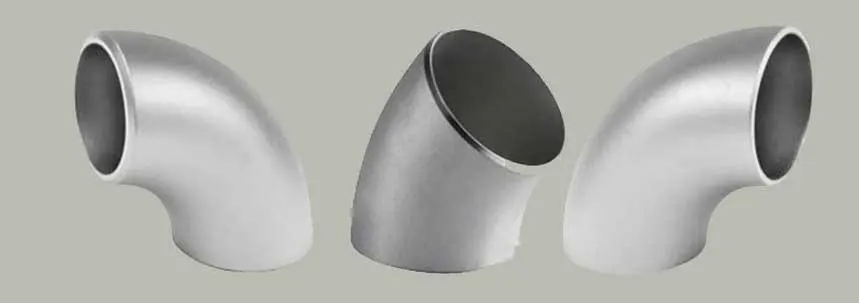
A 45 degree buttweld elbow is a hot-formed or forged steel fitting that redirects pipe flow at a 45-degree angle and is joined to the pipe by a full-penetration circumferential weld at the beveled ends. Manufactured to ASME B16.9, this fitting can provide a permanent, leak-tight connection suitable for high-pressure and high-temperature service when properly selected, welded, and inspected — making it a common choice over socket weld or threaded elbows in demanding industrial environments. This guide walks procurement managers, engineers, distributors, and EPC teams through specifications, material selection, installation, and sourcing strategies to make confident purchasing decisions.
Understanding 45 Degree Buttweld Elbows: Specifications and Functions
What Is a 45 Degree Buttweld Elbow?
A hot press or forge is used to make a butt weld elbow, which is then welded straight to a steel pipe. This type of elbow is widely used alongside the more common 90-degree elbow. Its gradual change in direction causes less turbulence and lower pressure drop than a 90-degree turn, which is very important in fluid systems with high speed or viscosity.
Key Dimensional Standards and Supply Range
Products that meet ASME B16.9 standards are the standard in the industry. As required by ASME B16.25, the bevel ends are typically prepared at 37.5° ± 2.5°. This makes a clean V-groove for full-penetration welds that can pass X-ray inspection. The standard supply includes:
- Size range: ½" through 48"
- Wall thickness: SCH 10, SCH 40, SCH 80 through XXS
- Material standards: ASTM A234 WPB, ASTM A403 WP304/316, ASTM A234 WP11/WP22
- Manufacturing standards: ASME B16.9, DIN 2605 (EN 10253-2), JIS B2312
- Surface coatings: Black painted, varnished, epoxy coated, galvanized
These factors set the standards for pressure integrity and interchangeability across foreign project requirements.
Long Radius vs. Short Radius
The Long Radius type of 45-degree elbow is the standard in the business. For Long Radius 45-degree elbows, the centerline curvature radius is 1.5 times the nominal pipe size (with the center-to-end dimension standardized per ASME B16.9 as approximately 0.414 × R). Short radius geometries are not standardized for 45-degree elbows under ASME B16.9 and are rarely specified. They generally produce higher pressure losses than long-radius elbows. Engineers should always use LR geometry for most project requirements.
Comparing 45 Degree Buttweld Elbows to Other Elbow Types
45 Degree vs. 90 Degree Butt-Weld Elbows
A 90-degree curve makes a faster turn that makes the pressure drop and turbulence much worse. Because it has a softer shape, the 45-degree elbow is the best fit for pump suction lines, remote riser systems, and long-distance pipes where energy economy has a direct effect on running costs. When there is room for a more gradual routing arrangement, two 45-degree elbows can provide a smoother change in direction, although the total pressure loss depends on the fitting geometry and spacing.
Buttweld vs. Socket Weld Elbows
Socket weld elbows have an intentional gap at the pipe end that can create a crevice where corrosive or process fluids may accumulate and can make radiographic inspection more difficult. Butt-weld joints eliminate this internal gap, and a butt welded 45 pipe elbow can provide a joint with strength comparable to the base pipe when properly designed and welded. It is common to use butt-weld designs for services that are subject to high pressure and temperature, like steam lines and plant feed systems.
Seamless vs. Welded Construction
For some high-pressure, corrosive, or low-temperature services, seamless elbows may be preferred because they do not have a longitudinal weld seam. For mild pressure uses, welded elbows are a cost-effective option, but the weld seam should be inspected using the examination methods required by the applicable material and project specification. A simple quality-control measure for reducing field failures is to match the construction method to the service requirements.
How to Choose the Right 45 Degree Buttweld Elbow for Your Industrial Project
Match Material Grade to Service Conditions
The choice of materials affects both safety and the overall cost of ownership. ASTM A234 WPB carbon steel is good for general oil, gas, and water service. Grades of stainless steel can handle conditions that are acidic or food-safe. Alloy steel is commonly used in power plants and process equipment for elevated-temperature service where the applicable design code and material specification require these grades. The standard way to make sure that supplied material fits the Mill Test Report is to use X-ray fluorescence for Positive Material Identification.
Verify Dimensional and Certification Compliance
Check three things before you place an order: the normal pipe size, the schedule, and the measurement standard. If the elbow schedule and pipe schedule do not match, an internal bore step may be created, which can increase turbulence and create an unfavorable condition for the welded joint. Depending on the project, manufacturers may be required to hold ISO 9001 certification, CE marking, or GOST-R acceptance. It is normal practice to ask for a copy of the manufacturer's most recent quality certifications before placing an order.
Assess Lead Times, MOQ, and Customization Needs
Off-the-shelf stock meets standard schedules in common sizes, and cuts lead time from weeks to days. Custom specifications, such as oversized dimensions, special alloys, or non-standard coatings, need to be manufactured to order and require more planning time. When placing an order, EPC teams with tight schedules should confirm stock availability in advance. Timelines for delivery on phased projects are kept safe by locking in a frame deal with a qualified 45-degree butt-weld elbow provider.
Installation and Maintenance Best Practices for 45 Degree Buttweld Elbows
Pre-Welding Preparation
Before putting the parts together, clean the bevel ends of mill scale, oil, and water. As per ASME B16.25, make sure the root face is 1.6 mm ± 0.8 mm, and the bevel angle is 37.5° ± 2.5°. To get a flush internal bore, make sure that the elbow bore matches the pipe it is being connected to. Using clamps to pull misaligned parts together is considered forced alignment and should be avoided.
Welding and Joint Inspection
Use a qualified welding procedure specification that is appropriate for the base materials being joined. For a butt welded 45 pipe elbow, carbon steel above a certain carbon equivalent value may require preheating. Skipping preheating is a frequent way to cause hydrogen cracks. Radiographic testing or ultrasonic testing is done after welding to verify weld penetration and detect relevant internal discontinuities. Magnetic particle inspection finds cracks in carbon steel parts that break the surface. Before the system is put into service, hydrostatic pressure testing of the finished assembly makes sure there are no leaks.
Routine Inspection and Service Life Management
Check the wall thickness on a regular basis at the elbow extrados, where erosion or flow-accelerated thinning may occur in rough or abrasive flow conditions. Ultrasonic thickness gauging can often be performed while the pipe remains in service, provided that access and inspection conditions are suitable, and it gives straight information for figuring out how much life is left. Always keep inspection records linked to the original MTR. This allows maintenance teams to compare the measured metal loss with the corrosion allowance specified in the original design. Finding thinning early on stops unplanned shutdowns and the safety problems that come with failures in service.
Where and How to Buy 45 Degree Buttweld Elbows: Procurement Insights
Evaluating Suppliers and Certifications
Manufacturers in the US, Europe, India, and China make up the global 45-degree buttweld elbow market. Depending on the project requirements, suppliers may need to provide ISO 9001 certification, third-party test reports, traceable heat numbers for each fitting, and references from similar projects.If a provider has been approved by major international energy corporations like ADNOC or Petrobras, it confirms that its quality management system has undergone rigorous third-party qualification.
Stock vs. Custom Manufacturing
Carbon steel standard-schedule elbows are easy to find and ship quickly. Do not forget to plan for a production run for sizes over 24 inches, alloy steel, or duplex stainless steel. Custom orders usually need full documentation of the materials, dimensional drawings, and agreed-upon inspection hold points. Make these needs clear in the purchase order, not after the work has started.
Pricing Factors and Logistics
Prices depend on the type of raw material, the thickness of the walls, the amount, and the treatment of the surface. Galvanized or epoxy-coated elbows cost more, but they save money on painting costs in the field. If you are a buyer in the US, make sure the seller has the right export licenses and that the goods you want to buy are legal to import. Buyers working on big projects should compare more than just the ex-works unit price. They should look at the total delivered cost, which includes freight, duties, and inspection fees.
Conclusion
Matching the material grade, schedule, dimensional standard, and production method of the 45 degree buttweld elbow to the real working conditions of your system is essential to choosing the right fitting. The three most common problems in the field can be avoided with a well-sourced fitting from a certified manufacturer: weld failure due to mismatched bores, corrosion from using the wrong material, and schedule delays due to unreliable stock. If you take the time to qualify suppliers up front, you'll save time and money in the long run on repair, maintenance, and making sure systems work for as long as they're supposed to.
FAQ
1. Are 45-degree butt-weld elbows suitable for high-pressure steam service?
For high-pressure service, the choice between seamless and welded elbows should be based on the applicable material specification, design code, service conditions, and project requirements rather than pressure class alone.
2. What is the difference between seamless and welded elbows?
Seamless elbows may be preferred for critical or corrosive service because they do not have a longitudinal weld seam. For moderate-pressure applications, welded elbows can be suitable, provided that the seam weld is inspected using the examination methods specified by the applicable requirements.
3. How do I verify a supplier's certifications?
Ask for the original ISO 9001 certificate with a current expiration date, inspection records from a third party, and EN 10204 3.1 Mill Test records for every heat of material. Check certificate numbers against the public record of the granting body if it is available.
4. Can a 45-degree elbow be cut from a 90-degree elbow on site?
For certified pressure piping, this is not a good idea. When you cut in the field, you get rid of the bevel that was machined at the factory and change the center-to-face dimension. This can affect the dimensional and welding requirements and may require additional field machining and qualification.
Get a Quote from JS FITTINGS — Trusted 45 Degree Buttweld Elbow Manufacturer
Since 1983, JS FITTINGS has been making and exporting pipe fittings. We maintain an annual production capacity of 30,000 tons, export more than 90 containers monthly, and sustain a verified on-time delivery rate exceeding 95%. Our products include 45 degree buttweld elbow fittings manufactured to the rigorous technical specifications of major energy operators like ADNOC and Petrobras. Please email our team at admin@jsfittings.com.
References
1. ASME International. ASME B16.9: Factory-Made Wrought Buttwelding Fittings. 2018.
2. ASTM International. ASTM A234/A234M: Standard Specification for Piping Fittings of Wrought Carbon Steel and Alloy Steel for Moderate and High Temperature Service. 2023.
3. ASTM International. ASTM A403/A403M: Standard Specification for Wrought Austenitic Stainless Steel Piping Fittings. 2022.
4. ASME International. ASME B16.25: Buttwelding Ends. 2017.
5. Nayyar, Mohinder L. Piping Handbook, 7th Edition. McGraw-Hill. 2000.
6. Becht, Charles. Process Piping: The Complete Guide to ASME B31.3, 4th Edition. ASME Press. 2014.
Send Inquiry
You may like