
45 degree buttweld elbow Installation Best Practices






2026-10-29 16:00:02
The best way to install a 45 degree buttweld elbow is to verify the fitting, prepare clean bevels, align the joint without force, weld to a qualified procedure, and then inspect and test the result. Start by matching size, schedule, material, and standard to the drawings. Fit the joint to the specified root gap, and let qualified welders follow the approved procedure. Finish with visual checks, nondestructive examination, and a pressure test that the project code requires. Keep every certificate and record in one quality file. This guide covers each step so your crew gets a leak-tight joint the first time.
I wrote this guide for EPC contractors, distributors, local installers, public project teams, and plant owners across the United States. Each group faces different pressures, such as deadlines, margins, tender rules, or downtime. The sections below follow a real job, from receiving inspection to final handover, and point to the standards that govern each step.
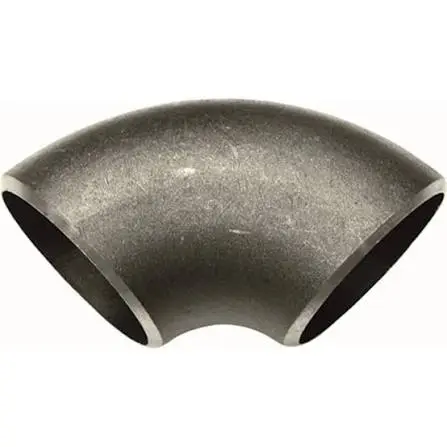
Verify and Prepare Before You Install the 45 Degree Buttweld Elbow
Setup can go wrong a lot of the time before the first curve is made. If you carefully check something when you get it, you won't have to spend hours in the field.
Confirm the 45 Degree Buttweld Elbow Before Installation
The 45 Degree Buttweld Elbow should be compared to the project plans, the pipe that is connected to it, and the instructions that were given. Verify that the nominal pipe size (NPS), schedule (wall thickness), outside diameter (OD), bend angle (45°), and center-to-end dimension conform strictly to the piping isometric drawing. Parts for welded buttwelding that are made in a workshop are talked about in ASME B16.9. When you buy it, a standard 45 Degree Buttweld Elbow is typically supplied with a long-radius geometry based on a 1.5D centerline radius. A short-radius 45 Degree Buttweld Elbow is not commonly available, so make sure engineers agree to any requests for them first. Next, read the mill test document, the heat number, and the material grade. Check them out against ASTM A234 for carbon and alloy steel or ASTM A403 for austenitic stainless steel. When the project needs it, ask for EN 10204 3.1 certification.
Prepare the Pipeline and Work Area
Look at the approved P&ID, the isometric drawing, and the spool drawing to make sure you understand the space needs, direction, orientation, and supports. On the pipe ends and elbow bevels, look for cracks, damage, rust, oil, and water. ASME B16.25 specifies a typical root face of 1.6 mm ± 0.8 mm and a bevel angle of 37.5° ± 2.5° for the applicable standard weld-end preparation. True-to-form calipers, micrometers, and ultrasound thickness gauges should be used to measure. Grounding, airflow, a fire watch, hot work permits, and safety gear should all be set up. Get the old line that you want to cut empty and drained. Also, make sure it is safe to do so. Cover the open ends of the pipe with something to keep dirt and other things out.
Choose the Right 45 Degree Buttweld Elbow for the Application
The path, the code, the fluid, the pressure, the temperature, the risk of rust, and the temperature will help you choose the right fitting. For high-velocity or high-viscosity fluid services, a 45-degree buttweld elbow is far superior to an abrupt 90-degree turn because its gradual arc significantly minimizes localized turbulence, friction, and pressure drop. Two 45-degree butt-weld elbows and a 90-degree elbow are not directly connected because the plan and center-to-end measurements are not the same. It is clear that socket-weld or threaded connections are not as good as butt-welded joints for long-term lines that are exposed to high temperatures and pressures. The fitting material should be selected as carbon steel, 304/304L, or 316/316L in this case. Find out what kinds of checks can be done, how much they cost, how important the service is, and how big the butt welded 45 pipe elbow is. That way, your plan and grade will stay separate.
Align, Fit Up, and Weld the 45 Degree Buttweld Elbow
A sound fit comes before a sound weld. It takes more work to move things around too quickly.
Align and Fit Up the Joint Without Force
You need to set up the 45 Degree Buttweld Elbow and pipeline by yourself. To hide a mistake in the size of a joint, don't push it into place. This could cause stress, movement, and then leaks. The drawings and the approved welding procedure specification (WPS) explain how to set the centerline, angle, root gap, and internal misalignment. Before you join them, mark the line in the middle on both pieces. Large parts should be aligned with laser tools, clamps, or stands. Clean and inspect the tack welds to ensure they are fully fused and free of cracks. Maintain rigid mechanical clamping during fit-up, as subsequent welding heat input can cause angular distortion and misalignment. In pre-fab shops, the spools fit together easily as long as the center-to-face lengths are right.
Follow a Qualified 45 Degree Buttweld Elbow Welding Procedure
ASME Section IX provides requirements for qualifying welding procedures and welders, while the applicable construction code requires qualified welders to follow an approved WPS supported by the required qualification records. It shows the filler metal, the temperature before welding, the temperature during welding, the amount of heat used, and any heat treatment that needs to be done after welding. Most of the time, GTAW is the best choice for the root pass. SMAW, GMAW, or FCAW can usually fill and cap the joint. Each welder should know how to do the job and know what to do. Before you start the next pass, clean and check the last one. Be on the lookout for undercut, cracks, lack of fusion, incomplete penetration, and slag inclusions. With a 37.5-degree bevel, you can make a clean V-groove that helps full-penetration welds stay even.
Protect Materials and Control Heat During Welding
The care of the parts affects how well the weld works. Grinder wheels and brushes made of carbon steel shouldn't be used on stainless steel because the iron can rust on it. When it says to, after welding, take off the heat tint and passivate. Do not let steel elbows get wet. Cover them and keep them off the ground. A factory finish, such as galvanizing, black paint, varnish, or epoxy, keeps fittings safe while they are being moved and stored. Read the package and follow the directions to keep low-hydrogen electrodes dry. The features can stay in the WPS range and not bend if you control the amount of heat that comes in. People who work with steel should give you written permission before you change the grade from 304 to 316 or any other grade. And if you don't, the steel won't meet building codes as well or fight rust as well.
Inspect and Test the Installed 45 Degree Buttweld Elbow
The check showed that the joint meets the requirements. Plan it ahead of time, not after the first weld.
Check the Weld and Dimensions Visually
First, you should read it. Check for cracks, holes, undercuts, arc hits, too much support, and weld profiles that aren't even. You can use a weld gauge to find out how much reinforcement and misalignment there is. Then, compare the finished angle, center-to-end lengths, orientation, and alignment to the isometric. Make sure the supports are in the right place and don't load the arm by accident. As the rule says, use an ultrasound scale to find out how thick the wall is. Write down everything you see on the review sheet. In the event that the contract says so, add an owner witness point. Now is a better time to find a flaw than when the machine is going, protected, or under pressure for the 45 Degree Buttweld Elbow.
Select the Right NDT Method
Each joint needs a certain amount of nondestructive testing (NDT). This is set by the code and the service. For the test, follow the steps in ASME B31.3 that depend on the type of fluid service. Look at the line class first. Liquid penetrant testing can reveal surface-breaking flaws on stainless steel. Magnetic particle testing can be used to detect surface and near-surface discontinuities in ferromagnetic carbon steel. Internal discontinuities, such as porosity and lack of fusion, can be examined by radiographic testing. Ultrasonic testing can measure wall thickness and detect internal discontinuities. You won't have to test the full-penetration weld as often if you get it ready well. This is because it's easier to check on a clean, straight edge. The team can plan how to do the work and when to do it once the methods have been chosen.
Pressure Test and Document the Results
Tests that use water to show that something doesn't leak are used these days. Checking process lines is what ASME B31.3 tells us to do. Make sure that high spots let air out and that the pressure stays the same for the given amount of time. There should be more rules, a study of the risks, and places where gas tests aren't allowed. Make sure the stainless steel systems are dry and drained after the tests are over. Also, take down any temporary covers. You should have a good document that has all of your material certificates, welding records, NDT reports, pressure test results, and details on how the materials were made. Most of the time, public projects and bid packages need these records. The owners use them for cleanup and reports after the work is done.
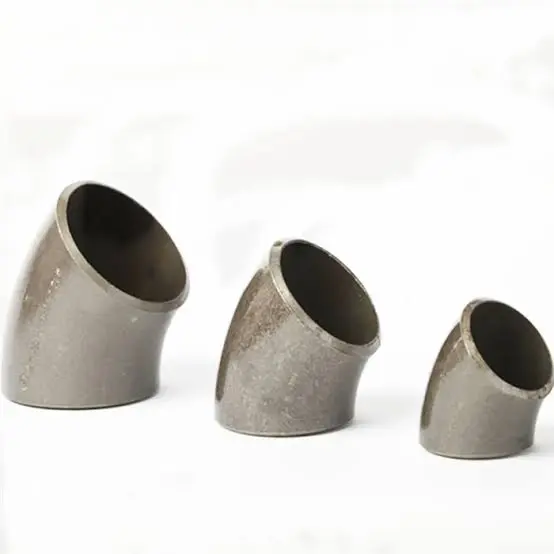
Prevent Failures and Choose a Qualified 45 Degree Buttweld Elbow Supplier
Welding defects in the field do not always stem from poor welder technique; improper procurement and dimensional mismatches are equally common culprits.
Prevent Common Installation Failures
It's very hard to work in the field when material is in the wrong order. Before you buy, make sure you know the rule, size, plan, radius, angle, wall thickness, tolerances, and type of bevel. They are not the same, so the applicable project or purchase specification should identify which dimensional standard governs the fitting. Never attempt to field-cut a 45-degree elbow from a standard 90-degree elbow. Field cutting destroys the factory-machined 37.5° bevel, alters the standardized center-to-end geometry, and instantly voids the manufacturer's ASME B16.9 certification and pressure rating. Also, this could mean that the guarantee and the maker's approval of the pressure rating are useless. Verify that the supports can stand up to shaking, water hammer, temperature changes, and loads that shift over time. Make sure the engineering and building teams all use the same copy of the drawing. Make sure the items aren't broken when they get there and report it right away.
Evaluate a 45 Degree Buttweld Elbow Supplier Beyond Unit Price
It doesn't matter how cheap something is if it doesn't work or does not come with the right paperwork. How well does the company make things? How well do they keep track of materials and measurements? Will they let someone else check their work? An MTC, an inspection report, an NDT record, models, and a trip ID are all things you need. You should think about how much the whole package is worth when you compare prices. This should include shipping, wait time, a guarantee, expert help, and certification. This is what US sellers need to make sure they can keep up their sales and profit rates. If an order is late or doesn't come at all, shelves are left empty. Make sure you have the right papers if you want to buy an EPC or a public project. Check the list of papers before you place your order. Get a sample or a small test order from a new source before you buy from them all the way.
How JS FITTINGS Supports Installation Quality
If you want to buy pipe fittings in Hebei, China, you can go to JS FITTINGS. They've been making and sending them to other countries since 1983. As part of our ISO 9001 quality management system, we use tools to look at spectra and find problems. There are more than 7,000 square meters of space in our plant. For our butt weld elbows, we use ASME B16.9 dimensions and ASME B16.25 bevels, as well as applicable material standards such as ASTM A234, ASTM A403, and MSS SP-75. When you make something with a mandrel, the wall width stays the same all the way around the circle. We have what you need in SCH 10, SCH 40, and SCH 80 sizes, ranging from 1/2 inch to 48 inches long. We also do OEM work and other jobs. We usually get things done on time, and if you have a question, we answer it within an hour.
45 Degree Buttweld Elbow Installation Checklist
Teams must follow a list from the time they get the review until they turn it in. There should be three checks.
Before Installation
Check the size, heat number, radius, angle, standard, and material on each 45 Degree Buttweld Elbow tag. Then, compare these details to the order and the plans. There should be a match between the MTC number and the heat number. Make sure you have the WPS, the safety permit, the welder's license, and the tools that are set up correctly. Check the bevels for holes or other damage, and make sure the caps stay on until the parts are put together. Don't take the parts out of the boxes until the crew needs them. Take a picture of the marks just in case. Before they get to the pipe rack, where these checks can find them, they can still be fixed for a small fee. You need to write to the supplier right away if something is wrong.
During Fit-Up and Welding
Make sure the root gap, hi-low, center, and orientation are all correct before you tack. First, look at how good the tack weld is. Next, use a measuring tool to look at the temperatures during the warm-up and the pass. Clean up and record each pass against the WPS after each one. When you bond, keep the area out of the rain and wind in order to protect it. After doing the steps, let the joint cool down. Take off the heat tint and passivate the stainless steel, among other things, after the weld. The NDT team will be able to perform the required examinations after the weld has been properly prepared. Put the welder's ID on a tag or stamp. If the fit-up needs force, don't work on it. Call the engineers instead.
Final Inspection and Handover
Check to see if the measurements, quality that can be seen, NDT data, and pressure tests all match what the project needs. Make sure that the supports, coats, insulation, and servicing access are all in good shape. The steps below will show you how to complete the final inspection and handover. For the final quality file, you should get certificates for the materials, records of the welding, inspection reports, pressure test results, and information on how the materials were made. Before you cover it and turn it on, get the owner or auditor to sign off on it. A clean file keeps the program safe and gives the plant owner a record in case of an audit. This makes it cheaper to own and less dangerous to maintain. There should be an easy way for the owner's team to get to the digital copies.
Conclusion
There are a number of steps that must be taken before welding and afterward in order to properly place a 45 Degree Buttweld Elbow. If you check the size, timeline, material, standard, radius, and certificates, you can avoid making mistakes. Flaws in the weld and stress buildup are less likely to happen when there are clean 37.5-degree bevels, natural alignment, and a valid WPS. A safe pressure test and an eye check both show that the joint is strong enough to handle working conditions. The system doesn't break down in ways that could have been avoided if the right grade is chosen, classes aren't switched (like 316 for 304 without permission), and things are kept in their proper places. With an MTC and test record file, it is easier to keep things up to date, check them, and keep track of them. These critical project milestones are readily achieved by partnering with an experienced manufacturer that delivers fully traceable test records, EN 10204 3.1 MTRs, and certified quality documentation.When you do these steps, the joint won't leak, will last a long time, and will cost and risk less.
FAQ
1. What is the main benefit of a 45 degree buttweld elbow?
The main advantage of a 45 Degree Buttweld Elbow is that the flow direction changes more slowly, so it leads to less friction, turbulence, and pressure loss than a 90-degree curve.
2. Should I choose a long-radius or short-radius elbow?
Select the required bend radius and angle according to the project specification. ASME B16.9 covers dimensional requirements for both long-radius and short-radius elbows, while the bend angle is specified separately. The customer needs to make sure that any short-radius version is suitable for the application.
3. How do I choose between seam-free and welded-seam elbows?
Choose the service based on how important it is, how big it is, what it checks, and how much it costs. Depending on the service, specification, and applicable material standard, fittings for important high-pressure lines may require seamless construction or additional inspection and testing.
4. Which documents should come with the fitting?
It is important to get an EN 10204 3.1 mill test certificate to make sure the product meets the requirements for chemistry, mechanical properties, and heat treatment.
5. Can I replace 304 with 316?
Material substitution requires formal engineering approval from the piping designer. While 316/316L contains molybdenum for enhanced chloride pitting resistance, substituting grades without verifying corrosion compatibility, welding procedures, and design code stress tables can introduce unexpected regulatory or operational risks.
6. What measurements should I take on arrival?
Check the outside diameter, wall thickness, length from center to end, angle, and center-to-end length against ASME B16.9. Also, measure the bevel and root face against the applicable ASME B16.25 requirements.
Request a 45 Degree Buttweld Elbow Selection and Quotation
What I'm looking for is a 45 Degree Buttweld Elbow. To find out more, email admin@jsfittings.com with your nominal size, material grade, schedule, radius, standard, quantity, destination, and certification scope. We can also take samples and small-batch trial orders and help you export. You can also get it straight from the plant. Our team members answer questions every hour.
References
1. ASME B16.9 Factory-Made Wrought Buttwelding Fittings, 2022
2. ASME B16.25 Buttwelding Ends, 2017
3. ASME B31.3 Process Piping, 2022
4. ASME Boiler and Pressure Vessel Code, Section IX: Welding, Brazing, and Fusing Qualifications, 2023
5. ASTM A234/A234M Standard Specification for Piping Fittings of Wrought Carbon Steel and Alloy Steel for Moderate and High Temperature Service, 2019
6. EN 10204 Metallic Products: Types of Inspection Documents, 2004: Markdown 模板(含 H2/H3 标题和 References)
Send Inquiry
You may like