
90 degree buttweld elbow: Sizes, Types, and Applications






2026-10-21 15:27:30
A 90 degree buttweld elbow is a steel pipe fitting, hot-pressed or forged, to redirect the flow of fluid at a straight angle inside an industrial piping system. The beveled ends are welded directly to matching pipes using circumferential butt welds. When properly designed, fitted, and welded, the joint provides a permanent connection with high structural integrity and a low risk of leakage. These fittings are commonly manufactured in accordance with ASME B16.9, with material specifications such as ASTM A234/A234M for carbon and alloy steel and ASTM A403/A403M for wrought stainless steel. Available sizes and wall thicknesses depend on the applicable standard and product range. They are used in oil and gas, petrochemical, power generation, and infrastructure industries.
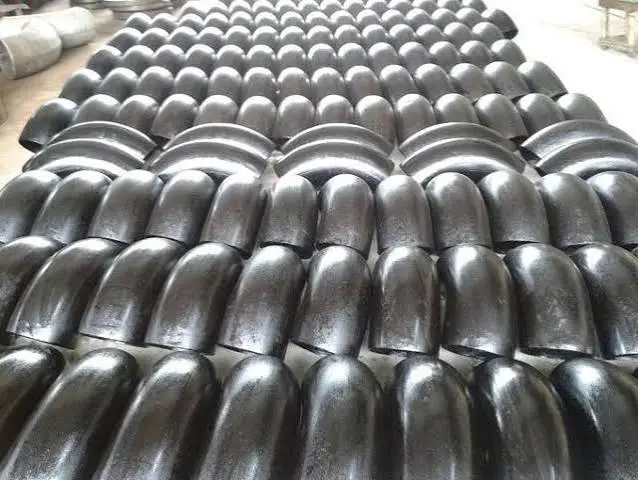
Understanding 90 Degree Buttweld Elbows: Definition, Specifications, and Standards
What Makes a Buttweld Connection Different?
A buttweld elbow differs from a threaded or socket-weld elbow because its beveled end is joined directly to the pipe by a butt weld, forming a continuous welded connection. Pressure fluctuations can contribute to fatigue or other forms of damage if a piping system is not properly designed for its operating conditions. Buttweld connections are commonly used by EPC contractors and industrial project owners when major service lines require reliable pressure integrity.
Key Dimensional Specifications
Procurement teams require precise dimensional data to eliminate costly fit-up errors during spool pre-fabrication. This list will help you quickly find standard sizes:
| Nominal Pipe Size (NPS) | OD (inches) | Center-to-Face LR (inches) | Center-to-Face SR (inches) |
|---|---|---|---|
| 1/2" | 0.840 | 1.50 | 1.00 |
| 2" | 2.375 | 3.00 | 2.00 |
| 6" | 6.625 | 9.00 | 6.00 |
| 12" | 12.750 | 18.00 | 12.00 |
| 24" | 24.000 | 36.00 | 24.00 |
The appropriate wall thickness depends on the pipe schedule, design pressure, temperature, and applicable material requirements. The elbow and adjoining pipe should have compatible dimensions and wall thicknesses to minimize internal bore mismatch, which can contribute to turbulence and localized erosion under certain operating conditions.
Governing Standards and Compliance
Contracts require industrial customers to use ASME B16.9 for factory-made wrought buttwelding fittings and ASTM A234 or ASTM A403 for carbon or alloy steels. It is not a matter of choice. MSS SP-75 pertains to fittings for high-strength and low-alloy pipelines. To support multinational engineering projects, JS FITTINGS also manufactures fittings conforming to DIN 2605 (EN 10253-2) and JIS B2312.
Types and Material Options of 90 Degree Butt-Weld Elbows
Long Radius vs. Short Radius Elbows
The two main versions have different middle radii. For a Long Radius (LR) elbow, the centerline curvature radius equals 1.5 times the nominal pipe size (1.5D). This gradual arc allows fluid to transition smoothly, minimizing localized turbulence, pressure loss, and extrados erosion. Most of the time, LR elbows are used to connect pumps, deck drains, and any other line where saving flow is important.
A butt weld 90-degree elbow with a Short Radius (SR) has a curvature radius equal to the nominal pipe size (1.0D). When there isn't enough room for LR installation, engineers only ask for SR elbows. This is because a tighter turn increases the chance of friction loss and erosion in service with high speed or particles.
Seamless vs. Welded Manufacturing
Seamless elbows are made from a single piece of metal that doesn't have any seams running through it. They have a uniform grain structure that can handle changes in temperature and pressure without the weld seams wearing out. As long as you follow these rules, you can use high-pressure and superheated steam safely.
A welded (seam) elbow is made from a plate or a strip and is joined along one length. They are less expensive in utility lines with moderate pressure because the lower cost at first makes up for the slightly lower resistance to wear. If you change one for the other without making any changes to the project plan, you might not be following the rules.
Material Selection by Service Environment
Getting the right type of material will determine how much it costs and how often it needs to be replaced over time. You can start with the table below:
Pipes for business, water, and oil are made of carbon steel (ASTM A234 WPB). Steel called stainless steel (ASTM A403 WP304/316) is used in marine, food-grade, and acidic media.
| Material | Grade | Recommended Service |
|---|---|---|
| Carbon Steel | ASTM A234 WPB | General industrial, water, oil pipelines |
| Stainless Steel | ASTM A403 WP304/316 | Corrosive media, food-grade, marine |
| Alloy Steel | ASTM A234 WP11/WP22 | High-temperature steam, refinery process |
Applications and Installation Guidelines
Where 90 Degree Pipe Elbows Are Used
The joint strength of these is the best of any standard fittings that can change the flow at a right angle. They're used in almost every process business. Some of the most important ways to use it are:
- Oil and gas transmission pipelines: Buttweld joints withstand extreme internal pressure and external soil loading without creating the weak points that threaded connections introduce. Route changes at compressor stations and wellhead manifolds rely on these fittings.
- Superheated steam lines in power plants: Rapid thermal cycling expands and contracts pipe continuously. The uniform weld structure of a seamless LR elbow resists the fatigue cracking that kills socket-weld fittings in this environment.
- Petrochemical process units: Smooth internal bores prevent particulate accumulation and erosion-corrosion when transporting hydrocarbons and corrosive process fluids through cracking and distillation equipment.
There is one rule that applies to all three of these places: joints must never break. That's why butt weld 90 degree elbows are the most common type of joint in pipes that are used for important things.
Installation Best Practices
These parts are important to talk about because they protect the quality of the weld joint during installation. These steps will help you do it right:
- Confirm that the elbow and adjoining pipe have compatible schedules and internal diameters.
- Inspect the bevel ends for damage, burrs, and compliance with the applicable requirements of ASME B16.25.
- Align the pipe and elbow correctly and verify that any internal misalignment is within the applicable project and code tolerances.
- Follow qualified welding procedures (WPS) and applicable welder qualification requirements under ASME Section IX.
- Apply post-weld heat treatment (PWHT) when required by the applicable construction code, material specification, and service conditions.
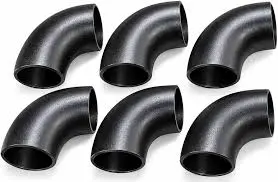
Comparing 90 Degree Buttweld Elbows with Other Elbow Types
Buttweld vs. Threaded vs. Socket Weld
It can be dangerous and cost a lot of money to fix if you choose the wrong type of link. A simple way to compare them is this:
| Parameter | Buttweld | Socket Weld | Threaded |
|---|---|---|---|
| Max pressure rating | Highest (matches pipe) | Moderate | Lowest |
| Leakage risk | Lowest | Low-moderate | Moderate-high |
| Size range | 1/2"–48" | Up to 2" typical | Up to 4" typical |
| Maintenance | Lowest over project life | Periodic inspection | Regular re-sealing |
| Installation cost | Higher initial labor | Moderate | Lowest initial |
Threaded elbows work well for instrumentation and utility lines with low pressure. Socket weld elbows can be used for work with small holes and moderate pressure. If the pipe is bigger than 2 inches or the working pressure is higher than 150 psi in an important service, the butt-weld design costs less over its whole life, even though it takes more work to set up.
Seamless vs. Welded: Balancing Cost Against Risk
The cost difference between seamless and welded 90-degree elbows depends on material grade, size, wall thickness, manufacturing method, and supplier. In high-temperature or high-pressure refinery service, the selection should account for material compatibility, weld integrity, inspection requirements, and operating conditions. For lower-temperature water systems, welded elbows may be a suitable option when permitted by the applicable specifications and design requirements.
Procurement Guide: How to Buy 90 Degree Buttweld Elbows
Ordering Parameters and Customization
If you wish to acquire these fittings, you need to know the standard (ASME B16.9), material grade (such as ASTM A234 WPB), size (NPS), schedule, radius type (LR or SR), and surface treatment. The diameters are from DN15 to DN2000, with surface protection options including black rust-preventive paint, transparent anti-rust varnish, epoxy lining, or hot-dip galvanizing. If you know the length of time you’ll be waiting, you may obtain non-standard sizes and wall thicknesses.
Supplier Qualification Criteria
For business-to-business customers wanting to keep project risk low, pricing is just as crucial as the list of certifications the supplier has. Before you submit large orders, verify the following:
ISO 9001 quality management system certification
- Material test reports (MTR) traceable to ASTM heat no.
- Dimensional inspection reports as per ASME B16.9 tolerances
- PMI (positive material identification) on demand of a third party
- Lead times, logistics, and pricing factors
Before placing an order, confirm that the supplier can provide traceable material test reports, dimensional inspection records, and third-party PMI when required by the project specifications.
Conclusion
A 90-degree butt-weld elbow is an important piping component used to change flow direction in industrial systems. Its material grade, dimensional accuracy, manufacturing quality, and compliance with applicable standards all affect system reliability, operating costs, and service life. Selecting the appropriate elbow for the operating conditions and verifying the supplier's quality documentation can help reduce installation errors and long-term maintenance risks.
FAQ
1. What is the difference between a 90-degree and a 45-degree butt-weld elbow?
A 90-degree elbow turns flow at a perpendicular right angle, making it ideal for compact piping runs and standard equipment headers. A 45-degree elbow redirects flow more gradually, significantly lowering turbulence and friction loss in high-velocity or abrasive slurry lines.
2. How do I select the right material for my service conditions?
For oil, water, and gas service below 800°F, you should use carbon steel (A234 WPB). For clean uses, corrosive media, or places with chlorides, stainless steel (A403 WP316) is the best choice. If you need to work with high temperatures of steam or hydrogen, pick alloy steel (WP11 or WP22).
3. Can JS FITTINGS manufacture custom sizes outside the standard range?
Yes, JS FITTINGS does make fittings from DN15 to DN2000. They can also take orders for unusual wall thicknesses, special metal grades, and custom surface treatments. To get a written quote, send us your 3D drawing and the terms of the service.
4. Is heat treatment included with standard carbon steel elbows?
Yes. Standard A234 WPB carbon steel elbows are normalized, which means they are no longer stressed, after they have been hot-formed. This is done during the manufacturing process to clean up the grains and get rid of any forming strains that are still there.
Get a Certified Quote from JS FITTINGS Today
JS FITTINGS has manufactured pipe fittings since 1983 and ships more than 90 containers per month. The company reports an on-time delivery rate of over 95%. Its product range includes 90 degree buttweld elbows in various sizes and wall thicknesses, subject to availability and applicable specifications. Products can be supplied to relevant ASME, DIN, JIS, and GOST requirements, depending on the product and order specifications. They are also certified by ISO, CE, and GOST-R. Within an hour, a technician will get back to you if you email your specification sheet to admin@jsfittings.com.
References
1. ASME B16.9 – Factory-Made Wrought Buttwelding Fittings, American Society of Mechanical Engineers, 2018.
2. ASTM A234/A234M – Standard Specification for Piping Fittings of Wrought Carbon Steel and Alloy Steel for Moderate and High Temperature Service, ASTM International, 2019.
3. ASTM A403/A403M – Standard Specification for Wrought Austenitic Stainless Steel Piping Fittings, ASTM International, 2021.
4. ASME B16.25 – Butt-Welding Ends, American Society of Mechanical Engineers, 2017.
5. MSS SP-75 – Specification for High-Strength, Wrought Butt-Welding Fittings, Manufacturers Standardization Society, 2019.
6. Nayyar, M. L. – Piping Handbook, 7th Edition, McGraw-Hill, 2000.
Send Inquiry
You may like