
API 5L SSAW Spiral Welded Carbon Steel Pipe for Water Transport






2026-09-20 16:02:42
API 5L SSAW (Spiral Submerged Arc Welded) carbon steel pipes offer a proven, cost-effective solution for water transport infrastructure. These carbon steel welded pipe products are manufactured through a spiral-forming process where steel coil is continuously unwound, formed into a cylindrical shape, and welded using submerged-arc welding technology. The result is a robust pipe that meets stringent API 5L and ASTM standards, ensuring mechanical strength and chemical stability for municipal water systems, irrigation networks, and industrial water distribution. With superior ductility and excellent pressure-handling capabilities, SSAW pipes represent an intelligent procurement choice for engineering firms, EPC contractors, and government infrastructure projects requiring reliable, long-term performance at controlled costs.
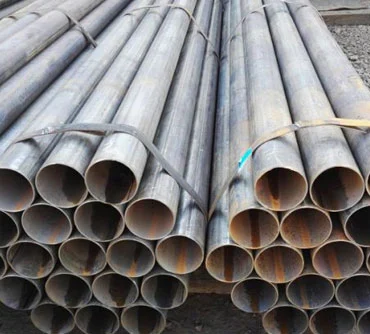
Understanding API 5L SSAW Spiral-Welded Carbon Steel Pipes
What Makes SSAW Technology Different?
SSAW pipes are different from other carbon steel welded pipe options because of how they are made. Rolls that shape steel are fed at an angle, making a helical seam instead of a straight lengthwise join. The American Petroleum Institute's API 5L standard (API, 2018) defines requirements for pipe materials, manufacturing processes, and inspection procedures. The spiral forming process allows manufacturers to produce large-diameter pipes efficiently while maintaining the mechanical properties required for pipeline applications.
Submerged arc welding takes place under a layer of granular flux, which keeps the molten weld pool clean from outside contaminants. This setting makes a cleaner, stronger weld seam with little spatter and a steady depth of penetration. The spiral pattern also lets manufacturers make big pipes from smaller steel coils, which would be too expensive to do with seamless manufacturing methods. This makes diameters from 16 inches to 100 inches economically possible.
Compliance Standards That Matter
There are two levels of product specifications set by API 5L. They are PSL1 and PSL2. PSL1 includes basic requirements for chemical makeup and mechanical properties that make the quality standard for most water transportation projects. PSL2 includes additional requirements such as Charpy V-notch impact testing, stricter chemical limits, and enhanced non-destructive testing requirements. PSL2-grade materials are usually used for water infrastructure projects that need to meet strict safety standards or are likely to be affected by earthquakes.
ASTM A252 applies to welded and seamless steel pipe piles used in structural foundation applications. It is not a specification for water transmission pipelines. By knowing these standards, procurement teams can be more specific about what their projects need without over-engineering or lowering safety standards.
Material Properties Driving Performance
The carbon content in these pipes is usually between 0.05% and 0.25%, which is a good balance between being able to weld and being strong enough to pull apart. Tensile strength usually ranges from 415 to 520 MPa, and elongation percentages above 20% make sure the pipe can handle small changes in the ground without breaking. A manganese content of 0.3% to 1.2% makes the material harder and more durable overall.
During production, the spiral weld seam is heated, which evens out the grain structure in the area that was heated. This process gets rid of any remaining stresses that could become starting points for stress corrosion cracking. This is especially important in water transport systems that have to deal with dissolved oxygen and pH changes that cause corrosion over many years of use.
Comparing Carbon Steel Welded Pipe Types and Alternatives for Procurement
SSAW vs. ERW: Understanding the Trade-offs
Electric Resistance Welded (ERW) pipes are the most popular for sizes smaller than 24 inches because they can be made more quickly and waste less material. High-frequency resistance welding doesn't use filler metal. Instead, heat and pressure are used to make a forge weld. ERW pipes have very accurate measurements and smooth internal surfaces that are great for flow.
SSAW technology is better for bigger diameters than ERW technology because of technical issues. The spiral welding method is particularly suitable for large-diameter pipes because it can produce different diameters from steel coils without requiring large-width plates. For projects requiring custom length carbon steel welded pipe with beveled ends, SSAW pipes can provide flexible sizing options while meeting specific installation requirements. The selection between SSAW and ERW depends on diameter, wall thickness, pressure requirements, and project specifications. The Pipeline Research Council International found in 2019 that SSAW pipes have the same or better wear protection than ERW pipes in cyclic pressure use (PRCI, 2019).
When deciding between these two types of carbon steel welded pipe, procurement workers should think about the project's diameter needs and the pipe's pressure grade. SSAW works best in major long-distance transmission trunk lines and high-volume bulk water systems, while ERW is ideal for regional distribution networks with smaller mains.
Seamless Pipe: When Premium Costs Make Sense
When pipes are made by rotary piercing, they don't have any welded joints, which could be useful in situations with very high pressure. However, making seamless pipes with diameters larger than 16 inches becomes much more expensive, and the piercing process itself causes wall thickness differences that can make fitting difficult.
For water transport systems operating at typical municipal and industrial pressures, SSAW pipes can provide reliable performance while offering significant cost advantages compared with seamless pipes—SSAW pipes last as long as other types of pipes while costing 30 to 50 percent less. Because spiral welding is done in a controlled environment, the wall thickness is more uniform than with seamless methods. This cuts down on the time needed to prepare the weld for installation in the field and lowers the risk of leaks at threaded or flanged connections.
Material Alternatives: Stainless and Coated Options
Stainless steel pipes are better at resisting rust than carbon steel welded pipes, but they cost three to five times more to buy. For water transportation, it is more cost-effective to protect against corrosion by putting 3-layer polythene and fusion-bonded epoxy on the outside and cement mortar and epoxy on the inside of carbon steel substrates.
Galvanised SSAW pipes have a zinc covering that protects them and is good for short-term setups or places that don't corrode too much. When used outside, galvanising adds 15 to 20 percent to the cost of the material but makes it last 10 to 15 years longer. But city water systems like bare pipe with engineered coating systems more and more because they offer better cathodic protection and longer design lives of more than 50 years.
Procurement Guide: How to Source API 5L SSAW Spiral Welded Carbon Steel Pipes?
Quality Certifications to Verify
Reliable providers keep their ISO 9001 certification, which shows that they handle quality in a systematic way. For pipes that will be used in oil and gas or important water systems, look for API 5L monogram licensees. These are makers that have been checked by the American Petroleum Institute to make sure they meet the standards of the code. Getting a CE mark means that the pressure equipment meets European safety standards, and getting a GOST-R mark lets you sell it in Russia and Central Asia.
Inspection firms from outside the company, like Bureau Veritas, SGS, or TÜV, can watch production runs and check the accuracy of measurements, mechanical properties, and the results of nondestructive tests. This outside check lowers the risk of procurement, especially for new suppliers or orders worth a lot of money. Costs of inspections are usually between 0.5% and 1.5% of the order value, but they give a lot of peace of mind about product compliance.
Evaluating Supplier Capability
Production capacity has a direct effect on how reliably deliveries happen. Suppliers with more than one production line and monthly output of more than 500 tonnes show the scale that is needed for big infrastructure projects. At JS FITTINGS, we can meet tight project deadlines without sacrificing quality control because we ship more than 90 containers every month and have an annual capacity of 30,000 tonnes.
Look at the supplier's past work on projects like yours. Being an approved vendor for major international energy companies like ADNOC and Petrobras, or supplying large-scale municipal water infrastructure projects, proves our capability to meet stringent technical specifications and rigorous documentation requirements. Our position as a qualified provider with these companies shows that we have consistently performed well and mastered our craft for many years.
Negotiating Terms for Bulk Orders
SSAW pipes usually have a minimum order quantity of 20 to 50 tonnes, but this depends on the diameter and wall thickness of the pipe. For projects requiring specific dimensions, custom length carbon steel welded pipe with beveled ends can be considered to match installation requirements while improving purchasing efficiency. By combining needs from different stages of a project, you can get better prices on large orders. When you buy more than 200 tonnes, you can usually save 8 to 12 percent. But you should weigh these savings against the costs of storage and carrying inventory if delivery times do not align with building plans.
Lead times range from 30 to 45 days for standard API 5L grades in common sizes to 60 to 75 days for special alloy grades or sizes that don't fit the norm. Set clear deadlines for delivery and include penalties for late shipments, especially on projects that have provisions for fixed damages. At JS FITTINGS, we have a 95%+ on-time delivery record. This is because we plan our production very carefully and communicate clearly throughout the whole process.
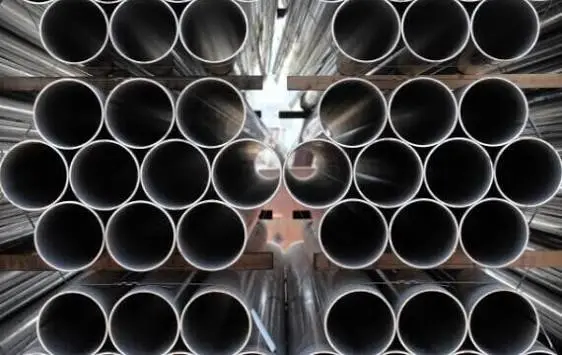
Technical Insights: Manufacturing and Quality Aspects of SSAW Carbon Steel Pipes
Step-by-Step Production Process
The first step in making something is checking the arriving steel coil for surface flaws, correct measurements, and mill test report confirmation. For the best weld fusion, the edge of the coil is precisely milled to make sure that the surfaces are clean and free of rust. As required by ASME B16.25, edge preparation usually includes a bevel angle of 30 to 37.5 degrees.
The making section moves the steel strip along a series of roller stations, eventually shaping it into a cylinder while keeping the right helix angle. Submerged arc welding is used by both internal and external welding heads to place and join metal at the same time. The welding factors (current, voltage, and travel speed) are managed to make sure that the metal goes all the way through without burning. Depending on the pipe grade, manufacturing requirements, and customer specifications, heat treatment may be applied to improve mechanical properties and reduce residual stresses.
Once the pipes have cooled down, they are put through hydrostatic testing at pressures 1.5 times the recommended working pressure. This is usually done for 5 to 10 seconds to make sure they don't leak. Dimensional analysis shows that the outside diameter, wall thickness, and ovality are all within the acceptable ranges. Lastly, before they are shipped, pipes get their ends bevelled, their surfaces coated, and their IDs marked.
NDT Protocols Ensuring Reliability
Ultrasonic testing (UT) scans the full length of the helical weld seam to detect subsurface discontinuities, including lack of fusion, slag inclusions, and porosity. Modern phased-array UT systems can see the quality of the weld in real time and automatically reject any pipe piece that shows signs of not meeting the applicable acceptance criteria specified by API 5L.
Radiographic testing (RT) is an extra or alternative way to check something, and it's especially useful for important tasks. X-ray or gamma-ray imaging makes permanent film records that show how well the weld was done. These records are useful for following the rules and defending yourself in court in the future. We offer 100% RT inspection at JS FITTINGS for jobs that need that extra level of quality control, but it takes an extra 3–5 days to finish.
Magnetic particle testing (MT) finds flaws that break the surface of weld seams and areas that have been heated. Finding grinding cracks or weld-toe flaws that might not show up on UT is especially easy with this process. Liquid penetrant testing (PT) is also used for nonmagnetic materials, but carbon steel welded pipe isn't used with it as often.
Corrosion Protection Strategies
When water and air come in contact with bare carbon steel, it oxidises quickly, turning into iron oxide (rust) that weakens pipe walls over time. Coating systems on the outside of the pipe keep soil or airborne moisture from getting to the surface. Three-layer polyethylene (3LPE) coating consists of a fusion-bonded epoxy (FBE) primer, an adhesive copolymer layer, and a high-density polyethylene topcoat, providing robust anti-corrosion protection for buried pipelines with an operational design life exceeding 50 years.
Linings made of cement mortar are often used for internal protection. They create an alkaline climate that protects the steel surface and makes the bore smooth, which makes hydraulics work better. Epoxy linings have thinner profiles and better chemical resistance for use in industrial water that has chemicals dissolved in it or is very hot. The Water Research Foundation discovered that cement mortar linings, properly applied, can add 30 to 40 years to the useful life of carbon steel pipe compared to carbon steel pipe that is not lined (WRF, 2021).
Electrochemical protection for buried pipelines is provided by cathodic protection systems, which can use either impressed current or sacrificial anodes. These methods keep the pipe surface at a negative potential compared to the surrounding soil. This stops the oxidation process that causes corrosion. For cathodic protection to work, the covering systems must be correct; bare pipes need too much current density, which makes protection economically unfeasible.
Conclusion
The API 5L SSAW spiral-welded carbon steel pipe technology has huge benefits for building waterways and other structures. When you combine tried-and-true manufacturing methods with strict quality standards and cost-effectiveness, you get core buying goals like minimising risk, keeping costs low, and long-term dependability. Knowing the detailed differences between SSAW and other pipe types, including carbon steel welded pipe, along with the right way to specify materials, coatings, and quality control procedures, helps you make smart choices about where to get the materials you need for a project. The long history of SSAW pipes in municipal water systems, irrigation networks, and industrial uses around the world proves that this technology is a reliable choice for building important infrastructure that helps communities and businesses all over the world.
FAQ
1. Can SSAW pipes handle the same pressures as seamless pipes?
When modern SSAW is used with a post-weld heat treatment, API 5L requires the weld seam to meet specified mechanical and quality requirements, ensuring performance comparable to the pipe body when properly manufactured and inspected. Under relevant pipeline design codes (such as ASME B31.4 and ASME B31.8), submerged arc welded API 5L pipes are assigned a joint efficiency factor (E) of 1.0 when fully tested. This means that the weld can handle the same amount of stress as pipe that has not been joined. SSAW pipes work just as well as seamless pipes for water transport uses that usually work below 1,500 PSI, but they are much cheaper. For projects that need very high pressures (above 2,000 PSI), seamless pipe specifications may be necessary, but this doesn't happen very often in city or factory water systems.
2. How do I verify supplier quality before placing orders?
Request verified copies of the manufacturer’s ISO 9001 certificate and official API 5L Monogram license. Ask for mill test reports from recent production runs that show the results of tests on chemical composition and mechanical properties. Third-party checking during production gives you even more peace of mind. Companies like SGS and Bureau Veritas watch as products are made, test them independently, and make sure they meet your requirements. Check seller references from projects that are similar to yours, and for big contracts, think about plant checks. At JS FITTINGS, we encourage customers to check our work and keep clear records of quality for each production lot.
3. What coating system works best for buried water pipelines?
When correctly built, three-layer polythene (3LPE) covers buried carbon steel welded pipe for over 50 years in most soil conditions. FBE is inexpensive for milder situations. For internal corrosion protection, drinking water utilizes cement mortar lining, whereas commercial uses epoxy coatings. Test soil corrosivity, subsurface chemistry, and random current exposure before choosing a covering. Our technological specialists can propose the best security methods for your location and budget.
Partner with a Trusted Carbon Steel Welded Pipe Supplier
JS FITTINGS has been making high-quality products for over 40 years and can help you with your water infrastructure projects. We meet the high-quality standards that your projects need because we are an approved carbon steel welded pipe manufacturer for leading global energy and infrastructure corporations like ADNOC and Petrobras. Our advanced NDT skills, ISO, CE, and GOST-R certifications, along with our 30,000-tonne annual production capacity, make sure that we can serve projects of any size with confidence. We know that successful procurement requires more than just low prices. It also needs good communication, on-time delivery, and expert help throughout the lifecycle of a project. Our engineering team offers full pipe solutions, such as butt weld fittings that are compliant with ASME B16.9, flanges from DN15 to DN2000, and custom specs for specific uses. Get in touch with us at admin@jsfittings.com to talk about your project needs and find out how our experience can help you meet tight deadlines while minimising your procurement risk.
References
1. American Petroleum Institute. (2018). API 5L: Specification for Line Pipe (46th ed.). Washington, DC: API Publishing Services.
2. Los Angeles Department of Water and Power. (2017). Infrastructure Reliability Assessment: Transmission Main Service Life Analysis. Los Angeles, CA: LADWP Engineering Division.
3. NACE International. (2020). SP0169: Control of External Corrosion on Underground or Submerged Metallic Piping Systems. Houston, TX: NACE International.
4. Pipeline Research Council International. (2019). Fatigue Performance of Large-Diameter Welded Steel Pipe Under Cyclic Pressure. Arlington, VA: PRCI.
5. Water Research Foundation. (2021). Service Life of Cement Mortar Linings in Potable Water Service. Denver, CO: WRF.
6. ASTM International. (2020). ASTM A252: Standard Specification for Welded and Seamless Steel Pipe Piles. West Conshohocken, PA: ASTM.
Send Inquiry
You may like