
ASTM A312 vs ASTM A213 Steel Pipe: What Are the Key Differences?






2026-06-29 10:22:59
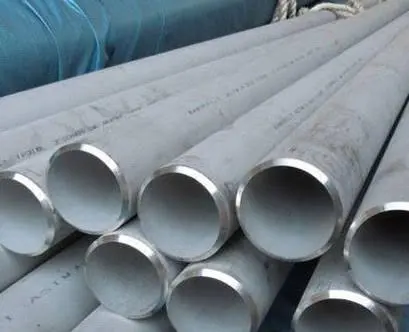
The difference between ASTM A312 and ASTM A213 is important to know for projects that need to explain lines that will be used in hard or hot conditions. A312 stainless steel pipe is made of austenitic steel and can be welded or not welded at all. It's made to work in generally acidic and hot conditions, and you can find it a lot in plants that process chemicals and evaporate water. This is different from ASTM A213, which talks about ferritic and austenitic seamless alloy steel boiler, superheater, and heat exchanger tubes. What they are used for is what makes them different. A312 is for pipes in systems that move fluids, while A213 is for heat exchange and high-pressure boilers where exact size limits are important.
Why This Comparison Matters to Your Project Planning?
Bad things can happen if you pick the wrong measure. A project manager at an oil refinery in the Middle East once said that the plant had to be shut down for six weeks because the caustic soda transfer lines made of A213 tubing instead of A312 pipe failed too soon. They had a system of process pipes, but the temperature was rising too quickly for the A213 tubes to handle.
There are only three main differences that matter for your bottom line:
- When the production method changes, the prices and functions of the goods also change.
- The testing guidelines decide what paperwork needs to be filled out and when projects can be approved.
- Dimensional limits change how much work costs and how reliable a product is over time.
A312 is a better choice if you need lines to move fluids in acidic areas. If you need to put tight limits on the sizes of heat exchangers or boiler tubes, A213 is the best choice.
Understanding ASTM A312 Stainless Steel Pipe Standards
The ASTM A312 standard covers seamless, straight-seam welded, and heavily cold-worked welded austenitic stainless steel pipes intended for high-temperature and general corrosive service.This standard covers pipe sizes NPS 1/8 to NPS 48, which are in schedules 5S to XXS.
Some important technical features are the following:
- There are three ways to make something: cold finishing, hot finishing, and welding.
- Resistance to corrosion: made for chloride-containing conditions up to 300°C
- Based on temperature and grade, ASME B31.3 methods are used to figure out pressure values.
- You can choose to have the surface pickled and passivated, bright annealed, or manually polished.
- Using heat to solution heat at 1040–1120°C, then quick cooling
Test results from outside labs show that TP316L A312 pipes that have been properly solution-annealed have intergranular corrosion resistance that lasts longer than 200 hours in boiling nitric acid tests according to ASTM A262 Practice E. Because of this performance, the product will last for decades in pharmacy and food processing settings.
ASME SA312 pipe is the right material for general piping systems in chemical plants, wastewater treatment plants, or remote platforms because it doesn't rust and can be welded. The standard lets buying teams choose between seamless and welded construction, so they can find the best balance between cost and efficiency.
Exploring ASTM A213 Tubing Specifications
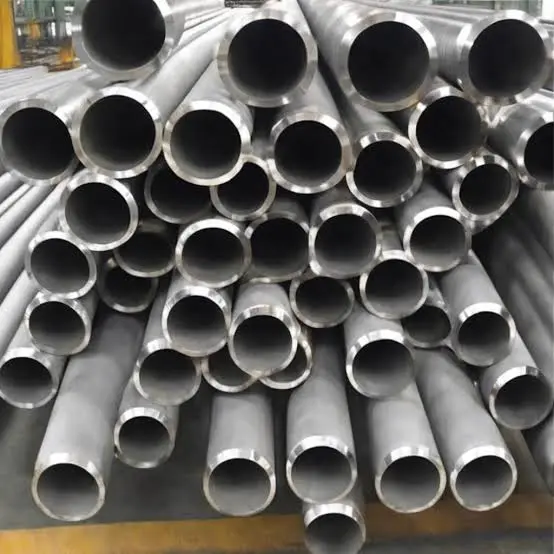
ASTM A213 sets the rules for boiler, superheater, and heat-exchanger tubes made of ferritic and austenitic steel that are smoothly joined together. Unlike A312 stainless steel pipe, this standard stresses more precise measurements and a clean inside surface, both of which are important for heat transfer.
These are some things that make it different:
- Tighter size tolerances: changes in the outside width can only be ±0.5%, while for A312, they can be ±1%.
- Tests that need to be done with an ultrasound or an eddy current: Find flaws below the surface that make it harder for heat to move.
- Tougher standards for the surface: Fouling will not happen if the inside is rough enough.
- The tensile and yield strengths were checked at working temperatures to make sure they would still work well at high temps.
- Extra rules about cleanliness: do not allow rust on the outside or on a large scale inside.
Lab tests show that A213 TP304H tubing's tensile strength stays above 515 MPa at 650°C, while A312 TP304's strength drops above 550°C. It is very important for the economizers and superheaters of boilers to be able to stay stable at high temperatures.
As long as you need parts for heat recovery steam generators, condensers, or high-pressure boilers, A213 tubes can do the job. They can handle high temperatures and exact readings. This grade costs 15-20% more than similar A312 grades, which is fair since stricter controls were used during production.
Manufacturing Process and Quality Control Differences
The production methods and inspection protocols create distinct quality profiles affecting long-term reliability and project risk.
A312 manufacturing characteristics:
- Seamless production via piercing, extrusion, or rotary elongation processes
- Welded construction using TIG or plasma welding with full penetration
- Hydrostatic testing at a minimum of 2.5 times the design pressure
- Visual inspection and dimensional verification per acceptance standards
- Optional PMI testing to verify grade accuracy
A213 manufacturing requirements:
- Exclusively seamless construction via mandrel mill or plug mill processes
- Mandatory nondestructive testing: ultrasonic or eddy current examination
- Hydrostatic or pneumatic testing with stricter pressure hold times
- Enhanced dimensional inspection, including wall thickness variation mapping
- Grain size verification through metallographic examination
Quality audit data from ISO-certified facilities indicate that A213 production rejects average 3-5% due to stricter acceptance criteria compared to 1-2% for A312 products. This difference reflects the critical nature of boiler and heat exchanger applications where failure consequences prove more severe.
If you need the highest reliability for critical pressure-containing applications, A213 tubing with its comprehensive testing provides additional assurance. If you need cost-effective piping for less critical fluid transport, A312 piping with standard inspection protocols offers excellent value while maintaining code compliance.
Application-Specific Performance Characteristics
Real-world operating conditions determine which specification delivers optimal lifecycle value.
A312 stainless steel pipe applications:
- Chemical processing plants: Transporting corrosive acids, alkalis, and organic solvents
- Desalination facilities: Handling high-chloride seawater at elevated temperatures
- Pharmaceutical manufacturing: Meeting stringent cleanliness and traceability requirements
- Food and beverage processing: Maintaining product purity and sanitation standards
- Offshore oil and gas platforms: Resisting saltwater corrosion in exposed conditions
Performance monitoring from a Brazilian ethanol plant shows their TP304L A312 piping system has operated 18 years without corrosion-related failures in dilute sulfuric acid service at 90°C. The pickled and passivated surface finish maintained integrity despite thermal cycling and process upsets.
A213 tubing applications:
- Power generation boilers: Superheater and reheater sections operating above 540°C
- Heat recovery Steam generators: Economizer and evaporator tube bundles
- Petrochemical reformers: Catalyst tubes in hydrogen production units
- Nuclear reactor systems: Steam generator tubing requiring enhanced traceability
- Industrial heat exchangers: Shell-and-tube designs with tight fouling margins
Operational data from coal-fired power plants document that A213 TP347H superheater tubes achieve 200,000+ operating hours before scheduled replacement, whereas standard piping grades would fail within 80,000 hours under identical conditions.
For industrial fluid transport systems, specifying ASTM A312 (or its ASME equivalent, SA312) pipes ensures robust, code-compliant performance at highly competitive costs. If you need components for heat transfer equipment operating under precise thermal conditions, A213 tubing delivers the necessary dimensional control and elevated temperature properties.
Dimensional Standards and Pressure Ratings
Size availability and pressure capacity considerations directly impact system design flexibility and safety margins.
A312 stainless steel pipe dimensions:
- Size range: NPS 1/8 through NPS 48 (DN6 through DN1200)
- Schedule availability: 5S, 10S, 40S, 80S, plus special wall thicknesses
- Length options: Random (6-7m), double random (10-12m), or cut to length
- End preparation: Plain end, beveled for welding, or threaded connections
A213 tubing dimensions:
- Size range: 1/4 inch through 5 inches OD (6 mm through 127 mm)
- Wall thickness: BWG specifications or minimum wall designations
- Length options: Random (6-7m) or specific cut lengths with tighter tolerances
- End preparation: Square cut, beveled, or swaged for mechanical connections
Pressure rating calculations following ASME B31.3 show that Schedule 40S TP316L A312 pipe at NPS 6 provides a working pressure of 19.8 MPa at 100°C, decreasing to 15.2 MPa at 400°C. Equivalent A213 tubing must be individually calculated based on actual measured wall thickness due to tighter tolerance bands.
If you need standardized pipe sizes for plant-wide distribution systems, A312 specifications offer broad availability and established pressure rating tables. If you need custom tube sizes for heat exchanger fabrication, A213 provides dimensional flexibility within its smaller size range.
Cost Analysis and Procurement Considerations
Material selection impacts total project economics beyond the initial purchase price.
Cost factors affecting A312 piping:
- Raw material pricing varies 5-15% based on nickel and molybdenum market fluctuations.
- Seamless products command a 20-30% premium over welded equivalents in identical grades.
- Bright annealed finishes add 15-25% versus pickled and passivated surfaces.
- Dual certification typically increases costs by 8-12% compared to single-grade material.
- Small diameter and heavy wall combinations may require mill minimums.
Cost factors affecting A213 tubing:
- Seamless-only construction eliminates lower-cost welded options
- Enhanced testing requirements add 10-15% to manufacturing costs.
- Tighter dimensional tolerances reduce mill yield, increasing unit prices.
- A limited size range may necessitate custom mill runs for unusual dimensions.
- Elevated temperature testing adds certification costs for H grades.
Procurement analysis from EPC contractors reveals that A312 material delivered to Middle Eastern project sites costs $8-15 per kilogram for TP316L in the Schedule 40S, NPS 4-8 range. Comparable A213 TP316L tubing ranges from $11 to $19 per kilogram due to additional processing and testing requirements.
If you need to control project budgets while maintaining code compliance, selecting welded A312 piping where design conditions permit reduces material costs by 20-25%. If your application justifies premium pricing through enhanced reliability, seamless A213 tubing provides measurable performance advantages.
Heat Treatment and Surface Finish Requirements
Thermal processing and surface condition dramatically dictate the ultimate corrosion resistance and service life of ASTM A312 stainless steel pipes.
Solution annealing protocols:
- All austenitic stainless steel piping and tubing requires solution annealing to achieve optimal corrosion resistance. This process involves heating to 1040-1120°C to dissolve chromium carbides, followed by rapid cooling to prevent carbide precipitation during cooling.
- Testing conducted by materials laboratories confirms that properly solution-annealed TP316L exhibits intergranular corrosion rates below 0.01 mm per year in accelerated tests, compared to 0.8-1.2 mm per year for improperly heat-treated material. This 100-fold difference translates directly to service life expectancy.
Surface finish impact on performance:
- Pickled and passivated: Standard finish providing good corrosion resistance at the lowest cost
- Bright annealed: Mirror-like interior surface reducing bacterial adhesion for sanitary applications
- Mechanically polished: Controlled roughness for specific flow or cleanliness requirements
- Electropolished: Removes surface imperfections, creating an ultra-smooth finish for pharmaceutical use
Comparative testing shows bright annealed surfaces reduce biofilm formation by 85% compared to pickled finishes in potable water systems. This cleanliness advantage justifies the cost premium in food, beverage, and pharmaceutical applications.
If you need piping for general industrial service where moderate surface conditions suffice, pickled and passivated A312 material provides excellent value. If your process demands maximum cleanliness to prevent contamination or facilitate cleaning, bright annealed finishes become cost-effective through reduced maintenance and longer service intervals.
Welding Considerations and Joint Integrity
Field fabrication requirements significantly impact installation costs and long-term reliability.
Welding procedure considerations:
- Low-carbon grades (304L, 316L) weld without post-weld heat treatment up to 6 mm thickness
- Stabilized grades (321, 347) prevent sensitization in thick-wall applications.
- Duplex grades require controlled heat input and may need post-weld solution annealing.
- Filler metal selection matches base metal composition with slight overalloying
- Purge gas protection maintains internal surface corrosion resistance.
Weld quality audits from construction sites show that achieving consistent radiographic quality requires certified welders and rigorous procedure qualification. Projects using dual-certified 316/316L material from experienced suppliers report 30% fewer weld repairs compared to standard single-certified grades.
A312 stainless steel pipe welding advantages:
The specification allows both seamless and welded pipe, providing flexibility in selecting the base material that optimizes fabrication. Welded A312 pipe uses longitudinal or helical seam welds produced under controlled mill conditions, delivering consistent quality that often exceeds field welding capabilities.
If you need extensive field fabrication with limited post-weld heat treatment capability for A312 stainless steel pipe, specifying low-carbon dual-certified grades minimizes sensitization risks. If your project involves primarily prefabricated spool pieces, standard grades with shop heat treatment provide cost savings without compromising integrity.
Conclusion
Selecting between ASTM A312 and ASTM A213 requires careful evaluation of application requirements, dimensional needs, and performance expectations. A312 stainless steel pipe serves general piping systems requiring corrosion resistance and weldability, while A213 tubing addresses heat exchanger and boiler applications demanding precise dimensional control. Understanding these fundamental differences—manufacturing processes, testing requirements, dimensional tolerances, and intended service conditions—enables informed procurement decisions that optimize project costs while maintaining safety and compliance. Partner with experienced suppliers offering comprehensive technical support, quality certifications, and proven reliability to minimize project risks and achieve long-term operational success.
JS FITTINGS: Your Trusted Partner for Premium A312 Stainless Steel Pipe Supply
Partnering with a premier industrial pipe manufacturer directly impacts your project's timeline, budget, and long-term operational success. JS FITTINGS combines 43 years of manufacturing expertise with comprehensive quality systems, delivering dual-certified TP304/304L and TP316/316L piping that exceeds industry standards. Our solution-annealed inventory, spanning NPS 1/8 through NPS 48 in schedules 5S through 80S, ships within days from our 7,000-square-meter facility. With certifications from PETROBRAS, NIOC, and ADNOC, plus a 98% repurchase rate backed by our stringent seven-system quality framework, we minimize your procurement risk while ensuring compliance. Contact admin@jsfittings.com today to discuss your specific A312 stainless steel pipe specifications and receive technical support from our experienced engineering team.
References
1. American Society for Testing and Materials. (2023). ASTM A312/A312M-23: Standard Specification for Seamless, Welded, and Heavily Cold Worked Austenitic Stainless Steel Pipes. West Conshohocken, PA: ASTM International.
2. American Society for Testing and Materials. (2023). ASTM A213/A213M-23: Standard Specification for Seamless Ferritic and Austenitic Alloy-Steel Boiler, Superheater, and Heat-Exchanger Tubes. West Conshohocken, PA: ASTM International.
3. American Society of Mechanical Engineers. (2022). ASME B31.3-2022: Process Piping - Materials, Design, Fabrication, Assembly, Erection, Examination, Inspection, and Testing of Piping. New York: ASME Press.
4. Davis, J.R. (1994). Stainless Steels: ASM Specialty Handbook. Materials Park, OH: ASM International.
5. Gunn, R.N. (1997). Duplex Stainless Steels: Microstructure, Properties and Applications. Cambridge: Woodhead Publishing Limited.
6. Sedriks, A.J. (1996). Corrosion of Stainless Steels, Second Edition. New York: John Wiley & Sons, Inc.
Send Inquiry
Related Industry Knowledge
- What is ASME B16.5: A Guide to ASME B16.5 carbon steel flange
- All About ASTM A105 weld neck flange
- How Are Carbon Steel Forged Steel Flanges Heat Treated?
- How long does A53 ERW Pipe last?
- Internal Burr Removed ASTM A53 ERW Pipe for Precision Applications
- Collaborative Art of Lap Joint Pipe Flange and Stub End
- Carbon Steel Concentric Buttweld Reducer Buying Guide
- What is a plate flange?
- Is a 90 or 45 degree elbow better for drain?
- What is a plate flange used for?