
ASTM A53 ERW vs Seamless Pipe: Strength and Usage Comparison






2026-06-26 10:53:25
When choosing between welded and seamless carbon steel pipes, understanding their fundamental differences becomes essential for project success. The ASTM represents a cost-effective, high-strength solution for a wide range of mechanical and pressure applications, manufactured through electric resistance welding from steel coils. Seamless pipes, produced through hot extrusion, eliminate weld seams entirely but come at a significantly higher cost. Both options meet rigorous industry standards, yet their performance characteristics, pricing, and ideal applications differ markedly—making informed selection critical for minimising project risk while controlling budgets.
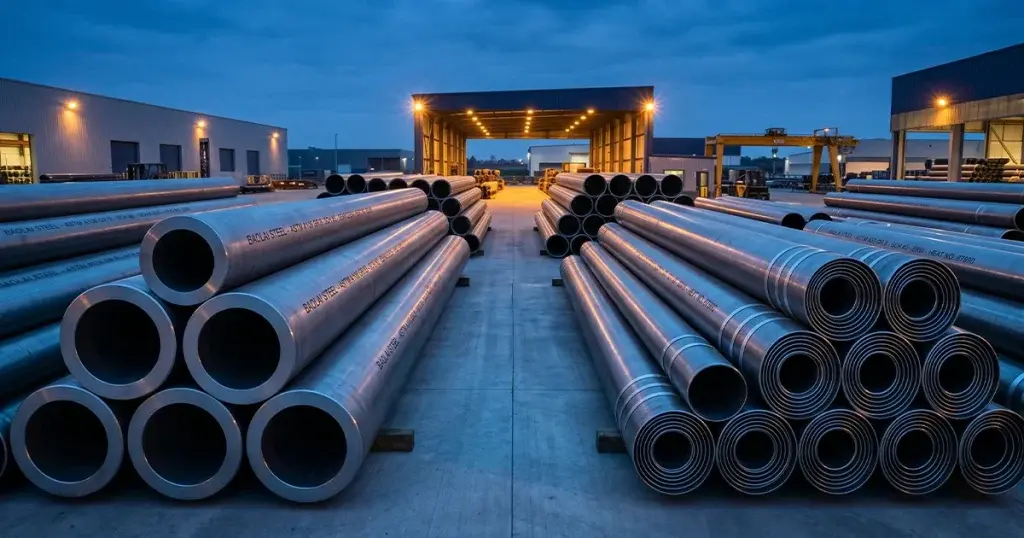
Understanding ASTM A53 ERW and Seamless Pipes
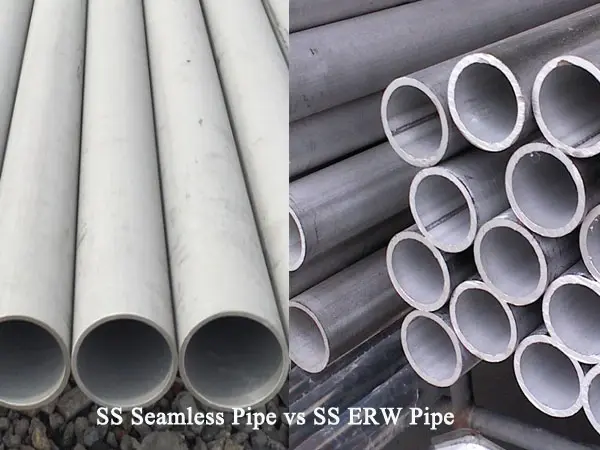
The fundamental difference between these two pipe types lies strictly in their manufacturing processes—a distinction that directly dictates their mechanical performance, operational limits, and overall project costs.
Manufacturing Process of ERW Pipes
With electric resistance welding, ASTM A53 pipes are made by shaping flat steel strips into tube-like forms and then using a high-frequency electric current to melt the sides together. At JS Fittings, we use modern high-frequency induction welding, and then we heat treat the weld seam right away. This method gets rid of any remaining stress in the area that was heated, so the lengthwise weld has the same strength and flexibility as the base metal. The end result is a pipe that is regular, reliable, and very accurate in terms of its dimensions.
Because the factory is controlled, the limits on wall thickness and outer diameter can be smaller than with seamless options. This accuracy directly leads to easier installation on-site, faster fit-up with flanges and fittings, and fewer alignment issues during the building stages.
How are seamless pipes produced?
To make a seamless pipe, a solid steel block is heated to about 2,200°F and then punctured and forced through a mandrel to make a hollow tube. When rotary piercing or extrusion is used, there is no weld joint, so the wall thickness is the same all the way around the pipe. The cost of making things with this method is higher because it needs more energy and special tools.
The lack of a weld seam could be helpful in very high-pressure or high-temperature situations where the stability of the joint might be called into question. Modern ERW technology, on the other hand, has made this performance gap much smaller for most industry uses.
Material Specifications and Chemical Composition
ASTM A53 Grade B pipes have a maximum carbon content of 0.30%, which makes them very flexible and easy to weld. Manganese content usually runs from 0.27% to 1.06%. Manganese makes things stronger and harder and helps remove oxygen during production. Sulphur and phosphorus levels are carefully kept below 0.05% and 0.045%, respectively, so that they don't have too much of an effect on the ability to bond and bend.
Our ASTM A53 ERW pipes come in sizes from 1/2" to 24" (DN15 to DN600), and you can choose from SCH 10, SCH 20, SCH 40, STD, SCH 80, and XS for the wall thickness. You can choose a surface treatment like black lacquer to protect against rust, hot-dip galvanising to prevent corrosion, or FBE/3PE coating for buried service uses. Depending on the needs of the job, end finishes can be plain square cut, bevelled ends per ASME B16.25, or threaded and coupled.
Strength Comparison: ASTM A53 ERW vs Seamless Pipes
When buying teams know the mechanical qualities of each type of pipe, they can match the material's strengths and weaknesses with the project's pressure and stress needs.
Tensile and Yield Strength Analysis
ASTM A53 Grade B pipes, including A53 ERW pipe, have a minimum tensile strength of 60,000 psi and a minimum yield strength of 35,000 psi, which means they can handle the tough mechanical needs of most building projects. When heat-treated correctly, the weld seam in ERW pipes works the same way as the base metal under normal conditions. As part of our production process, we make sure that the weld zone is fully heated to at least 1,000°F. This evens out the substructure and keeps the joint from breaking easily.
When seamless pipes are made to the same standards, they usually have the same tensile and yield strengths. The most important thing that sets these pipes apart is not their numerical strength values, but how well they work in harsh situations like fast temperature changes or stress loads acting in multiple directions.
Pressure Resistance and Testing Protocols
Every piece of ASTM A53 ERW pipe that leaves our plant is tested for 100% hydraulic pressure and must stay under that pressure for at least five seconds without leaking. This quality control step can't be skipped; it makes sure that the pressure-retaining capability works in real-world situations. We also use non-destructive eddy current tests on every weld seam to find flaws or areas that haven't fused properly before shipping.
These rigors tests ensure that ERW pipes don't break even when there are quick increases in pressure, which can happen in power lines, district heating systems, and fire protection networks. These quality assurance steps take care of the main thing that procurement managers care about: getting rid of the chance of failures in the field that cause project delays and safety issues.
Fatigue Tolerance and Weld Integrity
With modern high-frequency induction welding, join lines are highly resistant to fatigue loading. The heat-affected zone undergoes metallurgical refinement that fits the composition of the base metal. This gets rid of the weak spots that some older welding methods used to create. Our pipes go through flattening tests, which are standard destructive tests in which parts of pipes are pressed together between parallel plates until the space between them is equal to two-thirds of their outer diameter. During this test, the weld shouldn't crack, which proves that it is ductile and of good quality.
Seamless pipes don't have any problems with fatigue caused by welds, so they are better for uses where there is steady shaking, high temperature cycles, or corrosive sour gas service. But for most uses with water, steam, air, and natural gas, ERW pipes that are made correctly offer similar fatigue performance at a much lower cost.
Usage and Application Areas in Construction and Industry
To choose the right pipe type, you need to know how each one works in real-life industrial settings and which uses are worth the extra cost of smooth construction.
Low- to Medium-Pressure Applications
Water, steam, and air are all efficiently transported by ASTM A53 ERW pipes in the mechanical, electrical, and plumbing (MEP) systems. Grade B ERW pipes are used a lot in district heating systems, HVAC projects, and fire sprinkler networks because they can handle modest pressure, are reliable, and are cheap. The smooth surface on the inside lowers flow turbulence and the amount of energy needed for pumping, and the finish on the outside makes it easy to add extra coatings.
The high yield strength of Grade B material makes it useful for structural and artistic uses like piling sleeves, fence posts, handrails, and scaffolds. Hot-dipped galvanised types provide important corrosion protection in outdoor settings that are subject to rust and moisture.
High-Pressure and Critical Service Environments
When safety must be the top priority, seamless pipes are the best choice. Upstream oil and gas activities, especially sour gas service that exposes people to hydrogen sulphide, need buildings that are smooth to get rid of any possible weak spots. For important process lines, chemical plants that work with toxic fluids at high temperatures choose seamless pipes.
For high-pressure steam lines with elevated pressures and temperatures, seamless construction is often specified based on project design requirements and applicable codes. When stopping the process could lead to big loses in production or safety risks, the extra cost is worth it.
Midstream and Utility Infrastructure
This shows that ERW lines are most useful in the midstream area. ASTM A53 ERW pipe construction is used a lot for low-pressure gathering lines inside refineries, moving processed fluids, and installing utility pipes for natural gas delivery. For these uses, reliable pressure containment is needed without the harsh conditions that require seamless construction.
For projects that need pipes that are both cost-effective and approved to work well, our pipes, manufactured according to ASTM A53 ERW pipe specifications, are used in water treatment plants, city distribution networks, and industrial cooling systems. Short wait times and the ability to offer different sizes from DN15 to DN600 help keep projects on schedule and keep distributors' inventory costs as low as possible.
Cost, Availability, and Procurement Insights
Budget limits and shipping dates have a big impact on the materials that can be used, so analysing costs and availability is an important part of any procurement plan.
Pricing Dynamics and Value Proposition
When ERW is used to make things more efficiently, unit costs go straight down. Because they are made in a continuous process, use less energy, and waste fewer raw materials, they can be priced 15–30% less than similar seamless pipes. When thousands of feet of pipe are needed for big jobs, this cost benefit becomes very important.
Because they have to be made in a certain way and are thought to work better, seamless pipes are more expensive. The price difference changes depending on the diameter, wall thickness, and market factors, but for non-critical uses, it always supports ERW.
Supply Chain Considerations
Availability and wait times are affected by how much can be made and where it is distributed. China has a lot of ERW production capacity and well-established export routes, so even when demand goes up, there is a steady supply. Our plant in Hebei Province keeps a collection of popular sizes and schedules so that deliveries can be made on time to meet building plans.
It can be harder to find seamless pipes, especially ones with bigger sizes and thicker walls. For seamless construction, lead times are often 8–12 weeks, while for ERW pipes from known sources with enough stock, lead times are only 3–4 weeks.
Procurement Strategy for Project Success
When you buy ASTM A53 ERW pipes in bulk, you can save even more money through volume discounts and be sure that the material will be the same from one part of the job to the next. Working with sellers who have more than one foreign certification, like ISO, CE, and GOST-R, lowers the risk of not following the rules and gets rid of delays caused by problems with paperwork.
As a seller to the National Iranian Oil Company, the Abu Dhabi National Oil Company, and Petrobras, we have shown that we are reliable and consistent with the quality that these large energy businesses need. These certifications give purchasing managers faith that the material will meet the needs and pass review by a third party without needing to be fixed or thrown away.
Making the Right Choice: ASTM A53 ERW vs Seamless Pipe
To find a good balance between technical needs, budget limits, and project deadlines, you need a structured review framework that takes into account the goals of all stakeholders.
Technical Evaluation Criteria
Instead of over-specifying for what you think are safety margins, match the pipe choice to the real working conditions. ASTM A53 ERW pipes that meet ASTM A53 Grade B requirements are suitable for a wide range of moderate-pressure and moderate-temperature services within the limits established by the applicable design code. Weld seams that have been properly heated and treated work reliably in these circumstances, as shown by thorough testing methods.
When engineering requirements say so, or when working conditions include high temperatures, harsh corrosive environments, or stress loading in more than one way, seamless construction is needed. For the extra cost to be worth it, it should be based on real scientific needs, not on old ideas about how reliable welds are.
Debunking Common Misconceptions
The idea that seamless pipes always work better than welded ones is no longer based on truth in industry. When high-frequency induction welding is combined with the right heat treatment, the joints match the qualities of the base metal. Our hydraulic tests, bending tests, and non-destructive examinations all show that the weld is as strong as the pipe material around it.
Another false belief is that ERW pipes can't be shaped or bent. When manufacturers place the longitudinal weld along the neutral axis during forming operations, Grade B ERW pipe can be bent and wound without stress building up at the weld seam.
Decision Framework for Procurement Managers
Procurement managers should carefully evaluate these key questions: Does the project specification strictly mandate seamless construction, or is a high-quality ERW alternative perfectly acceptable? Are there situations that are higher than 400°F or 600 psi? Does the job involve working with sour gas or chemicals that are very corrosive? if the answer to any of these questions is yes, seamless construction might make sense.
When the specs allow for different materials to be used and the working conditions are normal, ERW pipes give the same performance for less money. The money saved can be used for other important projects while still meeting safety and legal requirements. Our technical team can help you choose the right materials and pipes for your project, taking into account both your budget and the needs of the project.
Conclusion
Selecting between ASTM A53 ERW pipe and seamless pipes requires balancing technical performance, cost, and the needs of your individual project. Because they are made with current high-frequency induction welding and the right heat treatment, ERW pipes work well in most industrial settings and are much cheaper than seamless pipes. Their high level of accuracy in measurements, uniform quality, and strict testing procedures meet the main goals of procurement managers, which are to keep costs low and project risks to a minimum. Seamless construction is still good for very high pressure, high temperature, or acidic service, but it's too specific for most water, steam, air, and low-pressure gas uses where ERW pipes are often the more economical choice.
FAQ
1. What is the main difference between ASTM A53 Type E (ERW) and ASTM A106 Grade B?
Electric resistance welding is used to join ASTM A53 Type E, which is made for general to medium pressure and temperature uses. ASTM A106 is only made of smooth steel that is made to withstand high temperatures and pressures. Because A106 is explicitly engineered for high-temperature service, substituting A53 ERW in its place requires rigorous engineering approval based on design codes. Conversely, ASTM A106 seamless pipe can seamlessly substitute for A53 in general applications, provided the project budget accommodates the premium cost.
2. Can ASTM A53 ERW pipes be bent or coiled for construction needs?
Type B ERW pipes can be used for both bending and coiling. For proper manufacturing methods, the longitudinal weld seam must be placed along the neutral axis while the piece is being bent to avoid stress cracking. Professional makers who know how to shape welding pipes can make tight radius turns without damaging the weld.
3. How does post-weld heat treatment affect ERW pipe quality?
To make the microstructure of the weld the same as the parent metal, the joint seam must be heated to at least 1,000°F right after welding. This very important step gets rid of any remaining stresses in the heat-affected zone, which stops the brittle failure. Online heat treatment is an important part of our manufacturing process that makes sure the quality of the welds is the same along all lengths of pipe.
Partner with JS Fittings for Reliable A53 ERW Pipe Supply
Every ASTM A53 ERW pipe that JS Fittings makes is backed by our more than 40 years of production experience. Our factory in Hebei Province uses high-frequency induction welding and heat treatment right away to make sure that the strength and flexibility of the weld seams match the strength and flexibility of the base metal. We keep a large stock of sizes from DN15 to DN600 in plans from SCH10 to XS, so we can keep your projects on schedule with our supply times. We know what quality standards and paperwork procurement managers want because we're a qualified seller to big energy companies like NIOC, ADNOC, and Petrobras. Our ISO, CE, and GOST-R standards take away any worries about compliance, and our non-destructive and 100% hydrostatic testing ensures pressure stability. Email our team at admin@jsfittings.com to talk about the needs of your project and get expert help choosing the best pipe standard. As a premier global manufacturer of industrial piping solutions, we deliver the uncompromising dependability, supply chain stability, and exceptional value that your critical infrastructure projects demand.
References
1. ASTM International. (2020). ASTM A53/A53M-20: Standard Specification for Pipe, Steel, Black and Hot-Dipped, Zinc-Coated, Welded and Seamless. West Conshohocken, PA: ASTM International.
2. American Society of Mechanical Engineers. (2019). ASME B31.3: Process Piping Design and Construction Standards. New York: ASME Press.
3. Davis, J.R. (2006). Metals Handbook: Welding, Brazing, and Soldering. Materials Park, OH: ASM International.
4. Xie, M., & Tian, Z. (2018). Comparative Analysis of ERW and Seamless Steel Pipe Manufacturing Processes and Applications. Journal of Materials Processing Technology, 264, 89-102.
5. Boyer, H.E. (2015). Atlas of Stress-Strain Curves for Carbon and Alloy Steels. Materials Park, OH: ASM International.
6. American Petroleum Institute. (2018). API Specification 5L: Specification for Line Pipe, 46th Edition. Washington, DC: API Publishing Services.
Send Inquiry
Related Industry Knowledge
- ASTM A234 WPB Buttweld Tee Material Properties Overview
- Getting to Know ASTM A53 ERW Pipe: Characteristics & Uses
- What Is The Difference Between Different Grades Of API 5L Seamless Steel Line Pipe In Performance?
- How long does A53 ERW Pipe last?
- Understanding the API 5L Seamless Steel Line Pipe Specification
- FBE Coated Steel Pipe: The Ultimate Guide (Process & Specs)
- Carbon Steel Buttweld Reducer for High-Pressure Pipelines
- What Are the Types of Buttweld Elbows in ASME B16.9 Systems?
- Best Buttweld Elbow Materials for Corrosive Industrial Pipelines
- What are butt weld fittings?