
Butt Weld Pipe Reducer Applications in Oil and Gas Systems






2026-05-19 10:57:46
In oil and gas infrastructure, efficient diameter transitions are non-negotiable. Buttweld reducers serve as the linchpin connecting pipes of differing bore sizes, ensuring pressure stability, optimizing flow rates, and preventing turbulence that can lead to costly downtime. These fittings, manufactured to ASME B16.9 and EN 10253 standards, provide permanent, leak-proof connections crucial for upstream drilling, midstream transportation, and downstream refining operations where safety and compliance drive every decision.
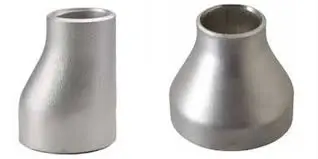
Understanding Buttweld Pipe Reducers in Oil and Gas Systems
What Are Buttweld Pipe Reducers?
In oil and gas networks, pipe diameters change all the time, whether flowlines need to be adapted to wellhead equipment or large trunk lines need to be linked to smaller distribution branches. A buttweld reducer makes this transition through full-penetration butt welding, creating a continuous metal structure. This gets rid of the need for mechanical parts that can leak when pressure or temperature changes. Welded buttweld reducers are better than threaded or flanged ones because they spread stress evenly across the joint. This makes them essential in dangerous situations.
Concentric vs. Eccentric Reducer: Choosing the Right Configuration
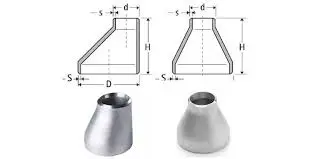
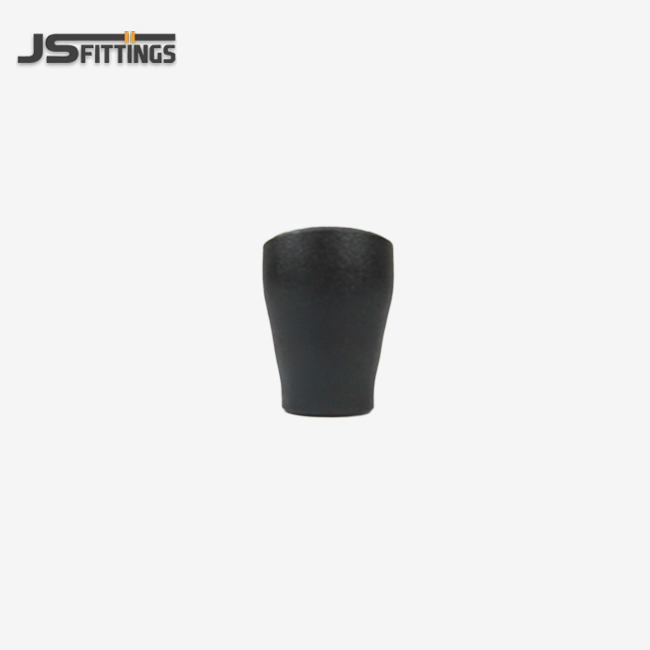
There are two main versions on the market, and each one solves a different hydraulic problem. Concentric reducers line up the centerlines of pipes and keep the flow even. They are perfect for vertical runs in processing columns or connecting pieces of equipment with centered openings. The carbon steel concentric reducer is a typical application of this configuration for low-cost, non-corrosive fluid transport scenarios. This design cuts down on the noise that uneven turbulence can make and works well in situations where the fluid's speed needs to stay the same during the shift. Eccentric reducers move one side of the pipe away from the other, making the top or bottom flat. This shape keeps air from building up in horizontal pump suction lines, which is a very important safety measure to keep impellers in crude transfer stations from getting damaged by cavitation. Keeping the bottom level also makes it easier for water to drain completely during shutdowns, which stops waste from building up and speeding up rust. Which one to choose depends on how the system is set up, the type of fluid (liquid, gas, or multiphase), and whether stopping vapor lock is more important than centerline alignment.
Material Selection: Balancing Strength and Corrosion Resistance
The choice of material has a direct effect on safety margins and lifetime costs. Onshore pipes that carry dry gas or sweet crude are mostly made of carbon steel types like ASTM A234 WPB, which have high tensile strength (at least 240 MPa) and low cost. But because carbon steel is easily damaged by sulfide stress cracking and CO₂ rust, epoxy lining or advanced coating systems (such as FBE or 3PE) must be used to protect it in wet offshore or corrosive service conditions. Stainless steels like ASTM A403 WP316L are better at resisting rust, especially chlorides in underwater uses or acidic condensates in gas processing plants. The molybdenum percentage of 2% to 4% in 316L types makes them less likely to pit, but it costs 3–4 times more than carbon steel. This gap is filled by alloy steel types (A234 WP11, WP22, and WP91), which offer high-temperature stability for steam injection projects or catalytic cracking units that work at temperatures above 450°C. For Arctic pipes or LNG facilities, ASTM A420 WPL6 must be specified because it is tough at low temperatures and won't break easily, even at temperatures below -45°C.
Key Applications of Buttweld Pipe Reducers in Oil and Gas Systems
Flow and Pressure Regulation
As fluids move from the wellbore to the surface equipment, upstream production sites often experience drops in pressure. By adding a buttweld reducer at the flowline opening, operators can increase the size of the pipes further downstream. This lowers the speed of the fluid to avoid erosive wear while keeping the economic flow rates the same. Buttweld reducers step down from high-pressure injection lines to smaller wellbore tubes in gas lift systems. This makes the lift more efficient without sending shock waves that damage finishing equipment. Refineries use buttweld reducers to make sure that the hydraulic resistance of all the parallel processing trains is the same. Engineers make sure that pressure drops are equalized by carefully sizing the changes in width at the inlets of heat exchangers. This stops the favored flow that would starve some units while overloading others. This balancing act has a direct effect on the steadiness of throughput and the uniformity of product quality.
Integration with Valves and Flanged Connections
Usually, pump outflow lines need buttweld reducers to fit smaller valve inlet sizes. This keeps the fluid from pooling in dead zones, which are places where bacteria can grow or wax can build up. The beveled end of the buttweld reducer welds straight to the pipe, and connections to flanged components are typically achieved using separate flanges in accordance with ASME B16.5 allowing direct bolting to valve bodies without the need for additional intermediate fittings. With this combined design, there are fewer joints. Each link that isn't needed cuts down on fugitive emission spots and inspection work. In underwater manifolds, small eccentric buttweld reducers keep the vertical gap low, which lets valve actuators fit into small seabed templates. The flat-side-down position makes sure that the system can self-ventilate while it is under pressure, reducing the need for additional bleed valves that can make ROV assistance methods more difficult.
Onshore vs. Offshore Installation Considerations
Onshore pipeline building lets butt-weld reducer assemblies be made in the field, and welding teams make fit-up changes to account for differences in how the pipeline was built. Because thick-wall carbon steel needs to be preheated to 150°C for parts wider than 25mm, portable induction heating equipment is needed. This makes things more difficult to handle in desert or jungle places that are far away. Offshore spools are made in controlled yards with automatic orbital welding that ensures consistent weld quality, and the flaw rate stays below 2%, as required by ASME Section IX quality standards. Buttweld reducers come already installed in spool pieces and come with corrosion protection and preservation methods that are good for 18 months of storage in tropical regions. This method of pre-assembly shortens the time needed for ocean hook-ups, which lowers the day-rate costs for installation ships that charge more than $500K per day.
How to Choose the Right Buttweld Reducer for Oil and Gas Projects
Evaluating Pressure Ratings and Diameter Ratios
Design pressures determine the wall thickness through ASME B31.3 formulas. As the temperature rises, the allowed stress values drop. A 12" x 8" WPB buttweld reducer that works with 600 psi of gas at 200°C needs walls that are built to Schedule 40 standards. On the other hand, the same shape that works with 1,500 psi of sour crude needs walls that are built to Schedule 80 standards. When the width changes quickly, more than a 3:1 ratio, it causes turbulence in the area, which speeds up erosion and rust unless the flow speed stays below 3 m/s for liquids or 15 m/s for gases. For important changes, project engineers should ask for Computational Fluid Dynamics (CFD) research to make sure that pressure recovery after the buttweld reducer does not lead to cavitation zones. This process is sped up by suppliers who offer pre-validated butt-weld reducer shapes for common service conditions. However, custom fabrications may be needed for fluids that aren't typical, such as supercritical CO₂ or thick bitumen blends.
Material Selection for Operational Environments
NACE MR0175 says that materials must be able to withstand sulfur stress cracking in sour service conditions with more than 50 ppm H₂S. This means that a carbon steel concentric reducer must typically be limited to a maximum hardness of 22 HRC through normalized heat treatment, which means that it needs to meet the requirements of A234 WPB-N. Corrosion-resistant alloys, such as Inconel 625, don't crack, but they are 15–20 times more expensive than carbon steel. This means they should only be used in underwater infrastructure that can't be replaced and where the cost of replacement is much higher than the material price. The type of chloride affects the choice of stainless steel. For saltwater (<20,000 ppm Cl⁻), 316L is enough, but hypersaline brines need 6% molybdenum super-austenitic grades (like AL-6XN) or nickel alloys. In steam-assisted gravity drainage (SAGD) wells, the temperature changes from 300°C for input to 50°C for shutdown. This means that stabilized stainless steels (such as 321H) with stable microstructures are needed to keep the wells from becoming sensitive after repeated thermal cycles.
Custom Fabrication vs. Standard Specifications
Standard catalog items, like 6" x 4" Schedule 40 concentric WPB buttweld reducers, ship within 2 to 4 weeks. However, wait times for custom shapes, like buttweld reducers with different tangent lengths to fit existing pipe layouts, can take up to 8 to 12 weeks. When changing existing infrastructure, it makes financial sense to use custom fabrication, since cutting standard buttweld reducers in the field to odd lengths causes weld flaws and removes material certifications. For projects that need non-standard materials (like titanium Grade 2 for brine service) or non-standard coatings (like internal FBE lining), they should involve manufacturers during the FEED phase. This way, factory samples can be used to confirm process parameters before a purchase order is committed. Early involvement of the seller often shows ways to save money. For example, instead of a special 14" x 9" butt-weld reducer, a standard 14" x 10" unit paired with a 10" x 9" concentric unit can be used, cutting costs in half while still meeting hydraulic needs.
Advantages and Inspection of Buttweld Reducers in Oil and Gas
Mechanical Strength and Joint Integrity
Full-penetration butt welds make joints that are stronger than the parent pipe material. According to ASME Section VIII figures, properly executed welds can achieve joint efficiency approaching 100%. This extra strength is very important during hydraulic transients—for example, when an emergency shutdown valve closes, pressure can rise to two times the design value for a short time. This puts too much stress on threaded connections, pushing them past their breaking point, while welded buttweld reducers take the shock elastically. The one-piece structure gets rid of cracks where fluid can pool and cause rusting by microbes, which is a common problem with threaded connections that collect biofilms. Subsea pipelines benefit the most from this feature, as the smooth interior profile of a buttweld reducer prevents the accumulation of internal marine growth that would otherwise obstruct flow and necessitate expensive pigging operations.
Inspection Techniques and Quality Control
Visual checking can find big flaws like undercuts, holes, or misalignments, but flaws below the surface need non-destructive testing. Using gamma or X-ray sources for radiographic testing (RT) makes film records that can be kept for the lifetime of an asset. However, the exposure times of 15 to 30 minutes per joint slow down building. Real-time defect analysis is possible with phased-array ultrasonic testing (PAUT). Trained workers can find 98% of flaws while inspecting 8–10 joints per hour. Coordinate measuring tools (CMMs) or laser scanning for large-bore fittings are used for dimension verification to ensure concentricity and bevel geometry. According to the Paris crack growth law, fatigue life can be significantly reduced when out-of-roundness exceeds approximately 1.5% of the diameter. This is because it causes stress peaks during pressure cycles. Finding these problems before installation saves $5K to $15K per joint in transportation and downtime costs for work that needs to be redone in the field.
Maintenance Best Practices
In erosive service, like downstream of control valves that slow down high-velocity flows, buttweld reducers need to have their thickness checked with ultrasonic waves every three to five years. This lets you know how much metal is being lost so that you can replace it before they hit the minimum safe thickness. Cathodic protection tests should make sure that underground buttweld reducers keep polarization potentials below -850 mV (CSE reference), which makes sure that the sacrificial anode systems cover the extra surface area at diameter changes. For thermal cycling services, frequent hardness surveys are needed to find creep damage. Readings that are higher than the original values by more than 15% mean that the microstructure is breaking down, which means that metallurgical repeat sampling is needed. Catching creep-induced cracking in its early stages lets you plan downtime for times when demand is low during the season instead of having to shut down during times when production is high.
Procurement Insights for B2B Buyers: Sourcing High-Quality Buttweld Reducers
Global Supplier Landscape
Asian companies make most of the bulk production. They sell buttweld reducers in typical sizes (2" to 12") for $15 to $40 a piece, and the wait time is 6 to 8 weeks.
European suppliers often command a 20–30% price premium over North American counterparts due to tighter manufacturing tolerances (e.g., ±0.5mm concentricity vs. ±1.0mm) and comprehensive material traceability that meets nuclear-grade documentation standards. For urgent replacement needs, premier manufacturers can typically expedite production by up to 10 days, though this usually incurs a 50–70% price premium over standard rates.
Certifications and Compliance Documentation
Multilateral development banks, like the World Bank and the Asian Development Bank (ADB), often require projects to have Social Accountability 8000 approval. This makes sure that suppliers follow fair labor standards. Environmental product declarations (EPDs) that measure embodied carbon help companies meet their net-zero goals. For example, steel made in an electric arc furnace has 30% less CO₂ emission than steel made in a blast furnace. Third-party inspection services, like Intertek, SGS, and TÜV, offer independent confirmation. They charge between $800 and $1,500 per production lot to check the dimensions, test the materials, and look over the paperwork. This oversight raises the cost of buying by 3–5%, but it lowers the rate of rejection in the field from the normal 8–12% to below 2%, which saves a lot of money in inspection fees by avoiding the need for rework.
Cost Optimization Strategies
Standardizing buttweld reducer specs across projects increases buying power and makes it easier to negotiate framework agreements that protect prices and give priority to certain projects when supplies are limited, like when rebuilding after a storm uses up all the manufacturing capacity on the Gulf Coast. Giving producers choices about when to deliver—for example, letting them ship finished sizes as production goes on instead of expecting a single delivery—lowers their working capital needs and lets them get savings of 5–8%. Through inventory consignment programs, sellers take on the cost of storage and keep vendor-managed stock at client sites or regional hubs. Buyers only pay when they take the stuff, which improves cash flow and guarantees a 48-hour supply. These plans work well for workers who are in charge of more than 500 miles of gathering systems and need to get parts right away for emergency repairs.
Conclusion
Selecting the optimal buttweld reducer requires a delicate balance of technical performance, stringent regulatory compliance, and the total cost of ownership over the component's entire lifecycle. It doesn't matter if you're dealing with pump suction needs with eccentric shape or high-temperature creep through alloy steel standards; making smart purchase decisions has a direct effect on the success of the project. Material certifications, exact measurements, and the quality of the production process separate providers who are trustworthy from those who pose secret risks. As oil and gas infrastructure moves toward harsher service conditions like deeper wells, higher H2S concentrations, and longer underwater tiebacks, the safety performance and operating continuity of every welded joint become more important.
FAQ
1. What distinguishes concentric from eccentric reducer applications?
Concentric buttweld reducers work best for connecting vertical pipes and equipment because they keep the axis straight and stop nozzles from being loaded unevenly. They make sure that the flow is evenly spread in pipelines that split fluid streams. Eccentric buttweld reducers are used for horizontal runs that need either full drainage (flat side down gets rid of low points that trap condensation) or air-free pump suction (flat side up stops vapor pockets). In pipe racks that are already full, eccentric shapes also save vertical space.
2. Can buttweld reducers handle high-pressure oil and gas pipelines?
Yes, properly specified butt-weld reducers meet or beat the pressure values of the parent pipe. Carbon or alloy steel walls made to Schedule 160 standards are often used in 10,000 psi situations. The full-penetration weld creates joints that work 95–100% of the time, which means that under overload conditions, failure is more likely to occur in the pipe body rather than in the weld or the reducer. Following the design rules in ASME B31.3 or B31.4 ensures that adequate safety margins are maintained for surge pressures and thermal expansion loads.
3. What are typical lead times for customized reducer orders?
Standard stock sizes (2"-24" on most schedules) ship in two to four weeks. Custom shapes, like non-standard size pairs, special materials like titanium, or unusual coatings, take 8 to 12 weeks to make, which includes material procurement, fabrication, heat treatment, and testing. Schedules are cut down to 4–6 weeks with expedited production, but costs go up by 30–50%. Getting suppliers involved early in the planning process lowers the risk of delays.
Partner with JS FITTINGS for Your Critical Reducer Requirements
Partnering with a dependable buttweld reducer manufacturer allows you to keep your project on schedule and avoid costly supply chain disruptions. Every fitting that JS FITTINGS makes, from standard carbon steel concentric reducers to special alloy steel configurations, is made with over 40 years of experience in the business. Our factory is ISO 9001-certified and only sells certified goods that meet ASME B16.9, EN 10253, and customer-specific standards. All of these goods come with full material traceability and EN 10204 3.1 paperwork. With more than 90 containers shipped every month and an on-time delivery rate of over 95%, we're a qualified seller for big oil companies around the world. Our fast technical team is ready to help you succeed, whether you're an EPC contractor with tight deadlines or a dealer building your stock. Email our engineering experts at admin@jsfittings.com to talk about your particular needs and get a full quote within 24 hours.
References
1. American Society of Mechanical Engineers. (2020). ASME B16.9: Factory-Made Wrought Buttwelding Fittings. New York: ASME Press.
2. American Petroleum Institute. (2019). API RP 571: Damage Mechanisms Affecting Fixed Equipment in the Refining Industry. Washington, DC: API Publishing.
3. Norsok Standard. (2018). M-650: Qualification of Manufacturers of Special Materials. Lysaker, Norway: Standards Norway.
4. Det Norske Veritas. (2021). DNV-RP-F101: Corroded Pipelines – Recommended Practice. Oslo: DNV GL AS.
5. National Association of Corrosion Engineers. (2022). NACE MR0175/ISO 15156: Petroleum and Natural Gas Industries—Materials for Use in H₂S-Containing Environments. Houston: NACE International.
6. Mohitpour, M., Golshan, H., & Murray, A. (2007). Pipeline Design and Construction: A Practical Approach (3rd ed.). New York: ASME Press.
Send Inquiry
Related Industry Knowledge
- How to Inspect Buttweld Elbow Quality Before Installation?
- Sourcing Custom Steel Flange: A Buyer’s Guide to Working with a Manufacturer
- What is the material of A53 ERW Pipe?
- Getting to Know ASTM A53 ERW Pipe: Characteristics & Uses
- What is FBE Coated Steel Pipe?
- ASTM A53 ERW vs Seamless Pipe: Strength and Usage Comparison
- ASTM A105 Carbon Steel Forged Steel Flange Specifications
- Do blind flanges require hydrotesting?
- How to weld carbon steel pipe?
- What causes porosity in carbon steel pipe welding?