
Buttweld Bend Dimensions: LR, SR & Custom Radius Guide






2026-07-03 11:05:15
When choosing pipe parts for industrial projects, it's important to know the exact measurements of buttweld bends to get the best flow performance and system stability. A buttweld bend is a custom-made part that changes the direction of pipes. The bend radius, angle, and wall thickness determine its size. How well fluids move through the system and how well the part handles mechanical stress depend on the radius classification, which can be Long Radius (LR), Short Radius (SR), or special combinations. Having accurate information about sizes helps procurement workers choose fittings that meet project requirements, lower costs over time, and work with current infrastructure in the power generation, petrochemical, and oil and gas industries.
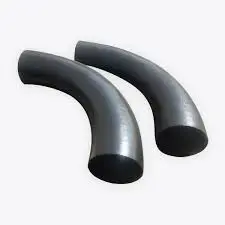
Understanding Buttweld Bend Dimensions: LR, SR & Custom Radius
What Defines a Buttweld Bend?
The bend radius is what makes elbows and bends different from each other. A pipe bend is generally a manufactured fitting with a larger radius than standard elbows. Common bend radii include 3D, 5D, 6D, and 8D designs. On the other hand, fittings with a radius of 1D or 1.5D are called elbows. Short Radius (SR) elbows are 1D, and Long Radius (LR) elbows are 1.5D. This difference in size has a big effect on flow dynamics. For example, bends with a bigger radius reduce noise and pressure drop, which makes them suitable for high-velocity pipeline systems.
Long Radius vs. Short Radius Bends
LR bends make changes in direction easier and decrease flow resistance, which means they use less energy and wear down less over time. They are chosen in situations where keeping the flow rate high is very important, like in long-distance oil and gas pipes. Because they are more tightly curved, SR bends take up less room and are great for setups that are limited in space, but they cause higher pressure drops and more stress on the piping system. Both types are made to meet standards like ASME B16.49 and ASME B16.9, which ensure that the sizes are the same and the structure is strong.
Custom Radius Bends for Complex Requirements
Custom radius bends are used to solve problems that only happen in certain projects where standard LR or SR setups don't work. With the help of isometric models, these bends can be made with radii from 2.5D to 20D and angles from 15° to 180°. Custom solutions allow for complicated routes through crowded areas, like offshore platforms or underwater installations, where reducing the number of weld joints lowers the risk of leaks and the cost of inspections. The induction bending and cold-forming methods make it possible to precisely control the sizes, making sure that they meet the design codes and operating needs of each project.
Key Factors Influencing Buttweld Bend Dimension Selection
There are a lot of interconnected factors that affect both the construction process and the performance in the long run that need to be taken into account when choosing the right bend measurements. The bend radius directly affects how well the hydraulics work. Larger circles lower pressure losses and make it possible for intelligent pigs that are used to check and clean pipelines to pass through. In oil and gas pipeline systems, where regular maintenance is importantfor safety and keeping the system running, this piggability feature is a must.
Wall thickness requirements are also affected by the choice of material. For mild working conditions, carbon steel grades like ASTM A234 WPB and pipes made to API 5L X42 through X80 specifications are strong and easy to weld. For better performance in high-temperature settings, alloy steels like ASTM A234 WP11 and WP22 are better, and stainless steels like ASTM A403 WP304L and WP316L don't rust when used in chemical processing. The material you choose affects how thick the walls need to be, and thicker walls require higher forming loads during the bending process.
Space limitations during installation often determine whether LR or SR turns are possible. Even though they slow down the flow, tighter radius bends may be necessary for machine layouts that aren't very big. On the other hand, bigger radius designs are better for open pipeline routes because they are better for hydraulics. To choose turns that improve system performance without lowering safety or costs, procurement teams have to weigh these factors against project budgets, delivery schedules, and compliance requirements.
Comparing Buttweld Bend Types and Their Dimensional Variations
Buttweld Bends vs. Pipe Elbows
Understanding the differences in terminology helps prevent costly procurement errors. Standard elbow joints are made in large quantities and come in set angles (45° and 90°) and radii (1D or 1.5D). They work well with standard pipe systems that don't need a unique design. Butt-weld bends, on the other hand, are designed parts that are made to exact radius and angle specs, usually by induction heating or mandrel bending. This customisation makes it possible for bends to fit into complicated pipe isometrics without any problems, which cuts down on the number of fittings and weld joints that are needed.
Seamless vs. Welded Bend Manufacturing
Dimensional correctness and pressure values are affected by the way the product is made. Seamless bends are made from extruded or seamless pipe and are commonly produced in sizes from 1/2" to 24" and above, depending on manufacturing capability. They have consistent wall thickness and good mechanical qualities, which means they can be used in high-pressure situations. Longitudinal Submerged Arc Welding (LSAW) or Helical Submerged Arc Welding (HSAW) can be used to make welded turns that can fit widths up to 60 inches. The longitudinal seam weld is placed along the neutral line during bending to avoid too much stress buildup and to make sure the weld keeps its ability to contain pressure.
Performance Comparison Across Industries
In oil and gas pipes, LR turns with radii of 5D or more are common because they make it easier for pigs to pass and reduce erosion. Custom radius bends made of corrosion-resistant materials are often used in petrochemical plants to navigate tight areas while safely containing aggressive chemicals. Power plants use high-temperature metal bends that have been heated after they have been bent to handle supercritical steam conditions that are in supercritical or ultra-supercritical steam conditions (typically above 540°C). For each use, specific size requirements must be carefully considered in relation to the working pressures, temperatures, and fluid properties.
How to Measure and Specify Buttweld Bend Dimensions Correctly for Procurement?
Essential Measurement Parameters
To get accurate dimensions, you must first know the standard pipe size (NPS), the bend radius (which is given as a multiple of the diameter, like 3D or 5D), the bending angle (15°, 30°, 45°, 60°, 90°, or custom), and the wall thickness schedule (SCH 10, SCH 40, SCH 80, or XXS). Tangent lengths, which are the straight parts at each end of the bend, need to be defined so that welding and positioning can be done in the field. Standard tangents are usually one to two times the width of the pipe, but you can ask for different lengths if you need to for your work.
Creating Clear Purchase Orders
Supply chain delays and quality problems are less likely to happen when purchase papers are clear. Your purchase orders should have details about the material grade (API 5L X52, ASTM A234 WPB, ASTM A403 WP316L, etc.); the production standards (ASME B16.49, MSS-SP-75, and SY/T 5257); the end finish (bevelled per ASME B16.25 or taper bored); and any finishing needs (3LPE, FBE, or internal epoxy). To make sure the seller understands, dimension limits for ovality, wall thickness variation, and tangent length should refer to relevant code provisions.
Quality Control and Inspection Protocols
When the buttweld bend is received, it is inspected to ensure it fits within the specified dimensional limits.Out-of-roundness is typically controlled within approximately 3% or less, depending on specification requirements, to make sure that the field fit-up is perfectly aligned. The extrados (outer curve), where stretching during bends leads the wall to thin, is confirmed by ultrasonic testing (UT). Surface cracks can be found with non-destructive tests like magnetic particle inspection (MPI) or liquid penetrant testing (LPT), and weak spots caused by heat can be found with hardness testing. These steps of testing protect against failure before its time and make sure that design rules like ASME B31.3 and B31.8 are followed.
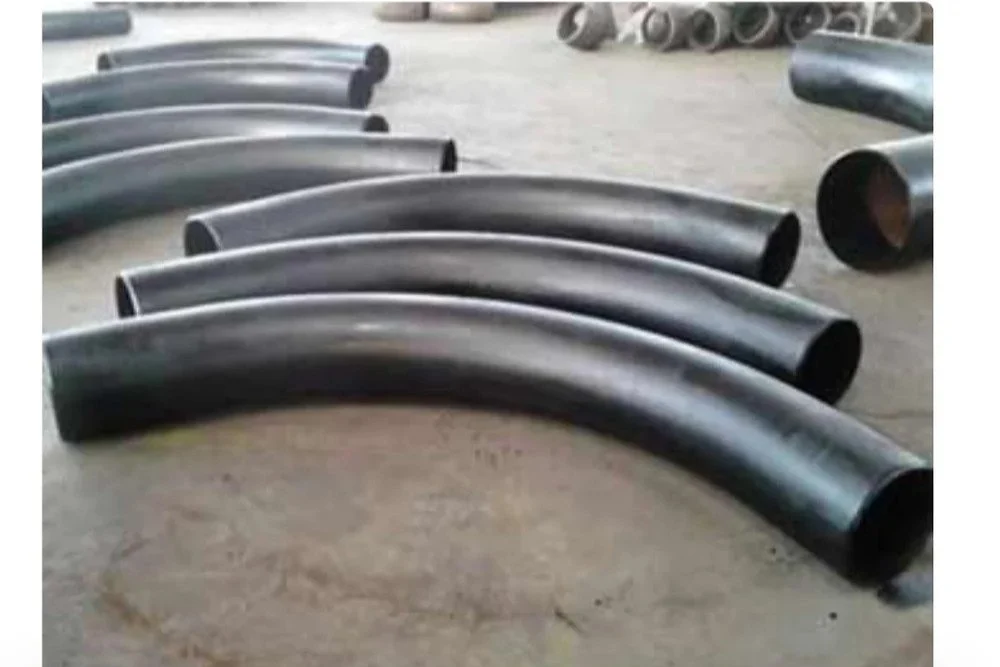
Applications and Industry Use Cases of Buttweld Bends by Dimension Type
Oil and Gas Transmission Pipelines
LR turns with 3D to 5D radii are used in long-distance pipes that move crude oil, natural gas, or refined goods. These layouts let smart pigs move along the line to clean and check the inside, which keeps wax from building up and rust from happening. Smooth internal changes of properly sized bends keep pressure drops to a minimum over thousands of kilometres, which lowers the cost of pumping energy. Offshore subsea pipes use custom-angle turns to get around uneven seabeds and avoid subsea obstacles. They are built with heavy walls that can withstand high water pressures from the outside at great depths.
Petrochemical and Chemical Processing
Chemical companies work with highly pure and corrosive fluids that need to be carefully controlled to avoid contamination. Custom-sized bends made of stainless steel and duplex metal move process streams through small equipment setups without causing too much turbulence. Long radius bends eliminate dead zones, which prevents fluids from stagnating and getting contaminated, which is very important in pharmaceutical and food-grade uses. Coatings like interior liquid epoxy make things even more resistant to chemicals and make them last longer.
Power Generation Facilities
In thermal power plants, where temperatures are higher than 600°C and pressures are higher than supercritical, alloy steel bends are used in superheated steam lines. Post-bend heat treatment (PBHT) repairs the material's grain structure by normalising it or cooling and tempering it. This gets rid of any remaining stresses and stops it from breaking easily. Custom radius bends can fit complicated boiler and turbine shapes, which cuts down on the number of welds that need to be inspected. This level of accuracy in measurements helps the business work well and cuts down on unplanned downtime.
Infrastructure and Municipal Projects
Carbon steel bends made to international standards are needed for government infrastructure projects like water treatment plants and district heating systems. Large diameter bends (DN400 to DN1500) make it easier for fluids to move through urban networks, and coatings like 3PE or FBE protect underground pipes from corrosion. Following the tender specs and minimising lifetime costs are what guide purchasing decisions towards providers who can consistently deliver goods of the right size.
Conclusion
Choosing the right buttweld bend dimensions—whether they are LR, SR, or a custom radius—is a smart choice that has a direct effect on the safety, economy, and long-term costs of running the pipeline. When procurement workers understand how radius, material grade, manufacturing method, and application needs all work together, they can choose parts that meet strict project codes and performance standards. Detailed knowledge of dimensions, strict quality control, and source experience make sure that pipe systems work consistently in tough situations. When industrial projects get more complicated, being able to get perfectly designed bends from experienced manufacturers gives you an edge in finishing projects on time, on budget, and up to the highest safety standards.
FAQ
1. What is the primary difference between a long-radius and short-radius bend?
The difference is in how far the turn is from the pipe's width. Long Radius (LR) turns have a 1.5D central radius, which makes the flow smoother and the pressure drop less. Short Radius (SR) turns have a radius that is only one dimension, which makes them smaller but increases turbulence and flow resistance.
2. How is wall thinning controlled during the bending process?
The outer curve (extrados) gets longer and thinner when it bends. Manufacturers start with a heavier wall thickness plan to make sure that the leftover thickness meets the minimum design standards set by ASME B31.3 or B31.8 after the metal has been bent. When induction bending is done, the temperature and speed are carefully controlled to keep the material from thinning too much.
3. Can buttweld bends accommodate pigging operations?
Yes, long radius bends with 3D or larger radii have smooth internal changes that smart pigs can use to check things out and clean them. Most of the time, short-radius bends and elbows make it impossible for pigs to pass, so they are not good for pipes that need regular repair.
4. Are post-bend heat treatments necessary?
Through localised heating and cooling, induction bending changes the composition of the steel. Post-Bend Heat Treatment (PBHT), like normalising or tempering, makes the material more flexible again, reduces leftover stresses, and ensures that the hardness is constant. This keeps the material from breaking easily in high-stress situations. ASME B16.49 says that high-yield steels must have PBHT.
Partner with JS FITTINGS for Precision Buttweld Bend Solutions
It has been over 40 years since JS FITTINGS has been making high-quality buttweld bends for tough industrial uses. We are a reliable buttweld bend source that offers LR, SR, and custom radius shapes from DN15 to DN1500 that are in line with ASME B16.49, ASME B16.9, and MSS-SP-75 standards. Our precise induction bending method promises controlled wall thinning, minimal ovality, and piggability. It is backed up by full NDT testing and PBHT capabilities. We provide safe, on-time delivery to EPC contractors, wholesalers, and end users. Our products are certified by ISO, CE, GOST-R, NIOC, ADNOC, and Petrobras. Get in touch with admin@jsfittings.com right away for technical advice and quotes that are specifically made for your project.
References
1. American Society of Mechanical Engineers. (2018). ASME B16.49: Factory-Made Wrought Buttwelding Induction Bends for Transportation and Distribution Systems. New York: ASME Press.
2. American Petroleum Institute. (2020). API Specification 5L: Specification for Line Pipe (46th ed.). Washington, DC: API Publishing Services.
3. ASTM International. (2019). ASTM A234 / A234M: Standard Specification for Piping Fittings of Wrought Carbon Steel and Alloy Steel for Moderate and High Temperature Service. West Conshohocken, PA: ASTM International.
4. American Society of Mechanical Engineers. (2020). ASME B31.3: Process Piping. New York: ASME Press.
5. Manufacturers Standardization Society of the Valves and Fittings Industry. (2017). MSS SP-75: Specification for High Test, Wrought, Butt Welding Fittings. Vienna, VA: MSS.
6. European Committee for Standardization. (2016). EN 10253-2: Butt-welding Pipe Fittings — Part 2: Non-alloy and Ferritic Alloy Steels with Specific Inspection Requirements. Brussels: CEN.
Send Inquiry
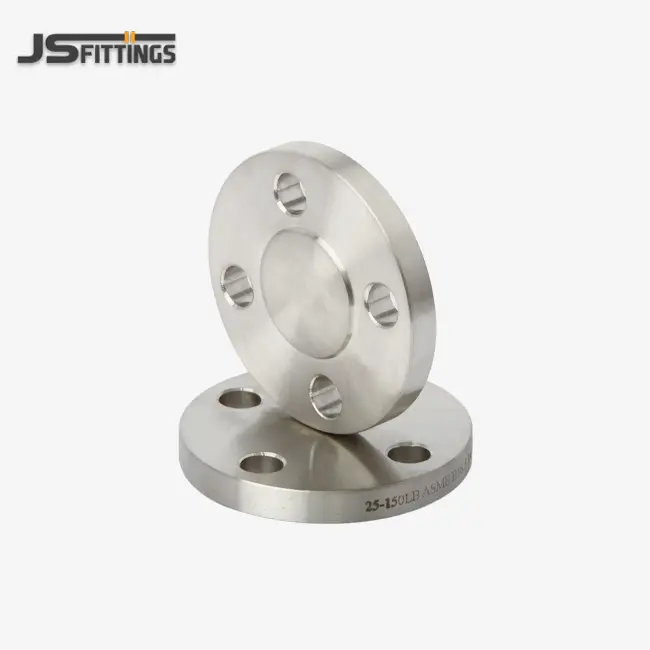
_1775030068227.webp "ASTM A105 Weld Neck Flange")

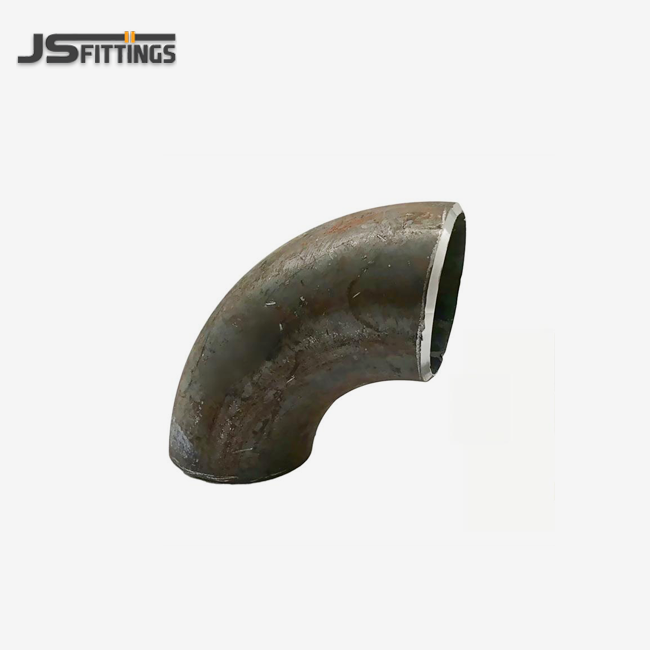
Related Industry Knowledge
- Stainless Steel 316L Buttweld Tee for Offshore Pipelines
- ASTM A105 Weld Neck Flange: Complete Guide
- Buttweld Elbow Dimensions Guide for ASTM A234 WPB Fittings
- CRA Clad Pipe vs Mechanically Lined Pipe: Key Differences Explained
- What is CRA clad pipe?
- Internal Burr Removed ASTM A53 ERW Pipe for Precision Applications
- Collaborative Art of Lap Joint Pipe Flange and Stub End
- Carbon Steel Forged Steel Flange in Oil, Gas & Power Plants
- A105 Carbon Steel Forged Steel Flange for Refinery Piping
- What is a plate flange?