
Buttweld Elbow Dimensions Guide for ASTM A234 WPB Fittings






2026-07-06 10:56:10
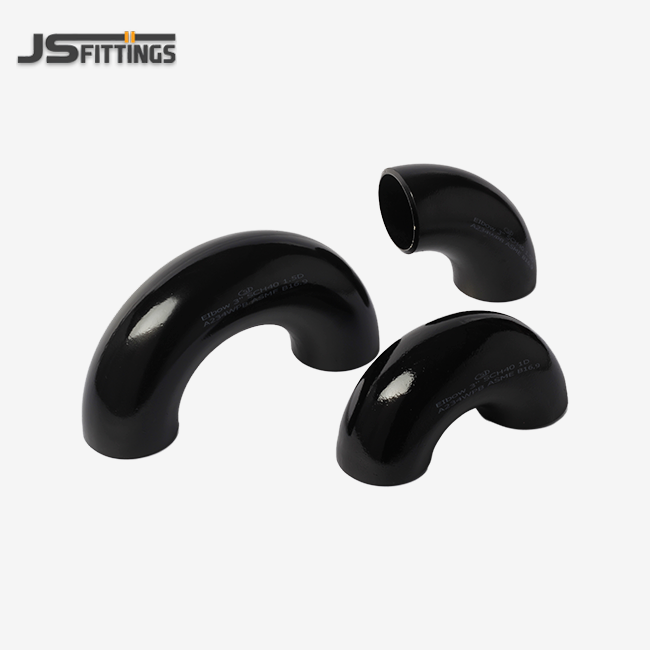
Choosing the right buttweld elbow measurements is a key part of making sure that the pipe system is safe and works properly. ASME B16.9 specifies exact measurements for how ASTM A234 WPB carbon steel elbows should be made, which makes sure they can be used in a wide range of industry settings. These fittings have bevelled ends that allow full-penetration welds. This makes lasting joints that won't leak and can handle temperatures up to 800°F and pressures over 2,000 psi. Understanding measurements like outside diameter, wall thickness schedules, and centre-to-end measurements helps procurement teams lower project risk and make sure they follow safety rules in the oil and gas, chemicals, and power generation industries.
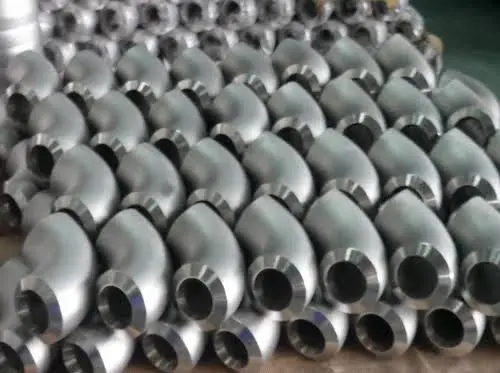
Understanding Buttweld Elbow Dimensions and Specifications
A pipe system's ability to meet design pressures, flow requirements, and long-term dependability goals depends on how accurately its dimensions are measured. When engineers define a carbon steel buttweld elbow, they have to think about a number of measurements that affect both how easy it is to install and how well it works.
Core Dimensional Parameters of ASTM A234 WPB Elbows
The outside diameter (OD) must match the nominal pipe size (NPS) and line up properly with the pipes that join to keep the welding from being out of place. Schedule numbers tell you how thick a wall is. In manufacturing settings, Schedule 40, Schedule 80, and Schedule 160 are the most popular. While thicker walls can handle more pressure, they also cost more and are harder to weld. Different elbow angles and radius types affect the centre-to-end length. For example, 90-degree long radius elbows have a centre-to-face length that is approximately 1.5 times the NPS-based reference, while short radius elbows are approximately 1.0 times the NPS-based reference in standard configurations.
Long radius configurations are better for most systems because they reduce flow turbulence and pressure drop. However, if room is an issue, compact designs should be used instead. The bend radius has a direct effect on how fluids move through it. Smoother bends prevent wear on the inside of the elbow, which increases its useful life in uses with rough slurry or fast-moving gas. Bevelled ends are typically prepared with a 37.5° bevel angle with a 1.6 mm root face (land) to support proper root pass welding without burn-through.
ASTM A234 WPB Material Properties and Ratings
The mechanical strength and weldability of WPB-grade carbon steel are very good at temperatures ranging from -29°C to 427°C. This type of material has a limited amount of carbon (0.30% max.) and manganese (0.29–1.06%), with sulfur limited to 0.058% max and phosphorus to 0.050% max to ensure optimal toughness and prevent embrittlement. Pressure-temperature values depend on the wall schedule. For example, a 4-inch Schedule 40 WPB elbow rated to ASME B31.3 can take about 1,800 PSI at room temperature, but only 1,300 PSI at 400°C because the material loses strength at high temperatures.
Knowing these grades keeps you from over-specifying (which loses money on heavy-wall fittings that aren't needed) or under-specifying (which could cause a catastrophic failure). To make sure they are following the rules, procurement managers should ask for Mill Test Certificates (MTCs) that list the chemical makeup and mechanical qualities of the goods. At JS FITTINGS, we offer 3.1 MTCs that can be tracked back to Tier-1 mills like Baosteel. This gives you full information about where the material came from and how well it works.
Measuring Tools and Verification Methods
Specialised tools are needed for accurate measurement proof. Callipers find the outside diameters and wall widths of things, and radius tools check the bend curve. Check the 37.5-degree angle with a bevel protractor that meets ASME B16.25 standards. Ultrasonic thickness gauges find internal thinning or manufacturing flaws that can't be seen with the naked eye. When the elbow comes in for review, your quality team should measure at least three points around its diameter to look for out-of-roundness issues that could weaken the weld.
Comparing Buttweld Elbow Types and Standards for Optimal Selection
To pick the best buttweld elbow configuration, you have to look at how changes in size affect the cost, speed, and performance of the work. Knowing these differences helps tech teams choose between different goals in a smart way.
Butt-weld versus socket-weld elbows
Even though they both make lasting joints when welded, their sizes are very different. Buttweld elbows have bevelled ends that line up flush with the ends of the pipes. This lets radiographic testing inspect full weld penetration, which is important for ASME Section VIII pressure tank rules. Socket weld elbows have sockets that are set back from the surface so that pipes can fit inside. They are only good for smaller hole sizes (usually NPS 2 and below), because the space between the socket and the pipe is fine. Socket weld systems are generally limited to small-bore piping (typically NPS 2 and below) and are widely used in small-bore systems, though they present crevice corrosion risks and are generally avoided in severe cyclic service.Buttweld joints, on the other hand, can handle 10,000 PSI or more in the same size.
ANSI and ASME Standard Distinctions
Factory-made wrought buttweld fittings must meet ASME B16.9 standards, which say that lengths from centre to end must be within ±1.6 mm and wall thickness must be within ±12.5%. ANSI standards are based on ASME guidelines, which means that goods marked "ANSI B16.9" actually meet the same standards. MSS-SP-43 covers wrought stainless steel fittings that have slightly different size limits. On the other hand, EN 10253 (the European standard) and DIN 2605 (the German standard) talk about metric sizes that might need to be changed for U.S. projects. When buying things from other countries, procurement teams need to make sure that the sizes are compatible. For example, a DN100 elbow under DIN 2605 is approximately equivalent to an ASME B16.9 4-inch NPS elbow, but tolerance systems and thickness series may differ.
Seamless versus Welded Elbow Manufacturing
Seamless elbows are made by hot-forming seamless steel pipes (mother stock) without longitudinal welds. This gives them a more regular grain structure and higher pressure capacity. Seamless elbows are commonly manufactured up to NPS 24 according to standard production ranges, depending on forming capabilities and specifications. Welded elbows (typically fabricated using ERW, EFW, or SAW processes) join plate edges using electric resistance or fusion welding. This lets larger sizes go up to NPS 72, but the joint seam could be a weak spot. Because of controlled mandrel forming, seamless goods usually have better dimension consistency. Welded elbows, on the other hand, may have a small ovality that needs more machining.
90-Degree versus 45-Degree Dimensional Impact
A 90-degree elbow changes the direction quickly, which raises the pressure drop by about 0.5 velocity heads. On the other hand, connecting two 45-degree elbows in a row lowers the pressure drop to 0.3 velocity heads while taking up more linear space. The centre-to-end length of a 45-degree long-radius elbow is about 0.625 times NPS, while it is 1.5 times NPS for a 90-degree LR elbow. When installing something after the fact and there isn't much room, 45-degree configurations give you more installation options without losing flow performance as much as 90-degree designs with a short radius.
Procuring Buttweld Elbows: Dimensions, Quality, and Supplier Considerations
To keep project delays to a minimum and avoid expensive changes in the field, good buttweld elbow buying strikes a balance between exact measurements, material certification, and source dependability. Professional buying managers know that doing their homework up front keeps problems from happening later on.
Interpreting Supplier Catalogues and Datasheets
Reliable sellers put out dimensional tables that show the NPS, schedule, centre-to-end length, and estimated weight of different items. Check that the catalogue measurements refer to the relevant standard (ASME B16.9, EN 10253, etc.) and look for comments that explain production tolerances. Be wary of catalogues that only show nominal measurements without tolerance bands. The goods that are shipped may not fit within the allowed ranges. For important tasks where even a 2mm difference could affect system balance, you should ask for certified measurement reports (CDRs).
At JS FITTINGS, our catalogue lists exact standards and includes 3D models that can be used with CAD software. This way, your design team can do virtual fit checks before placing an order. We keep popular sizes in stock, from 1/2" to 24" seamless and up to 72" welded, in Schedules 10s through XXS. This lets us complete orders quickly without sacrificing accuracy.
Custom Dimension Specifications and Lead Times
Standard catalogue elbows meet 90% of industry needs, but some jobs may need unique centre-to-end lengths, non-standard angles (60° or 120°), or wall thicknesses in the middle. Using dimensional models with GD&T callouts to make your unique needs clear will help you avoid confusion. Custom orders can add anywhere from 3 to 6 weeks to lead times, based on how complicated they are and how quickly they can be made. For projects with strict due dates, talk to sources early on to find out how much they can make and when the lines will form.
Our advanced CNC cutting and hot-forming skills let us make products to your exact specifications without the high costs that come with small-batch production. We've made special 15-degree elbows for offshore platforms and extra-heavy-wall fittings for high-pressure CO₂ injection systems that meet the standards of NACE MR0175 for sour service.
Dimension-Based Pricing and Volume Discounts
Costs go up as the amount of material used and the difficulty of making it go up. Because it has less steel and can be machined more quickly, an NPS 4 Schedule 40 elbow costs about 40% less than a Schedule 80 elbow. The cost of bigger sizes goes up very quickly. For example, an NPS 24 elbow may cost 15 times as much as an NPS 4 elbow on the same plan. Most of the time, volume savings start at orders of 100 pieces and get deeper when you order 500 or more pieces. This is because setup costs are spread out over bigger production runs. Putting together multiple line items into a single buy order gives you the most bargaining power.
Certifications and Supplier Quality Assessment
Precision in measurements doesn't mean much if the material isn't solid. Ask for an ISO 9001 certificate that shows that the process is being controlled, and ask for examples of inspection records that show how the real measurements compare to the specifications. Suppliers with ASME approval have been audited by a third party to make sure they follow the Code. Need PMI (Positive Material Identification) testing and NDT (ultrasonic testing, magnetic particle inspection) records for important services.
JS FITTINGS is an approved seller of carbon steel butt-weld elbows to NIOC, ADNOC, and Petrobras, and it has ISO 9001, CE, and GOST-R certifications. Our spectral analysers check the chemistry of each heat lot, and UT equipment finds problems inside the product before it is shipped. We've built our name on being able to deliver on time and to exact specifications, with less than 0.5% of customers complaining.
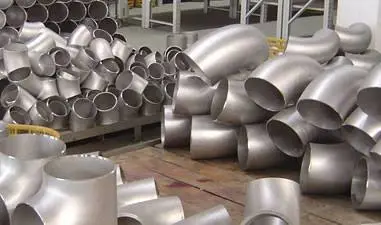
Installation and Measurement Best Practices for Buttweld Elbows
The right way to put a butt-weld elbow starts with checking the sizes on the job site and continues with careful positioning and welding. Even parts that were properly made will not work if they are installed incorrectly.
Step-by-Step Installation Aligned with Dimensional Standards
First, check the bevelled ends for damage or contamination that could make the weld less good. To find shipping damage, measure the elbow's outside diameter (OD) and wall thickness and compare them to approved dimensional records. Place the elbow so that the centrelines are lined up correctly. Use movable clamps to keep it in place while you tack-weld. Check that the gap between the bevelled ends is the right size for the welding process. The gap should be between 1.6 mm and 3.2 mm, based on the thickness of the wall.
To keep the metal from warping during full-pass welding, tack weld in four quadrants. Watch the temperatures between passes to make sure you don't go over the minimum preheat requirements, which are usually 150°C for WPB grade. Check carefully for undercut, porosity, or partial fusion after the root, fill, and cap passes are done. After the weld, check the dimensions to make sure the elbow hasn't moved—misalignment that is out of spec causes bending forces that lower the pressure capacity.
Addressing Fit-Up Issues from Dimensional Mismatches
Fit-up problems are caused by differences in size between the elbow and the pipe. Out-of-roundness greater than 1% of the circle stops the circumference from touching evenly, leaving gaps that need too much filler metal and could lead to lack-of-fusion flaws. When you connect a Schedule 40 elbow to a Schedule 80 pipe, the wall thicknesses are not the same. This makes an internal step that causes flow and wear. ASME B31.3 says that transitions must be flattened when changes in width go beyond the limits set by the code.
When measures taken in the field show problems with dimensions, you can either send back nonconforming fittings to the provider, which will delay the project; machine oversized ODs to fit, which will cost a lot of money and take a lot of time; or make changes to the welding process that will need to be re-qualified. It saves time and money to avoid these problems by doing a thorough review of all arriving goods.
Field Maintenance and In-Situ Measurement Techniques
Measure the length and width of the elbows during turnarounds or regular checks to look for rust, erosion, or mechanical damage. Ultrasonic thickness gauges show that the material is getting thinner at the elbow's extrados (outer radius), which is where fast-moving fluid focuses its wear and tear. Using ASME B31G or API 579 fitness-for-service methods, compare measurements to the original approved measures to figure out how much service life is left.
Radiographic or phased-array ultrasonic scanning can find cracks inside carbon steel butt-weld elbows that can't be seen from the outside. Photograph and measure the results of the inspections so that you can see how the damage is progressing over time. To avoid unplanned shutdowns and safety issues, replace elbows before the wall thickness drops below the minimum needed for design pressure.
Conclusion
The accuracy of the dimensions in ASTM A234 WPB buttweld elbows has a direct effect on the safety of the system, the speed of operations, and the cost of the project. According to ASME B16.9 standards, elbows must have confirmed centre-to-end lengths, wall thickness schedules, and bevel angles. This makes sure that they are compatible, makes fitting easier, and increases the elbows' service life. To minimise risk, successful buying requires careful review of suppliers, checking of measurements, and certification of materials. Engineering teams create piping systems that meet performance goals while keeping costs low by working with experienced makers who offer clear dimensional reporting and quality assurance.
FAQ
1. What are the standard dimensional ranges for ASTM A234 WPB buttweld elbows?
You can get ASTM A234 WPB elbows from NPS 1/2" all the way up to NPS 72" in welded configurations. The wall thicknesses range from Schedule 10s to Schedule XXS, and the standard angles are 45°, 90°, and 180°. For long-radius 90-degree elbows, the centre-to-end dimensions are 1.5 times the NPS, and for short-radius variants, they are 1.0 times the NPS.
2. How can I ensure dimensional compliance across different suppliers?
Request certified dimensional reports (CDRs) that show actual measurements compared to ASME B16.9 tolerances. Check that the supplier is ISO 9001 certified and ask for sample inspection data. Incoming inspection using calibrated tools (callipers, radius gauges, bevel protractors) on a statistically significant sample. Ask for mill test certificates that show the material came from certified steel producers.
3. Can I order custom dimensions under the ASTM A234 WPB standard?
ASTM A234 only talks about the chemical makeup and mechanical properties of a material, not its dimensions. For custom dimension needs, you can use ASME B16.9 or customer-specific purchase order drawings. Reliable manufacturers can work with custom centre-to-end lengths, non-standard angles, and intermediate wall thicknesses. To avoid confusion, make sure your needs are clear by using dimensioned drawings with geometric tolerancing.
Partner with JS FITTINGS for Precision ASTM A234 WPB Buttweld Elbow Supply
JS FITTINGS combines 43 years of manufacturing expertise with stringent dimensional quality control to deliver buttweld elbows meeting the exacting standards of EPC contractors, distributors, and industrial end users across North America. Our advanced CNC machining ensures bevel angles within ±1 degree of ASME B16.25 specifications, while optimized hot-forming processes maintain wall thickness uniformity critical for high-pressure service. Serving qualified clients including NIOC, ADNOC, and Petrobras, we ship over 90 containers monthly with on-time delivery exceeding 95% and client complaints below 0.5%. Whether you need standard catalog dimensions or custom configurations, our engineering team provides technical support, ensuring optimal elbow selection for your application. Contact our sales team at admin@jsfittings.com to request dimensional catalogs, certified test reports, or project-specific quotations. As a trusted buttweld elbow supplier, we're committed to minimizing your procurement risk through transparent dimensional documentation and superior product quality.
References
1. ASME B16.9-2018, Factory-Made Wrought Buttwelding Fittings. American Society of Mechanical Engineers, New York, 2018.
2. ASTM A234/A234M-22, Standard Specification for Piping Fittings of Wrought Carbon Steel and Alloy Steel for Moderate and High Temperature Service. ASTM International, West Conshohocken, 2022.
3. Mohitpour, M., Golshan, H., Murray, A., Pipeline Design & Construction: A Practical Approach, Third Edition. ASME Press, New York, 2007.
4. Nayyar, M.L., Piping Handbook, Eighth Edition. McGraw-Hill Education, New York, 2019.
5. Becht, C., Process Piping: The Complete Guide to ASME B31.3, Fourth Edition. ASME Press, New York, 2017.
6. Det Norske Veritas, Recommended Practice DNV-RP-F101: Corroded Pipelines. DNV GL, Oslo, 2015.
Send Inquiry
Related Industry Knowledge
- CRA Clad Pipe: Applications, Benefits, and Future Trends
- Choosing the Right Size Long Radius Buttweld Elbow for Your Project
- What is the material of A53 ERW Pipe?
- ASTM A312 vs ASTM A213 Steel Pipe: What Are the Key Differences?
- What is an API 5L Seamless Steel Line Pipe?
- Lap Joint Pipe Flanges: How and When to Use Them
- What Are the Types of Buttweld Elbows in ASME B16.9 Systems?
- What is seamless carbon steel pipe used for?
- Sch 40 Buttweld Reducer vs Sch 80 Pressure Performance
- Where can I buy carbon steel pipe?