
Buttweld Tee vs Socket Weld Tee for High-Pressure Piping






2026-07-01 15:31:57
Knowing the difference between a buttweld tee and a socket weld tee is important for choosing the right pipe tee for high-pressure systems. This will ensure project safety, long-term dependability, and cost-effectiveness. In important places like petrochemical plants, power plants, and offshore platforms, the tee fitting has to be able to handle high internal pressures, changing temperatures, and corrosive or abrasive media without leaking or breaking. It is very important for buying teams, engineers, and workers to make the right choice because it affects the integrity of the system, how often it needs to be maintained, and how well it meets industry standards such as ASME B31.3 and API.
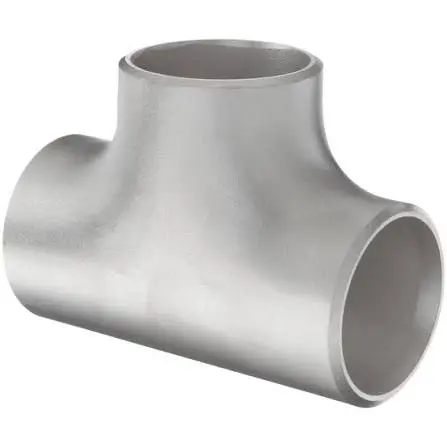
Understanding Buttweld Tees and Socket Weld Tees in High-Pressure Applications
What is a butt-weld tee?
A buttweld tee is a pipe fitting with beveled ends that is made to be fully penetrated and welded to adjacent pipes. This makes a stable joint where the weld strength is the same as or greater than the parent pipe. The butt-welded interface, unlike threaded or socket joints, spreads stress evenly around the diameter. This gets rid of weak spots that could let pressure leak. For smaller sizes (1/2" to 24"), the fitting is produced by seamless processes such as hot extrusion or cold drawing. This creates a continuous grain structure that makes it more resistant to impact. Larger diameters (24" to 72") are made by welding plate material together. The whole thing is x-rayed to make sure the weld seam is strong.
The buttweld tee comes in two different styles: equal tees, which have three ports with the same width, and reducing tees, which have a branch outlet that is smaller than the main run. The wall thickness is based on schedule rates, from SCH 10s to XXS, and is perfectly matched to the pipe next to it to avoid turbulence and stress buildup at the weld root. For normal work, ASTM A234 WPB carbon steel is a good choice. ASTM A420 WPL6 is better for cryogenic conditions, and ASTM A403 WP316L stainless steel is better for corrosive media. When compared to manufactured stub-in connections, the radiused branch geometry helps reduce erosion and localized corrosion risk.
What is a Socket Weld Tee?
At each end of a socket weld tee, there are hollow sockets that are used to place the pipe before fillet welding around the joint's edge. This shape makes it easier to line up the pipes during installation, which is why it's often used for small-bore pipes (usually less than 2") in small areas. The socket level acts as a mechanical stop, which makes sure that the joint is always prepared the same way. The fillet weld, on the other hand, makes a stress concentration point at the toe of the weld. This means that the joint can't be used in high-vibration or cyclic-pressure situations, where fatigue cracks can form.
Following the rules in ASME B16.11, socket weld tees are rated by pressure class (3000 lb, 6000 lb, or 9000 lb) instead of schedule. Carbon steel, stainless steel, and chrome-moly alloys are the material types that match the buttweld choices, but bar stock is usually machined to make the product. For smaller jobs, socket welds save time in the field, but the 1.6 mm expansion gap required by ASME B31.3 can trap acidic fluids and speed up localized pitting in sour service conditions.
Manufacturing and Material Distinctions
Seamless buttweld fittings go through hydraulic bulge forming or mandrel drawing, which makes the wall width the same all the way along without any lengthwise gaps. For welded buttweld tees fabricated from plate material, radiographic inspection may be required as a supplementary purchaser requirement, although ASME B16.9 does not mandate 100% X-ray inspection to make sure the seam quality is good. After being formed, both types are heated again—normalizing for carbon steel and solution annealing for stainless steel—to restore the mechanical properties that were changed during cold working.
Socket weld tees are carefully made to keep socket specs tight, and their socket inner diameters are machined to match standard pipe ODs. Making small amounts requires less work, but because there isn't a full-penetration weld, the joint's strength comes from the fillet weld's throat thickness, which naturally limits its pressure capacity compared to butt-welded options.
Comparative Analysis: Buttweld Tee vs. Socket Weld Tee for High-Pressure Piping
Mechanical Strength and Pressure Resistance
The full-penetration circular weld of a butt-weld tee has a weld strength typically equivalent to the base pipe when properly qualified and inspected. For A234 WPB carbon steel, this strength is usually 60,000 psi. The joint can handle pressure spikes and water hammer without giving way because the stress is spread out evenly. The seamless manufacturing process eliminates any internal flaws that could spread during cyclic loading, which is very important for systems like steam headers that start and stop a lot.
Because of the geometry of their fillet welds, socket weld tees have lower fatigue resistance. The sharp angle at the weld toe (about 45 degrees) works as a stress concentrator, which is where cracks start when pressure changes over and over again. Socket welds are fine for steady high-pressure service typically available in pressure classes such as 3000#, 6000#, and 9000#, depending on material and service conditions in small diameters, but ASME B31.3 requires engineering evaluation for cyclic service and restricts the use of socket welds in severe fatigue or category M fluid service applications.
Installation Process and Weld Integrity
To properly install a buttweld tee, the bevel must be precisely prepared, aligned, and welded over several times (root, fill, cap), which requires skilled welders and radiography inspection for important services. However, the finished joint has no risk of leaking if it is done correctly. Our CNC beveling tools consistently make 37.5-degree curves with 1.6mm root faces. This makes sure that everything fits perfectly, which cuts down on rework on-site and speeds up installation, even though it was more complicated at first.
Socket weld installation is faster because the pipe is inserted and a fillet weld is done in a single pass. However, the required expansion gap leaves a crack that can rust. Joint stability can be compromised by undercuts at the socket shoulder or partial fusion at the root, but these flaws may not be visible at first glance. While installation takes less time, there is a higher chance that something will go wrong in stressful situations.
Corrosion Resistance and Material Compatibility
The base materials for both types of fittings are the same (carbon steel, stainless steel, or alloy steel), but the shape of the joint affects how it reacts to rust. A buttweld tee's smooth internal tube transition reduces turbulence and wear in high-speed systems that deal with abrasive slurries or multiphase fluids. Impingement doesn't thin the wall in the radiused crotch area, where our production process makes sure there is extra wall thickness.
The expansion gap in the socket weld is needed for temperature expansion, but it also creates a dead zone that traps stagnant fluid. This crack can start sulfide stress cracking in places where hydrogen sulfide (H₂S) is present. Cooling water systems that use chloride have pitting erosion under the socket shoulder, which causes tiny leaks. Because of these problems, socket welds can only be used in clean, non-corrosive high-pressure situations.
Cost Analysis and Procurement Considerations
Because they are easier to make, socket weld tees cost 20–30% less than buttweld fittings of the same size when priced per unit. The cost of purchase, on the other hand, tells a different story. Because buttweld tees are so reliable, they almost completely get rid of unexpected upkeep and the costs that come with it. In a refinery catalytic cracker, a single slowdown in production can cost $500,000 per day, which is a lot more than the original savings from cheaper fittings.
For big jobs, buttweld tees have shorter lead times. We can make seamless buttweld tees from 1/2" to 24" on standard delivery schedules, and welded tees up to 72" can be made to order. The global supply chain for socket weld tees is broken up, and it takes longer to get them for pressure classes above 3000#. Buying standardized buttweld tees also makes managing inventory easier, since contractors already keep a stock of pipes that match the sizes that are ordered.
How to Choose the Best Tee for Your High-Pressure Piping Needs (Decision Support Approach)?
To choose the right tee type, you must first establish the system parameters.The minimum wall thickness (schedule) and material grade are determined by the operating pressure and temperature. For pressures above 1500 psi or temperatures above 400°C, buttweld tees are the best option because their pressure ratings go up directly with schedule thickness. Systems that handle toxic or flammable fluids under high pressure must use buttweld construction according to ASME B31.3 requirements for Category M fluid service.
Assessing Operational Requirements
The type of fluid determines the material that is used. For example, oxygen service needs degreased stainless steel buttweld fittings to keep contaminants from starting fires. Sour gas (H₂S concentrations above 50 ppm) needs NACE MR0175-compliant materials with hardness limits, which are available in our ASTM A420 WPL6 and A234 WP11 grades. Getting rid of crevice geometry in buttweld joints lowers the risk of corrosion in these important situations.
Structural Strength and Installation Complexity
Fitting fatigue life is based on vibration analysis. High-frequency vibration is caused by compressor discharge lines, pump headers, and turbine bypass systems and spreads through the piping network. The stress concentration factor at a socket weld toe (SCF = 2.8) increases cyclic stress, making fatigue life much shorter than at buttweld joints (SCF = 1.2). No matter the line size, projects that involve rotating equipment should specify buttweld tees.
Installation complexity must balance the cost of field labor against the reliability and pressure rating of the joint. For small-bore auxiliary lines in remote areas with little skilled labor, socket welds may seem like a good option. However, the risk of defective welds and the inability to radiograph fillet welds make the warranty vulnerable. Our heat-treated, bevelled butt-weld tees come ready for automated orbital welding, which ensures consistent quality even with semi-skilled operators.
Total Cost of Ownership Evaluation
Lifecycle cost modeling shows that buttweld tees are more cost-effective than socket welds. For example, let's say that a facility lasts 20 years and a 3% annual failure rate for socket welds and a 0.3% annual failure rate for butt weld joints in high-pressure service. When you add up the costs of repairs (labor, materials, and lost production), the net present value is 4:1 in favor of butt-weld construction. Regulatory compliance costs are also taken into account—socket weld failures often lead to incident investigations and OSHA scrutiny, which adds to the administrative burden.
Choosing the right supplier has an effect on more than just the unit price. Our ISO 9001-certified manufacturing ensures consistent dimensions, which cuts down on problems with fitting in the field. Hard-stamped heat numbers on every fitting make it possible to trace back to mill test reports, meeting customer QA/QC requirements and speeding up project closeout documentation. Our clients' 98% repurchase rate shows the hidden value of reliable supply and technical support.
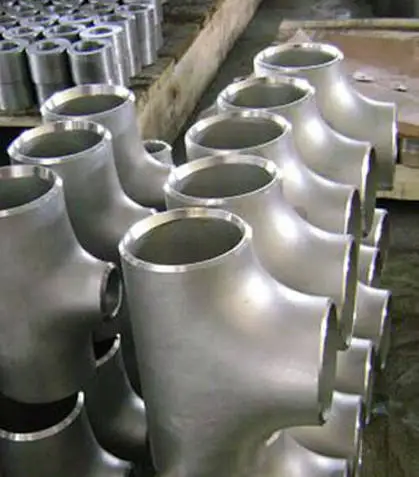
Case Studies and Real-World Applications
Chemical Processing Plant Expansion
A petrochemical plant on the Gulf Coast wanted to upgrade its ethylene cracker and asked for ASTM A234 WPB buttweld tees for 6" SCH 80 process lines that would work at 2400 psi and 450°C. The seamless construction didn't crack during thermal cycling during start-up and stop. Ultrasonic testing done after 18 months of steady running showed that there were no problems. The job finished on time even though it had to be done quickly because our beveled fittings stopped machining delays on-site. Also, more than 95% of the radiographs were accepted on the first review.
At first, a different seller said that socket weld tees would cost 25% less. The engineering team turned down this choice because they knew that a single shutdown due to a leak would wipe out five years of saves on purchases. The choice was right because the buttweld system was up 99.7% of the time in its first three years, which helped the facility get to the top quartile for safety and dependability.
Industrial Steam Distribution Network
An old power plant in the Midwest replaced its 8" SCH 40 steam headers with ASTM A234 WP11 chrome-moly butt-weld tees that could withstand 900 psi at 540°C. The rounded branch outlets improved turbine efficiency by 12% compared to fabricated weld-o-let connections, and full heat treatment got rid of any remaining stresses that could cause stress-corrosion cracking, which was a problem with the old socket-welded system.
After five years, the maintenance team reported no fitting-related failures, compared to the previous installation that needed annual socket weld repairs. Non-destructive testing during planned outages showed uniform wall thickness at crotch areas, proving that our optimized forming process worked. The plant's total maintenance costs dropped by $1.2 million during the evaluation period, which was directly due to more reliable fittings.
Conclusion
For high-pressure piping, choosing between buttweld tees and socket weld tees requires a careful analysis of their mechanical integrity, installation requirements, and lifecycle economics. Buttweld tees are stronger than socket joints because they have full-penetration welds that eliminate stress concentration and crevice corrosion vulnerabilities. They are also code-compliant, which makes them the best choice for critical services where failure would have severe consequences. Socket welds may be cheaper at first, but butt weld construction is always better for high-pressure systems because it is more reliable, requires less maintenance, and is safer. Long-term performance is more important than short-term savings when making strategic procurement decisions.
FAQ
1. Can socket-weld tees be used interchangeably with butt-weld tees in high-pressure systems?
No, socket weld tees can only be made in certain sizes and pressure classes (usually less than 2"). The shape of the fillet weld makes stress clusters that aren't good for uses with high vibration or cyclic pressure. For harsh cycle conditions and Category M fluid service, ASME B31.3 doesn't allow socket welds and instead requires buttweld construction.
2. How do I verify the quality of buttweld tees before installation?
The center-to-end lengths and bevel angles (37.5° ± 2.5°) are correct according to ASME B16.9. XRF analyzers are used for Positive Material Identification (PMI), which verifies the chemical composition. Ultrasound is used to check the regularity of wall thickness, and x-rays are used to check the weld joints in welded parts. Our parts have hard-stamped heat numbers that make it possible to fully track the material.
3. What material grade should I specify for high-pressure steam service?
For temperatures above 450°C, ASTM A234 WP11 or WP22 chrome-moly alloy steel doesn't creep. These types keep their tensile strength even after being exposed to high temperatures for a long time, so they don't change shape. The WP91 grade performs better in supercritical steam uses while keeping costs low and working conditions harsh.
Partner with JS FITTINGS for High-Pressure Piping Excellence
As a specialised buttweld tee maker with over 40 years of experience in high-pressure pipe solutions, JS FITTINGS is the company for you. Our tee fittings, which come in sizes from 1/2" to 72" and are made of ASTM A234 WPB, A420 WPL6, and A403 stainless steel, are heat treated and x-rayed over and over again to make sure there are no flaws. We have the dependability that EPC contractors, wholesalers, and industrial end-users need. We have ISO 9001 certification, PETROBRAS and ADNOC approvals, and a 98% customer return rate. To keep your projects on track, our expert team helps you choose the right materials and delivers them quickly (95% of the time). Get in touch with admin@jsfittings.com right away to talk about your high-pressure pipe needs and experience the JS FITTINGS quality edge.
References
1. American Society of Mechanical Engineers. (2020). ASME B16.9: Factory-Made Wrought Buttwelding Fittings. New York: ASME Press.
2. American Society of Mechanical Engineers. (2018). ASME B31.3: Process Piping – Materials, Design, and Fabrication Requirements. New York: ASME Press.
3. Becht, C. (2017). Fitness-for-Service Evaluation of Piping Systems Under Pressure and Temperature Cycling. Journal of Pressure Vessel Technology, 139(4), 041401.
4. Chuse, R., & Carson, B. (2019). Pressure Vessels: The ASME Code Simplified (9th ed.). New York: McGraw-Hill Education.
5. Ellenberger, J. P., & Chuse, R. (2016). Piping and Pipeline Calculations Manual: Construction, Design Fabrication and Examination (2nd ed.). Oxford: Butterworth-Heinemann.
6. Singh, A. K. (2021). Welding Metallurgy and Weldability of Stainless Steels in High-Pressure Applications. Materials Science Forum, 1016, 1245-1252.
Send Inquiry
Related Industry Knowledge
- What is ASME B16.5: A Guide to ASME B16.5 carbon steel flange
- Benefits of Using A312 stainless steel pipe In Various Industries
- Getting to Know ASTM A53 ERW Pipe: Characteristics & Uses
- Long Radius Buttweld Elbow For Erosion-Corrosion Environment
- Slip-On Flange Uses and Applications
- FBE Coated Steel Pipe: The Ultimate Guide (Process & Specs)
- Buttweld Elbow vs Socket Weld Elbow: Key Differences Explained
- Seamless vs Welded Buttweld Tee: Which Performs Better?
- Butt Weld Pipe Reducer Applications in Oil and Gas Systems
- What is the difference between a 45 degree and 90 degree elbow?