
Carbon Steel Buttweld Reducer Material Standards Explained






2026-07-08 10:06:35
Knowing the standards for materials is the first step in choosing the right pipe parts for commercial use. A buttweld reducer is an important part of plumbing systems because it permanently joins pipes of different sizes together to make sure they don't leak and the structure stays strong. Tough material standards, such as ASTM A234 WPB and ASME B16.9, control carbon steel buttweld reducers. These reducers offer high-pressure protection, exceptional strength, and low cost for infrastructure, chemical processing, and oil and gas projects. When meeting project schedules and ensuring smooth operation is essential, procurement managers and engineers need to be able to make decisions that balance safety, compliance, and budget.
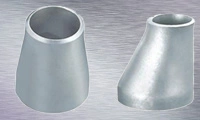
Understanding Carbon Steel Buttweld Reducers
Carbon steel buttweld reducers make it easy for pipe networks to transition between diameters smoothly. This keeps the flow efficient and the system's pressure integrity. With these fittings, links are permanently welded, reducing potential leak paths that can happen with threaded or mechanical joins. Carbon steel is chosen because it has a unique mix of mechanical strength, wear resistance, and low cost. This makes it perfect for harsh settings where efficiency must not be compromised.
Concentric vs. Eccentric Reducer Configurations
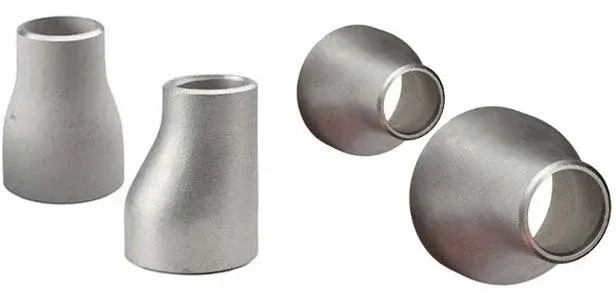
There are two main designs that meet different transportation needs. Centerline alignment means that the two pipe sizes share a common plane. Concentric reducers have this trait. In vertical installations and other situations where smooth flow is needed to avoid noise and turbulence, this design works well. To control how fluid moves in horizontal runs, eccentric reducers keep one side flat, either at the top or the bottom. When installed in pump suction lines with the flat side facing up, eccentric reducers stop air pockets from forming that could damage pump impellers through cavitation, which is the main reason why equipment breaks down in oil and gas pipeline operations. Which of these designs you choose has a direct effect on the hydraulics of the system, the life of the equipment, and the cost of upkeep.
Material Comparison: Carbon Steel vs. Alternatives
In some situations, carbon steel reducers are clearly better than stainless steel and metal choices. Carbon steel has higher pressure values and tensile strength at much lower material costs than stainless steel. Stainless steel is better at resisting rust. Because of this, carbon steel is the best choice for projects that need to save money without losing performance and where protective coatings can effectively mitigate corrosion. Because carbon steel is easily corroded, it's important to think about the climate and use the right surface treatments, such as epoxy finishing, black lacquer, or hot-dip galvanizing, to make it last for a long time in wet or salty conditions.
Standards Governing Carbon Steel Buttweld Reducers
Material standards are the basis for making sure that industrial pipe projects meet quality standards and government rules. These standards spell out the chemical makeup, mechanical qualities, allowable size differences, and testing procedures that make sure the product works the same way everywhere, even if it comes from a different maker.
ASTM A234 WPB: The Industry Benchmark
In North American markets, ASTM A234 WPB is the carbon steel grade most often used for pipe joints. This standard defines requirements for chemical composition, mechanical properties, and testing of carbon steel fittings, including typical minimum tensile strength requirements around 415 MPa depending on product form, yield strength, and elongation properties. The "W" in the WPB grade stands for wrought carbon steel, indicating it is manufactured in service at both low and high temperatures. Following the rules in ASTM A234 makes sure that reducers can handle the temperature changes and pressure changes that happen a lot in process industries without breaking down too soon. Mill test certificates conforming to EN 10204 3.1 are used by procurement teams to check the validity of materials. These certificates confirm that materials have been chemically analyzed and mechanically tested in accordance with the manufacturer’s internal quality control for each heat number.
ASME B16.9: Dimensional and Manufacturing Standards
The measurements, tolerances, and industrial rules for wrought buttweld parts, including buttweld reducers made in a plant, are set by ASME B16.9. For full-penetration welding, this standard sets important factors like end-to-end sizes, wall thickness schedules (from SCH 10s to XXS), and bevel angles (usually 37.5° ± 2.5°). Following ASME B16.9 makes sure that reducers from various makers can be used interchangeably and fit correctly when they are installed in the field. The standard also requires manufacturing methods that prevent excessive wall thinning during production, which is a common quality problem that can lower pressure ratings. JS FITTINGS uses ultrasonic wall-thickness verification at key stress points to make sure they meet ASME standards. This gives buying teams written proof that the tolerances have been met.
International Standards: EN, DIN, and JIS
Many times, global projects need to follow more than one set of area rules. For European markets, EN 10253 is the law, DIN 2616 is widely used in Germany as a technical standard, and JIS B2312 is the law in Japan. These standards are similar to ASME guidelines in some ways, but they are different in how they test, what materials they use, and how accurate the measurements must be. It is important to understand these differences when doing foreign business, especially when coordinating supply lines with multiple sources or working with EPC contractors who work in areas with different regulatory requirements. Manufacturers that are approved to meet more than one standard, like JS FITTINGS, make purchasing easier and lower the risk in the supply chain.
Dimensional and Pressure Ratings of Carbon Steel Buttweld Reducers
The right size and pressure rating have a direct effect on both how well the installation goes right away and how reliable the system is in the long run. Accurate measurements make sure that the new pipe will fit with the old one, and pressure ratings show the safest levels of operation when the fluid and temperature are changing.
Size Ranges and Wall Thickness Options
Buttweld reducers made of carbon steel come in a wide range of sizes to fit a wide range of uses. Seamless construction can handle sizes from 1/2" x 1/4" to 24" x 20", while welded construction can handle sizes up to 80" x 72" for large-scale construction projects. Different pressure service needs have different wall thickness plans, such as SCH 10, STD, SCH 40, SCH 80, and SCH 160. Heavier wall schedules can handle more pressure and are stronger mechanically, but they are heavier and cost more in materials. When making decisions about what to buy, people have to weigh the need for pressure against budget limits and structural load. This is especially important for offshore platforms or high-elevation sites where weight affects the design of the base.
Pressure Ratings and Service Conditions
The ANSI pressure class values (150, 300, 600, 900, 1500, and 2500) show the highest pressures that can be used at certain temperatures. As the working temperature rises, these values go down, which is because materials lose strength at high temperatures. Carbon steel reducers that meet ASTM A234 WPB standards are commonly used in elevated-temperature service, with allowable temperatures depending on design codes such as ASME B31.3.For low-temperature service, ASTM A420 WPL6 is designed to withstand temperatures as low as -46°C (-50°F). For use at temperatures above 400°C, alloy steel types like ASTM A234 WP11 or WP22 are needed because they retain their mechanical properties at elevated temperatures. By knowing these service limits, you can avoid catastrophic breakdowns and make sure you're following piping rules like ASME B31.3 for process piping or ASME B31.4 for transporting liquid petroleum.
Bevel Design for Weld Integrity
Bevelled ends made according to ASME B16.25 make it easier to prepare the weld correctly and make full-penetration welds, which are needed for high-pressure uses. Precision-machined bevels from JS FITTINGS are free of burrs and slag, which cuts down on preparation time on-site and ensures uniform weld quality. It is especially important to pay attention to the shape of the bevels when going from one wall thickness to another, because the wrong taper can create stress concentration points that are prone to fatigue cracking under cycle loading conditions.
Choosing the Right Carbon Steel Buttweld Reducer for Your Application
Material and design decisions are based on the needs of the application. When buying, teams know about the conditions of a project and what the expected performance is; they can choose buttweld reducers that have the best starting cost and life-cycle value.
Application-Driven Configuration Selection
When oil and gas companies use pump suction lines, horizontal pump suction lines require eccentric reducers with the flat side facing up.This keeps vapor lock from happening and protects the pump impellers from cavitation damage. In chemical factories, vertical process columns need circular reducers to keep the flow even and stop any preferred flow lines that could lead to scaling or corrosion. In power plants that use steam distribution systems, the reducers need to be easy to weld and resistant to thermal wear. This is usually done with a normalized or quenched-and-tempered heat treatment. Material standards deal with the different problems that come up in each application by defining the required mechanical properties and production methods.
Critical Material Properties
The load-bearing ability under internal pressure is based on the tensile strength, and the stress level at which lasting deformation takes place is based on the yield strength. The elongation percentage shows how ductile a material is—how well it can bend without breaking—which is important for dealing with pressure from vibrations and temperature changes. Weldability affects the cost of installation labor and the quality of the joint. The highest carbon content is usually kept at 0.30% to avoid the heat-affected zone getting too hard. Different environments have different levels of corrosion protection. For example, materials that need to be used in acidic, chloride-rich, or high-humidity environments need protective coats or better materials. Every heat number has to go through chemical analysis and mechanical testing by JS FITTINGS. This is done to make sure that the materials meet the standards and work reliably under the service conditions that are mentioned.
Supplier Certification and Traceability
Working with certified makers lowers the chance of buying things and ensures that regulations are followed. Product-specific certifications, like the CE mark, show that a product meets European health, safety, and environmental standards. ISO 9001 certification makes sure that quality control systems are uniform. With GOST-R approval, you can sell your goods in Russia and the CIS. As an approved seller for big energy companies like National Iranian Oil Company, Abu Dhabi National Oil Company, and Petrobras, you have shown that you can meet strict technical and business requirements. Full material tracking with heat numbers and mill test certificates lets you find the root cause of quality problems and meets audit standards for safety-critical uses. JS FITTINGS keeps detailed records that allow full tracking from receiving raw materials to shipping finished products.
Installation Best Practices and Quality Assurance
The safety and dependability of a system over time are directly affected by how well it was installed. Even high-quality parts can break too soon if the way they are installed weakens the weld or adds mechanical stress.
Welding Procedures and Joint Preparation
Following qualified welding methods that follow ASME Section IX will make sure that the quality of the weld and its mechanical features stay the same. For a joint to be properly prepared, its beveled sides must be clean, the gaps must be the right size, and, if needed, the right backing must be used. Preheating stops too fast of cooling, which could lead to stiffening and cracking in the heat-affected zone. This is especially important for steels with thick walls and low alloy content. Post-weld heat treatment removes any remaining stresses and makes the material flexible again for important business uses. Documentation of a welder's qualifications and procedures shows that they are qualified and follow the rules, which is needed for insurance coverage and governmental approval.
Non-Destructive Testing Verification
Radiographic testing finds problems inside the weld, like holes, slag spots, and lack of fusion, that make the pressure stability less reliable. Ultrasonic testing checks the thickness of the walls and finds laminations in the base material. Magnetic particle analysis can find cracks on the surface of ferromagnetic materials like carbon steel. Liquid penetrant testing finds breaks in the surface of non-magnetic materials. Depending on the type of service, project requirements usually require NDT. For example, hydrocarbon and high-pressure uses need more thorough inspection than low-pressure utility services. JS FITTINGS helps customers with their quality programs by giving them written inspection reports that can be linked to particular goods.
Maintenance and Inspection Programs
Routine checkup programs keep services running longer and stop them from going down without warning. Visual inspection shows surface rust, mechanical damage, and covering wear that needs to be fixed. Ultrasonic thickness tracking measures the rate of rust and estimates the remaining service life, allowing replacement before it fails. The study of vibrations can find flow-induced vibration and turbulence that can be a sign of imbalance or internal deposits. By using thermal imaging, hot spots can be found that indicate either internal erosion or external insulation degradation. Maintenance records help asset managers make choices and show that rules are being followed during safety checks.
Conclusion
In conclusion, when material standards determine the best option, carbon steel buttweld reducers are a cheap way to change the width of industrial pipes. The technical basis for achieving mechanical integrity, dimensional accuracy, and long-term dependability is set by ASTM A234 WPB and ASME B16.9. Procurement workers can balance short-term project budgets with long-term costs if they know about concentric versus eccentric shapes, pressure ratings, and application-specific needs. Partnering with certified makers that offer full material tracking, strict quality control, and expert support lowers supply chain risk and improves project results in a wide range of industries.
FAQ
1. What distinguishes ASTM A234 WPB from other carbon steel grades?
ASTM A234 WPB specifies standard carbon steel pipe fittings for mild and high-temperature work. These fittings must have a minimum tensile strength of 415 MPa and a carbon content limit that allows them to be welded. Different grades, such as A420 WPL6, can handle service at temperatures as low as -46°C. MSS-SP-75 WPHY grades (42, 46, 52, 56, 60, 65, and 70) are specific pipe grades for use in line pipes. The marking "WPB" means that the material is worked and can be welded. This is different from cast or forged materials, which have different mechanical properties.
2. Can carbon steel reducers perform reliably in corrosive environments?
When properly covered, carbon steel is resistant to corrosion in a lot of industry settings. Protective coverings like resin, polyethylene, or galvanizing make things last longer when they are wet or slightly acidic. But places with a lot of acids, chlorides, or hydrogen sulfide usually need better materials, such as stainless steel (ASTM A403 WP316) or special alloys. The right material and coating standard is based on an evaluation of corrosion based on fluid makeup, temperature, and contact time.
3. How can purchasers verify material standard compliance?
Mill test certificates that follow EN 10204 3.1 list the chemical makeup and mechanical qualities of a material for certain output temperatures. During the receiving review, positive material identification with small XRF analyzers checks the makeup of the alloy. Dimensional analysis proves that the limits set by ASME B16.9 are met. Testing for hardness is a secondary way to check the results of heat treatment and mechanical qualities. Suppliers with a good reputation maintain their ISO 9001 certification and provide all the paperwork needed for quality checks and audits.
Partner with JS FITTINGS for Premium Carbon Steel Buttweld Reducer Solutions
As a trusted provider to major energy companies around the world for over 40 years, JS FITTINGS offers carbon steel buttweld reducer solutions that are ISO-certified and made to meet ASTM, ASME, and foreign standards. Our state-of-the-art factories make both seamless and welded reducers from DN15 to DN2000. The wall thickness is checked using ultrasonic technology, and the beveling is done precisely with CNC machines to make sure the reducers are ready for fitting and the weld is strong. Full material tracking with EN 10204 3.1 Mill Test Certificates and in-house spectral analysis and mechanical testing make sure that your project requirements are met. With a capacity of more than 30,000 tonnes per year, an on-time supply rate of more than 95%, and full expert support, we reduce your procurement risk and help your project succeed. Email our skilled staff at admin@jsfittings.com to talk about your needs, get detailed specs, or get cheap quotes for your next project that needs buttweld reducer solutions from a reputable maker.
References
1. American Society of Mechanical Engineers. (2018). ASME B16.9: Factory-Made Wrought Buttwelding Fittings. New York: ASME Press.
2. ASTM International. (2021). ASTM A234/A234M: Standard Specification for Piping Fittings of Wrought Carbon Steel and Alloy Steel for Moderate and High Temperature Service. West Conshohocken: ASTM International.
3. Becht, C. (2017). Process Piping: The Complete Guide to ASME B31.3 (4th ed.). New York: ASME Press.
4. Ellenberger, J.P. (2016). Piping and Pipeline Calculations Manual: Construction, Design Fabrication and Examination (2nd ed.). Oxford: Butterworth-Heinemann.
5. Nayyar, M.L. (Ed.). (2019). Piping Handbook (8th ed.). New York: McGraw-Hill Education.
6. Singh, R.K. & Verma, A.K. (2020). Material Selection and Corrosion Control in Industrial Piping Systems. Materials Performance, 59(4), 48-53.
Send Inquiry
Related Industry Knowledge
- ASTM A105 Weld Neck Flange: Complete Guide
- What Is the Difference Between LR and SR Buttweld Elbow?
- ASTM A263/A264 Standard for Corrosion-Resistant CRA Clad Pipe
- How long does A53 ERW Pipe last?
- FBE Coated Steel Pipe: The Ultimate Guide (Process & Specs)
- Lap Joint Pipe Flanges: How and When to Use Them
- How to Select the Right Buttweld Bend Radius (3D–20D)
- Carbon Steel vs Stainless Steel Buttweld Bend: Which to Use?
- What is seamless carbon steel pipe?
- What specification is the carbon steel black pipe?