
Carbon Steel Pipes: Properties, Applications, and Benefits






2026-10-30 10:56:43
Carbon Steel Pipe is an iron-carbon alloy pipe with up to 2.1% carbon by weight and no specified minimum for alloying elements such as chromium or nickel. Its main properties are high strength, good weldability, and a wide size range. Those traits suit oil and gas lines, boilers, water systems, and structural work. Its main benefits are lower material cost than stainless steel and steady availability under ASTM, API, and DIN standards. Coatings protect it where corrosion is a risk. I wrote this guide for EPC teams, distributors, installers, public agencies, and plant owners who need to match grade, standard, and supplier to each job.
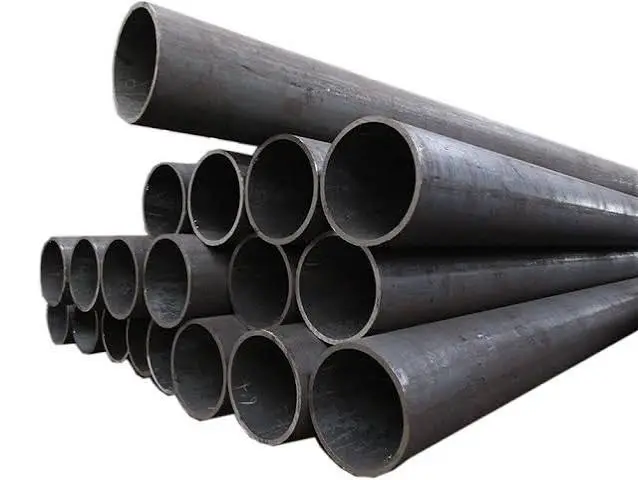
Carbon Steel Pipe Types, Grades, and Manufacturing Processes
How SMLS and Welded Pipe Differ
There are two groups for all Carbon Steel Pipes. There is no weld line in SMLS pipe because it is made from a solid billet through processes such as piercing, rolling, and sizing. It's often used in places with high temperatures and pressures, like steam lines, by people who buy it. Steel plates or strips are used to make welded pipe. The ends of ERW pipe are joined together with an electric resistance welder. LSAW and SSAW pipes are formed from steel plate or strip and welded using submerged arc welding. This type of pipe is cheaper and can be made in bigger sizes, so it is often used for building and water projects. The budget, the diameter, the pressure, and the temperature all play a role in choosing the right shape. The design code should tell your engineer what kind of shape is okay.
ASTM Carbon Steel Pipe Grades We Supply
Most of what you need for pressure, boilers, and buildings is in our ASTM range. ASTM A106 Gr. B is a type of SMLS that can be used in hot conditions. ASTM A53 Gr. A and B are everyday steels that come in SMLS, ERW, and hot-dip galvanized zinc-coated types. ASTM A179 has cold-drawn heat exchanger tubes, and ASTM A192 has boiler tubes for high-pressure work. Pipe piles are discussed in ASTM A252. ASTM A333 covers SMLS and welded pipe for low-temperature service and applications requiring notch toughness. For ERW pipe, look in ASTM A135; for electric-fusion welded pipe in NPS 16 and larger, look in ASTM A134. On your order form, you need to write down the exact specification, grade, and edition for each standard. Every standard has its own rules about chemistry, testing, and how big something can be.
API 5L, ISO 3183, DIN, CSA, and NBR Standards
API 5L is a good place to start for people who want to buy pipes. It's a lot like ISO 3183 for foreign projects. There are various grades, including Grade B and X42, X46, X52, X56, X60, X65, X70, and X80. The number after X shows the lowest yield strength in ksi. Our normal range goes from API 5L Gr. B to X70, so please call to make sure that X80 is available. API 5L pipes come in four different types: SMLS, LSAW, SSAW, and ERW. There are also standards for things like DIN 2440 for medium-weight tubes that can be screwed, DIN 2444 for zinc-coated tubes that will be hot galvanized, CSA Z245.1 for oil and gas pipeline systems, and NBR 8261 for structural tubes that can be square, round, or rectangular.
Carbon Steel Pipe Properties, Specifications, and Performance
Mechanical Properties That Drive Grade Choice
The most critical factor in pipeline design is mechanical strength. The minimum tensile strength is 60 ksi, and the minimum yield strength is 35 ksi for ASTM A53 Grade B; ASTM A106 Grade B has a minimum tensile strength of 60 ksi and a minimum yield strength of 35 ksi. For ASTM A53 Grade A, the minimum tensile strength is 48 ksi and the minimum yield strength is 30 ksi. A higher-strength grade such as API 5L X70 does not automatically eliminate the need for adequate wall thickness. Required wall thickness depends on design pressure, diameter, material strength, temperature, corrosion allowance, and the applicable design code. Also, the amount of carbon is important. Carbon content is controlled because higher carbon can increase hardness and reduce weldability. ASTM A106 Grade B specifies a maximum carbon content of 0.30%. Another concern in cold service is that carbon steel can become less tough and more susceptible to brittle fracture. That's why it's looked for in ASTM A333 pipe. Because it moves heat better than stainless steel, it can be used for heat exchange.
Sizes, Schedules, and Specifications for Your RFQ
The Carbon Steel Pipes we sell have nominal pipe sizes that range from 1/2 inch to 60 inches, and they are available in schedules from 10 to 160. The wall is between 2 mm and 45 mm thick. By ASME B36.10M, sizes for NPS pipes are set. NPS is a nominal pipe size designation, not a direct measurement of the pipe's outside diameter. The outside of the NPS 2 pipe is 2.375 inches wide. Because they are the same size, Schedule 80 has a thicker wall than Schedule 40. However, the pressure rating is not just based on the schedule. Engineers figure that out based on rules like ASME B31.3. The standard, grade, type, NPS, schedule, length, end finish, coating, and tests should all be written down in a clear way.
Coatings and Corrosion Protection
It rusts when it gets wet, is buried, comes into contact with chemicals, or is in the sea. A study by NACE IMPACT says that corrosion cost the world about US$2.5 trillion in 2013. That's around 3.4% of the world's GDP. Coatings are one of the first lines of defense. We can cover it with 3PE, FBE, or zinc; just tell us what you want. We can use solid CRA, clad alloy steel, or lined alloy steel for fluids that are rougher. For lines that are underground, FBE and 3PE work well. Galvanizing pipes in hot water is the best way to keep them safe from water and weather for ASTM A53 pipes that are used in air and water. To keep the cost low over its whole life, the covering should be used with a plan for inspections and a corrosion limit.
Carbon Steel Pipe Applications and Benefits
Oil, Gas, and Power Applications
Crude oil, natural gas, and other fluids are transported over long distances through API 5L line pipe. It needs to be able to handle pressure and stress spikes in the ground. LSAW pipe is used for many wide lines. An automatic submerged arc welder is used to connect LSAW and SSAW pipes. Radiographic testing (RT) may be used to inspect weld seams according to the applicable standard and project inspection requirements. Crews can more quickly line up the ends of large pipes in the field because Cold expansion can help LSAW pipe achieve more consistent outside dimensions. ASTM A106 pipe and A192 boiler tubes are used in power plants and refineries for high-temperature service involving steam and other fluids. They are designed for high-temperature service and heat-transfer applications.
Water, Structural, and Industrial Uses
If you want to build a big, safe system for moving water, SSAW pipe is the best choice. Gas, water, air, and steam lines that can be used for many things are covered by ASTM A53. This standard works best for water and air lines that are out in the open when it is galvanized. For small building and utility services like HVAC, tubes complying with DIN 2440 are often specified. For heat exchange applications, ASTM A179 tubes are utilized. The ASTM A252 pipe pile is used for deep base work in ports, bridges, and other places to hold up big loads vertically. Tubes made of NBR 8261 are used for building tasks like supports. Many types of products can be found in this range, which is why businesses and the government like it.
Core Benefits and Limits
This is the main reason why people pick Carbon Steel Pipe. For the price, it's very strong, easy to make and join, comes in a lot of different sizes and plans, and is shipped all over the world. People who buy these things can keep costs low and get infrastructure and plant work done on time. Also, the lines are very clear. At low temperatures, most types of steel become less tough, and bare steel rusts. In order to fix this, you can use coatings, linings, rust allowance, low-temperature types such as ASTM A333, and planned upkeep. There may be less risk of maintenance and higher costs when Carbon Steel Pipe is used in this way.
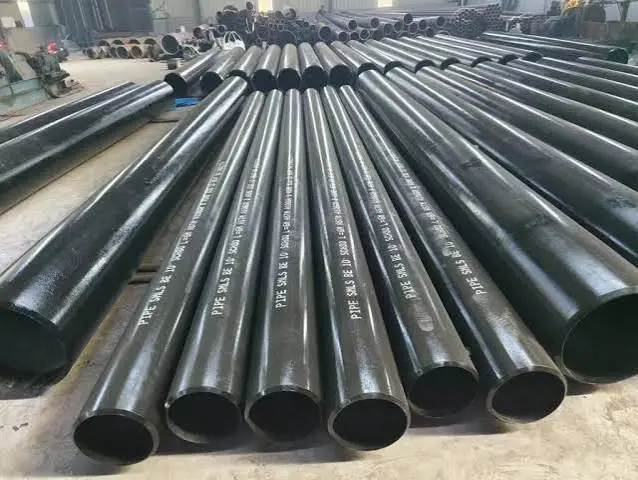
How to Choose the Right Carbon Steel Pipe
Define the Service Conditions First
The fluid, the pressure, the temperature, the flow rate, the cyclic stress, the fitting area, and the corrosion exposure are some of the first things you should look at. To give you an idea of what each number means, A106 is for high-temperature steam, A333 is for cold service, API 5L is for pipes, and A53 is for general lines. Next, figure out what size pipe you need. The design code tells you how thick the walls should be and lets you account for rust. Calculations of flow and pressure drop are used to figure out the width. Most of the time, you have to do more work when you only look at nominal diameter or price. Let the supplier know what your design code is, such as ASME B31.3 for process pipes, so that the quote matches the charts you sent them.
Carbon Steel vs. Stainless Steel, Ductile Iron, and HDPE
Carbon steel rusts more quickly than stainless steel, but stainless steel costs more at first, so it's mostly used in places where liquids would damage carbon steel. Some water networks that are buried can be made of iron that will last. It's light and doesn't rust, but HDPE isn't as strong as steel when it comes to hot or cold. Galvanized pipe has zinc added to it to protect it, but its use is still limited by temperature, layer thickness, and rust inside the pipe. Carbon Steel Pipe is in the middle. It can handle high pressure and heavy loads from the outside and doesn't cost too much. Don't compare the price to buy, but the cost over time. It could be more expensive to fix a cheap pipe that breaks quickly than to keep a steel line safe.
A53 vs. A106 and Schedule 40 vs. 80
ASTM A53 Grade B and ASTM A106 Grade B have the same minimum tensile and yield strength requirements. Their differences mainly relate to specification scope, manufacturing requirements, chemical requirements, testing, and intended service. A53 is a general term for SMLS, ERW, and galvanized pipe. But A106 only covers SMLS pipe for use in high-temperature situations. SMLS pipe is often selected for applications involving high temperature or pressure when the applicable design and material requirements call for it. Welded pipe is often cheaper and comes in more sizes, making it better for building projects, water work, and pipes with large diameters. Schedule 80 has more wall than Schedule 40. It costs more and makes the pipe heavier, but it can handle more pressure and protect against rust. Pick the plan based on the code, not what you usually do.
Carbon Steel Pipe Purchasing, Quality Checks, and Supplier Selection
Build a Complete RFQ and Compare Real Costs
It is important that the RFQ is clear about the grade, standard, SMLS or welded form, size, schedule, length, number, covering, end finish, testing needs, location, and delivery date. Next, don't just look at the prices per ton; look at how much it costs to deliver each quote as well. You also have to pay for processing like threading and beveling, as well as testing, packing, freight, security, and U.S. import taxes. These costs add up quickly. A low price might not include all of these things, which will cost you more in the long run. Also, distributors should check the labels and packaging, as clear labels keep things safe to use again. Bid teams should make sure they have all the papers they need for the bid before they give the order.
Quality Documents and Mistakes to Avoid
Get material test certificates (MTCs) from each seller. These should have heat numbers, chemical and mechanical results, hydraulic or NDT reports, records of the parts' sizes, and coating certificates. Phosphorus, carbon, manganese, and sulfur are all checked for by spectrometry.Mechanical tests, such as tensile, flattening, and bending tests on the ERW seam, verify its strength and structural integrity. Electrical or UT tests look for cracks and laminations. Additionally, avoid common procurement pitfalls: never arbitrarily substitute ASTM and EN standards. Remember to check your valves, fittings, and flanges for sharp edges, uneven shapes, and outside diameters that are too small or too large. If your engineer or the project owner doesn't tell you in writing that you can accept a different grade, don't.
Why Buyers Work with JS FITTINGS
They have been making and shipping Carbon Steel Pipe products from a plant that is more than 7,000 square meters in size for more than 30 years. Our quality management system is certified to ISO 9001, and our products have relevant ISO, CE, and GOST-R certifications or compliance documents. To find mistakes, we use spectral scanners and other tools. We send goods to more than 30 countries and work well with Petrobras, NIOC, and ADNOC. We deliver on time more than 95% of the time, customers buy from us again more than 98% of the time, and our complaint rate is less than 0.5%. We can answer your question in an hour, and we can make samples and sell them in small quantities for testing. We also do OEM and ODM work. You only need to go to one place for all of your pipe needs because we also supply butt-weld fittings and related piping products.
Conclusion
Still, Carbon Steel Pipe is a good choice because it is strong, easy to weld, comes in a range of sizes, and is cheap. Most people choose based on style and shape. If you need to work with hot things, ASTM A106 Gr. B SMLS pipe is the best choice. For water, building, and big-diameter work, ERW, LSAW, and SSAW pipe that has been welded is the best choice. For work in pipelines, API 5L grades are best, and for work in cold places, ASTM A333 grades are best. To find out about mechanical properties, sizes, and dates, you need codes. Coatings that stop rust are bare steel's main weakness. Prices alone are not a fair way to compare carbon steel, stainless steel, ductile iron, and HDPE. You should also look at how much they cost over their whole lives. Things stay safe, on budget, and on time with detailed RFQs, full test papers, and double-checked measurements.
FAQ
1. What is the difference between SMLS and ERW carbon steel pipe?
SMLS pipe has no weld seam and can be suitable for high-temperature and high-pressure service when the grade, dimensions, and design requirements are appropriate. ERW Carbon Steel Pipe is wound up and then joined at one seam. Most of the time, it costs less, but the weld seam must meet the applicable manufacturing, testing, and inspection requirements.
2. Can I use ASTM A53 instead of A106?
Only if explicitly approved by the project engineer. While both ASTM A53 Gr. B and ASTM A106 Gr. B have the same lowest tensile and yield strength. SMLS pipe that is used at high temperatures is covered by A106. The A53 standard is general and applies to both welded and galvanized pipe.
3. Which pipe works in low-temperature service?
Normal carbon steel becomes less tough when it cools down. ASTM A333 pipe is subject to notch-toughness requirements and impact testing as specified by the applicable grade and order requirements.
4. What should a quotation request include?
Please list the type, grade, size, timeline, length, number, coating, testing needs, location, shipping date, and whether the form is SMLS or welded. We can quickly see if everyone agrees when we have drawings and project specs.
Request a Carbon Steel Pipe Quote from JS FITTINGS
Want to work with a Carbon Steel Pipe company that answers quickly and keeps track of all shipments? Email admin@jsfittings.com with your required standard, grade, size, quantity, and delivery destination.Someone from our team will get back to you in an hour. We can do small-batch and sample production, and our ISO 9001 system backs up every order.
References
1. ASTM International, ASTM A106/A106M Standard Specification, 2019
2. ASTM International, ASTM A53/A53M Standard Specification, 2020
3. American Petroleum Institute, API Specification 5L: Line Pipe, 46th Edition, 2018
4. American Society of Mechanical Engineers, ASME B36.10M, 2018
5. American Society of Mechanical Engineers, ASME B31.3 Process Piping, 2022
6. NACE International, International Measures of Prevention, Application, and Economics of Corrosion Technologies (IMPACT) Study, 2016
Send Inquiry
You may like