
Choosing the Right Size Long Radius Buttweld Elbow for Your Project






2026-07-03 11:05:19
Long radius buttweld elbow size is one of the most important factors in pipeline design and installation. These 1.5D radius fittings make it easy to change the direction of a pipe system without causing too much pressure drop or turbulence. If you choose the wrong size, it can lead to inefficient flow, damage, failure before its time, and costly project delays. This guide helps purchasing managers, engineers, and sellers understand the diameter, pressure ratings, material suitability, and compliance standards needed to make sure that pipeline projects work well, are safe, and can be relied on.
Understanding Long Radius Buttweld Elbows and Their Specifications
What Makes Long Radius Buttweld Elbows Essential?
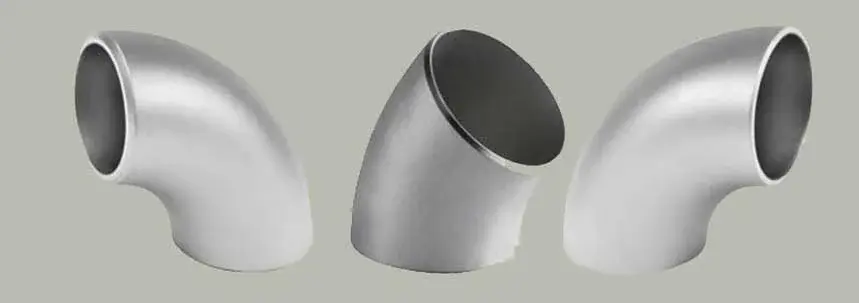
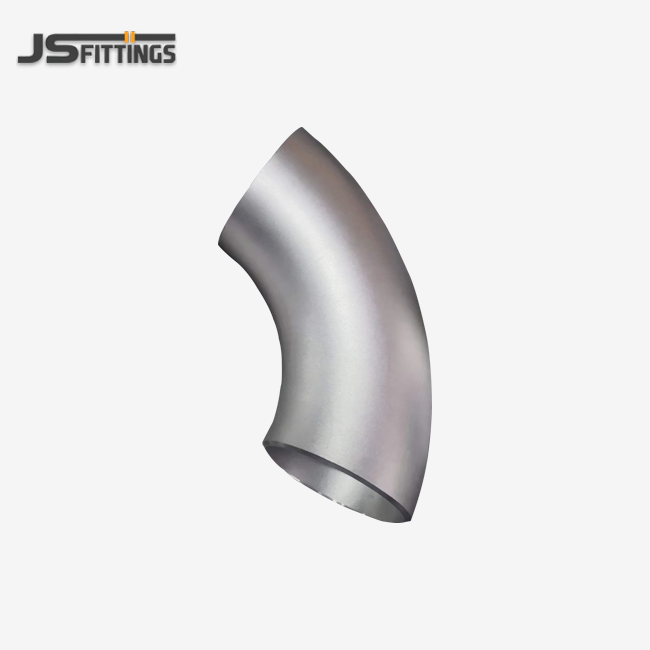
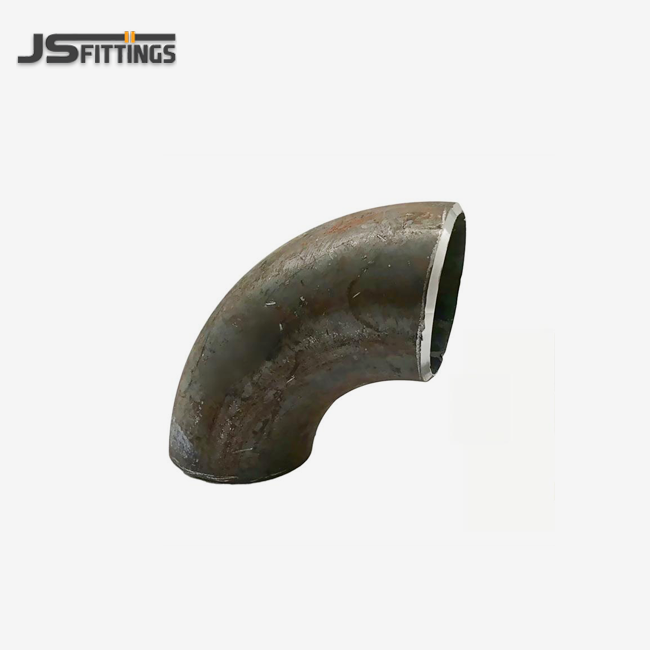
A hot-pressed or forged long-radius buttweld elbow is a pipe part that is meant to change the flow of fluid at 45°, 90°, or 180° angles. It is different because its radius of curve is 1.5 times the diameter of a regular pipe (R = 1.5D). This longer pass cuts down on frictional losses and damage caused by turbulence more than R=1.0D options. When angled ends are welded to pipes that are connected together, the buttweld connection method makes a full-penetration joint that is structurally strong and doesn't leak at high temperatures or pressures.
Critical Specifications You Need to Know
Knowing the technical specs of a job helps you decide which long radius buttweld elbow to use. Weld elbows from JS FITTINGS meet ASME/ANSI B16.9, MSS-SP-43, EN 10253, and DIN 2605 standards. For a wide range of industrial uses, we offer seamless choices from 1/2" to 24" and welded (ERW/EFW) versions up to 72". You can choose wall thicknesses from Schedule 10s to XXS (Schedule 160), which lets you match the pipeline pressure class and flow speed perfectly.
Because they are strong and cheap, carbon steel types like ASTM A234 WPB are used a lot in industry. Stainless steel types like ASTM A403 WP304/304L and WP316/316L are better at resisting rust in chemical processing and marine settings. ASTM A234 WP5, WP9, WP11, WP22, and WP91 alloy steels are used in high-temperature power production.
Pressure Ratings and Operational Reliability
Know the highest pressure that your system can handle (MAOP) and how the temperature can change so that you can choose parts that will keep their structural integrity over time. Aligning the pressure grade stops catastrophic breakdowns and makes the system last longer.
How to Choose the Right Size Long Radius Buttweld Elbow for Your Project?
Define Your Pipeline's Core Parameters
Document your system operating parameters to determine the nominal pipe size (NPS), the estimated inside diameter, and the international sizing reference. Next, figure out the design pressure and temperature for the long-radius buttweld elbow. These will have a direct effect on the required material grade and wall thickness. The chemical makeup and pH of the fluid being moved help determine the appropriate material grade to prevent corrosion and chemical degradation.
Evaluate Radius Length Impact on Flow Dynamics
Long radius elbows generally reduce pressure drop compared to short radius elbows, especially in high-flow systems at the same flow rates. This means that the equipment lasts longer, costs less to run, and doesn't wear out as quickly. It is standard practice for pigs to be able to move smoothly through pipes with a 1.5D radius.
Align with Industry Standards and Project Codes
In North America, ASME B16.9 sets the rules for factory-made worked buttwelding parts such as long-radius buttweld elbows. It says what materials must be used, how they should be measured, and how they should be tested. In Europe, projects usually follow EN 10253 or DIN rules, while Russia and the CIS regions require GOST compliance.
Balance Pressure Rating, Durability, and Cost
Premium materials and heavier wall schedules cost more up front, but they save money in the long run on repairs and replacements. When you look at installation work, downtime risk, and lifecycle length, critical apps often support a higher initial investment. Standard scheduling and carbon steel can be used on non-critical service lines.
When to Specify Custom Sizing or Protective Coatings?
For special practical needs, JS FITTINGS can provide custom sizes, non-standard degrees (60° or 120°), unusual metal compositions, and specific heat treatments. For example, epoxy linings are used to protect drinkable water pipes, fusion-bonded epoxy (FBE) is used for underground pipes, and PTFE linings are used for harsh chemicals.
Installation Best Practices for Long Radius Buttweld Elbows
Preparation and Inspection Procedures
When you get the parts, check to see if the long-radius buttweld elbow was damaged in transit and make sure that the bevel angles, measurements, and heat numbers all match. Align the plans for the pipes and elbows so that the internal width stays the same across all joints. This will stop turbulence and corrosion or erosion at the joints.Remove mill scale, oil, and other contaminants that could compromise weld integrity by cleaning the joint surfaces.
Welding Guidelines for Optimal Joint Strength
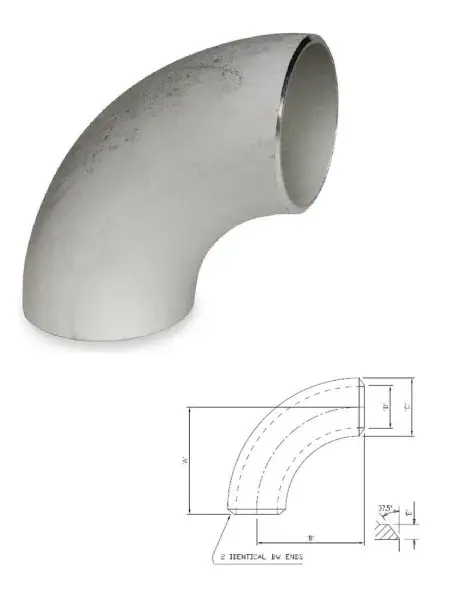
Buttweld parts need to be done carefully so that they fully penetrate and fuse. Our precise beveling, which is done according to ASME B16.25 standards, makes sure that standard bevel angles, such as 37.5° (depending on wall thickness and heavy sections), always have compound J-bevels for heavy-wall pipes where required. This makes welding faster and more reliable.
Addressing Alignment and Thermal Expansion
To keep the axial alignment straight during tack welding, use internal or external alignment clamps. Use protractors or laser alignment tools to check the angle orientation. Add expansion rings or bellows to long pipeline runs to keep elbow stress from building up during temperature cycles. Based on the features of the material and operation, figure out the growth coefficients.
Comparing Long Radius Buttweld Elbows with Other Types and Materials
Long Radius vs. Short Radius Elbows
Short radius (1.0D) elbows cause more turbulence, higher pressure drop, and faster erosion at the outer bend, so they should only be used when there isn't much room for installation and the flow speed is low. When it comes to high-pressure, high-speed situations, a long-radius buttweld elbow works better and uses less energy.
Stainless Steel vs. Carbon Steel Material Selection
Carbon steel (ASTM A234 WPB) is commonly used in industrial piping and is suitable for moderate-temperature service depending on design code limitations. 304L and 316L stainless steel types are worth the extra cost in corrosive settings like chemical plants, the ocean, and food preparation, where contamination or rust could put people or products at risk.
Buttweld vs. Threaded and Socket Weld Elbows
Buttweld elbows have the strongest joints, eliminate the risk of crevice corrosion, and can handle the highest temperatures and pressures. Because the full-penetration weld matches the strength of the parent pipe, the buttweld joints can also match the strength of the parent pipe.
Procurement Guide: Where and How to Buy Long Radius Butt-Weld Elbows?
Evaluating Supplier Credentials and Certifications
It is best for projects to go with manufacturers who have ISO 9001 for quality management, CE marks for entry to European markets, and industry-specific qualifications like GOST-R for Russian markets or API monograms for oil and gas uses. There are certificates for JS FITTINGS from ISO, CE, and GOST-R, and big energy companies like NIOC, ADNOC, and Petrobras use our products. A long-radius buttweld elbow from a certified supplier ensures project safety.
Understanding Pricing Models and Lead Times
We have standard sizes of carbon steel elbows in stock and can ship them quickly. However, it takes 4 to 8 weeks to make elbows out of exotic metals or in a unique shape. With a monthly production capacity of over 90 containers and a 95% on-time delivery rate, we offer competitive bulk pricing to support large-scale EPC projects and distributor stocking programs.
Verifying Quality Assurance and Traceability
Only Tier-1 mills like Baosteel and Tsingshan supply steel to JS FITTINGS. This ensures consistent quality and clear documentation of where the steel came from. Our improved hot-mandrel and cold-forming methods keep the wall thickness the same at the elbow's extrados, which is where internal pressure is most likely to cause damage.
Logistics and After-Sales Support
Our seaworthy wooden cases or palletized designs for long-radius butt-weld elbows with clear heat-number marks make it easier for distributors to keep track of their stock and clear up any confusion that might happen on-site. Our experienced foreign trade team answers questions within an hour, helping to meet deadlines for procurement and making sure that technical needs are clear. Full service after the sale includes documentation help and technical support.
Conclusion
For buying to go well, standards must be followed, quality must be checked carefully, and suppliers must be trusted. You can choose the right long radius buttweld elbow if you know the width, pressure, temperature, and flow factors of your pipeline.
FAQ
1. How does a long-radius buttweld elbow differ from a short-radius one in performance?
Short radius elbows (R=1.0D) have a rougher sweep than a long radius butt-weld elbow (R=1.5D), which means there is less pressure drop and turbulence. They are the standard in the industry for systems that need to deal with flow. On the other hand, short-radius elbows are only used in setups with limited room where flow efficiency is not as important.
2. Why is bevel preparation critical on buttweld elbows?
Following ASME B16.25 for precision CNC beveling ensures steady angles for good welding. When bevels aren't done right, they can lead to weak links, no fusion, or only partial entry, all of which are major failure points under high pressure.
3. Can long radius buttweld elbows be used in piggable pipelines?
Yes, elbows with a big radius are best because most standard utility pigs can typically pass through 1.5D radius bends under suitable pipeline conditions.
4. What heat treatment is required for carbon steel long-radius butt-weld elbows?
ASTM A234 specifies that certain grades and manufacturing processes require heat treatment, such as normalizing, to remove forming stresses, refine grain structure, and improve overall toughness. Post-weld heat treatment (PWHT) is often needed to keep elbows with thick walls over 19 mm from breaking.
Partner with JS FITTINGS for Reliable Long Radius Buttweld Elbow Supply
As a qualified provider to some of the world's biggest energy companies, JS FITTINGS knows how important it is to deliver on time and with accurate measurements. We offer a wide range of sizes, from 1/2" to 24" for seamless pipes to 72" for welded pipes, with different wall thickness choices from Schedule 10s to XXS. With 3.1 Mill Test Certificates and advanced NDT quality control, you can track all the way back to the materials used to make each part. We ship more than 90 containers every month to big EPC projects and distributor stocking programs, and we deliver on time more than 95% of the time. You can email our knowledgeable staff at admin@jsfittings.com to get technical help, competitive prices, and custom solutions from a long radius buttweld elbow manufacturer you can trust to make your project a success.
References
1. ASME B16.9-2018, Factory-Made Wrought Buttwelding Fittings, American Society of Mechanical Engineers, New York.
2. Nayyar, M.L. (2000), Piping Handbook, Seventh Edition, McGraw-Hill Professional, Chapter on Pipe Fittings and Flanges.
3. Mohitpour, M., Golshan, H., Murray, A. (2007), Pipeline Design and Construction: A Practical Approach, Third Edition, ASME Press, New York.
4. ASTM A234/A234M-2019, Standard Specification for Piping Fittings of Wrought Carbon Steel and Alloy Steel for Moderate and High Temperature Service, ASTM International, West Conshohocken.
5. EN 10253-2:2007, Butt-welding Pipe Fittings – Part 2: Non-alloy and Ferritic Alloy Steels with Specific Inspection Requirements, European Committee for Standardization, Brussels.
6. Parisher, R.A., Rhea, R.A. (2011), Pipe Drafting and Design, Third Edition, Gulf Professional Publishing, Houston, Texas.
Send Inquiry

_1775030564781.webp "Blind Flange")
Related Industry Knowledge
- What is ASME B16.5: A Guide to ASME B16.5 carbon steel flange
- What is an API 5L Seamless Steel Line Pipe?
- The Ultimate Guide to Slip-On Flanges: Exploring Applications and Benefits
- Lap Joint Pipe Flanges: Everything You Need to Know
- Buttweld Elbow vs Socket Weld Elbow: Key Differences Explained
- Carbon Steel Forged Steel Flange: Class 150 to 2500 Guide
- Why Is Long Radius Buttweld Elbow Preferred in Oil & Gas?
- What specification is the carbon steel black pipe?
- What causes porosity in carbon steel pipe welding?
- Is a 90 or 45 degree elbow better for drain?