
FBE vs 3LPE vs CWC for Underground and Subsea Applications






2026-07-06 10:56:06
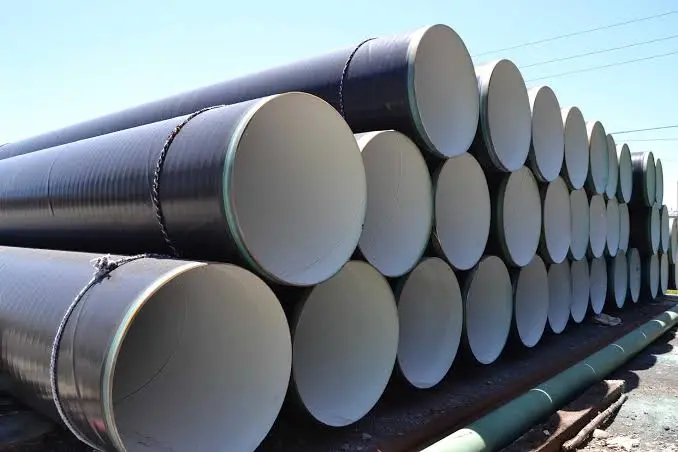
Selecting the optimal external protection system for buried or submerged pipelines is a decision that directly influences project longevity, maintenance costs, and operational safety. Among the most trusted solutions, FBE-coated steel pipe provides excellent adhesion and chemical resistance, while 3LPE (3-Layer Polyethylene) stands as the gold standard for long-term underground corrosion prevention. Concrete Weight Coating (CWC) is primarily used in subsea applications to manage buoyancy and protect against mechanical damage. Understanding the distinctions between these three coating technologies empowers procurement managers, EPC contractors, and industrial end users to make informed choices that minimize risk, ensure compliance, and control total cost of ownership.
Introduction
Cracks and corrosion are two of the most constant threats to pipeline systems. They weaken structures and cause accidents and costly downtime. Underground gas mains, marine oil pipes, and water distribution networks all need strong outside security to withstand harsh soil chemistry, saltwater exposure, and mechanical stress. The surroundings, the size of the project, the budget, and government rules all play a role in deciding between FBE, 3LPE, and CWC coats. This guide gives an in-depth comparison engineered for global B2B procurement professionals seeking dependable, low-cost options. We look at each coating technology's technical features, how it's used, and how well it works in the real world. This helps you make sure that your requirements match up with what the project needs and what the seller can do.
Understanding the Core Coating Technologies: FBE, 3LPE, and CWC
Fusion Bonded Epoxy (FBE) Coatings
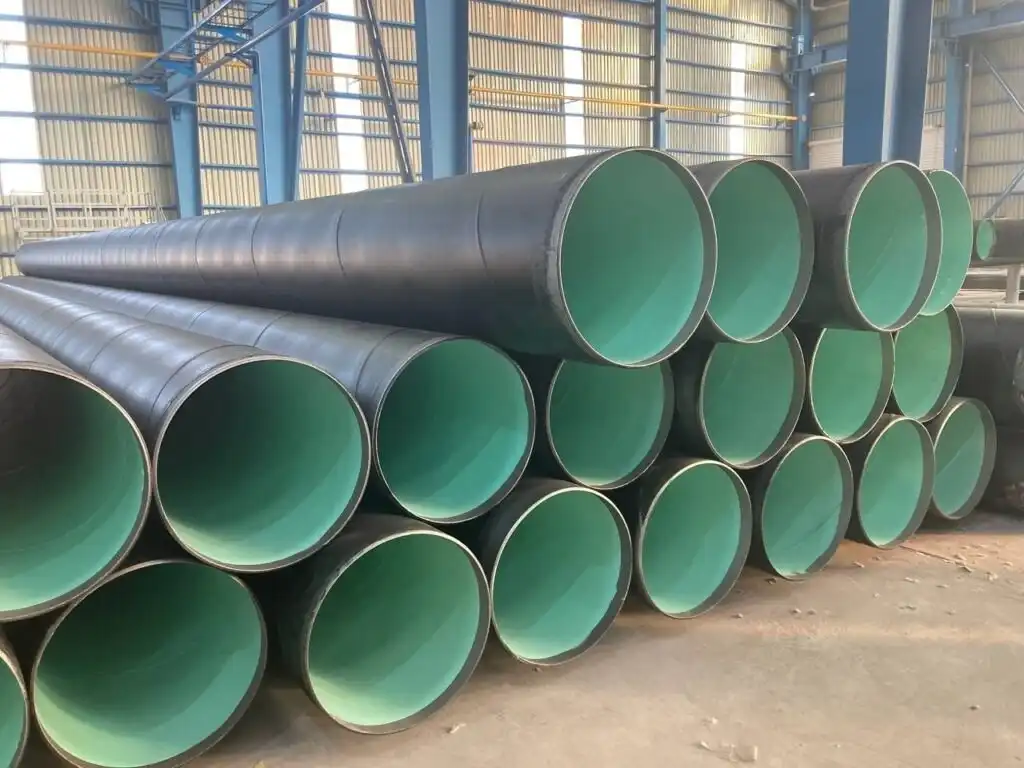
Fusion-bonded epoxy is a thermosetting powder coating that is electrostatically applied to steel surfaces that have already been heated, usually to temperatures around 232°C (450°F). The heat melts the epoxy particles, causing them to melt, flow, and undergo chemical cross-linking. This makes a continuous, permanent protected surface. This process eliminates solvent evaporation typical of liquid coatings and ensures a continuous impermeable barrier. Standards like CAN/CSA Z245.20, AWWA C213, and API 5L are met by FBE, which has a higher binding strength and typically demonstrates strong performance in hot water soak tests under relevant standards. When it comes to long-distance oil and gas transmission lines, potable water systems,and marine pilings, this coating is ideal because it can stand up to soil stress, bacteria, hydrocarbons, and alkalis. Two-layer FBE systems, also called ARO (Abrasion Resistant Overlay) systems, add an extra layer to prevent mechanical damage during directional drilling and lay-barge work. Because FBE doesn't act as a shield, cathodic protection systems can still work well even if the layer is broken. This stops rust from spreading below the film.
3-Layer Polyethylene (3LPE) Coatings
A three-layer coating technique called 3LPE is made up of an epoxy primer, a copolymer glue, and a polyethylene finish. This structure has the good bonding and corrosion resistance of FBE and the dynamic strength and water resistance of polyethylene. The epoxy primer sticks directly to the blast-cleaned steel surface, as required by DIN 30670 and similar international standards. The adhesive layer makes sure that the primer and the upper polyethylene shell are strongly joined. With the plastic topcoat, moisture, soil chemicals, and mechanical abrasion and wear can't get through. This contributes to long service life, often designed for 30–50 years or more, depending on operating conditions. 3LPE coatings have great cathodic disbondment protection, which means that even minor localized damage to the coating won't compromise the integrity of the protective layer around it. Because of this, 3LPE is the best material for gas mains that run underground, water distribution networks, and marine pipes that work in harsh conditions.
Concrete Weight Coating (CWC)
Concrete weight coating is mostly used on underwater pipes to protect them mechanically, keep their weight stable, and control their movement. A layer of reinforced concrete is applied on top of an anti-corrosion primer, which is usually FBE or 3LPE. CWC keeps the pipeline safe from damage during installation by securing it to the bottom and fighting the forces of buoyancy in underwater uses. Even though CWC doesn't protect against electrochemical corrosion as well as FBE or 3LPE, its main job is to keep the pipeline stable and protect the anti-corrosion layer below from mechanical threats. CWC is heavily utilized in offshore oil and gas subsea pipelines where negative buoyancy (weight control) and mechanical protection are critical design requirements.
Comparing FBE, 3LPE, and CWC for Subsea and Underground Applications
Corrosion Resistance and Longevity
Because they are chemically stable and don't let water or air through, FBE coats are very good at resisting corrosion. Because the covering is both hard (Shore D > 80) and flexible, it can handle changes in temperature without breaking. When used correctly and kept up, FBE can protect against damage for up to 50 years in harsh soil conditions. The performance of 3LPE coats is even better because the polyethylene topcoat acts as a second shield against water, making up for any flaws in the epoxy primer. Tests in the lab show that 3LPE systems are better at stopping cathodic disbondment than FBE systems that work alone. This reduces the likelihood of underfilm corrosion. Even though CWC isn't really an anti-corrosion system, it does protect the FBE or 3LPE layer underneath from damage and keeps it stable, so it doesn't come into direct contact with soil or seawater.
Mechanical Protection and Abrasion Resistance
The thick polyethylene topcoat of 3LPE coatings protects against mechanical damage better than FBE alone. This is because it absorbs hits and fights wear and tear during handling, shipping, and installation. Because of this, 3LPE is the best material for pipes that will be put in rough terrain or where the ground is packed down a lot. FBE coatings, especially dual-layer ARO systems, and FBE coated steel pipe are good at resisting wear and tear in many situations, but they are more likely to get damaged during installation than 3LPE. CWC provides the best mechanical safety, which is why it is needed for underwater pipes that are hit by trawlers, anchor drops, and moving ground. The strengthened concrete shell spreads out loads and absorbs shocks, which keeps the anti-corrosion protection below from getting damaged.
Application Process and Surface Preparation
For all three covering methods, the surface must be properly prepared. To get the anchor profile depth of 40–100 microns needed for mechanical bonding, the metal must be blasted clean to Sa 2.5 or Sa 3 standards, which means it is almost white. For the FBE application, careful temperature control is needed to make sure that the coating melts and cures properly. The coating usually gets to a thickness of 300–600 microns. The method of applying 3LPE is more complicated because the epoxy primer, glue, and polyethylene layers must be put on in a certain order, usually in a continuous extrusion process. For the CWC application, special tools are needed to wrap the strengthened concrete around the pipe and then let it cure so that it has the right compression strength. To meet foreign standards and project requirements, each step needs skilled workers and strict quality control.
Performance in Aggressive Environments
There are some problems that are only found in saltwater under the sea, such as high chloride levels, problems with cathodic protection, and mechanical stress from currents and moving bottoms. Because they don't shield, FBE coatings work well in these conditions. This means that cathodic protection currents can reach affected areas and stop rust. 3LPE coats make things more resistant to water, which lowers the chance of water getting in and causing underfilm rust. For offshore uses, where controlling buoyancy and mechanical safety are very important, CWC is a must. When you use an FBE or 3LPE primer with a CWC overlay, you get full defense against both electrical and mechanical risks.
Procurement Insights: Choosing the Right Coating for Your Project
Environmental Conditions and Coating Selection
The setting your pipeline will be in will have a lot to do with your choice between FBE, 3LPE, and CWC. Standalone FBE can protect underground pipes in fairly corrosive soils in a cost-effective way while also being very compatible with cathodes. Pipelines in areas with very rough soils, swampy land, or water tables that rise and fall need 3LPE because it is a better protection against moisture and lasts longer. For underwater pipelines, especially those in deep water or areas with a lot of boat traffic, CWC is needed to control buoyancy and keep the pipes from breaking. Procurement managers should carefully look over the site and talk to coating experts to make sure that the qualities of the coating are right for the risks of the project.
Total Cost of Ownership and Value Analysis
Most of the time, FBE coats have the lowest initial material cost. However, 3LPE systems are more valuable in the long run because they lower upkeep costs and make pipelines last longer. CWC adds a lot of cost because the materials are heavy and the application is complicated, but it is necessary for underwater uses where other options are not possible. Buyers need to look at the total cost of ownership, which includes things like installation costs, the frequency of inspections, and the possible costs of downtime. At JS FITTINGS, we help procurement teams do lifetime cost studies to make sure that the coating choice fits the budget and meets performance standards.
Supplier Qualifications and Quality Assurance
Working with a dependable maker is important for the job to go well. Look for suppliers that have foreign approvals like ISO 9001 and CE, as well as approvals specific to your business like PETROBRAS, NIOC, and ADNOC. JS FITTINGS has been making things for more than 43 years, and their goods comply with ASTM, ASME, DIN, JIS, and GOST standards. Our high-tech testing tools, like spectral analyzers and non-destructive testing (NDT) systems, make sure that every covered pipe meets our strict quality standards. We use high-voltage DC scanning, cathodic disbondment tests over 24 to 48 hours, and differential scanning calorimetry to check the degree of cure for holiday detection testing (100% inspection coverage). Over 95% of our deliveries are on time, and over 98% of our customers buy from us again. This shows how committed we are to being reliable and making sure our customers are happy.
Application Cases and Industry Use Cases
Long-Distance Oil and Gas Transmission
Transcontinental pipes that move natural gas and crude oil depend on FBE and 3LPE coats to protect them from the shear forces of compacted soil, changing temperatures, and different types of landscape, from corrosive marshes to rough deserts. It has been shown that API 5L grade steel pipes treated with dual-layer FBE or 3LPE systems work very well in these tough situations, requiring less upkeep and keeping the supply going. Large energy projects in the Middle East, South America, and Eastern Europe have all used covered pipes from JS FITTINGS. The company has always met project schedules and technical requirements.
Offshore and Marine Infrastructure
Subsea pipes and marine pilings work in splash zones and deepwater areas where mechanical and corrosion risks are common.Steel pipe FBE coating solutions, particularly dual-layer FBE (ARO) systems, protect against damage during installation, and 3LPE coats keep things from rusting over time. CWC is put on top of the anti-corrosion coating to keep the pipeline stable on the bottom and protect it from anchor strikes and trawling. JS FITTINGS offers project-ready end preparation with standard cut-backs, which makes welding possible right away in the field and cuts down on installation time.
Potable Water and Municipal Systems
To keep the inside and outside of municipal water delivery networks clean and safe, they need food-grade FBE coatings that are NSF-61 approved. These coats stop tuberculation (the formation of crust) and reduce friction loss, which keeps the water quality high and lowers the cost of pumping energy. 3LPE coatings are often used on underground water mains in dirt that is corrosive because they create a barrier that keeps water out, which increases the system's lifespan and lowers the cost of upkeep over its lifetime.
Future Trends and Innovations in Pipeline Coating Technologies
Advanced FBE Formulations
New research into high-glass transition temperature (Tg) FBE formulas is making covered pipes more useful by letting them work at temperatures higher than 110°C without losing their effectiveness. These high-tech mixtures are especially useful for geothermal uses and oil and gas pipeline systems that are exposed to high temperatures. Automation of FBE application processes, such as robotic powder pouring and real-time thickness tracking, is making the coating more consistent and lowering the cost of production.
Hybrid and Smart Coating Systems
Hybrid systems that combine FBE with new plastics or nanocomposites are starting to look like good choices for harsh settings. Smart coatings with built-in sensors can check the integrity, temperature, and strain of the coating in real time, giving workers early warning of possible breakdowns. These new ideas should make pipelines safer, lower the cost of inspections, and allow for more advanced upkeep plans.
Sustainable and Eco-Friendly Coatings
More rules about the environment are making people want sustainable coating materials and methods, such as ASTM A106 Grade B FBE-coated seamless steel pipes to minimize environmental impact., manufacturers are working on water-based epoxy bases, polyethylene topcoats that can be recycled, and low-VOC ways to apply paint. JS FITTINGS is dedicated to environmentally friendly production. We are always tweaking our methods to cut down on trash, energy use, and pollution while keeping the quality and performance of our products.
Conclusion
To pick between FBE, 3LPE, and CWC coatings, you need to know a lot about the project's needs, the climate, and how well you want the coatings to work in the long run. At a reasonable price, FBE has good adhesion and cathodic compatibility, so it can be used in mild corrosion conditions. 3LPE offers better mechanical support and keeps water out, which makes pipelines last longer in harsh soils and underground uses. For underwater pipes, CWC provides important buoyancy control and mechanical shielding. Procurement experts can make sure that the coating they choose minimizes risk, meets regulations, and performs reliably over time by working with experienced makers, conducting thorough quality checks, and figuring out the total cost of ownership.
FAQ
1. What is the expected lifespan of FBE coated pipes in subsea conditions?
In underwater settings, FBE coated steel pipes usually last between 30 and 50 years, but this depends on the chemistry of the water, how well the cathodic protection works, and how much mechanical stress the pipes are under. Dual-layer FBE systems with ARO are more durable, so they last longer in harsh saltwater environments.
2. How does mechanical protection differ between FBE and 3LPE coatings?
The thick polyethylene topcoat of 3LPE coats provides better mechanical protection because it avoids wear and damage from handling and installation. Even though FBE coatings are chemically resistant and stick well, they are more likely to get damaged by mechanical forces if they are not put in two-layer ARO designs.
3. What factors influence delivery timelines and costs for coated pipes?
The amount of orders, the complexity of the covering, the needs for customization, and the production schedule all affect how long it takes to deliver. JS FITTINGS can ship more than 90 containers every month, and more than 95% of the time, they achieve on-time delivery performance. We answer questions within an hour and offer flexible wait times so that you can meet the dates for your projects.
Partner with JS FITTINGS for High-Performance FBE Coated Steel Pipe Solutions
Since 1983, JS FITTINGS has been in the pipeline business around the world, providing coated steel pipes that meet the strict needs of EPC companies, distributors, government building projects, and industrial end users. Our FBE coated steel pipe options meet the requirements of CAN/CSA Z245.20, AWWA C213, and API 5L. They provide better adhesion, cathodic disbondment protection, and end preparation that is ready for the project. Our goods come in sizes from DN15 to DN2000, and you can make them exactly how you want them. Our prices are also very reasonable. With our ISO, CE, GOST-R, PETROBRAS, NIOC, and ADNOC standards, you can be sure that the quality you receive is the best in the world, backed by 43 years of industrial experience. Contact admin@jsfittings.com right away to talk about your project needs with our skilled team and find out why leading FBE coated steel pipe suppliers trust JS FITTINGS for dependable, low-cost corrosion protection solutions.
References
1. NACE International. "Recommended Practice for the Application and Use of Fusion-Bonded Epoxy (FBE) Coatings for Underground or Submerged Pipe." NACE RP0394, 2019.
2. American Water Works Association. "Fusion-Bonded Epoxy Coating for the Interior and Exterior of Steel Water Pipelines." AWWA C213-20, 2020.
3. Canadian Standards Association. "External Fusion Bond Epoxy Coating for Steel Pipe." CAN/CSA Z245.20-18, 2018.
3. International Organization for Standardization. "Petroleum and Natural Gas Industries – External Coatings for Buried or Submerged Pipelines Used in Pipeline Transportation Systems – Part 2: Fusion-Bonded Epoxy Coatings." ISO 21809-2:2014.
4. European Committee for Standardization. "Polyethylene Coatings for Steel Pipes and Fittings – Part 1: External Three Layer Polyethylene-Based Coatings." EN 10288-1:2003.
5. Det Norske Veritas. "Submarine Pipeline Systems: Design, Construction, and Installation." DNV-OS-F101, 2021 Edition.
Send Inquiry
Related Industry Knowledge
- What is ASME B16.5: A Guide to ASME B16.5 carbon steel flange
- What Facing Types Suit a Carbon Steel Forged Steel Flange?
- ASTM A312 vs ASTM A213 Steel Pipe: What Are the Key Differences?
- A53 ERW Pipe – Type, Grade, Performance, Tolerance, Application Full Analysis
- What are ANSI Pipe Flanges, And How Does it work?
- How long does A53 ERW Pipe last?
- Induction Buttweld Bend vs Cold Bend: Pros and Cons
- What is seamless carbon steel pipe?
- Seamless vs Welded Buttweld Tee: Which Performs Better?
- What is the difference between a 45 degree and 90 degree elbow?