
How Are Plate Flanges Manufactured and Tested?






2026-10-13 10:25:14
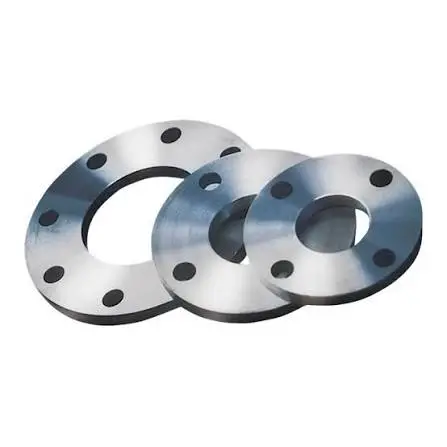
A plate flange — also called a flat flange or slip-on plate flange — is a flat, circular steel disk with a central bore, cut directly from rolled plate material and fillet-welded over the pipe end. Unlike forged hub flanges, it carries a low profile that suits compact piping layouts and budget-conscious projects. At JS FITTINGS, we produce flat flanges from DN15 to DN2000 across EN 1092-1, DIN, BS 4504, and applicable ASME standards. This article walks through exactly how these components are manufactured, tested, and maintained — so procurement teams can source with confidence.
Understanding Plate Flanges: Types, Materials, and Design Standards
What a Plate Flange Is — and Where It Fits
A slip-on plate flange fits over the end of the pipe and has two fillet welds made on it: one inside the hole and one on the outside.Unlike weld neck flanges that feature an extended tapered hub, plate flanges have a compact, hubless geometry that substantially reduces component weight and material cost. It is used a lot in places like water treatment plants, irrigation networks, low-pressure cooling systems, and city waterworks where the working pressure is within commonly specified PN6 to PN40 ranges or, where applicable, ASME Class 150 pressure ratings.
Common Types and Facing Options
Flat flanges can have different facing styles to meet different sealing needs. For most utility-grade links, the Flat Face is normal. If you need a tighter gasket contact, you can get the Raised Face. Blind plate versions block off pipe ends while pressure testing is being performed or the system is being turned off. The sizes of each type range from DN15 to DN2000, so they can be used for everything from instrument lines to large-bore water mains.
Materials and Design Standards
A36, Q235, S235JR, and SS400 are all grades of carbon steel that are good for general use. Grades SS304/L and SS316/L of stainless steel can handle fluids that are slightly acidic. Standards like EN 1092-1 Type 01, DIN 2573/2576/2501/2502, BS 4504, AS 2129, and ASME B16.5 are known and used. These standards specify dimensions such as bolt-circle diameters, flange thicknesses, and applicable facing requirements. They make it easy for EPC contractors and distributors to make sure that bids are compliant.
The Manufacturing Process of Plate Flanges
Raw Material Selection and Traceability
A verified hot-rolled steel plate and a Mill Test Certificate that meets EN 10204 3.1 are used at the start of every production run. At JS FITTINGS, we check the Carbon Equivalent value before we start cutting. This helps confirm that the steel has suitable weldability without requiring preheating. Plate thickness is checked at several locations to look for variations in rolling tolerances that might affect the flatness of the finished flange.
Cutting, Boring, and Bolt-Hole Machining
Blanks are cut with CNC plasma or laser tools and then moved to CNC lathes to be machined on the bore and face. Bolt holes are made on a CNC radial drill press that keeps the bolt circle diameter within ±0.3 mm. This tolerance is important because holes that aren't properly aligned slow the fit-up process on-site and put extra stress on the bolts. The bore is machined to the customer-specified pipe outside diameter, including non-standard sizes required for tank nozzles or custom components. This precision machining capability makes partnering with an experienced large-diameter plate flange manufacturer essential for projects requiring bespoke dimensions and non-standard nozzle connections.
Surface Finishing and Facing
The gasket mounting face is turned to the goal roughness band after it has been machined. Flanges are protected during shipping and storage externally with yellow anti-rust paint, black lacquer, or hot-dip galvanizing. Galvanizing is especially important for waterworks that are submerged, where bare carbon steel would rust quickly.
Testing and Quality Inspection Procedures for Plate Flanges
Dimensional and Visual Inspection
Every flat flange undergoes comprehensive dimensional inspection verifying the bore diameter, bolt circle diameter (BCD), flange thickness, outside diameter (OD), and face flatness. Coordinate measuring tools can verify critical flange dimensions and applicable geometric tolerances. This helps ensure consistent gasket seating during bolt-up and prevents uneven gasket loading. Visual inspectors check the sealing face for unacceptable scratches, damage, or machining marks that could prevent the specified surface finish from being achieved. Even a small scratch can create a potential leak path when the flange is pressurized.
Non-Destructive Testing Methods
Internal laminations are a known risk for plate flanges because they are made from rolled plate instead of a casting. Ultrasonic testing (UT) examines the source plate for internal laminations and non-metallic inclusions before blanks are cut. Magnetic Particle Testing and Radiographic Testing are used based on customer or project requirements to check the integrity of the weld zone on final parts. These NDT methods find flaws below the surface of a part without damaging the component.
Pressure Testing and Certification Documents
Hydrostatic testing checks for leakage by applying the test pressure specified by the applicable piping code, product standard, or project specification and maintaining it for the required period. Where hydrostatic testing is impractical or specifically prohibited by the applicable procedure, pneumatic testing may be used under the required project and safety controls. All test results are written down in inspection reports that can be linked to the raw material certificate's heat number. JS FITTINGS maintains ISO 9001, CE, and GOST-R certifications, and is an approved supplier to major international energy corporations including ADNOC and Petrobras. These credentials can support supplier qualification and documentation requirements for relevant projects.
Comparing Plate Flanges: Manufacturing Quality and Application Suitability
Plate Flange vs. Weld Neck Flange
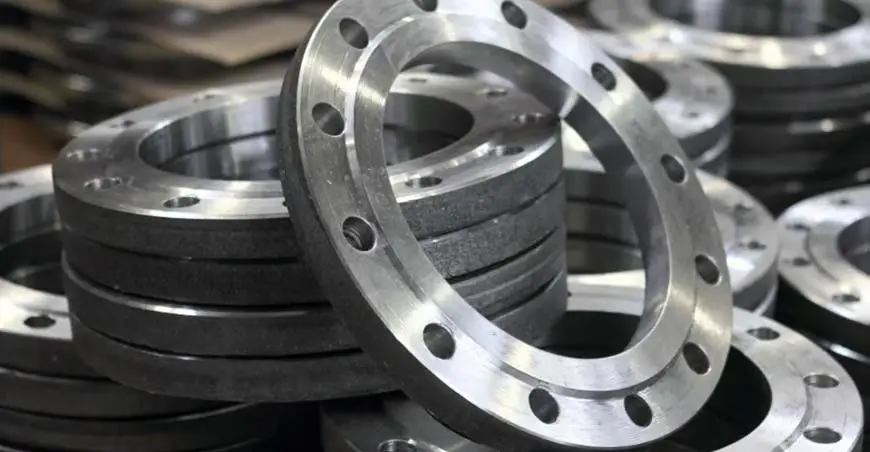
A weld neck flange costs 30% to 50% more per unit than a plate flange cut from certified plate stock because it needs to be die forged, hub turned, and butt-weld prepared. This price difference is important for water or air lines with a big diameter because they have dozens or even hundreds of links in a single contract.Partnering with an experienced plate flange manufacturer allows procurement teams to source flanges precision-machined to exact project dimensions while preserving the cost and weight advantages of plate-based designs. The main difference lies in their design and typical application range: weld neck flanges are commonly selected for higher-pressure and more demanding services, while plate or slip-on flanges are often used for lower-pressure utility applications.
How Material Choice Affects Performance?
Most of the time, carbon steel plate flanges are used for water, compressed air, and low-pressure gas. Stainless steel 316L is used for mild chemical service, seawater cooling, and food-processing applications where chloride pitting is a concern. Picking the right material has a direct effect on the welding process, the treatment that happens after the welding, and the coating requirements. That's why confirming the service fluid early on in the buying process saves a lot of money during manufacturing.
Cost Factors and Order Quantities
Flat flanges are priced based on the plate grade, size, pressure class, facing type, and surface treatment. Large orders lower the price per unit because the time it takes to set up the machine is spread out over more pieces. Before a full-volume release, JS FITTINGS allows sample orders and small-batch trial runs. This lowers the procurement risk for distributors trying a new product line or builders looking at a new source.
Maintaining Plate Flanges for Long-Term Performance and Safety
Routine Inspection Practices
When used normally, a flat flange that was made correctly—with parallel faces, the right bore size, and double fillet welds—needs very little corrective maintenance. There should be regular checks for gasket expansion, bolt rust, and signs of seepage at the weld toes. Ultrasonic thickness measurement can detect material loss caused by corrosion before it becomes a significant integrity concern or a safety issue.
Detecting and Addressing Degradation
Paints on the surface are the first line of defense. To stop underfilm corrosion, you should fix any damaged paint or galvanizing right away. If abrasive media cause pitting on a sealing face, re-machining to recover the correct roughness profile is better than replacing the whole face, as long as the remaining wall thickness stays within code limits.
Production Quality as a Maintenance Advantage
When flanges that are made to exact measurements and checked by a CMM arrive at the job site, they are ready to bolt directly into the piping system without additional machining. This directly reduces installation work, minimizes gasket damage caused by uneven seating, and can shorten the maintenance cycle over the system's lifetime. These benefits can reduce total lifecycle costs, which buying teams should consider alongside the initial unit price.
Conclusion
Flat flanges, including the plate flange, are a tried-and-true, low-cost way to connect low- to medium-pressure pipe systems in water treatment, irrigation, cooling, and utility infrastructure. Their worth is directly related to the quality of the source plate, how well the hole and face are machined, and how well the NDT and dimensions are checked. If a buyer knows how a product is made and tested, they can ask the right questions, read certification documents correctly, and choose suppliers whose products have quality records that can be tracked. All of this is provided by JS FITTINGS, which has been in business for 43 years and has certifications that are known around the world.
FAQ
1. How do I verify that a plate flange meets specification before installation?
Ask for the EN 10204 3.1 Mill Test Certificate for the source plate and the flange's dimensional inspection report. Both papers should have heat and lot numbers that can be tracked. Every order from JS FITTINGS comes with full reference packages as standard.
2. Are flat flanges suitable for oil and gas service?
Flat flanges are used on low-pressure utility lines in oil and gas facilities. These lines carry cooling water, firewater, and instrument air. The pressure ratings stay between PN16 and Class 150. It is best to use weld-neck or socket-weld flanges for hydrocarbon service that is high-pressure or high-temperature.
3. Can JS FITTINGS produce custom bore diameters for non-standard pipe?
Yes. The internal bore is machined to fit non-standard pipe ODs. This is useful for repairing or connecting to existing infrastructure or making custom tanks when standard bore sizes don't match up with the pipe dimensions.
4. What surface treatments are available for corrosive environments?
You can use hot-dip galvanizing, yellow anti-rust paint, or black lacquer. Stainless steel plates that haven't been coated with anything else are often the most durable choice for chemical or saltwater service.
Get a Quote from JS FITTINGS — Trusted Plate Flange Supplier
Since 1983, JS FITTINGS has been making industrial flanges and ships over 90 containers every month. We maintain an on-time delivery rate exceeding 95% and a repeat-customer rate over 98%. If you need standard carbon steel flat flanges or special large-diameter stainless steel plate flanges for a project that treats water or builds infrastructure, our team will get back to you within an hour. You can get a price or look at our full product list by emailing us at admin@jsfittings.com.
References
1. ASME B16.5 – Pipe Flanges and Flanged Fittings: NPS ½ Through NPS 24 Metric/Inch Standard, American Society of Mechanical Engineers, 2017.
2. EN 1092-1 – Flanges and Their Joints: Circular Flanges for Pipes, Valves, Fittings and Accessories, European Committee for Standardization, 2018.
3. Nayyar, M. L. – Piping Handbook, 7th ed., McGraw-Hill, 2000.
4. TWI (The Welding Institute) – Guidance on Ultrasonic Testing of Plate Material for Lamination Defects, TWI Knowledge Summary, 2019.
5. Smith, P. R. & Van Laan, T. J. – Piping and Pipe Support Systems: Design and Engineering, McGraw-Hill, 1987.
6. ISO 9001:2015 – Quality Management Systems — Requirements, International Organization for Standardization, 2015.
Send Inquiry
You may like