
How do ERW and EFW carbon steel welded pipes differ?






2026-09-15 10:24:23
Carbon steel welded pipes are an important part of today's industrial infrastructure. They are used for important tasks like transporting oil and gas, building structures, and maintaining public water systems. For procurement professionals in charge of big projects, knowing the main differences between Electric Resistance Welded (ERW) and Electric Fusion Welded (EFW) pipes is not just useful technical information; it's also essential for lowering project risk, keeping costs low, and ensuring long-term performance. Even though technologies for making carbon steel welded pipes have changed a lot, the choice between ERW and EFW methods still has a real effect on how well projects turn out. ERW pipes use high-frequency electric resistance to join the edges of steel coils together without using filler material. This makes joints that look like they are one piece up to the applicable size limits of the relevant specification. EFW pipes use electric arc fusion welding with filler materials on rolled plates to make pipes with bigger diameters and thicker walls. LSAW and SSAW pipes are related fusion-welded products made using submerged arc welding (SAW), but they should not be treated as exact synonyms for EFW. This guide looks at the differences in manufacturing, performance traits, and buying factors that are most important to B2B buyers looking for dependable suppliers for tough industrial uses. The technical information below will help you make decisions that meet the needs of the project and your budget, whether you're looking for materials for a cross-country pipeline or building up infrastructure in a city.
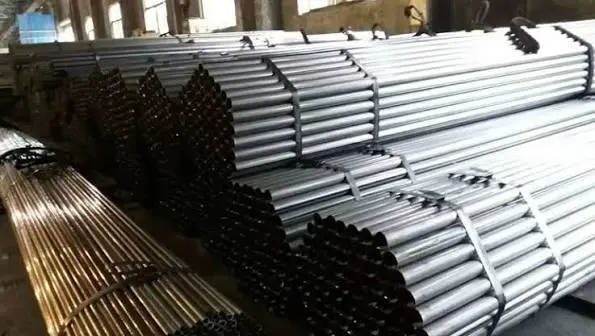
Understanding Carbon Steel Welded Pipes: ERW vs. EFW
The differences between ERW and EFW welded pipes start at the weld interface and go all the way through the production process. Both ways make tubular goods from flat-rolled carbon steel, but they use very different welding processes and produce different metallurgical results when they make longitudinal links.
What Defines ERW Carbon Steel Welded Pipe?
The ERW process transforms hot-rolled or cold-rolled steel coils into pipes by passing flat strips through a series of forming rollers that progressively shape them into cylinders. As the sides meet, high-frequency alternating current heats the contact site. The steel is heated rapidly to a temperature suitable for forge welding. When squeeze rollers press on edges, they forge without filler metal. The grain structures of both edges merge to form a solid-state weld. This autogenous welding process can make a wide range of pipe sizes, depending on the applicable specification. Piping diameters and wall thicknesses vary according to the product standard and grade. ASTM A53 Grade B and ASTM A135 cover specific applications for ERW pipe, including pressure, mechanical, gas, vapor, water, and other liquid services. Online heat treatment may be applied to the joint after welding, depending on the grade and manufacturing process. This can improve the weld-area microstructure and reduce hardness variations. Manufacturers use nondestructive testing and hydrostatic testing according to the applicable product standard to assess weld integrity and pressure performance. The end product is stable, smooth, and cost-effective for medium-diameter applications.
How do EFW Pipes differ in manufacturing approach?
Electric-fusion-welded pipes use an electric arc welding process with filler metal added to join formed plate edges. Standards such as ASTM A671, ASTM A672, and ASTM A691 cover different classes of electric-fusion-welded pipe for specified temperature and pressure services. LSAW and SSAW are common submerged arc welding (SAW) processes and are closely related to this broader family of fusion-welded pipe, but they should be identified by their actual welding process rather than automatically classified as EFW. Individual steel plates are cut to specific sizes to make LSAW pipes. These plates are progressively formed into cylindrical shapes utilizing press brakes or multi-roll bending equipment. Lengthwise seams require submerged arc welding, often from both the inside and outside. A continuous wire electrode is fed under granular flux. That creates deep-penetration welds with controlled shielding from atmospheric contamination. LSAW pipes can be manufactured in large diameters and substantial wall thicknesses, depending on the production equipment and applicable specifications. A similar submerged arc technique is used in SSAW pipes, but on spirally wrapped steel strips. These spiral seams follow a helical path around the pipe. To avoid undercutting or slag inclusion, welding parameters, including current, voltage, travel speed, and flux chemistry, must be regulated. Post-weld heat treatment may be applied when required by the material specification, service conditions, or purchase requirements. Welds may undergo radiographic or ultrasonic testing, depending on the applicable specification and inspection class, to ensure weld integrity and detect discontinuities that might limit service life. EFW and SAW products are selected for large-bore or thick-wall applications when their dimensions, mechanical properties, and weld quality meet the project requirements.
Standard Specifications and Application Contexts
ERW and EFW pipes have varying specifications according to their design and application. For structural, water distribution, and low- to medium-pressure gas transmission, ASTM A53 or API 5L PSL1 ERW pipes are utilized where the applicable grade and product requirements are satisfied. Cost-effectiveness is a primary consideration when procuring these pipes for standard utility applications. ERW pipes can be specified for low-temperature service when the applicable API 5L or ASTM specification and supplementary impact-testing requirements are met. ASTM A333 Grade 6, for example, has a minimum impact test temperature of -45°C, but this requirement belongs to the ASTM A333 low-temperature pipe specification rather than being a general requirement for all ERW pipe. EFW pipes produced to applicable grades and specifications can provide the strength and toughness required for demanding oil and gas applications, but the allowable pressure depends on grade, diameter, wall thickness, design code, and operating conditions. ASTM A252 governs foundation pilings made of welded and seamless steel pipe. These pipes must be designed to withstand driving loads and the long-term loads imposed by the surrounding soil. DIN 2440 and CSA Z245 regulations ensure this usage complies with local safety and installation norms in Europe and Canada. Prior to procurement, the selection between ERW and EFW should be dictated by the project's specific pressure class, operating temperature range, and environmental exposure.
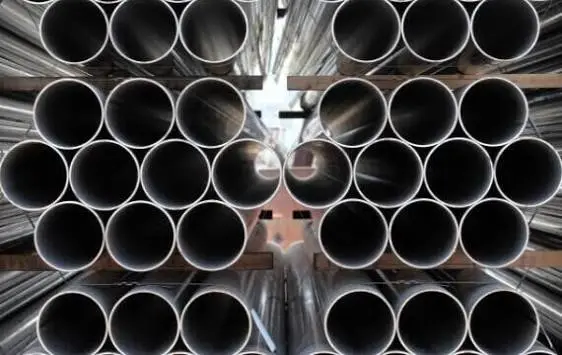
Manufacturing Processes and Technical Differences
Different ways of making ERW and EFW pipes lead to differences that can be measured in their microstructure, accuracy in measurements, Schedule 40 carbon steel welded pipe dimensions, and mechanical performance. Procurement teams have to compare these differences to the needs of each project.
ERW Production Workflow and Quality Controls
ERW pipe production begins with coil selection. The forming mill receives a hot-rolled or cold-rolled steel strip with a chemical composition selected to meet the applicable specification. Roller stations bend the strip's edges into an open U-shape and finally a nearly circular O-shape. Sides join at the welding station. High-frequency induction coils before the squeezing rollers direct electromagnetic energy to the V-shaped space between the merging edges. This generates induced currents that heat the material. Combining this controlled thermal input with forge roller mechanical pressure allows solid-state bonding at high production speeds. After that, an induction heating coil may heat the weld seam to improve the weld-area microstructure and reduce hardness differences between the weld region and base metal. Inline ultrasonography or eddy current testing monitors the weld and alerts of bonding issues. Finished pipes are end-faced, trimmed to length, and hydrostatically tested according to the applicable product standard. Dimensional tolerances for ovality and wall thickness vary according to the applicable specification and pipe size. This controlled production process makes threading, coating, and installing in the field simpler, reducing personnel expenses and installation time.
EFW Production Methods and Inspection Protocols
To produce large-diameter fusion-welded pipes, each portion must be treated carefully. The process begins by procuring steel plates from mills that produce normalized or TMCP materials, as required by the product specification. Chemical and mechanical qualities are examined initially when plates arrive. Edge milling creates clean, square weld connection surfaces. Pyramid plate rollers or hydraulic press brakes gently cylinderize the plate. Operators continuously monitor dimensions and ovality throughout the forming phases to control material spring-back. Once the cylinder is the proper size, tack welds stabilize the form before seam welding. For SAW-based pipe, submerged arc welding heads can weld the interior and exterior seams. They feed flux and wire electrodes at predetermined rates to ensure complete penetration without burn-through. Flux forms a protective blanket over the weld pool, preventing atmospheric contamination and helping control the welding process. Mechanical expanding or cold forming rounds the junction after welding and can reduce dimensional deviations and residual stresses. The weld is examined using radiographic and/or ultrasonic testing when required by the applicable specification and inspection class to identify internal problems like pores, lack of fusion, or slag inclusions that must be repaired before the pipe is finally checked. Hydrostatic testing at specification-defined pressures verifies leak-tightness before surface preparation and coating. This multi-stage quality assurance validates the reliability of fusion-welded pipes in critical applications where failure could result in environmental damage or operational shutdowns.
Heat Treatment and Mechanical Property Enhancement
Post-weld heat treatment benefits ERW and EFW pipes, although the aims and scale vary. ERW weld-seam heat treatment can normalize or otherwise condition the narrow weld region, depending on the manufacturing process and product specification, helping to improve microstructure and reduce hardness differences. Rapid heating and cooling can produce undesirable microstructural changes if the process is not properly controlled. Weld efficiency factors (the ratio of weld strength to base metal strength) can approach 1.0 for many properly manufactured and tested products after appropriate processing restores weld-area properties. Some gas-fired or electric furnaces totally normalize EFW pipes, notably when required by the applicable product specification or purchase order. The pipe is heated to an appropriate austenitizing temperature and cooled under controlled conditions. This full-body heat treatment minimizes microstructural variations associated with plate processing, refine grain size, and improve low-temperature toughness. Charpy V-notch impact toughness is a critical parameter for pipelines operating in low-temperature or sour gas environments. When the material undergoes precise thermal processing under rigorous quality controlf, the required impact values depend on the applicable material grade, wall thickness, test temperature, and specification. Procurement specifications should provide heat treatment and mechanical testing acceptability. These significantly impact pipeline service dependability and overall cost of ownership.
Performance Comparison: ERW vs. EFW Carbon Steel Welded Pipes
When used in real life, ERW and EFW pipes work differently because of the differences in how they were made. Each technology has its own benefits based on the application, the pressures in the environment, and the Schedule 40 carbon steel welded pipe dimensions required for the piping system.
Structural Strength and Pressure Capacity
Today's ERW pipes have yield strengths and tensile strengths determined by the applicable material grade and specification. Weld seams generally equal or approach base metal strength when properly manufactured, heat-treated where required, and tested. This is because forge welding can produce a strong metallurgical bond between the strip edges. Hydrostatic testing demonstrates whether the completed pipe can withstand the specified test pressure without leakage; it does not by itself prove that the weld will always be stronger than the parent metal under every service condition. However, the ERW technique has geometric wall thickness and diameter constraints that vary with the manufacturing process and applicable standard. LSAW and other fusion-welded pipes constructed from suitable X65 or X70 plate can provide the strength and toughness required for large-diameter transmission applications. Heavy wall capabilities allow substantial wall thicknesses to be manufactured for demanding service, depending on the production process and specification. The submerged arc weld deposit is reinforced by flux-assisted deep penetration with the suitable filler metal and welding procedures. This produces a fusion zone with mechanical characteristics that must meet the applicable specification requirements. From these strength parameters, pipeline designers calculate the maximum operating pressure and wall thickness based on permitted stress levels.
Corrosion Resistance and Surface Quality
However, some minor modifications should be considered. ERW pipes manufactured from coiled stock provide a uniform surface finish due to continuous milling. This evenly prepares the substrate for protective coatings like FBE or 3PE. ERW lines' HAZ may have different microstructural characteristics from the base metal depending on the welding and heat-treatment process. Proper material selection, welding control, inspection, and coating are therefore important for corrosion performance. EFW pipes produced from plates may have somewhat varied surface roughness between the plate and weld beads. To ensure adhesion, surfaces must be prepped properly before coating. Submerged arc welding has a broader HAZ than some high-frequency welding processes, creating a larger region of altered microstructure that may have different corrosion behavior from the parent metal if not adequately controlled. Appropriate heat treatment can improve microstructural uniformity, but it does not automatically eliminate differences in electrochemical behavior. Both kinds of pipes operate well with external coatings (3PE, coal tar enamel, and concrete weight coating) and interior linings (cement mortar and epoxy) when these systems are suitable for the service environment and applied according to the coating specification. The environment determines the coating, not the pipe construction.
Dimensional Accuracy and Installation Efficiency
ERW pipes feature regulated outer diameter, wall thickness, and straightness tolerances per specification and manufacturing process. This consistent diameter makes it easier to line up pipes in the field during installation, eliminating fit-up time and field alterations that might damage the installation. A correctly completed internal weld seam reduces flow resistance in fluid flow applications, and adequate internal geometry facilitates pigging for cleaning and inspection. Mechanical connection threading for water and HVAC applications needs consistent wall thickness and roundness per ASTM A53. Natural ERW processing may provide these qualities within dimensional limitations. Post-weld mechanical expansion and end-facing manage EFW pipe dimensions despite their harder construction. Cold expansion gives LSAW pipes a perfect round shape and reduces welding stresses. Pipe ends align concentrically within tolerances. Because gap spacing and root alignment affect girth weld quality, automated pipeline welding is easier. Planning pipe connections and inspection sites must account for weld-seam crossings because SSAW pipes' helical weld shape travels a longer journey around the pipe. Although less important than strength and corrosion measures, these practical considerations affect project timeframes and labor costs. When assessing ERW and EFW values, procurement teams must consider these criteria.
Conclusion
The choice between ERW and EFW carbon steel welded pipes fundamentally shapes project outcomes across cost, performance, and schedule dimensions. ERW technology delivers dimensional precision and economic efficiency for small to medium diameters, serving countless applications from water distribution to structural construction. EFW methods provide the heavy-wall capacity and large-bore capability essential for high-pressure transmission pipelines and demanding industrial processes. Procurement professionals minimize project risk by matching pipe manufacturing technology to specific design requirements, environmental conditions, and operational priorities rather than applying generic preferences. Successful sourcing partnerships with qualified suppliers who maintain rigorous quality systems, comprehensive testing capabilities, and responsive technical support transform pipe procurement from a transactional necessity into a strategic advantage that enhances project reliability and profitability.
FAQ
1. Can ERW pipes withstand high-pressure applications?
Modern ERW pipes made to API 5L standards and properly manufactured can work reliably in pressure applications, but there is no universal pressure limit such as 1,500 psi. The allowable operating pressure depends on the pipe diameter, wall thickness, material grade, design factor, temperature, and applicable design code. The weld seam can achieve strength comparable to the base metal when processing and testing meet the applicable requirements. However, ERW manufacturing has practical limits for some combinations of large diameter and heavy wall thickness, in which case fusion-welded alternatives may be considered.
2. How does heat treatment affect pipe service life?
Post-weld heat treatment directly affects microstructure uniformity, helping reduce hardness gradients and improve low-temperature toughness when required for the application. ERW weld-seam heat treatment treats the weld region, while some EFW products may receive full-body heat treatment according to the applicable specification. The appropriate heat treatment that covers the weld and adjacent zones can help reduce risks associated with unsuitable microstructures and improve service reliability, but its effect on service life depends on material, environment, design, and operating conditions and should not be expressed as a universal twofold or threefold increase.
3. What customization options exist for bulk orders?
Reliable suppliers can meet project-specific needs like nonstandard lengths, special end preparations (such as beveling, threading, and grooving), custom coating systems (3PE, FBE, and internal linings), and better testing protocols (100% ultrasonic inspection and extended hydrostatic hold times). They can also adjust material chemistry within specification tolerances, coordinate delivery times for critical path items, and combine packaging for shipments to multiple destinations, all of which simplify project logistics and lower the total installed cost.
Partner with JS FITTINGS for Reliable Carbon Steel Welded Pipe Supply.
Your choice of carbon steel welded pipe supplier affects every step of a project, from the initial engineering to the final commissioning. JS FITTINGS has been manufacturing high-quality pipes meeting international standards like ASTM A53, ASTM A106, API 5L, and DIN specifications since 1983. Our ISO 9001-certified quality system, along with approvals from CE, GOST-R, and national oil companies like ADNOC, NIOC, and Petrobras, guarantees consistent product quality backed by full material traceability and thorough testing documentation. We ship more than 90 containers every month, which keeps us as a major supplier of carbon steel welded pipe. Email at admin@jsfittings.com.
References
1. ASTM International. (2024). ASTM A53/A53M: Standard Specification for Pipe, Steel, Black and Hot-Dipped, Zinc-Coated, Welded and Seamless. ASTM International.
2. ASTM International. (2023). ASTM A671/A671M: Standard Specification for Electric-Fusion-Welded Steel Pipe for Atmospheric and Lower Temperatures. ASTM International.
3. ASTM International. (2023). ASTM A672/A672M: Standard Specification for Electric-Fusion-Welded Steel Pipe for High-Pressure Service at Moderate Temperatures. ASTM International.
4. ASTM International. (2023). ASTM A691/A691M: Standard Specification for Carbon and Alloy Steel Pipe, Electric-Fusion-Welded for High-Pressure Service at High Temperatures. ASTM International.
5. American Petroleum Institute. (2018). API Specification 5L: Specification for Line Pipe (46th ed.). American Petroleum Institute.
Send Inquiry
You may like