
How Does an RTJ Blind Flange Ensure Leak-Free Sealing?






2026-10-23 09:47:00
An RTJ blind flange delivers leak-free sealing through a metal-to-metal contact mechanism. A precision-machined annular groove on the flange face holds a metallic ring gasket — either oval or octagonal in cross-section. When bolts are tightened, the softer gasket is "coined" into the harder groove surfaces of the RTJ blind flange, forming an exceptionally tight seal. Unlike elastomeric gaskets, the metallic ring is designed to maintain a reliable seal under high-pressure and high-temperature conditions when properly installed. The result is a termination point that remains leak-proof across pressure classes up to ASME Class 2500 and temperatures where organic sealing materials simply fail.
What Is an RTJ Blind Flange and Why Is It Essential for Leak-Free Sealing?
Defining the Component
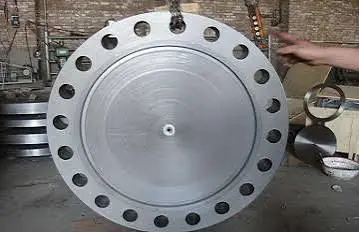
A blind flange is a solid metal disk that doesn't have a hole in the middle. Its function is to stop fluid flow in a piping network, isolate pressure vessel nozzles, or provide positive line termination for future system expansion. The Ring-Type Joint (RTJ) configuration incorporates a precision-machined annular ring groove on the sealing face engineered to seat a metallic ring gasket.
What Makes the RTJ Design Different?
Standard blind flanges come in two shapes: Raised Face and Flat Face. They use spiral-wound or sheet seals that can be compressed. With the RTJ design, that dependence is gone for good. The solid metallic ring gasket seats directly into the precision-machined groove, establishing a high-integrity metal-to-metal seal. This shape doesn't change when the temperature changes, unlike soft gaskets.
Where Are RTJ Blind Flanges Used?
RTJ blind flanges are the standard for high-pressure oil and gas service, offshore wellhead systems, petrochemical processing, and power generation. According to ASME B16.5, RTJ facing is available for several pressure classes and is commonly selected for high-pressure and demanding service environments. We make RTJ blind flanges from 1/2" to 60" NPS in all common pressure classes at JS FITTINGS. These include ASME Class 150 through 2500 and European PN6 through PN100.
How Does an RTJ Blind Flange Work to Prevent Leaks?
The Coining Mechanism
When the bolts are tightened, the tightening force pushes the metal ring gasket into the groove walls. The ring gasket material must be at least 30 HB softer than the flange material. When minor surface irregularities are present, the seal can bend and fill them fully. Because of this "coining" effect, the metal-to-metal sealing mechanism can provide reliable sealing under demanding service conditions, and the metallic ring maintains contact with the groove surfaces under the specified pressure and temperature conditions.
Oval vs. Octagonal Ring Profiles
These days, RTJ blind flange designs have flat-bottom grooves that can fit both oval and octagonal ring shapes. Because they have a different sealing geometry, octagonal rings are commonly used with standard flat-bottom RTJ grooves. Older flanges with round grooves at the bottom will only fit oval rings. For the seal to work properly, the ring profile must match the groove form of the RTJ blind flange.
Installation Requirements That Protect the Seal
RTJ assemblies need a controlled sequence of torques. Technicians must keep an eye on the gap between mating flange faces during bolt-up, which is not necessary for RF flanges. To make sure that gap stays the same all the way around, the bolts must be tightened in a cross pattern. Uneven bolt torquing tilts the flange, creating unbalanced gasket seating stress that can gall the 23° groove sidewall and establish an immediate leak path. Gaskets must never be reused; once compressed, the metal permanently work-hardens and cannot achieve the plastic deformation ("coining") necessary for a pressure-tight seal.
Comparative Analysis — RTJ Blind Flange vs. Other Flange Types in Leak Prevention
RTJ vs. Raised Face (RF) Blind Flanges
In general industrial use, RF flanges are the most common type. They use spiral-wound or ring seals that sit on a higher seating face. They work well up to Class 600 in services with mild temperatures. When those levels are reached, heat cycling breaks down the gasket over time. Because the RTJ design uses a metallic ring gasket rather than a conventional soft gasket, it is commonly selected for high-pressure and high-temperature services where a robust metal gasket is required.
RTJ vs. Slip-On Flanges
Slip-on flanges connect to pipes with two fillet welds and can have either a flat or raised face. They can be used for low-pressure, non-critical tasks. Under normal specs, they don't come with RTJ facing, and their shape doesn't allow for the bolt loads that RTJ sealing needs. For high-pressure or high-temperature services, engineers may select weld neck or RTJ configurations instead of slip-on designs when the application requires higher mechanical or sealing performance.
Material Selection for RTJ Service
Carbon steel RTJ blind flanges, usually ASTM A105 for forgings, are the standard material for most oil and gas uses. To reduce the risk of sulfide stress cracking in NACE MR0175-covered sour service environments, the material must meet the applicable hardness and material requirements specified by NACE MR0175. When corrosion resistance is the most important thing, grades of stainless steel like ASTM A182 F316 are chosen. The pressure grade, temperature range, and ability to meet project requirements are all directly affected by the material chosen.
Ensuring Long-Term Leak-Free Performance: Maintenance and Inspection Tips
Groove Inspection Protocols
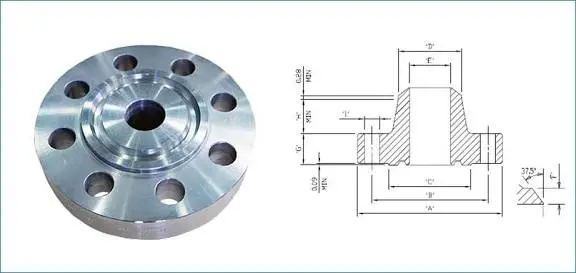
The most critical sealing feature of an RTJ blind flange is the annular groove.During inspections, accurate gauges or a CMM should be used to compare the groove measurements to the relevant R-number. The surface finish inside the groove needs to meet the requirements of the applicable flange and gasket standards. If there are any tool marks, corrosion pits, or scratches on the sidewall of the groove, the part should be evaluated for repair or replacement in accordance with the applicable specification. Depending on the damage, the groove may need to be re-machined or the flange may need to be replaced.
Bolt Torque Verification
Bolts in RTJ assemblies can loosen up over time, especially after being heated and cooled several times. Bolt condition and preload should be checked during maintenance in accordance with the applicable bolting procedure and project requirements. In the maintenance log, you should write down the original torque numbers so that you have something to compare each check to.
Recognizing When Replacement Is Due
If groove wear goes beyond the allowed dimensions, if hardness testing shows values outside the allowed range, or if non-destructive testing finds flaws below the surface, the RTJ blind flange assembly should be considered for replacement. Early replacement of a worn component can help avoid unplanned shutdowns and the higher costs associated with seal failure.
Procurement Considerations: How to Source Reliable RTJ Blind Flanges?
Finding the right RTJ blind flange is a choice that can put a project at real risk if it is not done carefully. A good procurement review is based on the following factors.
Before placing an order, procurement professionals should think about these main things:
- Standards Compliance: Confirm the flange is manufactured to ASME B16.5 or ASME B16.47 Series A/B. European projects may require DIN or EN 1092-1 compliance. Request full dimensional reports and Mill Test Certificates with each shipment.
- Material Certification and PMI: Positive Material Identification must confirm that the carbon or alloy content matches the MTC. Material mix-ups at site are a well-documented cause of in-service failures.
- Groove Dimensional Verification: The pitch diameter, depth, and 23° groove angle must be verified with functional gauges before dispatch. Any deviation prevents the ring gasket from seating correctly.
- Anti-Corrosion Protection: JS FITTINGS applies industrial black lacquer, yellow anti-rust oil, or hot-dip galvanizing to every flange before shipment, protecting the sealing groove during ocean transit and warehouse storage.
- Lead Time and Supply Capacity: JS FITTINGS ships over 90 containers monthly with an on-time delivery rate above 95%, supporting projects with tight schedules across the Middle East, South America, and Eastern Europe.
If you always use these criteria, you'll have a much lower chance of receiving non-conforming material that passes an initial review but fails to perform as required in service. When procurement teams partner with a manufacturer holding ISO, CE, and GOST-R certifications and approved vendor status from major operators like ADNOC and Petrobras, they ensure reliable technical compliance before issuing purchase orders.
Conclusion
An RTJ blind flange provides a metal-to-metal sealing mechanism designed to maintain sealing integrity under high pressure when properly installed. It clearly performs better than RF or flat-face options in high-pressure, high-temperature, or thermally cycling applications where soft gaskets can't keep their integrity. Three practical factors decide the long-term trustworthiness of a seal: the right installation torque steps, the choice of the right ring profile, and regular groove checks. For procurement teams, the selection process must put dimensional compliance, certified material traceability, and a supplier who can consistently deliver large volumes at the top of the list.
FAQ
1. Can I reuse the ring gasket after breaking the joint?
No. The sealing mechanism depends on the gasket deforming plastically into the groove walls. Once that deformation has occurred, the ring is work-hardened and cannot conform correctly to the groove a second time. Reinstalling a used ring gasket significantly raises the probability of leakage.
2. What is the difference between oval and octagonal ring types?
Flanges with flat-bottom grooves accept both profiles. Octagonal rings create broader surface contact with the groove walls, making them more effective in high-pressure services. Flanges with older round-bottom grooves accept only oval rings.
3. Why must the gasket be softer than the flange?
If the gasket material is harder than the flange groove, bolting force deforms the groove rather than the gasket. This destroys the precision-machined seating surface. Standard practice requires the gasket to be at least 30 HB softer than the flange.
4. How do I protect the groove during shipping?
The groove seating surface scratches easily. Flanges should be fitted with heavy-duty plastic face protectors or bolted plywood covers before shipment. A scratch that appears minor often requires full re-machining to restore the surface finish to Ra 0.8–1.6 μm.
Get RTJ Blind Flanges From a Verified Manufacturer — JS FITTINGS
Since 1983, we have manufactured industrial flanges and built more than 40 years of experience. Our customer complaint rate remains below 0.5%, and we manufacture certified RTJ blind flanges for projects involving major energy operators such as ADNOC and Petrobras. We have ISO, CE, and GOST-R certifications and ship more than 90 containers every month, with over 95% of them arriving on time. To get a price, email our team at admin@jsfittings.com. We can help you with standard sizes or custom specs up to 60" NPS.
References
1. ASME B16.5 — Pipe Flanges and Flanged Fittings, American Society of Mechanical Engineers, 2017.
2. ASME B16.47 — Large Diameter Steel Flanges, American Society of Mechanical Engineers, 2017.
3. NACE MR0175 / ISO 15156 — Petroleum and Natural Gas Industries: Materials for Use in H₂S-Containing Environments, NACE International, 2015.
4. Bickford, J.H. — Gaskets and Gasketed Joints, Marcel Dekker, 1998.
5. MSS SP-44 — Steel Pipeline Flanges, Manufacturers Standardization Society, 2010.
6. API 6A — Specification for Wellhead and Tree Equipment, American Petroleum Institute, 2018.
Send Inquiry
You may like