
How Does Carbon Steel Welded Pipe Compare With Seamless Pipe?






2026-10-20 10:54:34
Carbon steel welded pipe is produced by forming flat-rolled steel into a cylinder and fusing the seam through ERW, LSAW, or SSAW welding processes. Seamless pipe, by contrast, is extruded from a solid billet with no weld joint. In practice, both types meet ASTM A53, API 5L, and related standards for pressure service. The key differences lie in cost, dimensional consistency, and performance under extreme conditions. Choosing the right type directly affects project safety, budget, and long-term maintenance costs.
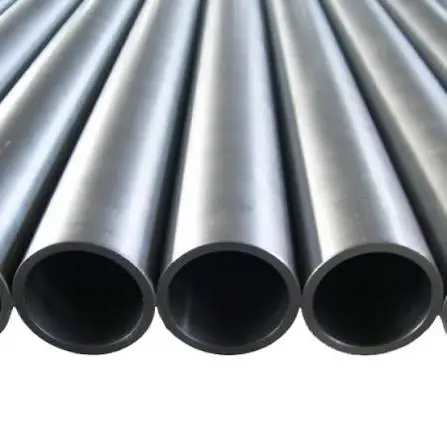
Understanding Carbon Steel Welded Pipes and Seamless Pipes
How Welded Pipe Is Made
Carbon steel is flat-rolled into a coil or plate that is used to make pipe. There are three different ways that the seams are joined after it has been rolled into a cylinder by the maker. Because it utilizes high-frequency induction/contact welding without filler metal, ERW is ideal for pipe outside diameters up to 24 inches. Submerged arc welding (SAW) is used for pipes up to 60 inches in diameter that have thick walls. Filler wire and flux are used. SSAW continuously forms hot-rolled steel coil into a helical cylinder joined by submerged arc welding, making it exceptionally cost-effective for large-diameter transmission pipelines and piling projects.
How Seamless Pipe Is Made
A solid round steel billet is heated to forging temperature (approx. 2,200°F) and pierced over an internal mandrel in a rotary piercing mill, forming a seamless hollow shell that is rolled and elongated to exact dimensions. There is no weld seam in the pipe, so the grain structure is the same all the way through. When the mechanical properties of all cross-sections need to be the same, this method works best for diameters less than 24 inches.
Governing Standards
Both types of pipes have to follow rules set by the business. Moving oil and gas is what API 5L (PSL1/PSL2) is for. ASTM A53 can be used for many different types of mechanical and pressure jobs. ASTM A252 governs welded and seamless steel pipe piles for deep foundation and civil infrastructure projects. In Europe, both EN 10217 and EN 10219 outline the rules for pressure and structure. The first step to making a sensible buying choice is to follow these rules.
Performance Comparison: Welded vs Seamless Pipes
Tensile Strength and Pressure Ratings
A weld seam efficiency factor of 1.0 is used for modern ERW and LSAW pipes that are made with an online normalizing heat treatment. In other words, the seam is as strong as the base metal. One example is API 5L Grade X52 welding pipe, which has a tensile strength of at least 535 MPa. Seamless pipe may be preferred for certain high-temperature or high-pressure applications because it has no weld seam or associated heat-affected zone (HAZ). However, suitability depends on the pipe grade, wall thickness, design conditions, and applicable code.
Wall Thickness Consistency
Carbon steel welded pipe works better than seamless pipe when it comes to keeping the wall thickness the same. The flat-rolling process guarantees superior wall thickness uniformity along the entire pipe length. It is very important to do this for automatic welding during installation and for connecting things with threads. Because of the rotary piercing process, the wall thickness of a seamless pipe can vary by up to 12.5%. It is known that this can happen in high-precision settings.
Corrosion Behavior and Lifespan
The weld joint in ERW pipe needs to be heated after welding in order to keep the HAZ's stiffness the same. If it wasn't there, the gap could become a place where rust builds up faster. For underground lines, either 3LPE (Three-Layer Polyethylene) or FBE (Fusion Bonded Epoxy) coatings are used. The API 5L PSL2 must follow NACE MR0175/ISO 15156 in sour service areas where H2S is present. This standard limits the amount of sulfur and phosphorus in the material and keeps the joint hardness below 22 HRC.
Application Suitability: Which Pipe Is Best for Your Project?
Where Welded Pipe Excels
Welded pipe is the preferred choice for large-diameter, low-to-medium pressure pipelines where cost efficiency matters. Municipal water mains, district heating networks, and structural piling for bridges and ports all rely on ERW or SSAW pipe. API 5L LSAW pipe is standard in midstream oil and gas cross-country transmission lines, where thick walls and large diameters are required. For oil and gas storage and general transportation, ERW longitudinal pipe is widely recommended because of its balance of quality, ease of transport, and lower cost per meter.
Here are the typical application scenarios where each type is the practical choice:
- ERW pipe: General fluid conveyance, low-to-medium pressure gas distribution, structural sections, and water mains in diameters up to 24 inches.
- LSAW pipe: High-pressure oil and gas transmission pipelines, offshore lines, and thick-wall pressure vessels in diameters from 16 to 60 inches.
- SSAW pipe: Large-bore water transmission, piling, and drainage where cost per unit length is the primary driver.
These distinctions help procurement teams match pipe type to project scope before the purchasing process begins.
Where Seamless Pipe Is the Stronger Argument
Seamless pipe is the right call for high-pressure process piping, refinery service, boiler tubes, and hydraulic lines where internal pressures exceed the threshold at which a weld seam introduces unacceptable risk. Its uniform structure also makes it the standard for high-temperature service and for applications involving cyclic pressure or thermal fatigue.
Procurement Insights: Buying Carbon Steel Welded vs Seamless Pipes
Cost and Lead Time
Sch 40 Black Welded Steel Pipe for Natural Gas Lines can cost 20–40% less per meter than seamless pipe of the same size and grade, although actual prices vary by supplier, material specifications, and market conditions. Because the pipe doesn't need to be cut with a rotary tool, it takes less time to make. It takes a lot less time to get welded pipe in most regular sizes when jobs need to be finished quickly.
Supplier Vetting and Quality Assurance
Anyone you buy carbon steel welded pipe from should give you full material test reports (MTRs), third-party inspection certificates, and hydrostatic test records. You need to keep NDT records of the weld seam for important reasons. These records should include the results of ultrasonic testing (UT) and radiographic testing (RT/X-ray). Also, you need to make sure that the supplier's licenses fit the project standard, which could be EN 10217, ASTM A53, or API 5L.
Logistics and Minimum Order Quantities
It's easier to load containers when they are 20 or 40 feet long. Pipe ends are typically beveled per ASME B16.25 for circumferential butt welding. For threaded connections, factory-machined NPT or BSPT threaded ends are required. On the one hand, black paint, varnish, 3PE, and FBE all have different short-term and long-term effects on how well they stop rust in service.
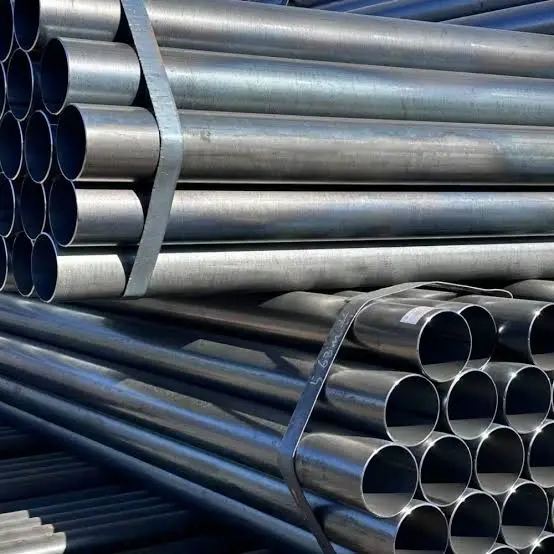
Making the Right Choice: Factors to Consider When Selecting Your Pipe
Match Pipe Type to Pressure and Temperature
The range of working pressure and temperature is always a good place to begin. ERW pipe can handle service pressures below 1,500 psi and mild temperatures if it is heated in the right way. Since there is less risk above that point or when building codes require seamless pipe, the extra cost is worth it.
Evaluate Total Cost of Ownership
The initial cost of the supplies is only one part of the issue. For most structural uses, welded pipe can last as long as seamless pipe if it is wrapped and checked in the right way. If the pipe you buy is 30% less expensive but doesn't get enough NDT or sealing, it could cost you a lot more in repairs and emergencies.
Choose a Supplier With Verified Capacity
What makes a project risky is how reliable the supplier is. Check to see what the company can make, what certifications they have, how often they deliver, and if they can make things in unique sizes. Your buying team has proof that a seller comes through more than 95% of the time and has certifications from major energy companies. This can be used for an audit.
Conclusion
In modern industrial piping, carbon steel welded pipe and seamless pipe each serve distinct, mission-critical roles. Welded pipe is clearly less expensive and better for uses with large diameters and moderate pressures. As long as it is properly inspected and coated, it can also be used for pumping water, moving oil and gas, and construction work. So long as there aren't any seams, seamless pipe is still the standard for high pressure, high temperatures, and cyclic service. That's not enough. You need to find the best pipe too. The best choice is the pipe type that fits the working conditions, the building code, and the total cost over its entire life.
FAQ
1. Can welded pipe be used in high-pressure oil and gas service?
Many high-pressure transmission pipelines use API 5L PSL2 LSAW pipe, provided that the pipe meets the project's design and inspection requirements. It's very important that the weld line passes both X-ray and ultrasound tests every time. The pipe also needs to meet all the chemical and mechanical property standards for that grade.
2. Is welded pipe more prone to corrosion than seamless pipe?
No, not by nature. If the HAZ isn't heated enough, the weld seam could rust faster than the rest of the metal. In buried or submerged service, welded pipes can handle corrosion just as well as seamless pipes, as long as they are properly coated and normalized online.
3. What are typical lead times for bulk orders of welded steel pipe?
If the size and grade are in stock, lead times are usually between two and four weeks. It might take six to ten weeks from the time the order is confirmed until it is shipped if the sizes or grades are special. This depends on how busy the mill is.
4. Does welded pipe comply with API 5L requirements for sour service?
Yes, but only if it follows NACE MR0175, ISO 15156, and the rules set by PSL2. Chemists have to keep sulfur and phosphorus in check, and the weld hardness can't be more than 22 HRC.
5. What surface protection options are available?
People often choose lacquer, black paint, 3LPE coating, FBE coating, and natural mill finish. Which one to pick depends on whether it will be hidden, submerged, or set up above ground.
Request a Quote From JS FITTINGS — Certified Carbon Steel Welded Pipe Supplier
If you need certified carbon steel welded pipe and pipe fittings, JS FITTINGS has been in business since 1983. Every month, we send goods to more than 30 countries, and each year we can handle 30,000 tons. The standards set by ASTM, API 5L, DIN, JIS, and GOST are met by our products. We also have ISO, CE, and GOST-R certifications. Your needs are our top priority. Whether you need LSAW pipe for an oil transfer line or ERW pipe for a job in the city, we can help. Send us an email at admin@jsfittings.com to get a price right away.
References
1. American Petroleum Institute. API Specification 5L: Specification for Line Pipe. 46th ed. API Publishing Services, 2018.
2. ASTM International. ASTM A53/A53M: Standard Specification for Pipe, Steel, Black and Hot-Dipped, Zinc-Coated, Welded and Seamless. ASTM International, 2022.
3. NACE International. NACE MR0175/ISO 15156: Petroleum and Natural Gas Industries — Materials for Use in H₂S-Containing Environments in Oil and Gas Production. NACE International, 2015.
4. Nayyar, Mohinder L. Piping Handbook. 7th ed. McGraw-Hill, 2000.
5. Becht, Charles. Process Piping: The Complete Guide to ASME B31.3. 3rd ed. ASME Press, 2009.
6. Lancaster, J. F. Metallurgy of Welding. 6th ed. Abington Publishing, 1999.
Send Inquiry
You may like