
How is stainless steel pipe made






2026-10-27 11:01:21
So, how is stainless steel pipe made? Mills melt scrap and alloys in an electric arc furnace, refine the steel to the target chemistry, and cast it into billets or slabs. They then form a hollow shape by piercing a billet or by rolling strip into a tube and welding the seam. Every A312 stainless steel pipe must then be solution annealed, cleaned, inspected, and tested. I wrote this guide for EPC contractors, distributors, installers, public project teams, and plant owners who want fewer surprises on site. Each step below shows what affects safety, cost, and delivery.
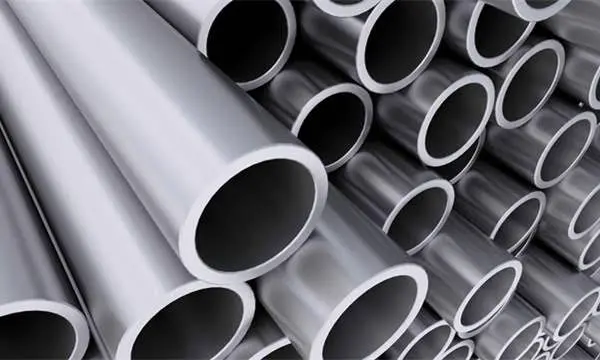
What Is ASTM A312 Stainless Steel Pipe?
What the A312 Specification Covers
A312 stainless steel pipes can handle heat and hard conditions. It covers seamless, straight-seam welded, and heavily cold worked (HCW) austenitic stainless steel pipe. This rule says that welded pipe can't have any filler metal in it. The outside lengths and wall thicknesses are set by ASME B36.19M. For boiler and heat exchanger tubing, you can use ASTM A213, and for general-service tubing, you can use ASTM A269. These should be kept separate by clients. For pipes, the standard pipe size is used. For tubes, the exact outside diameter is used.
Why "304 Pipe" Is an Incomplete Order
There are too many blanks when you type "304 pipe" or "Schedule 40 stainless pipe." There are still things the seller needs to know about the product, like its size, wall thickness, length, design, grade, and how it will be made. It's possible for two quotes to mean very different things, like welded TP304 vs. weld-free TP316L. The price difference can lead a buyer astray. This is what a whole line of ASTM A312 TP316/316L welded, NPS 4, Schedule 10S, random length, hydraulic test, MTC looks like. As long as you write it this way, everyone will price the same scope, so your budget is safe.
Common Grades and What Their Alloys Do
Chromium makes the protective oxide film, and nickel keeps the austenitic structure stable. 18–20% of TP304 is chromium, and 8–11% is nickel. Molybdenum is added to TP316 at a rate of 2–3%. This makes it less likely to split in salt service. Carbon in "L" grades is strictly capped at a maximum of 0.030% per ASTM A312 to prevent chromium carbide precipitation (sensitization) during welding. They offer TP304/304L, TP316/316L, TP321, and TP347. Titanium and niobium are added to TP321 so that chromium carbide doesn't build up when it's used near 800–1,500°F. Duplex 2205 is another commonly used duplex stainless steel pipe material governed by ASTM A790.
How Is Stainless Steel Pipe Made From Raw Material to Finished Product?
Melting, Refining, and Casting
The first step in making something is choosing the raw materials, which can be stainless steel scrap, ferrochrome, nickel, or molybdenum. The charge is melted by an electric arc burner. Then, the Argon Oxygen Decarburization (AOD) or VOD refining process decarburizes the molten bath while minimizing the oxidation and loss of chromium, bringing all alloying elements strictly within specification limits. TP321 and TP347 are made of Ti or Niobium. When you cast something, you get billets, which don't need to be joined, or pieces that you can use a mill to roll into strips. Each batch has a heat number that stays with the steel until it passes its final mill test. Businesses that want to buy something should first look at heat tracking, which links each pipe to its science.
The Weld-Free Route: Piercing to Solution Annealing
A rotating piercing mill can pierce a heated solid billet to create a hollow shell, while hot extrusion pushes the billet through a die to form the initial hollow shape. The hollow shell is then made to the right size and thickness with plug mills, mandrel mills, and scale mills. For small sizes, cold drawing is often used. There are several places where mills check the wall thickness. Uneven walls, surface cracks, internal laps, and poor concentricity are the main things that can go wrong. Annealing is the next step. It gets rid of dangerous carbides and makes metals bendable again and less likely to rust. It's important to heat types TP304 and TP316 to at least 1,900°F (1,040°C) and then cool them down quickly. Fixing, cutting, pickling, and passivating are the steps that are used to finish the job.
The Welded Route and Surface Finish
This A312 stainless steel pipe starts as a flat steel strip. The mill cuts the strip to the required width, cleans the edges, forms it into a cylindrical shape, and joins the longitudinal seam using TIG, plasma, or laser welding under a protective gas. Filler metal is not allowed in this pipe according to A312. ASTM A358 talks about filler metal methods, such as submerged arc, which are often used for bigger sizes. Mills look at how the lines are aligned and how well the weld is done. To stop intergranular rust, they anneal the whole pipe with a solution, including the area where the weld was made. Scale is taken off by pickling, and free iron is taken off by passivation. JS FITTINGS has finishes that are pickled, passivated, or bright annealed (BA) for lines that are used in food, medicine, and high purity. There is no carbon waste or scale on the inside of these products.
How Are Size, Testing, and Certification Controlled?
Nominal Size, Schedule, and Wall Thickness
It is important to remember that nominal pipe size is only a label and not a scale. There are two sizes of NPS pipes: 2.375 in (60.3 mm) for NPS 2 and 4.500 in (114.3 mm) for NPS 4. The schedule indicates the nominal wall thickness, but it does not specify the material grade or allowable pressure by itself. It doesn't say what kind of material it is or how much pressure it has. NPS 2 has walls that are 0.109 inches (10S), 0.154 inches (40S), and 0.218 inches (80S), all in line with ASME B36.19M. For NPS 4, these walls are 0.120, 0.237, and 0.337 inches thick. They have 5S, 10S, 40S, and 80S. As long as the pressure design is tight, A312 lets the wall drop as much as 12.5% below nominal, so make sure you get real readings.
Tests Before Shipment
A312 stainless steel pipe says that every pipe must pass either a hydraulic test or an electric test that doesn't hurt the pipe, such as eddy-current testing. People who want to buy something can also ask for an ultrasound or X-ray test. Mechanical tests evaluate tensile strength, yield strength, elongation, and other required mechanical properties. For TP304 and TP316, the tensile strength must be at least 75 ksi (515 MPa) and the yield strength must be at least 30 ksi (205 MPa). You need 70 ksi (485 MPa) and 25 ksi (170 MPa) for the L grades. It is possible to look at the surface, the weld, and the passivation conditions, as well as their size and shape. As part of its ISO 9001 quality system, JS FITTINGS checks for flaws with a spectral analyzer and other tools.
Reading an MTC and Verifying the Grade
On a mill test certificate, you should write down the heat number, grade, standard, heat treatment state, chemistry, and mechanical results. The EN 10204 Type 3.1 mark means that the data have been checked by a representative approved by the manufacturer who is not involved in production. If you choose Type 3.2, validation by the buyer's agent or a chosen inspector is added. Positive Material Identification checks the pipe itself. Molybdenum can be found on a handheld XRF to tell the difference between TP304 and TP316. It can't prove an L grade by itself, though, because it can't find carbon. Try to connect the heat number on the pipe to the certificate. JS FITTINGS has a lot of stock that is certified as either 304/304L or 316/316L. This means it's strong enough for everyday use and can be joined with low carbon.
How Do You Choose the Right A312 Pipe?
Match the Grade to Service Conditions
You should start with the fluid instead of the list. Write down the chemistry, acidity, temperature, pressure, flow conditions, chloride level, and the area where the installation will take place. TP304/304L is good for systems that are welded together and for resisting corrosion in general. Chloride doesn't wear down or damage molybdenum, so TP316/316L can handle being around chloride in evaporation plants, offshore platforms, and many chemical lines. The TP321 and TP347 are good for use in hot places where supporting parts keep carbides from forming. Your engineer must agree with every choice you make. Next, choose whether the construction is weld-free or welded. Also, choose the size, schedule, length, end preparation, finish, testing, packaging, and Incoterms. You can get quotes right away if you have a full list.
A312 Compared With A358, A333, and Carbon Steel
ASTM A358 covers austenitic pipe that has been welded with electric fusion. It permits the addition of filler metal, and its 100% radiographic examination classes make it ideal for large-diameter, heavy-wall process lines. ASTM A333 covers both carbon and alloy steel pipe that is used in cold places where resistance to impact is more important than resistance to rust. It is cheaper to buy carbon steel pipe at first, but it rusts in many chemical, saltwater, and process rooms. For corrosive chemical, saltwater, and process environments, A312 stainless steel pipe may provide better long-term corrosion resistance. The cost to buy something and the cost over its lifetime don't always match up. The reason for this is that the lifecycle cost may be higher than the purchase price since there is less need for repairs, maintenance, and downtime. Any change should be based on tech specs, not on price or habit.
TP304 vs. TP316, and Standard vs. Low-Carbon
TP316 costs more than TP304 because it has more molybdenum and nickel, but it pays for itself in salt or slightly acidic service. Most of the time, TP304 works well in clean water or air-side service. The main difference between standard and L grades is welding. Standard grades allow up to 0.08% carbon, which means that heavy welding without first letting the metal cool could make it more fragile. The carbon content in L-grades is strictly capped at or below 0.030%. Steel that is certified as both 304/304L and 316/316L is often chosen by fabricators who need both strength and the ability to weld. Make sure you look at the numbers on the certificate itself, not just the title.
What Affects Price, Delivery, and Purchasing Risk?
Price Drivers and Lead Time
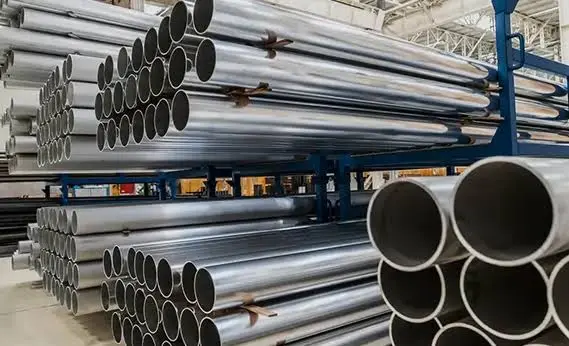
The first thing that changes the price is the nickel and molybdenum markets. When these markets change, mills have to change the surcharges. In addition to whether the pipe is welded or seamless, pricing depends on diameter, wall thickness, schedule, quantity, finish, testing, cutting, packing, freight, and certification. There isn't a direct link between price per meter and price per ton because thick walls cost more per meter. It takes longer to ship custom sizes than stock sizes. The company reports a repeat-customer rate of over 98% and a customer complaint rate of less than 0.5%. Also, the business answers questions within an hour. So that the price is correct, let them know early on how many you need and when you need them by.
Build a Quote-Ready RFQ
The standard, grade, building type, NPS, schedule, wall thickness, quantity, length, end preparation, finish, test standards, certificate type, location, delivery date, and test results should all be in a good RFQ. Type in the Incoterm and any packing needs, such as ends that need to be sealed or export cardboard boxes. Ask each supplier to confirm that they can track, test, export, and provide paperwork. A detailed RFQ breaks down material, handling, and freight costs so you can easily compare prices for similar items. If the bid needs certain certificates, put them in the first message so you don't have to do them again.
Mistakes That Raise Project Risk
There are five mistakes that are always made in RFQs. The buyers just say "A312 stainless steel pipe" and don't ask about the grade, the schedule, or the tests. When they pick a grade, they only look at the price. They accept incomplete MTRs or fail to verify that heat numbers stamped on the pipe physically match the test certificate. When it is kept next to carbon steel or worked on with carbon steel tools, iron bits are left behind that can cause rust spots. They also don't look at the total cost of ownership when they compare quotes. This includes things like installation, corrosion maintenance, inspection, downtime, and how often the parts need to be replaced. It's possible that a pipe that is less expensive now will cost more in the long run. That's why JS FITTINGS has seven systems to back up its orders. These range from quality control and material supply to pre-shipment inspection and service after the sale.
Conclusion
To make A312 stainless steel pipe, steel is melted and polished until the chemical makeup is just right. The hollow shell is formed via hot rotary piercing or hot extrusion for seamless pipe, or roll-formed and longitudinal seam-welded without filler metal for welded pipe. Solution annealing is then done, and the pipe is cleaned and checked. A312 tells us what kinds of products we can make, and B36.19M tells us how big they should be and when they should be made. The mark you pick will depend on how the job is done. TP304/304L is good for general use, TP316/316L is good for salt exposure, and TP321 or TP347 is good for use in hot conditions. Make sure the pipe is what it says it is by checking the heat numbers, mill test reports, and material proof. The best way to compare prices is to look at the lifecycle cost, which takes into account things like grade, building, size, testing, and wait time. When there is a full specification, there is less technical and business risk.
FAQ
1. What is the difference between TP304 and TP316?
TP316 contains approximately 2–3% molybdenum, which improves its resistance to chloride-induced pitting and crevice corrosion. For saltwater or chloride-rich environments, TP316 is generally a better choice than TP304.
2. Is ASTM A312 the same as ASME B36.19M?
No. A312 stainless steel pipe has rules about materials, production, and testing. B36.19M tells us how big each schedule needs to be, such as the wall thickness and outside diameter.
3. What does an MTC show?
The grade tests, chemical tests, mechanical tests, and heat treatment tests are all written on it. Match the heat number to the pipe's markings.
4. Can I order custom sizes or finishes?
Schedules 5S, 10S, 40S, and 80S can be bought from JS FITTINGS. You can get finishes that are pickled and passivated or bright annealed. Tell us what you need in terms of lengths or sizes, and we'll see what we can do.
Request an A312 Stainless Steel Pipe Quotation from JS FITTINGS
You can ask JS FITTINGS anything you want to know about A312 stainless steel pipe from a company that has been making it since 1983. We offer TP304/304L, TP316/316L, TP321, TP347, and Duplex 2205 in Schedules 5S to 80S. We offer mill test certificates and replies within one hour. For A312 stainless steel pipes, we can give you a price based on the grade, size, schedule, number, and finish you want. Email admin@jsfittings.com.
References
1. ASTM A312/A312M, Standard Specification for Seamless, Welded, and Heavily Cold Worked Austenitic Stainless Steel Pipes, ASTM International, 2022
2. ASME B36.19M, Stainless Steel Pipe, American Society of Mechanical Engineers, 2018
3. ASTM A967/A967M, Standard Specification for Chemical Passivation Treatments for Stainless Steel Parts, ASTM International, 2017
4. EN 10204, Metallic Products: Types of Inspection Documents, European Committee for Standardization, 2004
5. Handbook of Stainless Steel, Outokumpu, 2013
6. ASM Specialty Handbook: Stainless Steels, ASM International, 1994
Send Inquiry
You may like