
How Strong Is Industrial Carbon Steel Pipe? (Performance & Selection Guide)






2026-09-22 10:50:36
Industrial carbon steel pipe is one of the most widely used materials in heavy industry, and for good reason. With tensile strength typically ranging from about 415 MPa for ASTM A53 Grade B to over 550 MPa for higher API 5L grades such as X70, it delivers structural performance that meets the demands of oil and gas pipelines, power generation systems, and large-scale infrastructure projects. The answer is straightforward: yes, industrial carbon steel pipe is strong — and when the right grade, wall thickness, and manufacturing method are selected, it performs reliably across the most demanding service conditions.
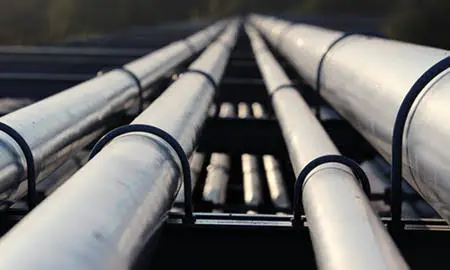
Understanding Industrial Carbon Steel Pipe Strength
How Does Material Composition Determine Strength?
The amount of carbon in a pipe directly affects its mechanical properties. Low-carbon products, like ASTM A179 tubes, are used in heat exchangers and condensers. Carbon steel grades such as ASTM A106 Gr. B have a minimum yield strength of 240 MPa and are good for high-temperature steam and process lines. API 5L pipes with higher grades, from Gr. B to X80, are designed for transmission pipelines where both tensile strength and impact toughness are important.
Seamless vs. Welded: Why Manufacturing Method Matters?
When a solid steel billet is pierced to make a seamless pipe, there is no longitudinal weld seam or associated heat-affected zone. This can provide relatively uniform material properties around the circumference, although actual performance still depends on the grade, dimensions, heat treatment, and service conditions. ERW, LSAW, and SSAW welded pipes are manufactured by forming steel coils or plates into cylindrical shells and welding the seam. With appropriate radiographic inspection and other required weld-quality controls, LSAW and SSAW pipes can achieve weld integrity suitable for their specified service requirements.
Standards That Validate Strength
Pipe strength is not simply a manufacturer's claim; it is proven by standards that are known all over the world. The following grades and standards are used to judge performance:
- ASTM A106 Gr. B — for use at high temperatures; minimum tensile strength 415 MPa
- ASTM A53 Gr. A/B — for general use, available in seamless, ERW, and hot-dip galvanized forms
- ASTM A333 Gr. 1–6 — for low-temperature service requiring specified notch toughness
- ASTM A192 / A179 — tubes for boilers and heat exchangers
- API 5L Gr. B to X80 — moving oil and natural gas through pipelines
- ASTM A134 (Electric-Fusion Arc Welded) / ASTM A135 (Electric-Resistance Welded) — for welded steel piping applications
- ASTM A252 / DIN 2440 / CSA Z245 / NBR 8261 — for use in piles, structures, and regional standards
These standards establish different requirements for chemical composition, mechanical properties, testing, dimensions, and service conditions, depending on the product specification. This gives procurement engineers objective performance criteria that they can use for material evaluation.
Comparing Industrial Carbon Steel Pipe Strength with Other Materials
Carbon Steel vs. Stainless Steel
In many standard applications, industrial carbon steel seamless pipe offers a favorable combination of strength and cost compared with austenitic stainless steel. ASTM A106 Gr. B pipe is generally less expensive than 316L stainless steel pipe, and it can provide adequate pressure performance in non-corrosive services when the grade, dimensions, temperature, and design code are properly selected. Stainless steel may be more suitable when the service medium is corrosive. For many oil, gas, and water transfer lines, carbon steel can provide a cost-effective solution, particularly when appropriate 3PE or FBE coating systems are applied.
Carbon Steel vs. Alloy Steel
Alloy steel pipes, like ASTM A335 Cr-Mo grades, generally provide better high-temperature strength and creep resistance than plain carbon steel at temperatures above 500°C. For power plant superheaters, the material should be selected according to the operating temperature, pressure, design code, and required high-temperature strength. Carbon steel seamless pipe grades are often a cost-effective choice for standard process lines and structural applications at moderate temperatures, provided that the applicable design-code limits are satisfied. This can help avoid unnecessary project costs.
Carbon Steel vs. Galvanized Steel
Galvanized steel pipe, like ASTM A53 zinc-coated or DIN 2444, has an extra layer of zinc on top that protects it from rust in outdoor and above-ground applications. The zinc coating doesn't weaken the base metal; instead, it protects the walls and increases the service life in places with moderate corrosion. Standard galvanizing is generally less commonly used for long-term buried pipeline corrosion protection than dedicated systems such as 3PE or FBE coatings.
Performance Factors Affecting Industrial Carbon Steel Pipe Strength
Wall Thickness and Pressure Rating
The pipe schedule determines the nominal wall thickness, which is one of the factors affecting the pressure capacity of an industrial carbon steel pipe. Under ASME B31.3, engineers determine the required wall thickness based on factors such as material strength, operating pressure, temperature, and design conditions. Working pressures can be raised when walls are thicker.JS FITTINGS supplies carbon steel pipe with outside diameters (OD) ranging from 1/2" to 60" and wall thicknesses ranging from 2 mm to 45 mm. This range of sizes covers everything from low-pressure municipal lines to high-pressure transmission systems.
Corrosion and Its Effect on Service Life
Carbon steel pipe that isn't covered and is exposed to water or aggressive media loses wall thickness through general rust and pitting. If rust isn't controlled, a pipe that starts out at SCH 80 can lose its minimum safe wall thickness years before it should. Safety coatings like 3PE, FBE, zinc coating, or solid CRA-lined pipe are the first line of defense. Ultrasonic thickness testing or magnetic flux leakage inspections can find problems early on, before they put the structure at risk.
Temperature and Chemical Exposure
Creep and other time-dependent deformation become increasingly important for plain carbon steel at elevated temperatures, so allowable stresses and service limits must be evaluated using the applicable design code. ASTM A192 and A106 Gr. B are used for high-temperature service, but allowable temperature and stress limits must be determined from the applicable material specification and design code rather than a single universal temperature limit. For sour gas service with H₂S, pipes must meet the standards set by NACE MR0175 and ISO 15156. ASTM A333 grades are important for low-temperature pipeline applications, with Grade 6 specified for service involving required notch toughness at temperatures down to –45°C.
Choosing the Right Industrial Carbon Steel Pipe for Your Application
Match the Grade to the Service Condition
Choosing the grade is the most important choice in the buying process. ASTM A106 Gr. B is used for process lines and steam that is very hot. From API 5L X52 to X70, you can transport oil and gas. ASTM A333 Gr. 6 is for service at low temperatures. Using the right grade stops both under-specification and over-specification.
Evaluate Coating Requirements Against Environment
Coatings keep things strong by stopping wall loss from rust. JS FITTINGS provides a complete range of protective coating systems for both seamless and welded carbon steel pipes based on operating conditions:
- 3PE Coating — widely used for buried pipelines because its multi-layer structure provides strong resistance to mechanical damage and external corrosion when properly applied
- FBE Coating — fusion-bonded epoxy coating commonly used for buried and submerged pipelines, with the specific coating system selected according to service conditions
- Zinc Coating — as per ASTM A53 or DIN 2444; suitable for outdoor use above ground
- Solid CRA / Clad / Lined Alloy Steel — for service media that are very corrosive and carbon steel alone is not enough
These choices are useful for all kinds of projects, from building structures above ground to burying pipelines under the sea. Picking the correct coating during procurement ensures that the structure works well for as long as the industrial carbon steel pipe is supposed to be used.
Source from Certified Suppliers with Traceable Quality
When suppliers keep their quality systems documented, procurement risk goes down a lot. ISO 9001 certification sets up rules for the process, and material test records show how the pipe was made, from the heat to the end product. Third-party inspection at the mill, which includes hydrostatic testing, dimensional checks, and RT of weld lines, makes sure that the product supplied meets the requirements of the buy order.
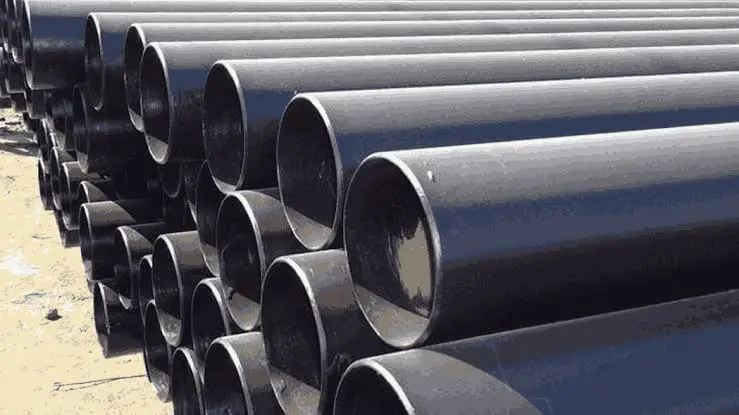
Maintaining the Strength of Industrial Carbon Steel Pipes Over Time
Inspection Programs That Catch Problems Early
In high-consequence systems, scheduled inspection is essential. Annual visual inspections and regular non-destructive testing, including UT wall-thickness measurements and RT of suspect weld areas, can find corrosion and mechanical damage before they cause failures. Smart pigs, also known as in-line inspection tools, can provide detailed information about wall condition along important oil and gas pipelines.
Repair vs. Replacement Decision Criteria
Not all problems with pipes need to be fixed by replacing them. Localized corrosion may sometimes be repaired using engineered sleeves or composite reinforcement systems, subject to an engineering assessment and the requirements of the applicable repair standard. The need for repair or replacement should be determined using an applicable pipeline integrity assessment method, such as ASME B31G where applicable, based on measured wall loss and the remaining strength of the pipe. The decision should be based on measured data rather than an estimate of the pipe's condition. This approach can help prevent premature replacement while reducing the risk of delaying necessary repairs.
Maintenance Practices From the Field
Oil and gas companies that follow API 570 inspection and integrity-management practices can identify degradation earlier and make more informed decisions about the remaining service life of piping systems. Regular coating inspections and cathodic protection maintenance on buried pipes in construction projects always work better than systems that aren't monitored. The money spent on inspections is returned in the form of lower emergency repair costs and less unexpected downtime.
Conclusion
Carbon steel pipe is very strong, and its durability has been proven by decades of use in oil and gas, power generation, infrastructure, and manufacturing. For applications requiring an industrial carbon steel pipe, choosing the right grade and pairing it with the right coatings, wall thickness, and upkeep plan will help the pipe stay strong for as long as it's used. Traceability is very important for procurement teams. They need approved materials, testing results that are written down, and a provider that can make the goods and has quality systems to back them up.
FAQ
1. How does carbon steel pipe strength compare with stainless steel?
For standard grades, carbon steel pipe (such as ASTM A106 Gr. B) provides higher yield strength than annealed austenitic stainless steel (such as 304/316) at a significantly lower material cost, though stainless steel offers superior tensile strength and corrosion resistance.Stainless steel is better at resisting rust in harsh environments. For many oil, gas, and water transmission applications, carbon steel can provide a cost-effective combination of strength and corrosion protection when an appropriate coating system is applied.
2. Which pipe grades are best suited for high-pressure applications?
ASTM A106 Gr. B and API 5L grades such as X52–X70 are commonly used for pressure and pipeline applications, with the specific grade selected according to the design pressure, temperature, service medium, and applicable code. Wall thickness is determined using the applicable design code, such as ASME B31.3, B31.4, or B31.8, based on design pressure, material strength, temperature, and other relevant conditions. High-pressure process lines often use SCH 80 and SCH 160.
3. How often should carbon steel pipes be inspected?
API 570 suggests checking things at regular times based on how fast they corrode and how much life they have left. In high-corrosivity service, inspections need to be done every one to three years. For low-corrosivity underground transmission lines, inspections may be done every five years, with tracking of the cathodic protection in between.
4. Can carbon steel pipe be used in low-temperature environments?
Yes, ASTM A333 Grade 1, 3, and 6 are specifically designed for low-temperature service with proven Charpy V-notch impact toughness. Grade 6 is tested down to –45°C (–50°F), while alloyed Grade 3 is rated for extreme cryogenic conditions down to –100°C (–150°F).
Partner With JS FITTINGS for Your Industrial Carbon Steel Pipe Supply
Since 1983, JS FITTINGS has made and shipped pipe goods, which is more than 40 years of proven production experience. These are the industrial carbon steel pipe standards that we can supply: ASTM A53, A106, A179, A192, A333, API 5L Gr. B through X70, DIN 2440, CSA Z245, and NBR 8261. The pipe outside diameters range from 1/2" to 60" OD, and the wall thicknesses range from SCH 10 to SCH 160. Each order comes with a material test report, CE and GOST-R certification, and quality management based on ISO 9001. For a price that fits your needs, email our team at admin@jsfittings.com right now.
References
1. American Society for Testing and Materials. ASTM A106/A106M: Standard Specification for Seamless Carbon Steel Pipe for High-Temperature Service. ASTM International, 2019.
2. American Petroleum Institute. API Specification 5L: Specification for Line Pipe, 46th Edition. API Publishing Services, 2018.
3. American Society of Mechanical Engineers. ASME B31.3: Process Piping Code. ASME, 2022.
4. American Petroleum Institute. API 570: Piping Inspection Code — In-service Inspection, Rating, Repair, and Alteration of Piping Systems, 4th Edition. API Publishing Services, 2016.
5. NACE International / ISO. NACE MR0175 / ISO 15156: Petroleum and Natural Gas Industries — Materials for Use in H₂S-Containing Environments in Oil and Gas Production. NACE International, 2015.
6. American Society for Testing and Materials. ASTM A333/A333M: Standard Specification for Seamless and Welded Steel Pipe for Low-Temperature Service and Other Applications with Required Notch Toughness. ASTM International, 2021.
Send Inquiry
You may like