
How thick is standard wall pipe on carbon steel?






2026-05-14 10:42:47
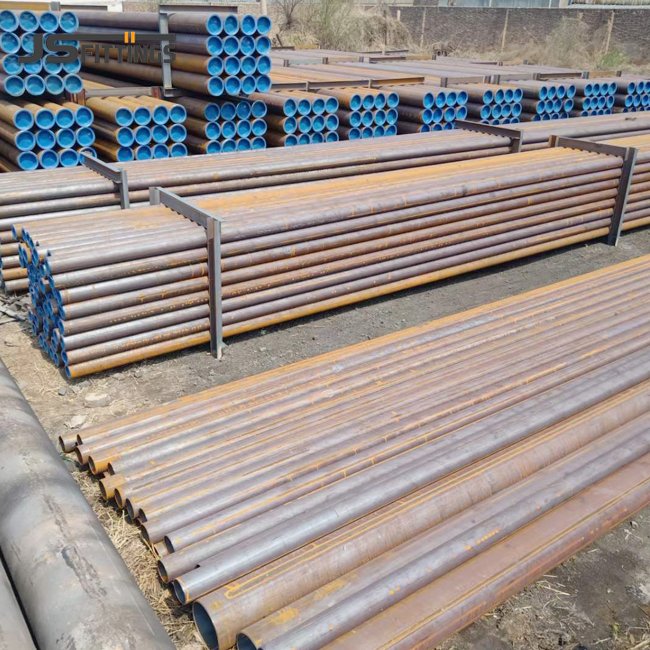
The standard wall thickness for carbon steel pipe is defined by its "Schedule" designation, most commonly Schedule 40 (STD). However, the actual thickness in millimeters or inches varies significantly depending on the pipe's nominal size (NPS). For industrial buyers, understanding the interplay between Schedule, NPS, pressure ratings, and international standards like ASTM and API 5L is critical for ensuring both project safety and cost-efficiency.
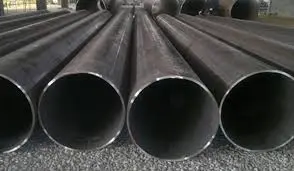
Understanding Carbon Steel Welded Pipe Manufacturing and Specifications
Carbon steel pipes are used in a lot of different jobs. Carbon steel pipes are manufactured by forming steel plate or coil into cylindrical shapes and joining the seam through welding processes such as electric resistance welding or submerged arc welding. These pipes are widely used to transport water, oil, gas, and other industrial fluids. They are widely used because they are cost-effective, easy to manufacture, and highly durable.
Standard Schedule Classifications
There are three main ways to make steel pipes that are joined together. There are times when each way works better than the other. The best way to make pipes from 1/2" to 24" is with electric resistance welding (ERW). High-frequency electrical current fuses the edges together along the seam. This is how ERW pipes are made to be the right size and have a smooth surface. They perform well in oil and gas transmission systems operating under high pressure.
Another common manufacturing method is longitudinal submerged arc welding (LSAW). This method is commonly used to manufacture pipes ranging from 16" to 60" in diameter. Automated welding systems are commonly used in this process. These systems use a flux-covered arc to generate heat and protect the weld zone. Submerged arc welding produces strong, high-quality joints suitable for high-pressure applications and improved corrosion resistance. Cold expansion processes help improve dimensional accuracy and roundness. This also simplifies alignment during large-diameter pipeline installation.
With spiral submerged arc welding (SSAW), big water lines can be built for less money. This method improves material utilization and allows the production of large-diameter pipes. SSAW manufacturing methods can produce very large-diameter pipes suitable for large water transmission and infrastructure projects.
Dimensional Standards and Tolerances
There are eight grades of steel line pipes used in the oil and gas industry. The grades are based on the minimum yield strength that the pipes must have. These materials can handle high and low temperatures, corrosive environments, and sour service conditions with hydrogen sulfide. Their chemical composition varies depending on grade requirements, with controlled levels of carbon, manganese, sulfur, and phosphorus to achieve the required strength, toughness, and weldability.
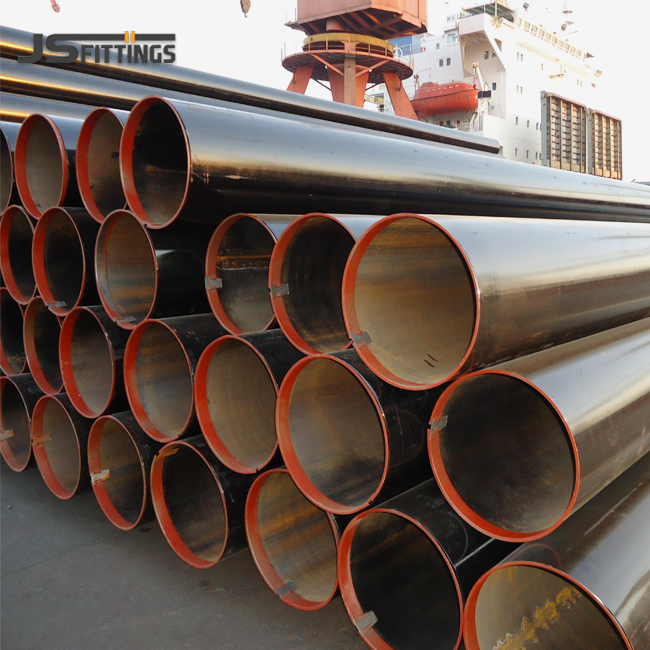
Wall thicknesses may range from Schedule 10 to Schedule 160 depending on the application requirements, design pressure, pipe diameter, and operating temperature. Standard lengths are 20-foot and 40-foot sections, but custom lengths can be made to fit any project. The surface can be left natural or painted with 3PE (three-layer polyethylene), FBE (fusion-bonded epoxy), or other anti-corrosion systems.
Key Specifications and Grades Related to Wall Thickness
When specifying carbon steel pipes, the most critical parameter related to wall thickness is the Schedule (Sch) number. This system, standardized by ASME B36.10M, classifies pipe wall thickness into various levels, such as Sch 10, Sch 20, Sch 40 (Standard or STD), Sch 80 (Extra Strong or XS), and up to Sch 160 for extreme high-pressure applications. A higher Schedule number indicates a thicker pipe wall, which directly translates to a greater pressure-handling capability. For example, a 6-inch NPS Schedule 40 pipe has a wall thickness of 0.280 inches, while a Schedule 80 pipe of the same size has a much thicker wall of 0.432 inches, allowing it to withstand significantly higher internal pressures.
Manufacturing Method Impact
To get the right angle and land sizes, cut or grind the pipe end. Standard bevel preparations have land sizes of 1/16" to 1/8" and angles of 30 degrees. This ensures proper penetration and fusion characteristics. Next, clean the surface by wire brushing, grinding, or chemically cleaning off mill scale, rust, oil, and other contaminants.
Root pass welding requires careful control of joint gaps and backing methods to prevent burn-through and ensure full penetration. To get even bead profiles and avoid common problems like not enough fusion or incomplete penetration, welders must keep their travel speeds and electrode angles steady.
Fill and cap passes bring the joint up to the same thickness as the base metal and give it the right mechanical properties. It's important to keep the material from getting too hot between passes, as that could damage its properties or cause it to warp. To get rid of slag and spatter, each pass needs to be cleaned well before adding the next one.
Surface Treatment Considerations
Welded carbon steel pipe systems are very strong and have to follow strict rules. They are tried very carefully before they are put in place to make sure they don't have any problems that cost a lot of money.
How to Choose the Right Wall Thickness for Your Application?
Selecting the right wall thickness is a crucial engineering decision that balances safety, performance, and cost. First, you must determine the maximum operating pressure and temperature of your system. Using industry codes like ASME B31.3, you can then calculate the minimum required wall thickness based on the pipe's diameter and material grade (e.g., ASTM A106 Grade B). Always remember to add a corrosion allowance—typically 1.5 to 3.0 mm—to the calculated thickness, especially for pipelines handling corrosive fluids over a long service life. Finally, select the next available standard Schedule number that meets or exceeds this total calculated thickness to ensure a robust safety margin.
Environmental Factor Assessment
Hydrostatic testing is typically performed at pressures specified by applicable ASME or API standards, often higher than the design operating pressure. This ensures leak-tight performance and verifies that all joints can withstand operational stresses. During the test, automated monitoring systems watch for small leaks and record changes in pressure.
A fundamental requirement of all major piping codes is that the welded joint must exhibit mechanical properties equal to or greater than the base metal. To verify this, transverse weld tensile tests are performed on weld specimens. These tests measure the ultimate tensile strength, yield strength, and ductility of the joint to ensure it meets or exceeds the minimum specified properties of the pipe itself.
If you work with welded parts, you need to know how tough they are at different temperatures. Charpy V-notch specimens from the weld metal, the heat-affected zone, and the base metal can help you compare how tough they are to see if they're ready for use.
Comparative Material Analysis
Some materials are more expensive, don't work as well, or don't last as long. Knowing the pros and cons of carbon steel pipe systems can help you save money and get the right supplies for your job.
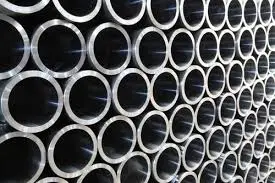
Procurement Insights on Carbon Steel Pipe Wall Thickness
When it comes to large diameters, carbon steel welded pipes are stronger and more affordable than seamless pipes. This is because welded construction doesn't have size limits like seamless construction does, so diameters bigger than 48 inches can be made at reasonable prices. Welded pipes also have more consistent wall thickness than seamless pipes, which is important for larger sizes where rotary piercing causes problems with eccentricity.
Quality Certification Requirements
Stainless steel doesn't rust as much, but it costs a lot more and has to be made in a certain way. Stainless steel is generally significantly more expensive than carbon steel due to its alloy content and enhanced corrosion resistance.
The zinc coating on galvanized steel sometimes keeps it from rusting, but it's hard to weld because the coating breaks down in hot spots, letting out dangerous fumes. For this reason, galvanized pipes can only be used in low-pressure situations, and the coating needs to be fixed after welding.
Supplier Evaluation Criteria
It's important to compare how much a material costs up front to how well it works and how much upkeep it needs over time. For example, welded carbon steel pipes are great for situations that need high strength, moderate corrosion resistance, and low-cost installation. It's easy to get carbon steel materials and learn how to weld them, which lowers project risks and lead times.
You should choose a material based on its working temperature, the pressure it needs, and the climate of the project. Carbon steel can be used across a wide range of operating temperatures depending on the material grade, pressure conditions, and applicable design codes. Coatings, cathodic protection, or chemical inhibitors can help it last longer and not rust in tough environments.
Carbon steel pipe systems are better at meeting volume needs and delivery dates because they are easier to make and have a better supply chain. Standard sizes are also kept in stock for quick projects, and standard production equipment can make customized specifications with reasonable lead times.
Cost Optimization Strategies
To buy carbon steel welded pipe systems, you need to know about the market and the companies that sell them. In today's global markets, the best companies say they are quality, deliver on time, and have great customer service.
Maintenance and Longevity Related to Pipe Wall Thickness
Reputable manufacturers maintain robust quality management systems certified to ISO 9001, in addition to holding product-specific certifications like API 5L and ensuring full compliance with ASTM standards and the European Pressure Equipment Directive (PED) where applicable.These certifications show that the products are consistently made and of high quality, which is important for important uses.
Corrosion Resistance Benefits
Many international approvals, like ADNOC, Petrobras, NIOC, and CE marking, show that the company can make things for projects all over the world. The factory has to pass many tests, have its products audited, and have quality checks done on a regular basis to make sure that standards are always met.
Mechanical Wear Considerations
Large-scale manufacturers may maintain substantial inventories of pipe fittings and flanges to support fast delivery schedules and large industrial projects. Some manufacturers also maintain monthly shipping capacities exceeding 90 containers. Some suppliers report customer repurchase rates exceeding 98%, and over 95% of orders are made on time.
Predictive Maintenance Applications
It costs more for high-end grades like API 5L X70 than for regular A53 Grade B materials. You should also think about how much the wall thickness will cost, if there are any special tests that need to be done, and if there are any limits on how much you can measure.
If you agree to buy a certain amount every year or for more than one project, you can save even more. This is how you get the best deals on big projects.
Shipping and delivery terms can change how much something costs when you buy it from another country. Free-on-board (FOB) terms, shipping insurance, and customs clearance procedures need to be carefully coordinated to keep projects on track and avoid extra costs. Well-known manufacturers have international trade teams with a lot of experience that can handle this kind of logistics.
Conclusion
To properly join carbon steel pipes, you need to know a lot about the material's properties, welding methods, and quality control procedures. ERW, LSAW, or SSAW should be used depending on the project's budget, diameter needs, and pressure ratings. To make sure the joints are reliable, meet industry standards, and last a long time, you need to test them thoroughly, pick the right technique, and properly prepare the pipes. Quality control includes mechanical validation, nondestructive testing, and certified manufacturing processes. These checks make sure the system is safe to use. Procurement professionals can evaluate suppliers by reviewing their certifications, production capacity, and track records in tough industrial settings.
FAQ
1. What is the most common standard wall thickness for carbon steel pipes?
Common wall thickness schedules for carbon steel pipes include Schedule 40 and Schedule 80, which are widely used in industrial piping systems. The appropriate wall thickness depends on the operating pressure, temperature, pipe diameter, and applicable design code requirements.
2. How does wall thickness affect the pressure rating of carbon steel pipes?
Thicker pipe walls generally allow higher pressure ratings because they provide greater resistance to internal pressure stresses. Pressure capacity depends on wall thickness, pipe diameter, material strength, temperature, and applicable design standards.
3. Can I use thinner-walled pipes to reduce project costs?
Thinner-walled pipes may reduce material costs, but they must still satisfy the pressure, temperature, corrosion allowance, and mechanical requirements defined by applicable engineering codes. Using undersized wall thickness can compromise safety and service life.
4. What standards govern carbon steel pipe wall thickness specifications?
Carbon steel pipe wall thickness specifications are commonly governed by standards such as ASME B36.10M, ASTM A53, ASTM A106, API 5L, and ISO 3183. These standards define dimensions, tolerances, material grades, and pressure-related requirements.
Partner with JS FITTINGS for Premium Carbon Steel Pipe Solutions
JS FITTINGS has been making high-quality industrial pipes since 1970. We offer certified Carbon Steel Pipe systems that meet the strictest requirements. Our ERW, LSAW, and SSAW pipes have diameters from 1/2" to 60" and wall thicknesses from Schedule 10 to Schedule 160. Our products are ISO 9001 certified, ASTM/API compliant, and have been approved by major oil companies like NIOC, ADNOC, and Petrobras, so you can be sure of their quality and dependability. Our experienced engineering team will help you choose the right materials and make sure they meet your needs.Email our expert engineering and sales team at admin@jsfittings.com for a personalized consultation and competitive pricing on your next project.
References
1. American Society of Mechanical Engineers. "ASME B36.10M - Welded and Seamless Wrought Steel Pipe." ASME International Standards, 2018.
2. ASTM International. "ASTM A53/A53M - Standard Specification for Pipe, Steel, Black and Hot-Dipped, Zinc-Coated, Welded and Seamless." Annual Book of ASTM Standards, 2020.
3. American Petroleum Institute. "API Specification 5L - Specification for Line Pipe." API Publishing Services, 2018.
4. Barlow, Peter M. "Mechanical Design of Process Systems: Piping Design and Wall Thickness Calculations." Industrial Engineering Press, 2019.
5. International Organization for Standardization. "ISO 3183 - Petroleum and Natural Gas Industries: Steel Pipe for Pipeline Transportation Systems." ISO Publications, 2019.
6. National Association of Corrosion Engineers. "NACE Standard RP0169 - Control of External Corrosion on Underground Metallic Piping Systems." NACE International, 2017.
Send Inquiry
Related Industry Knowledge
- Stainless Steel 316L Buttweld Tee for Offshore Pipelines
- What is FBE Coated Steel Pipe?
- What Is The Difference Between Different Grades Of API 5L Seamless Steel Line Pipe In Performance?
- Long Radius Buttweld Elbow For Erosion-Corrosion Environment
- What is CRA clad pipe?
- Why Engineers Choose Buttweld Bend Over Mitered Bends?
- ASTM A105 Carbon Steel Forged Steel Flange Specifications
- What is rtj blind flange?
- How to weld carbon steel pipe?
- What specification is the carbon steel black pipe?