
How to Choose the Right Buttweld Elbow for High-Pressure Piping






2026-05-20 10:53:04
To pick the correct butt weld elbow for high-pressure pipes, you need to carefully consider the pressure ratings, the suitability of the materials, the wall thickness, and the building methods. When you choose the right elbow, you can avoid major failures, cut down on downtime, and make sure that strict safety standards are met. To get effective long-term performance, procurement managers, engineers, and workers must make sure that product specs are in line with working conditions such as extreme temperatures, corrosive media, and stress cycles. This guide gives decision-makers an organized way to find pipe fittings that meet both practical and cost-effective needs.
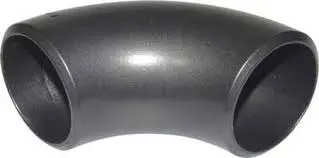
Understanding Buttweld Elbows and Their Role in High-Pressure Piping
A buttweld elbow is an important pipe part made to ASME B16.9 standards. It changes the flow direction by 90° or 45° while keeping the structure strong under high pressure and temperature. Unlike threaded or socket-weld fittings, these elbows have ANSI B16.25-compliant beveled ends that allow joining pipes to be welded all the way through. This makes a fixed joint with minimal leakage risk when properly welded and is integrated into the continuous system. Forging or hot pressing steel into exact angles is part of the industrial process. This method reduces potential defects associated with casting and provides a more uniform grain structure throughout the part. These parts are used in petrochemical processing, power generation, offshore platforms, and local water treatment, among other places. If a joint fails, it could cause safety issues or environmental problems.
Common Types and Configurations
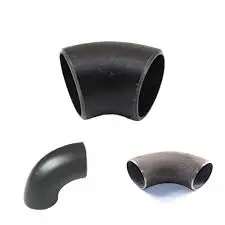
Types of elbows are based on their shape and design. The 90-degree design changes the flow path so that it is perpendicular to the original path. This is often needed in small areas or when there needs to be a sudden change in direction. The 45-degree version has smoother changes, which lowers noise and pressure drops in systems where flow efficiency is very important. For specific uses, 60-degree and 180-degree return turns are less common designs. There are two main types of construction methods: seamless and welded. When made from solid billets, seamless elbows can handle higher pressures and offer better wear resistance. When it comes to bigger diameters up to 72 inches, welded elbows made with ERW (Electric Resistance Welding) or EFW (Electric Fusion Welding) are more economical for larger diameters and can be used in a wide range of pressure services depending on design and material.
Material Composition and Standards Compliance
Choosing the right material has a direct effect on how well it resists rust and works mechanically. Some types of carbon steel, like ASTM A234 WPB, can handle temperatures up to 800°F in an industrial setting. ASTM A403 WP304/304L and WP316/316L stainless steel choices are very resistant to acidic and chloride conditions, which is important for chemical processing and marine systems. ASTM A234 WP5, WP9, WP11, WP22, and WP91 alloy steel types can handle high temperatures in boilers and factories. As low as -50°F, ASTM A420 WPL6 low-temperature carbon steel stays flexible in cold applications. Dimensional limits and quality norms are set by international standards. The ASME/ANSI B16.9 standard lists the sizes for wrought fittings that are made in a workshop, and the MSS-SP-43 standard talks about wrought stainless steel fittings. EN 10253 and DIN 2605 are used in European markets. Strict adherence to these guidelines for stainless steel butt weld elbows ensures global interchangeability and significantly simplifies international procurement.
Key Criteria for Selecting the Right Buttweld Elbow for High-Pressure Applications
To make a good decision, you must first understand the operational factors. With enough safety margins, pressure numbers must be higher than maximum working pressures. Pressure capacity is closely related to wall thickness. Scheduling ranges from 10s to XXS to handle pressures for light-duty to ultra-high-stress uses.When internal pressure is applied, the extrados (outer curve) is one of the critical stress zones of the buttweld elbow. Manufacturers who use optimized hot-mandrel methods make sure that the thickness is the same in this key area.
Material Selection Criteria
The people who work in procurement have to look at the chemical makeup and temperature profile of the liquids being sent. Media that are corrosive and contain sulfur compounds or chlorides need stainless steel or other special metals. Alloy steel types with chromium-molybdenum content are needed for high-temperature steam lines above 750°F to keep them from creep deforming. If you want to save money on a job that involves non-corrosive fluids below 400°F, you can use carbon steel that has been treated with the right finish: black painting for indoor use, hot-dip galvanizing for outdoor use, or anti-rust oil for short-term storage. Chemical and mechanical qualities can be guaranteed when materials can be tracked back to their source. Only Tier-1 steel mills, like Baosteel or Tsingshan, are used by premium providers. They provide 3.1 Mill Test Certificates (MTC) that show heat numbers, makeup analysis, and tensile test results. During regulatory checks and insurance reviews, this paperwork is very important.
Dimensional Accuracy and Quality Verification
Precision beveling makes field welding work well. Advanced CNC cutting makes bevel angles that are aligned with ASME B16.25. This cuts down on welding time and improves the quality of the joint. When dimensional limits are kept within ±1%, fit-up problems that slow down projects are eliminated. Verification of quality goes beyond just looking at something. Ultrasonic Testing (UT) and other Non-Destructive Testing (NDT) methods can find laminations or inclusions below the surface. Magnetic Particle Inspection (MPI) finds cracks on the surface that you can't see with the naked eye. Before shipping, structural integrity is verified through dimensional inspection and NDT, while pressure testing (such as hydrostatic testing) is typically conducted at the system level, while fittings are verified through dimensional inspection and non-destructive testing before delivery. Distributors who work with EPC firms should make sure that their suppliers follow these rules all the time, not just when they are asked to.
Comparing Buttweld Elbows with Alternative Elbow Types
When it comes to high-pressure situations, buttweld elbows work better than threaded and socket-weld choices. When you load and unload something repeatedly, threaded links put a lot of stress on the threads' roots, making them more likely to crack from wear. Even though socket-weld fittings are easier to install, they leave cracks where harmful fluids can gather, which can cause localized damage. With buttweld elbows, you can get a full-penetration weld that spreads stress evenly across the joint. This construction can handle changes in temperature and pressure without creating leaky areas. Installation is hard because it needs experienced welders and in some cases a heat treatment after the weld. However, the product will last for decades without needing any upkeep. When purchasing managers weigh up initial costs against long-term costs, buttweld elbows lower the total cost of ownership by extending service gaps and lowering the number of failures.
Angle Selection and Flow Dynamics
Choosing between 45-degree and 90-degree elbows affects both how well the hydraulics work and how easy it is to install. Sharp 90-degree turns cause secondary flows, and the pressure drops by the same amount as the square of the flow speed. In systems with a lot of speed, these losses use up pumping energy and can cause erosion at the inner radius of the elbow. Two 45-degree elbows connected in series can reduce pressure drop compared to a single 90-degree fitting, although the exact reduction depends on flow conditions and system design. However, the straight pipe length between the fittings needs to be longer. Project specs should find a mix between how well the flow works and how much space is available. Even though they lose more, 90-degree bends are better for small skid-mounted systems. To keep operating costs as low as possible over the life of a long-distance pipeline, 45-degree changes are given the most attention. Custom degree choices, such as 60°, 120°, or intermediate angles, can be used to meet specific plan needs, but they come with longer lead times and higher unit costs.
Practical Guide to Installation and Maintenance of Buttweld Elbows in High-Pressure Systems
Pipe parts will last as long as they are supposed to if they are installed correctly. Before welding, the quality, cleanliness, and orientation of the bevel are checked. Weld flaws are caused by mill scale, oil, or moisture; surfaces are prepared by wire brushing and liquid cleaning. Excessive fit-up gaps beyond code-specified tolerances need to be corrected to ensure proper full penetration during welding.
Welding Procedures and Techniques
Welding methods that are qualified list the warmup temperatures, interpass temperatures, filler metal choices, and heat input parameters. To keep hydrogen from causing cracks in carbon steel elbows with schedules above 80, they usually need to be heated to 200 to 400°F first. Gas tungsten arc welding (GTAW) is often needed for root passes because stainless steel parts need low heat input to keep their rust resistance. It is called post-weld heat treatment (PWHT), and it reduces residual stresses in carbon and alloy steel systems, especially those that work above 600°F or are loaded and unloaded many times. Stress distribution is directly affected by alignment limitations. Excessive misalignment beyond code limits can introduce bending moments during pressure cycles, which speeds up wear and tear. Pipe orientation clamps and tack welds keep the pipe in place while the root pass is finished. Before the system is pressurized, a radiographic or ultrasound check is used to make sure the weld is sound.
Post-Installation Testing Protocols
Before the system is put into service, hydrostatic or alternative pressure testing methods are used to verify system integrity before service. When test pressures hit 1.5 times the design pressure, flaws are shown that could spread during service. Leaks that happen slowly can be found by holding the test pressure for a specified duration as required by applicable codes or project specifications. For systems that can't handle water, pneumatic tests with compressed air or nitrogen can be used instead. However, extra safety measures are needed to deal with the risks that come from saved energy. Documentation demonstrating compliance is essential for governmental approvals and insurance coverage. Test reports recording pressures, temperatures, hold durations, and final results must be permanently retained. Essential documents—such as material traceability sheets, weld maps, and NDT records—prove that all code standards have been met. Well-organized documentation packages ensure a smooth handover to plant operations teams and provide a reliable baseline for planning future system modifications.
Procurement Strategies for Buttweld Elbows: Finding the Best Supplier and Managing Orders
Evaluating buttweld elbow suppliers requires looking far beyond initial price comparisons. Holding rigorous quality certifications—such as ISO 9001 for process control and ASME approval for code compliance—demonstrates a manufacturer's commitment to advanced engineering and production excellence. Performance history is equally critical; manufacturers approved by major energy corporations like NIOC, ADNOC, or Petrobras have successfully passed stringent qualification audits. Furthermore, high-end manufacturers distinguish themselves through transparent material sourcing, utilizing only Tier-1 mill products to guarantee consistent chemical and mechanical properties. Complete traceability, including raw material heat numbers, enables exact matching for future repairs or expansions and provides crucial data for regulatory audits and failure analysis.
Evaluating Technical Capabilities
How reliable deliveries are depends on how much can be made. Companies that make more than 800 tons of goods every month and ship more than 90 containers can handle bulk sales without affecting wait times. Over 95% of deliveries are made on time, which shows that production planning and warehouse control are good. Low complaint rates (below 0.5%) show that quality control is working well and customer service is listening. Customization lets you meet needs that aren't common. One-stop shopping is easy when you can find suppliers who can make sizes from DN15 to DN2000, wall thicknesses across the schedule range, and special degree angles. This merging makes buying things easier, cuts down on freight costs, and makes managing vendors easier. Suppliers who are ready to do sample production and small-batch trial orders are especially helpful for small engineering companies and local installers.
Managing International Procurement
Global buying makes logistics more difficult. Manufacturers with a lot of experience know how to package goods for export. Seaworthy plywood cases or palletized bundles with moisture shields keep goods safe during travel. Clear heat-number marks and color-coded labels make it easier for distributors who keep a lot of stock to keep track of their goods. Customs clearance is faster when you have documentation packages with commercial invoices, packing lists, certificates of origin, and material test results. How quickly communication is affected by project plans. When suppliers promise to answer questions within an hour, it's easy to make decisions quickly during selling rounds. Experienced international trade teams manage complex payment terms, shipping logistics, and regulatory compliance, significantly easing the administrative burden on procurement departments. Furthermore, comprehensive after-sales support—including expert installation guidance and robust warranty coverage—distinguishes true manufacturing partners from transactional vendors. With over 40 years of manufacturing excellence, JS FITTINGS is your premier manufacturer and trusted supplier of industrial buttweld elbows. We engineer our products to strictly meet ASME B16.9, MSS-SP-43, EN 10253, and DIN 2605 standards, offering seamless sizes from 1/2" to 24" and welded options up to 72". Utilizing optimized hot-mandrel processes, we guarantee consistent wall thickness—particularly at the elbow's extrados—ensuring uncompromising safety and performance in high-pressure environments.
Conclusion
When choosing the right butt-weld elbow for high-pressure piping, you have to balance technical specifications with practical procurement issues. Long-term reliability is based on material compatibility, pressure ratings, dimensional accuracy, and quality verification protocols. The best angle to use is determined by comparing construction methods and understanding how flow works. Installing the pipe correctly and having regular maintenance programs protects your investments in infrastructure. Strategic supplier partnerships that prioritize certifications, traceability, technical capabilities, and responsive service lower project risks while keeping costs low. This all-around approach lets procurement professionals choose fittings that will work safely and legally for decades.
FAQ
1. What distinguishes seamless from welded buttweld elbows?
Seamless buttweld elbows are made from solid steel billets using hot forming processes that eliminate longitudinal weld seams. This construction offers better pressure capacity and fatigue resistance, making it perfect for ultra-high-pressure services above 2500 PSI or critical applications where weld integrity is a concern. Welded elbows, on the other hand, are made by forming and welding steel plates or coils, which makes them cheaper for larger diameters than 24 inches while still meeting ASME B16.9 dimensional standards when they are made correctly.
2. How do I figure out what pressure ratings are right?
Engineers use the ASME B31.3 Process Piping Code or the B31.1 Power Piping Code to find out the allowable stress values at different temperatures. To figure out the required wall thickness, they use the Barlow formula, which takes into account the design pressure, the outside diameter, the allowable stress, and the efficiency of the weld joint. They also make sure to include safety factors and talk to suppliers who can give them pressure-temperature rating charts for specific material-schedule combinations.
3. Can buttweld elbows be customized?
Reputable manufacturers can accommodate custom specifications such as non-standard degrees, special material grades, longer wall thicknesses, and different surface treatments. Compared to standard catalog items, custom orders usually need minimum quantities and longer lead times. Giving detailed specifications, such as applicable codes, dimensional tolerances, testing requirements, and service conditions, allows for accurate quotes and ensures that delivered products meet project needs.
Partner with JS FITTINGS for Your High-Pressure Piping Needs
Getting reliable, legal pipe fittings shouldn't slow down your project or break the bank. JS FITTINGS offers precision-engineered buttweld elbows made to international standards with full traceability from Tier-1 steel mills. Our advanced CNC beveling makes installation easier, and strict NDT protocols, such as UT and MPI, ensure structural integrity. We serve EPC contractors, distributors, and industrial end-users in over 30 countries, and our 98% customer repurchase rate shows why. Email our technical team at admin@jsfittings.com to talk about your needs, and get a personalized quote today to see why leading energy companies trust our 40 years of manufacturing excellence.
References
1. American Society of Mechanical Engineers. ASME B16.9: Factory-Made Wrought Buttwelding Fittings. New York: ASME Press, 2018.
2. American Society of Mechanical Engineers. ASME B31.3: Process Piping Code. New York: ASME Press, 2020.
3. ASTM International. ASTM A234/A234M: Standard Specification for Piping Fittings of Wrought Carbon Steel and Alloy Steel for Moderate and High Temperature Service. West Conshohocken: ASTM, 2019.
4. Manufacturers Standardization Society. MSS SP-43: Wrought Stainless Steel Butt-Welding Fittings. Vienna: MSS, 2017.
5. European Committee for Standardization. EN 10253: Butt-Welding Pipe Fittings. Brussels: CEN, 2016.
6. Nayyar, Mohinder L. Piping Handbook, 8th Edition. New York: McGraw-Hill Education, 2019.
Send Inquiry
Related Industry Knowledge
- How to Inspect Buttweld Elbow Quality Before Installation?
- Sourcing Custom Steel Flange: A Buyer’s Guide to Working with a Manufacturer
- Choosing the Right Size Long Radius Buttweld Elbow for Your Project
- What Are Slip-On Flanges?
- Key Considerations With ANSI Pipe Flanges
- Buttweld Tee Pressure Ratings Explained for Industrial Piping
- Why Is a Seamless Buttweld Tee Preferred in Critical Service?
- What is rtj blind flange?
- How thick is standard wall pipe on carbon steel?
- Is a 90 or 45 degree elbow better for drain?