
How to Order Custom Steel Flange






2026-07-13 10:32:43
Ordering a custom steel flange involves understanding your project's exact requirements—pressure ratings, material grades, and dimensional tolerances—and partnering with a qualified manufacturer who can deliver certified products on schedule. The process requires careful specification, supplier vetting, and quality verification to ensure compatibility with existing piping systems and compliance with industry standards like ASME B16.5 or DIN EN 1092-1. Working with an experienced supplier streamlines procurement, reduces lead times, and guarantees that each flange performs reliably under demanding conditions.
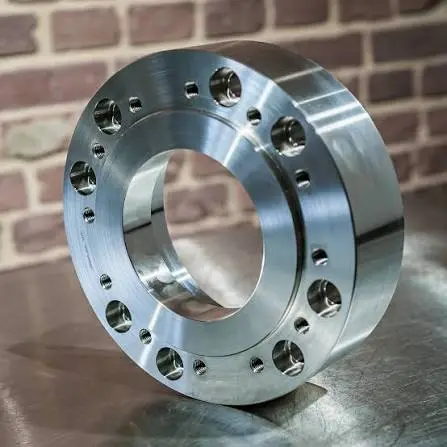
Understanding Custom Steel Flanges and Their Applications
To order a custom steel flange, you need to know exactly what your project needs in terms of pressure ratings, material grades, and dimensional tolerances. You also need to work with a qualified manufacturer who can deliver certified products on time. To make sure it works with existing pipe systems and meets standards like ASME B16.5 or DIN EN 1092-1, the process needs to be carefully planned, suppliers must be screened, and quality must be checked. Working with a supplier with extensive experience makes procurement more efficient, cuts down on lead times, and makes sure that every flange works reliably in tough situations.
If regular off-the-shelf flanges can't meet the specific needs of your pipe system, forged steel flanges are often a preferred choice. Forged carbon steel flanges are different from cast ones because they go through a high-pressure mechanical forging process that smooths out the internal grain structure. By improving material density and reducing internal defects during the manufacturing process, parts are made that can better withstand high-pressure surges and extreme temperature cycles.
At JS Fittings, we make a wide range of forged flanges that are used to connect pipes, valves, pumps, and other equipment in a way that doesn't leak. We offer a wide range of products, from basic weld neck configurations to specialized blind flanges. All of them are designed to last for a long time in oil, gas, and industrial operating environments.
Flange Types and Their Specific Applications
Figuring out what kind of flange you need for your job has a direct effect on the safety and performance of the system. Weld neck flanges have a curved hub that acts as an important support by moving stress from the flange to the pipe and lowering the stress at the base. Because of how they are made, they are the safest choice for systems that have to deal with changing temperatures or a lot of mechanical stress. This is especially true in refineries and other high-pressure services, where pressure classes may reach Class 1500 or Class 2500.
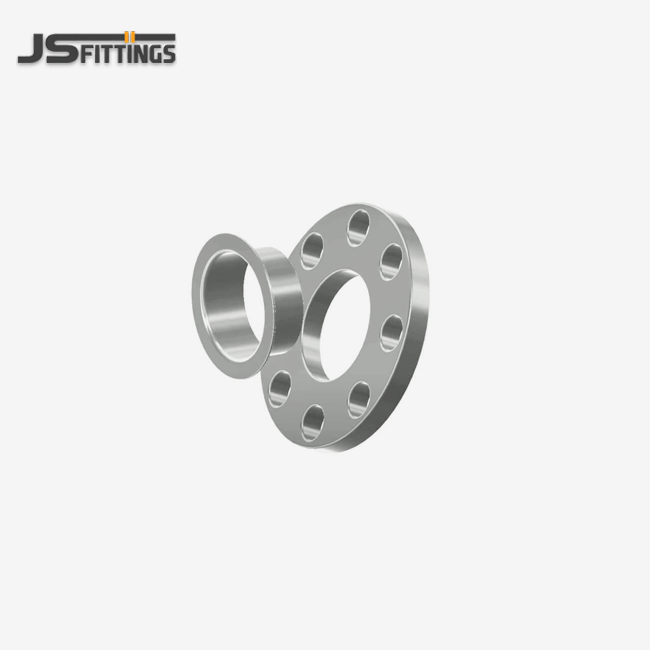
Slip-On flanges make it easy to line up parts during installation and work well in low-pressure lines where speed of assembly is important. Blind flanges cover the end of a pipe or tank opening, and socket weld types are used for small-diameter high-pressure piping, while threaded flanges are commonly used for smaller low-pressure systems where welding is undesirable. Lap joint flanges can be used with systems that need to be taken apart often for repair or inspection, which cuts down on downtime in chemical processing plants.
Material Options and Industry Standards
The choice of material depends on how corrosive the media is, the temperature at which it will be used, and the pressure that it needs to withstand. Grades of carbon steel like ASTM A105 are good for general-purpose uses, while A350 LF2 is good for low-temperature work. Different types of stainless steel (ASTM A182 F304/316) don't rust in harsh chemical conditions. Alloy steels like F11 and F22 can handle high temperatures in power plants, and Duplex or Super Duplex types (F51 and F53) provide improved resistance to stress corrosion cracking in offshore environments.
We manufacture custom steel flanges in strict accordance with major international standards. You can find standard pipe sizes in ASME/ANSI B16.5 from NPS 1/2 to NPS 24 and large-diameter flanges in ASME B16.47 Series A and B from NPS 26 to NPS 60. European projects use DIN/EN 1092-1 measurements. Pressure ratings range from Class 150 to 2500 and PN6 to PN64. There are different types of faces, such as Raised Face (RF), Flat Face (FF), Ring Type Joint (RTJ), and Male & Female facing designs, to meet the needs of gaskets and seals.
Key Considerations Before Ordering Custom Steel Flanges
Before they start a purchase order, procurement workers need to make sure they understand a number of technical and business issues that have a direct impact on the success of the project. Accurate dimensioning prevents project delays and expensive field remediation. Buyers should compare the piping drawings to make sure that the bolt circle diameter, flange thickness, hub dimensions, and bore size are correct. Misalignment, gasket failure, or not being able to get the right bolt torque during fitting can all be caused by small changes to a custom steel flange.
Material Selection and Pressure Rating Alignment
When choosing between carbon steel and stainless steel, you should look at the total cost of ownership instead of just the price of the initial purchase. Forged carbon steel flanges and custom steel flanges have better mechanical properties and are less expensive, which makes them perfect for use in hydrocarbon service where corrosion inhibitors are needed. When chemical compatibility or hygiene standards require it, like in pharmaceutical piping or food processing, stainless steel is worth the extra cost.
To choose the right pressure grade, you need to make sure that the flange class matches the system's Maximum Allowable Working Pressure (MAWP) with enough room for error. Pressure spikes, water hammer effects, and thermal expansion are all things that engineers have to think about. Using Class 300 flanges in a system designed for Class 600 service may be unsafe if the pressure-temperature rating is insufficient, and requiring too much makes materials cost more than they need to be.
Custom Versus Standard Flanges: Cost-Performance Analysis
Standards for flanges made to ASME or DIN standards have shorter lead times and lower unit costs because of economies of scale. When connecting to old equipment with out-of-date bolt patterns, working around limited space in retrofits, or meeting ultra-high pressure needs above Class 2500, custom designs become economically viable. When buyers order custom setups, they should ask for Finite Element Analysis (FEA) paperwork to make sure the structure will hold up under a load.
It can take anywhere from two to four weeks to get standard forged flanges, depending on the size and availability of the material. Custom OEM carbon steel forged flange orders take six to ten weeks longer because they need more engineering review, pattern making, and testing. Different manufacturers have different minimum order quantities. Standard sizes may only need one piece to ship, but custom designs usually need at least ten to fifty pieces to cover the cost of the tools. You can get volume savings and uniform lots of materials when you order in bulk. This keeps the mechanical properties of the materials constant across a job.
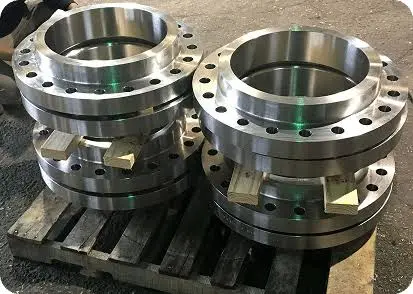
Step-by-Step Process to Order Your Custom Steel Flanges
Full technical paperwork is the first step to a successful purchase. Get all the specifications you need, such as detailed drawings showing sizes and tolerances, the material grade and how it should be treated during heat treatment, the pressure-temperature ratings, the testing and inspection criteria according to applicable standards such as ASTM A388 for ultrasonic examination of forgings or EN 10204 for inspection documents, and the surface finish requirements for the surfaces where the gaskets will sit. Specifications that aren't complete can cause delays in clarification, mistakes in quotes, and even non-conformance for a custom steel flange.
Vetting Manufacturers and Requesting Quotes
Supplier approval has a direct effect on how reliable a product is and how well it is delivered. Check to see if manufacturing sites are certified with ISO 9001, which shows that they handle quality in a planned way. Make sure the supplier has material traceability systems that meet EN 10204 3.1 or 3.2 standards. This way, you can be sure that each flange can be linked to its mill test report and heat number. Check for Positive Material Identification (PMI) tools that can be used on-site to check the chemistry of the metal in real time.
Ask three to five qualified providers for quotes, making sure that all of their prices are the same so that you can compare them fairly. The price should include the unit cost, any fees for tooling or engineering for special designs, an expected lead time with milestone dates, payment terms, and shipping plans with Incoterms made clear. Don't just look at the lowest bid; also look at the supplier's history with similar projects, their readiness to provide samples, and how quickly they responded during the quotation process.
Sample Verification and Production Oversight
Before giving the go-ahead for full production runs, you should ask for pre-production samples to be checked for size and quality. A Coordinate Measuring Machine (CMM) checks the samples to make sure the bolt hole spacing, flange face flatness, and gasket surface roughness values are correct. Sample pieces may be put through destructive tests to verify tensile strength, Charpy V-Notch impact requirements (when applicable), and hardness.
Set up inspection hold places during production where the maker needs to get approval before moving forward. Typical hold points are receiving the raw material and PMI testing it, checking the dimensions after forging, making sure the heat treatment was done correctly with furnace charts, checking the quality of the final cutting, and non-destructive testing with Ultrasonic Testing (UT), Magnetic Particle Testing (MT), or Dye Penetrant Testing (PT). Clear communication through weekly progress reports keeps the plan in view and lets problems be solved before they get out of hand.
Contract Finalization and Logistics Coordination
Make the order official by writing down technical details, quality standards that are accepted, inspection and testing procedures, a delivery schedule with liquidated damages clauses if needed, warranty terms that cover material defects and poor workmanship, and ways to settle disagreements. Clear contracts keep everyone safe and make sure that everyone is responsible.
Plan your operations ahead of time, especially for packages going to other countries of large-diameter custom forged steel flanges. Make sure the seller protects the surface properly by suitable methods such as industrial black paint, protective coatings, or anti-rust oil. This will keep the metal from rusting while it's being shipped by sea. Make sure that the packaging meets the standards for filling containers and has the right labels with heat numbers, material grades, and measurements. If the contract says so, have a third party like SGS or Bureau Veritas inspect the goods before they are shipped. This will give you an independent check before the goods leave the plant.
Conclusion
To successfully order custom steel flanges, you need to know a lot about them, choose your seller carefully, and keep an eye on the quality all the time. Knowing the qualities of the material, its pressure ratings, and its size requirements will help you make exact specs that meet the needs of your system. Working with skilled manufacturers who follow strict quality standards and can export their goods all over the world guarantees that you will get reliable products on time. Buying experts lower project risks, keep costs low, and set the stage for long-term operational success by following best practices in quality control, buying strategy, and managing relationships with suppliers. Spending time and money on carefully crafting specifications and checking out suppliers pays off in the end by lowering installation costs, increasing system reliability in serious situations, and extending service life.
FAQ
1. How long does it usually take to make a custom flange?
Standard forged flanges in popular sizes typically ship within two to four weeks after the order is confirmed. Lead times are six to ten weeks longer for custom designs that need engineering analysis, special tools, or materials that aren't commonly used. Large-diameter flanges bigger than 36 inches or metal types that aren't commonly used may take twelve weeks or longer. For extra money, you can sometimes get expedited production, which cuts down on wait times by 30 to 40 percent when the project's importance supports the extra cost.
2. How can I make sure of the quality of the goods before accepting shipment?
Ask for full mill test reports that list the chemical makeup and mechanical properties of each heat number. Ask for inspection by a third party, such as SGS or Bureau Veritas, which can do independent PMI testing, dimensional verification, and surface inspection at the factory. You might want to ask for independent lab checking of sample pieces from the production lot before you accept the whole package. This way, you can be sure that the materials meet all of your requirements.
3. Do unique flanges meet standards around the world?
The forged steel flanges that good makers make meet foreign standards like ASME/ANSI B16.5, ASME B16.47, DIN/EN 1092-1, and more. Custom designs take these standards' pressure-temperature values and material requirements into account while also meeting specific size needs. Always include the necessary codes in your buy order and make sure that the paperwork includes statements that it meets the necessary standards, backed up by third-party certificates if your project needs them.
Partner with JS FITTINGS for Reliable Custom Steel Flange Solutions
Trust JS FITTINGS to help you with your custom steel flange needs. For over 40 years, JS FITTINGS has been a trusted provider of forged carbon steel flanges to EPC contractors, distributors, and industrial end users all over North America. Our 7,000-square-meter factory follows strict ISO 9001 quality standards and has approvals from PETROBRAS, NIOC, and ADNOC, which means we can work on the toughest energy projects. We make parts from DN15 to DN2000 with pressure classes up to 2500. Our parts meet ASME, DIN, JIS, and GOST standards and can be fully traced back to their original sources.
Our yearly capacity is more than 30,000 tonnes, and we ship more than 90 containers every month, so we have an on-time delivery rate of over 95%. High-tech spectral analyzers and nondestructive testing (NDT) tools make sure that each flange meets the required mechanical properties and size limits. We show the consistency that procurement pros need to meet project dates and budget goals by having customer complaint rates below 0.5% and repurchase rates above 98%.
Email our skilled international trade team at admin@jsfittings.com with your requirements, and you'll get full quotes within one business hour. Whether you need standard configurations or custom solutions for tough situations, our technical experts can help. They offer a wide range of piping options and offer full-cycle service after the sale. Find out why major contractors choose JS FITTINGS as their first choice for mission-critical industrial projects that need custom steel flanges.
References
1. American Society of Mechanical Engineers. (2021). ASME B16.5: Pipe Flanges and Flanged Fittings: NPS 1/2 Through NPS 24 Metric/Inch Standard. New York: ASME Press.
2. European Committee for Standardization. (2018). EN 1092-1: Flanges and their joints - Circular flanges for pipes, valves, fittings and accessories, PN designated - Part 1: Steel flanges. Brussels: CEN.
3. Harvey, J.F. (2014). Theory and Design of Pressure Vessels, Second Edition. New York: Van Nostrand Reinhold Company.
4. Becht, C. (2017). Process Piping: The Complete Guide to ASME B31.3, Fourth Edition. New York: ASME Press.
5. Smith, P.R. & Zappe, R.W. (2016). Valve Selection Handbook: Engineering Fundamentals for Selecting the Right Valve Design for Every Industrial Flow Application, Fifth Edition. Oxford: Gulf Professional Publishing.
6. Nayyar, M.L. (2019). Piping Handbook, Eighth Edition. New York: McGraw-Hill Education.
Send Inquiry
Related Industry Knowledge
- ASTM A105 Weld Neck Flange: Complete Guide
- CRA Clad Pipe: Applications, Benefits, and Future Trends
- Buttweld Tee vs Socket Weld Tee for High-Pressure Piping
- What is FBE Coated Steel Pipe?
- What Are Slip-On Flanges?
- What is carbon steel pipe made of?
- How Does a Buttweld Elbow Reduce Pressure Loss in Pipelines?
- What is seamless carbon steel pipe used for?
- ASME B16.9 Buttweld Tee Dimensions and Weight Guide
- What is rtj blind flange?