
How to Select the Right Butt Weld Fittings?






2026-10-09 11:26:25
The first step in picking the right butt weld fittings is to understand the pressure rating, temperature range, material compatibility, and any applicable requirements of your system. These ASME B16.9 pipe fittings are designed for permanent butt-welded connections that can provide full-penetration joints when properly welded, helping minimise leak paths in critical industrial piping systems. Whether you’re choosing carbon steel elbows for a refinery or stainless steel reducers for a chemical plant, the most important step in minimising costly failures is matching the fitting type, schedule, and material grade to your specific operating conditions.
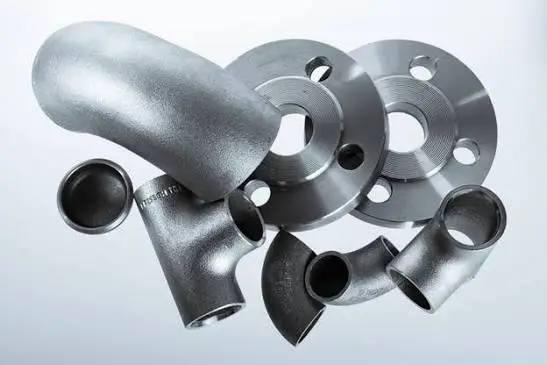
Understanding Butt Weld Fittings: Types, Standards, and Applications
What Are Butt Weld Fittings?
A butt weld fitting is one kind of pipe fitting. It has a bevelled end that is welded to the pipe, creating a continuous joint when properly welded. This design avoids the internal flow restrictions associated with threaded connections. This is a major benefit over threaded or socket weld connections. The smooth bore interior minimises turbulence and pressure drop, making these fittings the right choice for service lines subject to high pressure, high temperature, and corrosion in industrial, power-producing, and water infrastructure applications.
Common Types and Their Functions
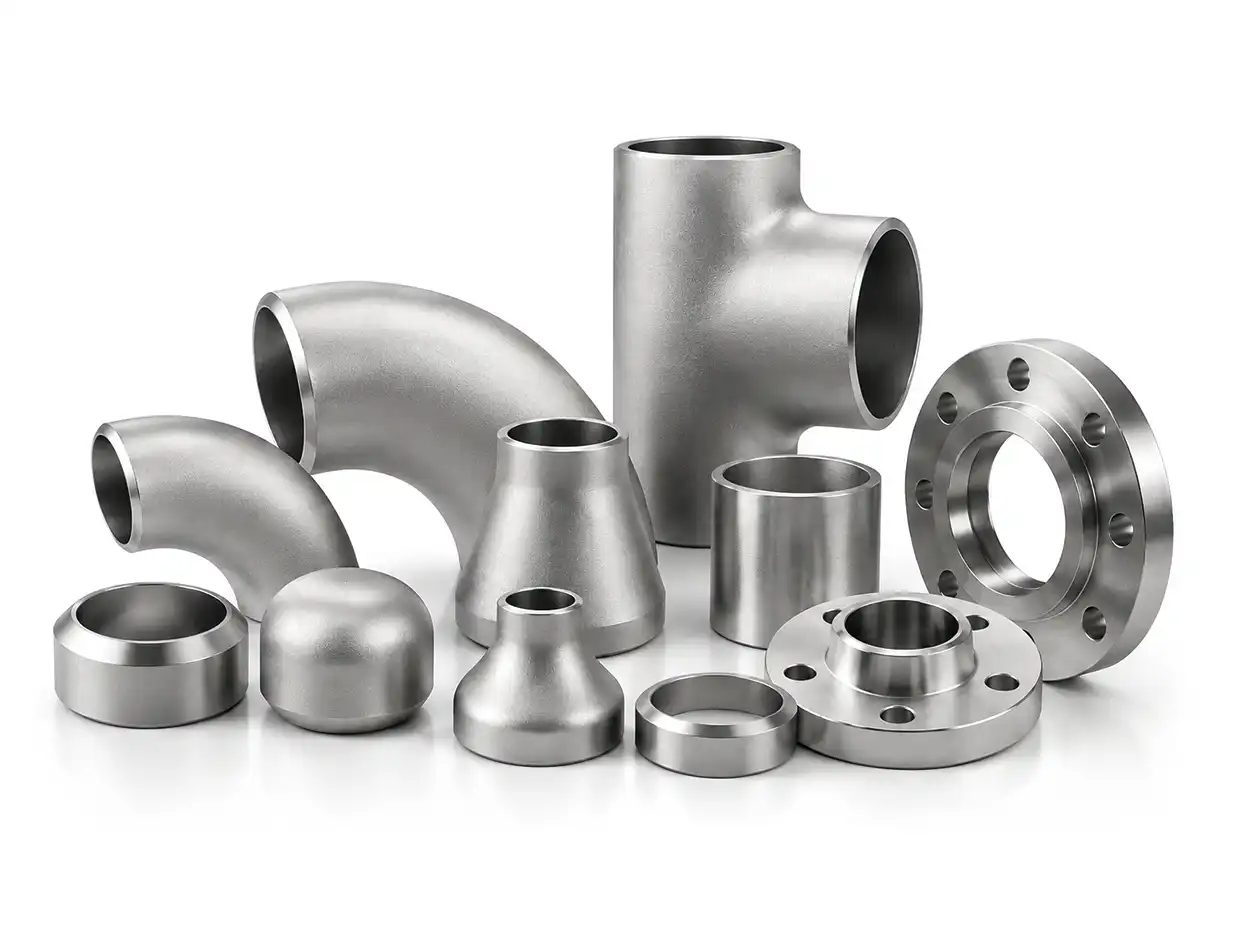
ASME B16.9 standard includes several kinds of factory-manufactured wrought butt-welding fittings. Each kind is built for a certain flow geometry need. These are the primary kinds of fittings you will see:
- Elbows: Redirect flow; long-radius models minimise pressure drop vs. short-radius units.
- Equal and Reducing Tees: Provide a 90-degree branch outlet to divide or combine fluid streams, with reducing tees featuring a smaller branch outlet to match reduced downstream line sizes.
- Concentric and Eccentric Reducers are used to change the pipe size. Eccentric reducers are preferable for horizontal lines to avoid air pockets.
- Caps: Close off a pipe end permanently and are selected according to the applicable material, dimensions, wall thickness, and design requirements.
- JS FITTINGS offers these fitting types in diameters from ½" to 48", with SCH 10, SCH 40, and SCH 80 options. These fittings are suitable for a wide range of industrial piping applications.
Applicable Standards and Material Grades
Dimensions are specified per ASME B16.9, which refers to ASME B16.25 for bevel-end preparation and ASME B31.3 for process piping design. ASTM A234 WPB is used for carbon steel, ASTM A403 covers austenitic stainless steel, and ASTM A420 covers carbon steel and alloy steel fittings for low-temperature service. Black paint, varnish, epoxy coating, or hot-dip galvanising are applied to the fittings to protect the surfaces during usage and storage. You will need to make sure that your seller’s material test results are for these grades before you purchase.
Key Factors to Consider When Selecting Butt Weld Fittings
Pressure Rating and Wall Thickness
The wall thickness is chosen for the pressure rating. SCH 40 is commonly used for typical applications, but its allowable pressure must be determined from the applicable material, temperature, component dimensions, and design code rather than a single fixed pressure value. SCH 80 provides a greater wall thickness and may be selected when the applicable design requires higher pressure capability. Check the pressure-temperature value against the ASME B31.3 tables using the actual fluid that will be utilised, not simply the notional design condition. If the fitting and its schedule are too small, it might fail on a pressure spike, and the ramifications could be much greater than the original cost reduction.
Material Selection for the Service Environment
ASTM A234 WPB carbon steel is commonly used for general industrial applications and moderate-temperature service, making it a common material for seamless butt weld fittings in suitable piping systems. 304L or 316L stainless steel grades may be suitable for certain chemical, chloride, or seawater services depending on the fluid composition, concentration, temperature, and exposure conditions. Higher molybdenum content generally improves resistance to chloride-induced pitting, which is one reason 316L performs better than 304L in many chloride-containing environments. Chrome-moly alloy steel grades such as ASTM A234 WP11 or WP22 are specified for elevated-temperature steam service to resist creep deformation. By matching the material to the fluid chemistry and temperature, you can reduce the risk of premature fitting failure caused by material incompatibility and unsuitable service conditions.
Installation and Inspection Requirements
ASME B16.25 states that the edge must be adequately prepared before welding starts. Follow the welding process specification for alignment tolerances, preheat requirements, and post-weld heat treatment. NDT methods such as ultrasonic testing and radiographic testing can be used to examine weld integrity after welding. An undetected defect in a high-pressure pipe can cost much more than the inspection itself. When your parts arrive, check that the bevel geometry is consistent. CNC-machined bevels save a huge amount of rework on site.
Butt Weld Fittings vs. Alternative Connection Types
Comparing Structural Integrity
Butt weld fittings provide full-penetration welds, so the junction is as strong as or stronger than the pipe’s specified strength. Socket weld fittings use a socket connection with a specified gap between the pipe end and the socket bottom to accommodate thermal expansion and reduce stress concentration. Threaded fittings are generally used for lower-pressure or smaller-diameter services, with their allowable pressure, size, and application determined by the applicable fitting standard and piping design code.
When Alternatives Make Sense?
Socket weld joints are used to speed assembly of low-pressure utility lines when a thorough weld inspection is not practicable. Threaded fittings work well for instrument air and water service where you may have to disassemble items. Slip-on flanges are simpler to install than weld-neck flanges, but their suitability for a given service depends on pressure, temperature, cyclic loading, and other design conditions. Each connection type should be selected within its applicable pressure, temperature, and design limits rather than based solely on price.
Long-Term Cost Perspective
Fittings seldom account for the largest portion of total capital expenditure in a piping project.Over 20 years, the cost of installation, inspection, maintenance, and downtime can be much more significant. Weld-joint failures in process piping can lead to unexpected shutdowns, repair costs, and production losses. That risk can be reduced by using seamless butt weld fittings from qualified mills and selecting the correct material grade. Although certified fittings may cost more per unit, the additional cost can be justified by improved traceability and quality assurance.
Procurement Guide: Selecting a Qualified Supplier
What to Look for in a Butt Weld Fittings Manufacturer?
A reputable supplier must have third-party approvals, at least ISO 9001, CE, GOST-R, or client-specific approvals for overseas projects. Traceability of the raw materials is also vital. Each fitting should be supplied with an EN 10204 3.1 inspection certificate when required by the purchase specification or project documentation, showing the chemical composition and mechanical properties of the part, together with its heat number. Without traceable MTCs, auditors and inspection authorities cannot adequately verify whether the supplied material meets the specified quality requirements.
Evaluating Quality Control Capability
Ask about paperwork as well as physical testing. Good suppliers conduct the required NDT, such as ultrasonic testing or magnetic particle inspection, according to the applicable product standard, purchase specification, and project requirements. Maintaining the required minimum wall thickness at the extrados is an important quality consideration for elbows because the extrados can experience wall thinning during forming.
Managing Lead Times and Logistics
The packaging style significantly affects how quickly EPC contractors and distributors can receive the items. For big shipments, marking seaworthy plywood crates or pallets with heat numbers makes sorting easier and less likely to go wrong. Before you sign anything, be sure your supplier’s monthly capacity and on-time delivery history can handle your project timing. A qualified manufacturer with a documented on-time delivery rate of 95% or higher can provide a useful starting point for supplier evaluation.
Conclusion
There are four factors to consider when selecting the correct butt weld fittings: the fitting type, the material grade, the wall thickness, and the seller’s qualifications. Each choice has implications for system safety, project completion time, and total cost of ownership. If any of these factors are overlooked, the risk may emerge long after the purchase order has been closed. Check supplier credentials and MTC documentation, confirm that the required NDT can be performed, and follow the dimensional requirements specified in ASME B16.9. Use ASTM standards to match the material to your service conditions. These stages help distinguish a proper installation from a costly one.
FAQ
1. What is the difference between seamless and welded butt weld fittings?
Seamless butt weld fittings are formed from high-quality seamless steel pipe stock, eliminating longitudinal weld seams and heat-affected zones. This manufacturing route can provide relatively uniform mechanical properties through the fitting wall. Welded fittings are fabricated from plate or pipe and have a weld seam that must satisfy the applicable radiographic examination and acceptance criteria. For important high-pressure or cyclic service, seamless construction is often preferable. Both types can be manufactured to ASME B16.9 when the applicable material specification and other requirements are met.
2. How do I verify the pressure rating of a fitting?
Cross-check the wall schedule and material grade of the fitting with ASME B31.3 pressure-temperature tables. The rated pressure of the fitting should be equal to or greater than the design pressure at the maximum operating temperature. Always seek the MTC from the supplier and verify that the yield strength matches the ASTM grade indicated. When using the catalogue pressure rating, do not use it alone without considering the temperature de-rating factor.
3. Are stainless steel fittings suitable for chemical service?
The inclusion of molybdenum makes the 316L grade more resistant to chloride pitting and general acid attack than the 304L grade. In the case of more hostile media, such as concentrated sulphuric acid, hydrofluoric acid, or high-chloride conditions, duplex stainless or nickel alloys may be necessary. Always define the fluid composition, concentration, and temperature to your metallurgist or supplier before finalising material selection.
Partner with JS FITTINGS for Your Next Project
Since 1983, JS FITTINGS has been manufacturing ASME B16.9 butt weld fittings for EPC contractors, distributors, and industrial end users in more than 30 countries. We ship more than 90 containers every month and have a proven on-time delivery rate of over 95%.We are an approved butt weld fittings manufacturer for major international energy corporations, including ADNOC and Petrobras. These are made from carbon steel, alloy steel, and stainless steel and range from ½" to 48". They all come with 3.1 MTCs and full NDT documentation. To get a quote within one business hour, email admin@jsfittings.com with your requirements.
References
1. ASME B16.9 — Factory-Made Wrought Buttwelding Fittings, American Society of Mechanical Engineers, 2018.
2. ASME B31.3 — Process Piping, American Society of Mechanical Engineers, 2022.
3. ASTM A234/A234M — Standard Specification for Piping Fittings of Wrought Carbon Steel and Alloy Steel for Moderate and High Temperature Service, ASTM International, 2022.
4. ASTM A403/A403M — Standard Specification for Wrought Austenitic Stainless Steel Piping Fittings, ASTM International, 2021.
5. Journal of Pipeline Engineering — "Weld Joint Failure Modes and Cost Impact in Process Piping Systems," Great Southern Press, 2019.
6. MSS SP-75 — Specification for High-Test Wrought Butt-Welding Fittings, Manufacturers Standardization Society, 2019.
Send Inquiry
You may like