
Industrial Buttweld Reducer Selection for Refinery Projects






2026-05-20 10:53:20
It's not enough to just look at the specs when choosing pipe fittings for refinery projects; you also need to think about safety, economy, and long-term operating success. The buttweld reducer is one of the most important parts because it connects pipes of different sizes and keeps the system intact in harsh conditions. This smooth transition fitting makes joints that won't leak and can handle the high temperatures, pressures, and corrosive conditions that are common in oil plants. Whether you're an EPC contractor in charge of multimillion-dollar setups or a procurement manager looking for reliable parts, knowing how to pick the right reducers has a direct effect on project timelines, safety compliance, and the overall cost of ownership.
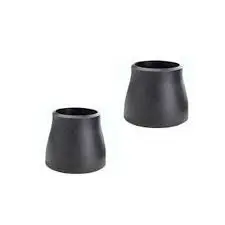
Understanding Buttweld Reducers in Industrial Applications
What Makes Buttweld Reducers Essential for Refinery Operations
Every day, the pipe systems in refineries deal with flammable fuels, corrosive chemicals, and huge changes in temperature. If you choose the right butt-weld reducer, the flow will go smoothly from one pipe size to another. This is because the fitting will stop any turbulence that could damage equipment further down the line, like pumps and compressors, by erosion, pressure drops, or cavitation. Butt-welded joints are stronger than threaded or mechanical connections because they become part of the pipe structure itself. This means that there are no possible leak lines that could threaten plant safety or environmental compliance. Because circumferential welding makes a lasting bond, these fittings meet strict standards like ASME B31.3 for process piping, where any joint failure could cause huge amounts of hydrocarbons to leak out. These transition fittings are used in distillation columns, cracking units, and product transfer lines in refineries that turn crude oil into gasoline, diesel, and petrochemicals.
Material Selection: Carbon Steel, Stainless Steel, and Alloy Options
Refinery environments demand materials that can handle certain mixtures of temperature, pressure, and chemical contact. Carbon steel reducers made to ASTM A234 WPB standards are very strong and don't break easily under pressure. They are also very cheap. These are good for general hydrocarbon work where the rate of rust can be kept under control by choosing the right material and making adjustments for it. Higher yield strengths are found in types like WPHY 52, 60, and 65, which make the steel tougher in normal circumstances. For tasks involving low temperatures, like moving LPG, you need ASTM A420 WPL6 material that doesn't break easily below freezing. Stainless steel reducers that meet ASTM A403 standards work great in places where corrosion is a problem. Type 316L offers improved resistance to chloride-induced corrosion, but material selection for sour gas service containing hydrogen sulfide must comply with NACE MR0175 requirements. In high-temperature catalytic cracker uses, Type 321 strengthened with titanium stops intergranular corrosion. Even though stainless steel types cost three to five times as much as carbon steel, the longer life and lower upkeep costs make the extra money worth it. Alloy steel reducers are used in high-temperature situations where carbon steel loses its power. In fluid catalytic cracking units, ASTM A234 WP11 (1.25% chromium, 0.5% molybdenum) can handle temperatures of up to 1050°F. Hydrocracking units that work near 1100°F can use WP22, which has 2.25 percent chromium and 1% molybdenum. The later WP91 grade, which has 9% chromium, is used in ultra-high-temperature reformers because it resists creep, which makes parts last longer in harsh thermal conditions.
Critical Selection Criteria for Buttweld Reducers in Refinery Projects
Pressure Ratings and Size Compatibility Requirements
When you match the buttweld reducer specs to the system design conditions, you avoid both over-engineering, which loses money, and under-engineering, which increases the chance of failure. Based on wall thickness plans from ASME B16.9, pressure values are based on classifications. Standard weight (STD) is used for moderate-pressure applications, but actual allowable pressure depends on material, temperature, and design calculations when the temperature is normal. The wall sizes of Schedule 40 and Schedule 80 can handle higher pressures, while Schedule 160 and XXS are used for higher-pressure applications, with allowable pressure depending on material properties and design conditions. It's important to carefully look at the link between pressure grade and temperature; a fitting rated for 1000 psig at 100°F might only be able to handle 400 psig at 800°F because the material strength drops. Size agreement goes beyond the stated sizes.For instance, when transitioning from an 8-inch pipe to a 4-inch pipe, you must ensure that both the large and small end dimensions perfectly match the exact Outer Diameter (OD) of the mating pipes, rather than merely relying on the Nominal Pipe Size (NPS). International standards vary; for example, ASME measurements aren't exactly the same as DIN or JIS versions. This can make it hard to fit standard systems together. Matching wall thicknesses at weld joints prevents stress concentration. When connecting Schedule 40 pipe to Schedule 80 pipe, you should choose fittings with transitional beveling to handle the change in wall thickness without making a sharp internal step.
Certification and Compliance Documentation
Refinery projects are closely watched by regulators, who need to see proof that every part that holds pressure is safe to use. Material Test Reports (MTR) that follow the EN 10204 3.1 standard list the chemicals that make up each process heat and their mechanical qualities. These papers show that the raw materials followed the right ASTM grades throughout the supply chain. Chemical testing shows that the amounts of carbon, manganese, sulfur, and alloying elements are within the allowed ranges. Tensile strength, yield strength, and elongation numbers are given by mechanical tests to make sure the material works as planned when it is put under load. Inspections by outside groups like Lloyd's Register, Bureau Veritas, or TÜV provide a reliable way to check the quality of manufacturing. Before allowing transport, inspectors watch as measurements are taken, non-destructive tests are done, and hydraulic pressure tests are performed. Reducers must have the manufacturer's quality system approval showing that they follow ASME Section IX welding processes for projects that need to be ASME B31.3 compliant. Dimensional inspection records make sure that lengths, widths, and wall thicknesses are within the limits set by ASME B16.9. Before the fittings, the documentation packages should arrive so that engineers can look them over and give their approval.
Installation Best Practices and Common Challenges
Preparation and Alignment Procedures
The right way to install a buttweld reducer starts long before the welder's arc is struck. Preparing the surface gets rid of mill scale, rust, and other things that could hurt the quality of the weld. Within an inch of the sharp edge, wire cleaning or grinding brings out the clean base metal. To keep the weld metal from getting holes or slag particles, any protective covering must be taken off of the heat-affected zone. Long-term joint health depends on how well the joints fit together. Check how far apart the two bevels are—ASME B31.3 usually lets a 1/16- to 1/8-inch root gap, but this depends on the width of the wall and the way it was welded. If the gap isn't big enough, the roots can't fully penetrate, which causes stress risers that initiate fatigue cracks. Internal symmetry is just as important as symmetry on the outside. To keep things centered, use interior lineup clamps or backing rings. A mismatch of just 1/8 inch makes a step in the flow path that leads to instability, erosion, and a drop in pressure. Putting tack welds in four corners around the edge keeps it straight during the final welding.
Welding Standards and Inspection Protocols
Welders who are qualified and follow accepted methods make joints that are reliable and meet code requirements. Welders must pass the ASME Section IX licensing tests to show that they can make good welds in the places, materials, and ways that are required for the job. No matter what the schedule pressures are, you should never let an untrained welder work on pressure pipes. The liability and safety risks are much greater than any time savings. Welding process standards (WPS) list the required pre-heat temperatures, interpass temperatures, filler metal specifications, and post-weld heat treatment for each mix of materials. Unless the wall thickness is more than 1 inch or the temperature goes below 50°F, carbon steel preheating requirements depend on material composition, thickness, and hydrogen control considerations. To keep alloy steels from stiffening and hydrogen cracking, they need to be heated up and then heated again after being welded. To keep their rust protection, stainless steels require controlled heat input and cooling to maintain corrosion resistance. Non-destructive examination (NDE) checks the quality of the internal weld. Radiographic testing creates X-ray images to show any fissures, lack of fusion, or slag particles that can't be seen from the surface. Critical welds need 100% X-rays and must meet the acceptance standards set out in ASME B31.3. Liquid penetrant testing can find cracks that break the surface of stainless steel welds that X-rays might miss. Acceptance criteria reject any linear indications longer than 1/8 inch.
Common Installation Errors and Prevention Strategies
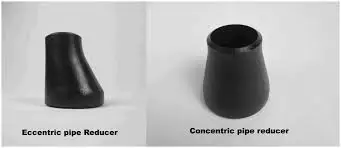
One of the most common mistakes is installing eccentric reducers turned the wrong way. Putting the flat side down in the pump's suction lines creates the same air pocket problem that the eccentric design stops. Before installation, paint a clear line on the flat side and include alignment instructions on isometric models of the pipes that building workers can use. When support space is too close to fittings, twisting stress builds up at the weld joints. Because the diameter changes, the stress increases, so the support spacing needs to be tighter than for straight pipe parts. During planning, structural analysis figures out where the supports should go. Usually, they are placed within two to three pipe diameters of each reducer end. Forcing parts that aren't lined up right ruins the bevels and adds stress that shortens the life of the joint. Stop and look into it if the sizes don't match—don't use brute force to make it fit. Heavy-wall alloy steel parts can crack during the post-weld heat treatment if the temperature changes quickly. Heating and cooling rates must be in line with what the material's maker says should be done, which is usually 100 to 200°F per hour based on the thickness. Rushing the heat treatment process often breaks expensive parts that need to be replaced.
Comparing Buttweld Reducers with Other Pipe Reducers
Performance Characteristics Across Connection Types
The buttweld reducer makes lasting connections that are as strong as or stronger than the pipe itself. The full-penetration weld makes a single piece of metal that doesn't have any cracks or stress points inside it. This makes butt-weld construction the only option that is safe and reliable for services that are subject to high pressure, high temperature, or corrosion. The capacity for 100% radiographic inspection (RT) on full-penetration butt welds allows for proof of joint integrity that simply cannot be achieved on socket or threaded connections. In contrast, threaded reducers are limited to low-pressure utility services (typically below 300 psig). While they are easy to install without hot work, the threads create stress concentration points and potential leak paths that are entirely unacceptable for critical hydrocarbon service. However, the threads make stress collection points and possible leak paths that aren't good for vital hydrocarbon service. Vibrations can loosen threaded joints over time. Socket weld reducers take less welding skill to install than butt joints, but the joints they make are stronger than threaded connections. The socket shape helps with positioning during fit-up, and the fillet weld takes less time to finish than a full-penetration butt weld. These benefits work well for small-bore pipes of 2 inches or less. However, socket welds are not good for sour gas or highly corrosive services because they form an internal crack where fluids can get stuck.
Procurement Considerations for Refinery Projects
When you buy regular sizes in bulk, unit cost and wait time go down. Keeping common fittings like 6x4-inch and 8x6-inch in stock in both concentric and eccentric forms helps keep the building plan flexible. When you buy in bulk, you can save 15 to 25 percent compared to buying in small amounts. However, the economic study needs to take into account the costs of storage and carrying goods. Custom manufacturing meets specific needs that can't be met by regular parts. Custom production may be needed for unusual materials, non-standard size combinations, or changes in wall thickness. Custom fittings cost 30–50% more than stock items and have wait times of 8–12 weeks. However, they allow for better designs that lower the total cost of the system. Tradeoffs between quality and price need to be carefully thought through. The cheapest option might save you $50 initially, but it could cost you thousands if it fails early. Established companies with well-documented quality systems offer uniform sizes, trustworthy material certifications, and quick expert help that lowers project risk.
Procurement Guide: How to Source High-Quality Buttweld Reducers for Refineries
Supplier Qualification and Selection Criteria
Certified products, production capacity, and a good reputation capability, and a good reputation in the industry are all signs of a reliable buttweld reducer provider. Having an ISO 9001 quality management system certification means that there are set ways to make sure that the quality of the products you make is consistent. Approvals from big oil companies, like qualification by national oil companies or foreign energy corporations, show that the supplier meets strict refinery standards. How well a seller can meet project deadlines without sacrificing quality is based on their production ability. Manufacturers that ship more than 90 containers a month and have on-time delivery rates of more than 95% show that they have the organizational skills to support big refinery projects. Product quality isn't the only thing that counts; technical help is too. Suppliers with skilled engineering staff can help choose materials, do dimensional estimates for non-standard designs, and fix problems that come up during installation in the field.
Verification of Quality and Certifications
Material traceability is made possible by EN 10204 3.1 papers that show what the materials are made of and their mechanical qualities for each production lot. Each fitting should have a heat number written on it so that the physical part and the lab test findings can be linked. Check the information on the certificate against the standards spelled out in the specification before taking delivery. Dimensional measurement records make sure that ASME B16.9 limits are met. The outside diameters of both ends, overall end-to-end length, and wall thickness at the bevels and transition zones represent the most critical measurement points. All dimensional verification must be conducted utilizing properly calibrated instruments bearing up-to-date certification. Furthermore, engaging third-party inspection agencies provides an independent and authoritative verification of quality. Lloyd's Register, Bureau Veritas, TÜV, and DNV are some of the inspection companies that insurance companies and government bodies trust. Inspection costs are usually between 2 and 5 percent of the value of the fitting.
Managing Lead Times and Ensuring Project Continuity
Standard goods from existing stock can be shipped within one to two weeks, which helps meet tight building plans. Custom configurations take 8 to 12 weeks, based on how hard it is to get the materials and how complicated the manufacturing process is. Ask for shipping schedules when you look over the quotes to find long-lead items that need to be ordered early. When full orders can't come at the same time, partial shipments keep the building going. Give priority to delivering critical-path items that are needed for the early stages of building. If problems with quality are found during the receiving check, the seller should be notified right away. Manufacturers with a good reputation react within 48 hours with replacement orders or plans for fixing the problem. This ability to respond sets apart reliable providers from problematic ones.
Conclusion
To choose the right buttweld reducer for refinery projects, you have to balance technical requirements, quality standards, and your buying strategy. By choosing the right materials and installing them correctly, you can make permanent parts that won't leak. This ensures operating safety while keeping lifecycle costs low. Knowing the difference between concentric and eccentric configurations can help you avoid making mistakes during installation that cost a lot of money, and matching the right material grade to the right process conditions can make parts last longer. Working with qualified providers who offer full paperwork and quick support lowers project risk and helps it get finished on time.
FAQ
1. What is the main difference between concentric and eccentric reducers in refinery applications?
Concentric reducers maintain centerline alignment between pipes, creating symmetrical flow suitable for vertical runs. Eccentric reducers keep one edge flat, preventing air pocket formation in horizontal pump suction lines or facilitating complete drainage during maintenance. The eccentric design protects rotating equipment from cavitation damage caused by vapor entrainment.
2. How do I choose between carbon steel and stainless steel reducers?
Carbon steel is generally more cost-effective and offers adequate strength for many applications, suitable for general petroleum service with manageable corrosion rates. Stainless steel is better at resisting corrosion in places with hydrogen sulfide, chlorides, or acidic substances.Ultimately, appropriate material selection demands a rigorous evaluation of the specific process conditions, fluid chemistry, intended service life, and total lifecycle cost.
3. What certifications should I require for refinery-grade reducers?
Require EN 10204 3.1 Material Test Reports documenting chemical composition and mechanical properties. ASME B16.9 dimensional compliance and third-party inspection certificates verify manufacturing quality. For pressure piping, confirm the manufacturer maintains ASME quality system certification and follows Section IX welding procedures.
Partner with JS FITTINGS for Reliable Buttweld Reducer Supply
When your refinery project needs pipe fittings that deliver decades of leak-free service, JS FITTINGS brings 43 years of manufacturing expertise to your supply chain. When we make buttweld reducers, we employ CNC-machined tooling, maintaining concentricity within 1mm, preventing the vibration and turbulence that plagues inferior fittings. Rigorous ultrasonic wall-thickness inspection at critical transition zones ensures compliance with ASME tolerances throughout the reducer profile—eliminating the thinning defects common in low-quality products. Every fitting ships with EN 10204 3.1 Mill Test Certificates documenting chemical analysis and mechanical testing on each production heat, providing the traceability refinery projects require. Our 95%+ on-time delivery rate and 90+ monthly container shipments demonstrate the production capacity to support your construction schedule without compromise. As a qualified supplier for major energy companies, including NIOC, ADNOC, and Petrobras, we understand refinery requirements. Contact our engineering team at admin@jsfittings.com to discuss your specifications—we respond within one hour to keep your project moving forward.
References
1. American Society of Mechanical Engineers, "ASME B16.9: Factory-Made Wrought Buttwelding Fittings," 2018 Edition.
2. American Petroleum Institute, "API Standard 570: Piping Inspection Code: In-Service Inspection, Rating, Repair, and Alteration of Piping Systems," Fourth Edition, 2016.
3. American Society of Mechanical Engineers, "ASME B31.3: Process Piping—Materials, Design, Fabrication, Assembly, Erection, Examination, Inspection, and Testing of Piping," 2020 Edition.
4. European Committee for Standardization, "EN 10253: Butt-Welding Pipe Fittings—Part 2: Non-Alloy and Ferritic Alloy Steels with Specific Inspection Requirements," 2007.
5. National Association of Corrosion Engineers, "NACE MR0175/ISO 15156: Petroleum and Natural Gas Industries—Materials for Use in H2S-Containing Environments in Oil and Gas Production," 2015.
6. Manufacturers Standardization Society, "MSS SP-75: Specification for High Test, Wrought, Butt Welding Fittings," 2018 Edition.
Send Inquiry
_1775029585391.webp "Buttweld Elbow")
Related Industry Knowledge
- What Facing Types Suit a Carbon Steel Forged Steel Flange?
- Buttweld Tee vs Socket Weld Tee for High-Pressure Piping
- A53 ERW Pipe – Type, Grade, Performance, Tolerance, Application Full Analysis
- Why Engineers Choose Buttweld Bend Over Mitered Bends?
- Carbon Steel Buttweld Reducer for High-Pressure Pipelines
- Seamless vs Welded Buttweld Tee: Which Performs Better?
- Why Is Long Radius Buttweld Elbow Preferred in Oil & Gas?
- What is carbon steel pipe used for?
- Do flanges with threaded holes take stud bolts?
- How thick is standard wall pipe on carbon steel?