
Industrial Buttweld Tee Selection Guide for Process Piping






2026-09-20 16:02:37
Selecting the appropriate pipe fitting components can determine whether your industrial piping system operates reliably for decades or faces costly downtime within months. Among these critical components, the buttweld tee stands as a fundamental element enabling fluid direction changes and system branching with exceptional structural integrity. This guide addresses the selection, specification, and procurement considerations that purchasing managers, engineers, and distributors face when specifying these fittings for demanding process environments.
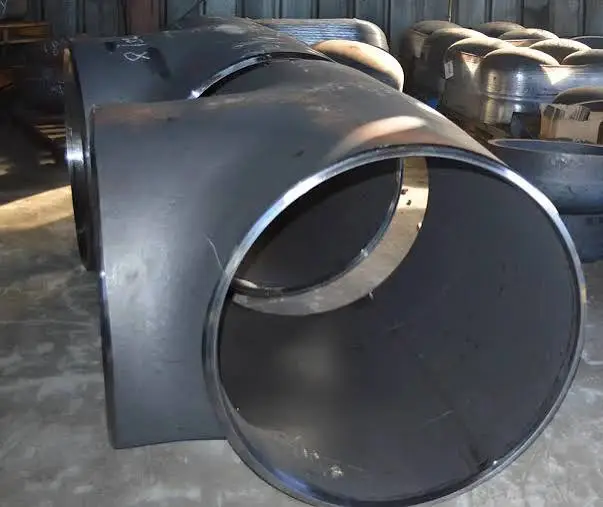
Understanding Buttweld Tees and Their Specifications
What Defines a Buttweld Tee in Process Piping?
A buttweld tee is a process piping fitting that commonly follows ASME B16.9 standards. It is designed to split, combine, or redirect flow at a 90-degree angle within process piping networks. Its beveled ends—which are usually machined with a 37.5-degree bevel angle on each side—make it easier to butt-weld to other pipes around the outside. With this design, full penetration welds can be made that have tensile strengths that are the same as or higher than those of the base pipe.
This type of fitting doesn't leak when it's exposed to high temperatures and pressures, unlike threaded or socket-weld options. The forged or formed structure of the fitting, which can be made by cold forming or hot extrusion, makes it more resistant to impact and reduces fatigue failure caused by operational vibration. The internal bore is smooth and shaped to reduce flow turbulence and pressure drop. This makes it essential for permanent installations that include 1/2-inch instrument connections and 60-inch transmission lines.
Material Standards and Selection Criteria
Material choice has a direct effect on how long something lasts and how safe it is to use. Fittings made of carbon steel that meet the requirements of ASTM A234 WPB are the most common type used in industry because they are strong and cheap. Stainless steel types that meet ASTM A403 WP304 or WP316 perform better when resistance to corrosion is very important. The molybdenum alloying in the WP316 grade makes pitting corrosion much less likely to happen in chloride-rich settings.
Specialty alloy steels that meet ASTM A234 WP11 or WP22 standards are used in high-temperature processes like power generation and petrochemical processing. These materials keep their mechanical qualities even at high temperatures, where carbon steel would start to creep and change shape. Mill test certificates (MTC/MTR) should verify controlled carbon equivalent (CE) values to ensure optimal field weldability. This is an important detail that is often missed when buying materials but is needed when installing them in the field.
Final material selection should be confirmed after evaluating all operating conditions. This choice is based on high temperatures, how acidic the fluid is, and how the pressure changes over time. ASTM A420 materials (such as WPL6) meet the requirements for low-temperature piping fittings, providing proven Charpy V-notch impact toughness to prevent brittle failure in cryogenic or cold-climate applications.
Equal vs. Reducing Configurations
The choice of configuration affects both the hydraulic function and the efficiency of the installation. Equal tees make sure that all three ports have the same diameter, which helps header systems distribute flow evenly. When linking to smaller equipment or branch lines, reducing setups don't need separate reducer fittings because the branch exit diameter is smaller than the main run diameter.
The reducing design does two things: it limits flow to branch circuits and makes transitions that are cost-effective without adding more weld joints. Each weld joint that isn't used cuts down on potential leak points and installation labor costs, which are important factors for project managers who are keeping an eye on construction budgets.
Seamless vs. Welded Construction
How the products are made affects their pressure capability and how well they work in certain situations. When seamless pipe stock is used to make seamless tees, there is no lengthwise weld seam. This design eliminates longitudinal weld seams and can provide consistent mechanical properties throughout the fitting body and consistent material properties all over. This makes the system more reliable, which is especially helpful for critical service uses that use dangerous fluids or high-pressure cycling.
For applications with a large diameter, welded tees made from plate material are cheaper. Automatic submerged arc welding and appropriate non-destructive examination methods are used in modern manufacturing according to applicable standards and customer requirements to make sure that the structure is as strong as seamless construction. JS FITTINGS uses these advanced welding methods and does a full X-ray check to make sure that the seams meet the strength requirements of the base metal.
Wall Thickness Schedules and Pressure Ratings
To keep stress from building up at the weld roots, which happens a lot when parts that aren't a good fit are joined, wall thickness schedules must match the connected piping. Schedule 40 pipe is a normal weight that can handle mild pressure, while Schedule 80 pipe has thicker walls that can handle higher pressures. Schedule 160 and double-extra-strong (XXS) configurations are typically used for demanding high-pressure applications.
Dimensional alignment is more than just meeting schedules. The center-to-end measurements in ASME B16.9 make sure that the parts fit together correctly during installation, which stops alignment problems that lower the quality of the weld. For a buttweld tee, the 37.5-degree angle and 1.6mm root face of the bevel must be exactly the right size for the automated welding tools used in current fabrication shops.
How to Select the Right Buttweld Tee for Industrial Applications?
Analyzing Process Requirements
A thorough process study is the first step in writing a good specification. The required minimum wall thickness and construction type depend on the operating pressure and service requirements. Extreme temperatures can change the choice of material and may require a heat treatment after the welding process to remove any leftover strains. Material suitability choices are based on the corrosiveness, erosiveness, and phase of the fluid.
Pressure ratings are determined according to the applicable piping codes and material standards, including ASME B31.3 and relevant fitting specifications. Engineers have to make sure that the chosen fittings have enough safety margins for the worst possible operating conditions, such as short-term conditions during startup, shutdown, and upset events.
Material Suitability for Specific Environments
Even though chemical matching charts are very helpful, real-life experience is even more so. Carbon steel works great in dry gas service and liquid applications that don't corrode. But moisture, hydrogen sulfide, or carbon dioxide can speed up the corrosion process, which might mean that alloys need to be upgraded or protective coatings need to be applied.
Some types of stainless steel are very resistant to corrosion, but even these materials have their limits. Austenitic stainless steels can be susceptible to chloride stress corrosion cracking under certain temperature and chloride concentration conditions. This type of failure is less likely to happen with duplex stainless steels, which are stronger than standard austenitic grades.
JS FITTINGS keeps a large stock of materials that meet the requirements for carbon steel (ASTM A234 WPB), stainless steel (ASTM A403 WP304/316), and alloy steel (ASTM A234 WP11/WP22). This variety lets us quickly meet the needs of a wide range of projects without affecting the quality of our certifications or the ability to track materials.
Comparing Connection Methods
Even though this guide focuses on butt-welded links, knowing about other options makes it clearer when this technology is the best value. Socket-welded fittings are commonly used for small-diameter piping applications, since the fillet weld provides sufficient strength. However, these connections can create crevices that trap corrosive fluids and may contribute to fatigue cracking under vibration.
While threaded joints are easier to install, they are less structurally sound and less resistant to leaks. There are stress concentration points because the threads aren't fully engaged, and the mechanical joint can't handle the bending moments that fully welded joints can handle all the time. Vibration wears down threaded connections over time, which means they need to be fixed more often, which raises the cost of ownership over time.
A butt-welded structure gets rid of these problems. When you do a full-penetration weld, you get a smooth joint that is as strong as or stronger than the base pipe. This design is very important for places with a lot of vibration, like compressor discharge lines, where socket-weld and threaded connections break easily.
Schedule Selection for High-Pressure Service
For high-pressure uses, it's important to choose the right schedule so that the structure stays strong even when loads and pressures change. In standard sizes, Schedule 80 has walls that are 50% thicker than Schedule 40, which immediately raises the pressure capacity. Schedule 160 provides significantly greater wall thickness for higher-pressure applications, so it can handle the highest pressures found in hydraulic systems, high-pressure steam service, and some chemical processes.
Pressure values are based on how the material's yield strength and wall thickness work together. Higher-strength alloys may be able to handle the required pressure with thinner walls, which saves money on materials and cuts down on the amount of heat needed for welding. However, minimum wall thickness rules are usually followed to make sure that the structure is strong enough and won't be damaged by mechanical forces during installation and operation.
Certified goods from well-known sources like JS FITTINGS make sure that the sizes of the buttweld tee are correct and the material properties match what is written in the specs. Our products have been accepted by leading energy companies across the Middle East, South America, and Southeast Asia, supported by international certifications including ISO, CE, and GOST-R.
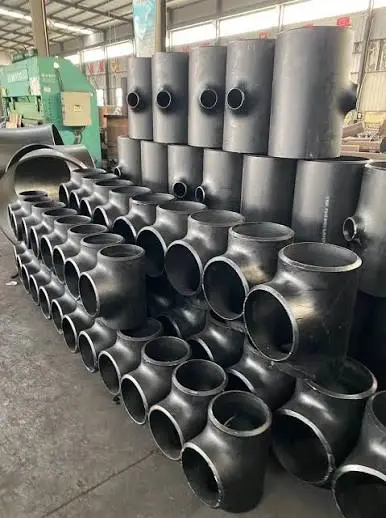
Installation and Inspection Best Practices of Buttweld Tees
Preparation and Alignment Procedures
A successful installation starts with preparation. Bevel surfaces must be dry and clean, without mill scale, corrosion, or other contaminants that could affect weld quality. Damaged parts from storage or handling may need to be ground or machined to a bevel.
System hydraulics and weld quality rely on alignment. Misaligned fittings create internal steps and turbulence and accelerate erosion and corrosion. Internal alignment clamps help maintain proper alignment during tack welding; however, they should be removed before circumferential welding to prevent interference with the weld.
Depending on wall thickness, the root opening between beveled surfaces should follow the approved welding procedure specification (WPS) to ensure proper penetration. Before welding, gap gauges ensure uniformity. Maintaining a uniform root gap helps reduce the risk of incomplete fusion and related weld defects.
Welding Technique Considerations
Welding process requirements must include base material, wall thickness, and service circumstances. Multiple passes with prescribed heat levels govern the microstructure of welded metal and avoid heat-affected zone cracking in qualified welding operations. Before welding, material may require preheating depending on material grade, thickness, and welding procedure requirements. Preheat needs to rise with section width and carbon content.
The interpass temperature should be controlled to maintain the desired weld-metal properties and limit excessive grain growth in the heat-affected zone. Carbon steel peak interpass temperatures, usually 260°C, must be monitored using temperature-indicating crayons or infrared thermometers. If you let the material cool too much between passes, hydrogen cracking may occur.
Pipe type, material, and wall thickness may need post-weld heat treatment. This heat technique reduces residual stresses, softens hard-welded metal microstructures, and toughens the heated area. Applicable ASME codes define PWHT requirements, including ASME B31.3 and, where applicable, ASME Boiler and Pressure Vessel Code requirements. The application needs to determine code choices.
Quality Assurance and Testing Methods
Visual testing (VT) serves as the primary baseline inspection. Certified inspectors evaluate weld profiles for reinforcement height, smooth transition to the base metal, and the absence of cracks, porosity, or incomplete fusion. Measurements ensure welded portions fit the model's length, shape, and alignment.
Non-destructive testing reveals underground defects, making it vital for crucial service. Radiographic testing (RT) detects volumetric flaws such as porosity, slag inclusions, and lack of fusion. Ultrasonic testing (UT) identifies planar discontinuities such as cracks without radiation hazards. Magnetic particle testing (MT) utilizes magnetic flux leakage to detect surface and near-surface defects in ferromagnetic materials.
System stability under pressure is assessed before usage. Hydrostatic testing pressure is determined according to the applicable code and specification requirements. If water is unavailable, pneumatic testing uses air or a harmless gas. Stored energy requires extra safety considerations. Soap solution or vacuum boxes may detect tiny leaks that pressure testing missed.
Case Study: High-Pressure Pipeline Integration
As the petrochemical facility expanded, additional process equipment was connected to the high-pressure steam headers, which operated at 10 MPa and 510°C.
Installing tie-in welding in confined spaces requires accurate prefabrication and short closing windows. Detailed planning prioritized downtime-prevention efforts. Off-site welding was approved, and all seams were X-rayed before assembly.
Fieldwork was successfully executed within a scheduled 48-hour plant shutdown window.Certified welders used gas tungsten arc welding for the root passes, with alignment supports used to maintain proper fit-up and weld quality. Following fill and cap passes were faster using shielded metal arc welding. Post-weld heat treatment was done on-site using ceramic pad heaters and temperature controls.
The assembly passed hydrostatic testing at 15 MPa without repairs using X-rays. After five years, the system has remained leak-free and operated reliably, demonstrating the effectiveness of the specified requirements and installation procedures.
Conclusion
To choose the right buttweld fittings, including a suitable buttweld tee, you have to balance scientific standards, application needs, and cost factors. Operational safety and lifetime costs are directly affected by how well the materials work together, how much pressure they can handle, and how well they are made. Using the right construction methods and testing procedures will make sure that the design's capabilities are matched in the field. Strategic buying from qualified providers helps projects succeed by ensuring on-time delivery, thorough paperwork, and quick expert support.
The industrial piping industry is always changing because of new materials, better ways to make things, and digital technologies. By keeping up with these changes, organizations can make procurement choices that will help them stay competitive in the long run. Reliable process systems that meet production goals while staying safe and in line with environmental regulations are built on high-quality parts from well-known manufacturers.
FAQ
1. What distinguishes butt-weld tees from socket-weld alternatives?
Butt-welded connections provide full-penetration circumferential butt welds that offer structural integrity matching or exceeding the parent pipe material.When you use fillet welds on socket-weld fittings, you create stress points at the toe and cracks that hold harmful fluids. Buttweld construction works better in situations with high pressure, large diameters (above 2 inches), and vibrations that often cause socket weld fatigue failures.
2. How do I determine the proper schedule and pressure rating?
To keep the wall thickness uniform and avoid stress concentrations, make sure that the fitting schedule matches the schedule for the linked pipe. According to ASME B16.9, buttweld fittings are designed to have the same pressure-temperature ratings as matching straight seamless pipe of the same material, size, and schedule under the applicable piping code (such as ASME B31.3). Make sure the chosen grade is higher than the maximum working pressure by an amount that allows for a safe margin, taking into account pressure spikes that happen when the pump starts up or a valve closes.
3. Can custom configurations be manufactured for specialized applications?
Well-known companies offer custom production for non-standard reducing ratios, special materials, or specific size needs. JS FITTINGS can make unique sizes from DN15 to DN2000 with different wall thicknesses and types of material. Give detailed drawings that include tolerances, material requirements, and rules for inspection. To ensure quality results, give enough time for engineering review and production scheduling.
Partner With JS FITTINGS for Your Process Piping Component Needs
Quality parts supplied on time with full paperwork are needed for piping systems to work properly. Every buttweld tee that JS FITTINGS makes is the result of more than 40 years of experience in the business. We keep strict quality control through our ISO 9001-certified processes. Our large inventory includes carbon steel, stainless steel, and alloys in sizes ranging from 1/2" to 60" in diameter. This means that we can quickly meet standard requirements and also make custom parts for unique needs.
We know how important your project deadlines and performance standards are because we are a trusted butt-weld tee maker that works with big energy companies around the world. Email our technical team at admin@jsfittings.com to talk about your specific application needs, get detailed product specifications, or get quotes for projects that are coming up.
References
1. ASME (American Society of Mechanical Engineers). (2018). ASME B16.9: Factory-Made Wrought Buttwelding Fittings. New York: ASME.
2. International Organization for Standardization. (2015). ISO 9001:2015 Quality Management Systems — Requirements. Geneva: ISO.
3. Narayanan, R. (2019). "Predictive Maintenance in Process Industries Using IoT and Machine Learning." Chemical Engineering Progress, 115(4), 42-48.
4. American Petroleum Institute. (2018). API Specification 5L: Specification for Line Pipe (46th ed.). Washington, DC: API.
5. Kumar, S., & Singh, R. (2021). "Material Selection for High-Temperature Process Piping: A Comprehensive Review." Journal of Materials Engineering and Performance, 30(6), 4128-4145.
6. Davis, J. R. (Ed.). (2006). Corrosion of Weldments. Materials Park, OH: ASM International.
Send Inquiry
You may like