
Large Diameter LSAW Carbon Steel Welded Pipe for the Oil and Gas Industry






2026-10-14 14:49:20
Large-diameter LSAW carbon steel welded pipe is one of the most specified line pipe products in oil and gas infrastructure today. Manufactured through longitudinal submerged arc welding, these pipes comply with API 5L and ASTM standards, making them suitable for high-pressure crude oil transmission, offshore pipelines, and refinery systems. The carbon steel base material delivers tensile strength typically between 415–760 MPa depending on grade, combined with reliable weldability. For EPC contractors, distributors, and industrial end users sourcing line pipe for demanding petroleum applications, understanding this product is the first step toward a sound procurement decision.
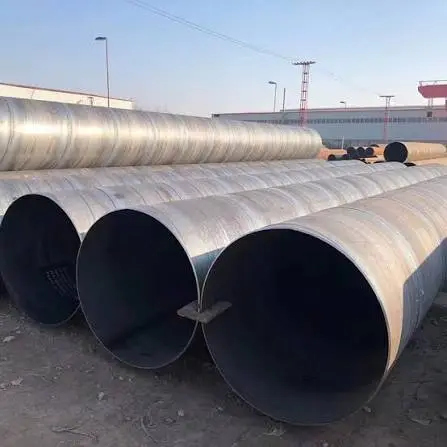
Understanding Large Diameter LSAW Carbon Steel Welded Pipes
What Is LSAW Pipe and How Is It Made?
LSAW stands for Longitudinal Submerged Arc Welding. The process uses submerged arc welding to join a single longitudinal seam on both the inside and the outside of wide steel plates to make a cylindrical shape. The flux layer helps shield the weld and concentrate heat in the weld zone. This makes a seam that is dense and strong, meeting the applicable requirements of API 5L PSL 1 or PSL 2. Wall thicknesses for pipes run from SCH 10 to SCH 160, and pipe diameters are commonly available from 16" to 60".
LSAW vs. ERW vs. SSAW: Key Differences
Three types of welding are used to make most line pipes. Electric Resistance Welding, or ERW, is commonly used for small- to medium-diameter pipe and is a cost-effective option for transporting low-pressure fluids. For large-diameter jobs with low pressure, like water transfer, spiral submerged arc welding works well. When wall thickness, high pressure, and precise measurements are all important at the same time, LSAW can be a suitable choice. It can provide better dimensional consistency than some spiral-welded alternatives because it only has one straight seam and is finished with cold expansion.
Steel Grades and Compliance Standards
X52, X60, X65, and X70 are common API 5L types for oil transfer. The minimum yield strength in ksi is shown by each grade name. In addition to API 5L, other specifications may apply to specific pipe applications, but ASTM A53 is not a general substitute for API 5L line pipe. NACE MR0175/ISO 15156 requirements apply to material selection for applicable sour service environments containing H2S. To maintain weldability and control the risk of HAZ hardening, carbon content is controlled according to the requirements of the specified steel grade and product specification.
Advantages of Large Diameter LSAW Carbon Steel Pipes in Oil Industry Applications
Mechanical Strength Under Extreme Conditions
Long-distance transmission pipelines are simultaneously subjected to high internal operating pressures, external soil or hydrostatic loads, and significant environmental temperature swings. Properly manufactured LSAW pipe can achieve high weld integrity, with weld quality and allowable design properties determined by the applicable pipe specification and design code. This allows large diameter LSAW pipe to withstand demanding pipeline conditions. This is very important for crude oil lines that go across the country and offshore pumping systems that are often hit by sudden increases in pressure.
Corrosion Resistance and Coating Options
In acidic conditions, carbon steel needs to have its surface protected. Standard external coating options for LSAW line pipe include 3LPE (three-layer polyethylene) or 3LPP for buried and offshore service, fusion-bonded epoxy (FBE), and temporary anti-rust varnish or black lacquer for transit protection. In underwater uses, cathodic protection systems work with these coatings to make them last much longer than 25 years. In H2S sour service, controlling weld hardness is an important part of material qualification, but resistance to sulfide stress cracking also depends on the applicable material, environmental, and service conditions specified by NACE MR0175/ISO 15156.
Cost Advantage Over Seamless and Stainless Alternatives
The rotary piercing process makes large-diameter seamless pipes more expensive to manufacture, particularly at larger diameters. Stainless steel also carries a higher material cost. LSAW carbon steel pipe is a good compromise because it has the same wall thickness as rolled plate, faster production processes, and lower prices per ton. If you choose LSAW over seamless for a large-diameter transmission pipeline, the material cost can be lower while still meeting the specified pressure and performance requirements.
How to Choose the Best Large Diameter LSAW Carbon Steel Welded Pipe for Your Oil Industry Project?
Evaluate Pressure Rating and Wall Thickness
Start with your MAOP and use ASME B31.4 or B31.8 design rules to work your way backward. Based on the pipe diameter, steel grade, and safety factor, these codes say how thick the walls must be. By choosing a higher grade, like X65 over X52, the wall can be thinner while still holding the same amount of pressure. This cuts down on weight and material costs. Always make sure that the pressure number meets the needs of both the working phase and the hydrostatic test.
Check Certifications and Sour Service Requirements
From a safety point of view, not all LSAW pipe is the same. For projects in H2S service areas, you should obtain mill test reports demonstrating that the material complies with the applicable NACE MR0175/ISO 15156 requirements. Because of standards for government and building bids, API 5L PSL2 certification is often needed. Make sure the seller has ISO 9001 quality management certification and can provide full traceability documentation that connects each pipe length to its chemical composition and heat number.
Vet Suppliers on Delivery and Track Record
In many projects, the risk of lead time comes up. It usually takes 6 to 12 weeks from the time the mill order is placed until the LSAW pipe is delivered for a big job. When evaluating an API 5L LSAW pipe manufacturer, procurement teams should verify monthly production capacity, current backlog, inventory turnover, and historical on-time delivery rates. Ask for references from EPC or energy company clients they've worked with before. Suppliers holding approved vendor status with major international energy operators such as ADNOC and Petrobras have already demonstrated compliance with rigorous technical and quality audits.
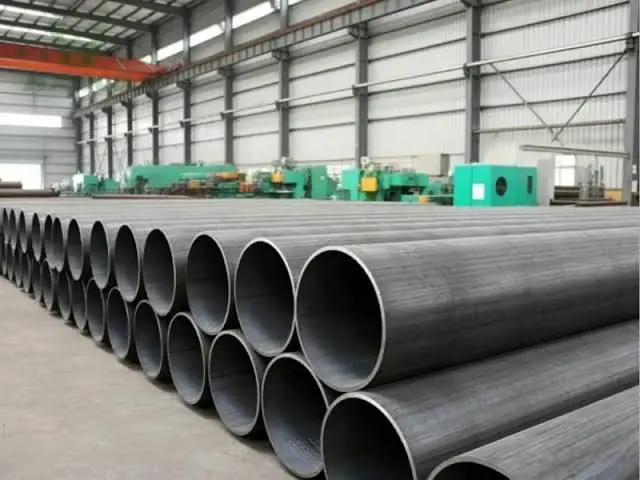
Inspection and Quality Assurance for Large Diameter LSAW Carbon Steel Welded Pipes
Nondestructive Testing of the Weld Seam
In any LSAW pipe, the weld seam is the part that gets the most attention. Ultrasonic testing looks along the whole length of the pipe for internal problems like slag particles or a lack of fusion. Radiographic testing may be required for certain ASME code applications and can provide information about volumetric weld discontinuities. At JS FITTINGS, all LSAW and SSAW pipes are given a 100% X-ray inspection of all weld seams as standard.
Hydrostatic and Mechanical Testing
Every length of pipe is subjected to a hydrostatic test at the pressure and holding time specified by the applicable product standard to verify pressure integrity and leakage resistance. The Charpy impact test for low-temperature service grades and other mechanical tests specified by the applicable product standard are used to verify the required material properties. Before it even leaves the mill, these tests show that the pipe will behave as expected in both normal and emergency situations.
Documentation and Traceability
Teams in charge of buying things should demand full documentation packages. The mill test report, dimensional inspection records, NDT reports, hydrostatic test certificates, and coating inspection records should all be included in the documentation package. For important oil and gas infrastructure, it must be possible to track from the plate heat number to the finished pipe. During seller qualification and third-party audits, paperwork that is missing or not full is a red flag.
Procurement Strategies and Cost Optimization for Large Diameter LSAW Pipes
Pricing Factors and Bulk Order Benefits
LSAW pipe prices depend on the cost of steel plates, the wall thickness, the diameter, the coating requirements, and the number of pipes ordered. Bulk orders can improve the price per ton and help secure production capacity and delivery slots. If you lock in some of your order against forward steel prices through your supplier, you can protect yourself from changes in the price of raw materials, which can cause significant changes in carbon steel costs over time.
Logistics for Large Diameter Pipe
Large-diameter pipes may require flat-rack or open-top containers, specialized trucks, or other suitable transport arrangements depending on their dimensions, weight, and route. Plastic or steel caps must be used to protect beveled ends from damage during transport. When pipe is stored on-site, it should be kept off of bare ground, held correctly to avoid ovality, and away from standing water. Last-minute delays that often happen in construction projects can be avoided by planning logistics early on in the project schedule.
Building Long-Term Supplier Relationships
Thinking of a single project vendor as cheap costs more in the long run. For repeat orders, suppliers who know your project's standards, preferred certifications, and delivery times can process them more efficiently. When the market is tight, long-term deals with skilled manufacturers can also help you get first-choice materials. More than 98% of customers place repeat orders with JS FITTINGS, which shows how important long-term relationships with suppliers are for buyers who want to maintain a stable supply of materials.
Conclusion
Large diameter LSAW carbon steel welded pipe is widely used for high-pressure oil transmission and can also be specified for suitable refinery, offshore, and oil infrastructure applications. It has been used in the field for decades and is suitable for demanding conditions involving high temperatures, challenging service environments, and high operating pressures. To make a good purchasing choice as a business-to-business buyer, you need to know the technical details, demand certified quality paperwork, and pick sellers with a history of on-time delivery. Getting these three things right saves project schedules, keeps costs low over the lifecycle, and makes sure pipes stay safe.
FAQ
1. What is the difference between LSAW and seamless pipe for oil applications?
LSAW pipe uses rolled steel plate welded along a single longitudinal seam, while seamless pipe is extruded from a solid billet without any seam. Modern LSAW manufacturing can achieve high weld integrity, with weld quality and design properties determined by the applicable product specification and design code. Seamless pipe may be selected for certain high-pressure or high-temperature applications when required by the applicable design conditions and specifications, but LSAW is significantly more cost-effective for large diameters above 16".
2. How is corrosion resistance achieved in offshore LSAW pipe?
Offshore LSAW pipe may receive FBE internal lining and an external coating system such as 3LPE or 3LPP, together with cathodic protection where required by the project design. For H2S sour service, NACE MR0175/ISO 15156 compliance controls steel chemistry and weld hardness to prevent sulfide stress cracking.
3. What are typical lead times for large diameter LSAW pipe orders?
Standard lead times run 6–12 weeks depending on pipe size, wall thickness, coating specification, and order volume. Buyers planning large infrastructure projects should place orders at least three months ahead of the required delivery date to avoid schedule risk.
4. What surface finishes are available for LSAW carbon steel pipe?
Available surface finishes include natural bare steel, varnished, black painting, 3LPE, and FBE coating, depending on the service environment and burial conditions.
Partner with JS FITTINGS for Your Next Pipeline Project
More than 30 countries have used JS FITTINGS' certified carbon steel welded pipe for energy projects for more than 40 years. We are a certified carbon steel welded pipe manufacturer approved by leading global energy corporations including ADNOC and Petrobras. We back up every order with ISO 9001 quality processes, a 100% weld X-ray inspection, and more than 95% on-time delivery. To get a quote and technical advice, email our team at admin@jsfittings.com within an hour of your inquiry.
References
1. American Petroleum Institute. API Specification 5L: Specification for Line Pipe. 46th Edition, API Publishing Services, 2018.
2. American Society of Mechanical Engineers. ASME B31.4: Pipeline Transportation Systems for Liquids and Slurries. ASME, 2019.
3. NACE International. NACE MR0175/ISO 15156: Petroleum and Natural Gas Industries — Materials for Use in H2S-Containing Environments in Oil and Gas Production. NACE International, 2015.
4. ASTM International. ASTM A53/A53M: Standard Specification for Pipe, Steel, Black and Hot-Dipped, Zinc-Coated, Welded and Seamless. ASTM International, 2022.
5. Nayyar, Mohinder L. Piping Handbook. 7th Edition, McGraw-Hill, 2000.
6. Bai, Yong, and Qiang Bai. Subsea Pipeline Engineering. 2nd Edition, Gulf Professional Publishing, 2014.
Send Inquiry
You may like