
Long Radius Buttweld Elbow: Ultimate Guide 2026






2026-06-29 10:22:55
The long-radius butt-weld elbow is a key fitting for selecting pipeline parts for important industrial infrastructure because it combines hydraulic efficiency with structural stability. This detailed guide covers all the technical issues, selection criteria, and buying tips that EPC builders, dealers, engineering firms, and industry end-users who need dependability in dangerous situations need to know. Understanding the details of these parts has a direct effect on the safety of the project, the prices over its lifetime, and the ability to keep running.
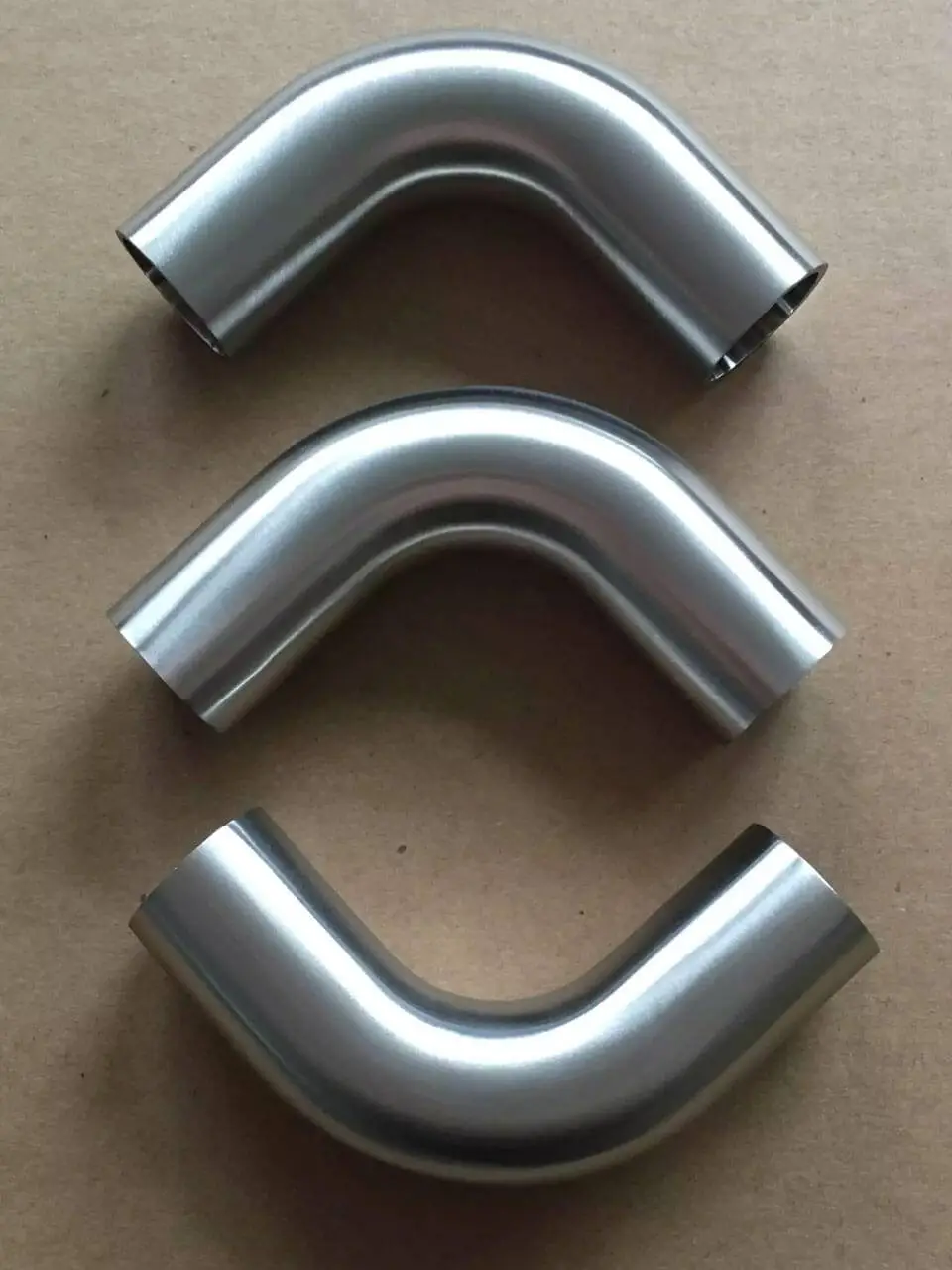
What Makes Long Radius Buttweld Elbows Essential for Industrial Piping Systems?
When it comes to directional change fittings, a long radius buttweld elbow has a central radius that is 1.5 times the standard pipe diameter (1.5D). This physical feature sets it apart from options with a short radius that are ranked at 1.0D. The longer curve radius is very important for hydrodynamics because it lowers friction losses and turbulence, which speeds up erosion in fast-moving systems.
For the buttweld connection method to work, both the fitting end and the joining pipe need to be beveled so that full-penetration welding can happen. This makes a smooth link that doesn't have any mechanical breaks like threaded or socket connections do. This weld quality can't be compromised for projects that have to follow ASME B31.3 process pipe rules or API standards.
When pipeline inspection rules require "piggable" designs, these fittings are always the first choice of purchasing decision-makers. Standard cleaning or inspection pigs can't go around tight radius bends without getting stuck, so the 1.5D sweep radius is necessary for maintenance access. In fields like oil and gas transfer, this feature alone makes the extra cost increase over choices with a smaller radius worth it.
Material tracking is another important thing to think about when buying something. Reliable makers get mother pipe from licensed mills that can show EN 10204 3.1 mill test certificates that show the chemical makeup and mechanical qualities. This chain of paperwork is very important for third-party reviews or projects that need to follow NACE MR0175 guidelines for bad service settings.
The producing method has a direct effect on how well and how reliably the product works. Using mandrels in hot-forming keeps the wall thickness even, especially at the intrados (inner curve), where it thins when the metal is bent. To make up for it, more advanced manufacturers start with thicker source material. This way, they can make sure that the finished fitting meets the minimum scheduling standards even if the material moves around during the making process.
Technical Specifications and Supply Range for Project Planning
Long radius elbows from JS FITTINGS are compliant with ASME/ANSI B16.9, MSS-SP-43, EN 10253, and DIN 2605 standards. The usual sizes for seamless items range from 1/2" to 24". For big-bore jobs, ERW and EFW elbows made in a factory extend the range to 72". This width is good for a lot of things, from main transmission leads to tracking lines.
Angled models are in stock and come with back curves of 45 degrees, 90 degrees, and 180 degrees. We can make special curves between these steps if you need them for special route problems. Plan 10S to XXS for wall thickness, with 20, 40, 80, 120, and 160 for middle plans. This makes sure that the pressure number matches perfectly with the lines that are connected.
Different types of work are taken into account when choosing the grade of material:
- Carbon steel grades like ASTM A234 WPB can be used for many jobs when the temperature is standard to low. If you use steam systems that get very hot, the WPC form is better. Power companies that use supercritical boilers can count on these materials to work reliably and at a low cost.
- Steels like ASTM A403 WP304/304L and WP316/316L don't rust when they are used in food- and chemical-processing parts. The low-carbon form of 316L keeps carbide from forming as much as possible when welding. This means that places that were heated during the welding process don't need to be fired again to keep them from rusting.
- Alloy steels like ASTM A234 WP5, WP9, WP11, WP22, and WP91 are used to stop creep at high temperatures. Companies that deal with hydrotreater wastewater at 650°C often need WP11 chrome-moly elbows because they don't react with hydrogen and have a high creep strength.
- ASTM A420 WPL6 carbon steel can handle low temperatures and stays strong in cold LNG systems, where other carbon steel would break. This standard makes sure that weak materials don't break in terrible ways when it's cold or icy.
- Taking care of the outside of something often makes it last longer. When putting things inside, black iron paint works well. When lines are put in outside, hot-dip galvanizing keeps them from rusting due to the weather. Some types of stainless steel have a layer of chromium oxide that covers them. This layer can be made harder by passivation.
ASME B16.9 strictly dictates critical dimensional tolerances for long radius buttweld elbows. These include precise center-to-end measurements to ensure accurate field fit-up, strict out-of-roundness limits that guarantee proper gasket seating for flanged connections, and tight off-angle tolerances that prevent the introduction of severe residual welding stresses caused by misalignment.
Performance Advantages in High-Consequence Applications
Offshore oil and gas platforms illustrate the critical role these fittings play in operational continuity. Subsea pipeline systems transporting crude from wellheads to production platforms must accommodate periodic "pigging" operations. Inspection gauges measuring wall thickness degradation or detecting corrosion require a smooth passage through directional changes. The 1.5D radius of long-radius buttweld elbows prevents pig entrapment that would necessitate costly intervention or production shutdown.
Power generation facilities rely on these fittings in main steam lines where superheated steam at 540°C and 16 MPa flows at velocities exceeding 60 m/s. Short-radius fittings would create secondary flow patterns and pressure fluctuations that induce flow-accelerated corrosion and vibration fatigue. The gradual curvature of long radius designs maintains laminar flow characteristics, extending component life from 15 to 30+ years between overhauls.
Petrochemical refineries processing corrosive media face unique challenges with crevice corrosion. Socket-welded connections create geometric crevices that concentrate chlorides and sulfides, initiating localized attack. Buttweld elbows eliminate these crevices through flush interior surfaces. When fabricated from duplex stainless steel or nickel alloys, they provide containment integrity for hydrofluoric acid alkylation units where leaks pose catastrophic safety risks.
The hydraulic efficiency translates to tangible operating cost reductions. Computational fluid dynamics studies show long-radius elbows generate 60% less pressure drop than short-radius equivalents at identical flow rates. For large pumping stations moving liquids through extensive pipeline networks, this efficiency gain reduces parasitic energy consumption by thousands of kilowatt-hours annually.
Structural considerations matter equally. The stress intensification factor (SIF) used in piping flexibility analysis calculations runs lower for long-radius fittings, reducing required pipe support density and expansion loop footprint. This simplifies design while maintaining code compliance for thermal expansion management.
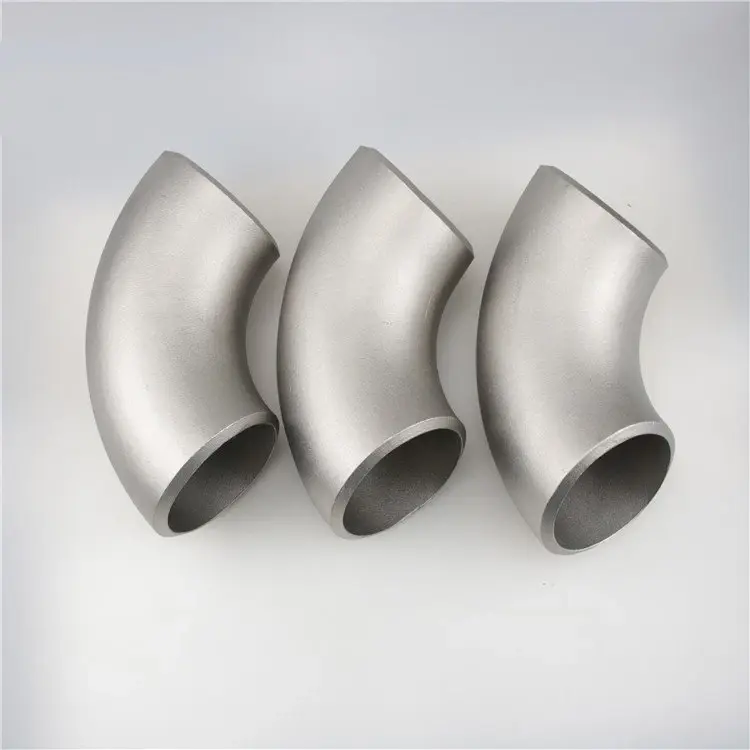
Quality Control Measures That Protect Project Integrity
Distributors and stockists building trusted supplier relationships must verify manufacturing quality before accepting inventory. Dimensional inspection confirms center-to-end measurements match ASME B16.9 tables, preventing field fit-up issues that delay commissioning schedules. Out-of-roundness measurements taken at bevel ends should remain within 1% of nominal diameter to ensure proper weld root gap and gasket compression.
Wall thickness verification goes beyond simple calipers. Ultrasonic thickness gauging at multiple circumferential points along the elbow curve maps material distribution. Reputable manufacturers maintain wall thickness within the -12.5% tolerance specified by ASME B16.9, but premium suppliers exceed this by holding -10% or tighter. This conservative approach provides a safety margin in pressure calculations.
Positive material identification using handheld XRF spectrometers confirms alloy chemistry matches mill test certificates. This verification step prevents dangerous grade mismatches where a carbon steel elbow might inadvertently enter a chrome-moly system, creating a weak point vulnerable to hydrogen attack or creep rupture.
Non-destructive testing protocols separate acceptable fittings from potential field failures. Magnetic particle inspection detects surface-breaking cracks on ferromagnetic materials, revealing grinding defects or quench cracks invisible to visual inspection. Liquid penetrant inspection serves the same purpose for nonmagnetic stainless and nickel alloys.
Ultrasonic shear wave testing examines internal integrity, detecting laminations, inclusions, or lack-of-fusion conditions within the elbow wall. JS FITTINGS applies these NDT methods systematically, with documented procedures traceable to ASME Section V requirements. This rigor provides the evidence base for quality assurance documentation demanded by engineering firms meeting client specifications.
Heat treatment verification ensures microstructure suitability for intended service. Carbon steel fittings formed above the critical temperature range require normalizing heat treatment to refine the grain structure and relieve residual stresses. Hardness testing confirms proper heat treatment, with values matching material specification requirements.
For long radius buttweld elbows, the quality of bevel preparation directly impacts both welding productivity and ultimate joint integrity. Advanced CNC machining centers produce precision bevels meeting ASME B16.25 geometry specifications—typically 37.5-degree angles for standard wall thicknesses, featuring consistent land widths and flawlessly smooth machined finishes. Conversely, poor bevel preparation drastically increases welding time, consumable waste, and the critical risk of weld defects during installation.
JS FITTINGS maintains stringent quality protocols across seven integrated management systems covering material procurement through after-sales service. Raw materials sourced exclusively from Tier-1 mills like Baosteel and Tsingshan carry full traceability documentation. Advanced CNC machining centers ensure dimensional precision, while dedicated NDT technicians perform ultrasonic and magnetic particle testing on every production lot.
This systematic approach yields measurable reliability: client complaint rates below 0.5%, on-time delivery exceeding 95%, and repurchase rates above 98%. These metrics reflect operational excellence developed over 43 years of manufacturing experience since 1983.
Addressing Common Procurement Questions and Technical Concerns
Project managers frequently question the performance differential between long and short radius configurations. The pressure drop calculation reveals the impact: short-radius elbows generate resistance coefficients (K-factors) ranging from 0.6 to 0.9 depending on Reynolds number, while long-radius equivalents produce K-factors of 0.3 to 0.4. This translates to 40-60% lower energy dissipation per directional change.
Piggability requirements often drive specification decisions. Standard foam or mandrel pigs used for pipeline cleaning require a minimum 1.5D bend radius to maintain pig integrity and prevent lodging. Projects planning future inspection capability must specify long radius elbows during initial construction, as retrofitting after commissioning proves prohibitively expensive.
Wall thickness consistency concerns center on the forming process. During mandrel bending, the extrados (outer curve) stretches while the intrados compresses. Material migration can thin the back wall beyond acceptable limits if manufacturers use improper mother pipe thickness or inadequate forming controls. Purchasing from suppliers who document wall thickness mapping via ultrasonic inspection mitigates this risk.
Post-weld heat treatment requirements vary by material and wall thickness. Carbon steel fittings exceeding 19 mm wall thickness typically require stress relief per ASME B31.3 to prevent delayed cracking from hydrogen embrittlement or reduce residual stresses that accelerate stress corrosion cracking. Alloy steel materials mandate PWHT to temper martensite formed in heat-affected zones during welding.
Bevel standard confusion arises from varying wall thickness ranges. Standard bevels at 37.5 degrees with 1.6mm land width suit most applications. Thick-wall fittings above 22mm may require compound J-bevels that reduce total weld volume and heat input, minimizing distortion and residual stress.
Installation practices impact long-term performance. Proper fit-up maintains a 1.6-3.2 mm root gap for full-penetration welding. Tack welding at quadrant positions prevents distortion during main weld passes. Qualified welding procedures following ASME Section IX ensure defect-free joints capable of withstanding design pressures throughout service life.
Real-World Applications Across Industrial Sectors
Municipal water treatment facilities handling clarified effluent at moderate pressures specify these fittings in 304L stainless steel to resist chloride-induced stress corrosion cracking. The smooth interior profile of buttweld joints prevents bacterial colonization points that threaten water quality in distribution systems.
Mining operations transporting abrasive slurries benefit from long-radius elbows fabricated in wear-resistant alloys or rubber-lined carbon steel. The gentle curvature distributes impact forces across larger surface areas, reducing localized erosion that causes premature failure in short-radius fittings handling solid-laden flows.
Food and beverage processing plants prioritize sanitary design with 316L stainless steel elbows featuring smooth interior finishes and flush welds. The absence of crevices prevents bacterial harborage, supporting Clean-In-Place protocols that meet FDA and EHEDG hygienic standards.
Pharmaceutical manufacturing facilities handling aggressive solvents specify exotic alloys like Hastelloy C-276 or Inconel 625 in buttweld configurations. The homogeneous welded joint eliminates threaded connections vulnerable to solvent penetration and contamination.
District heating networks distributing superheated water across urban areas use pre-insulated long-radius elbows with polyurethane foam and HDPE jacketing. The 1.5D radius accommodates thermal expansion while maintaining insulation continuity that prevents heat loss and condensation damage.
Chemical injection skids on upstream production platforms utilize highly compact manifolds featuring 45-degree and 90-degree long radius buttweld elbows to safely and efficiently route highly aggressive corrosion inhibitors and scale treatment chemicals.The buttweld integrity ensures zero-leakage performance in unmanned offshore installations where access for maintenance occurs only during quarterly turnarounds.
Pulp and paper mills circulating black liquor through recovery boilers specify A234 WP11 chrome-moly long-radius elbows resistant to high-temperature oxidation and sulfidation attack. The extended service life reduces unplanned shutdowns that cost hundreds of thousands in lost production.
Conclusion
Long radius buttweld elbows play a vital role in modern industrial piping systems by combining hydraulic efficiency, structural reliability, and long-term safety performance. Their 1.5D geometry reduces pressure loss, minimizes turbulence, and supports piggable pipeline design across demanding sectors such as oil and gas, power generation, and petrochemicals. Compliance with international standards and strict quality control ensures dependable operation under high pressure and corrosive conditions. Careful material selection, fabrication, and inspection further enhance lifecycle value. Partnering with experienced manufacturers like JS FITTINGS helps ensure project success, operational efficiency, and reduced maintenance risks across critical infrastructure applications for long-term operational reliability.
Partner with JS FITTINGS: Your Premier Manufacturer of Industrial Piping Solutions
JS FITTINGS delivers engineering-grade pipe fittings backed by 43 years of manufacturing excellence and certifications from CE, ISO, GOST-R, PETROBRAS, NIOC, and ADNOC. Our long radius buttweld elbow inventory spans materials from carbon steel to exotic alloys, with production capacity exceeding 800 tons monthly and 90+ container shipments serving over 30 countries. Contact our experienced trade team at admin@jsfittings.com to discuss your project specifications and receive technical support from qualified supplier engineers who understand the critical balance between cost control, schedule compliance, and safety assurance your projects demand.
References
1. American Society of Mechanical Engineers. (2020). ASME B16.9: Factory-Made Wrought Buttwelding Fittings. New York: ASME Press.
2. American Society of Mechanical Engineers. (2022). ASME B31.3: Process Piping Design and Construction. New York: ASME Press.
3. European Committee for Standardization. (2019). EN 10253-2: Butt-welding Pipe Fittings – Part 2: Non-alloy and Ferritic Alloy Steels with Specific Inspection Requirements. Brussels: CEN Publications.
4. Nayyar, M.L. (2025). Piping Handbook, 9th Edition. New York: McGraw-Hill Professional.
5. Singh, A. & Kumar, R. (2023). Fluid Flow Analysis in Pipeline Elbow Configurations: A Comparative Study of Long and Short Radius Fittings. Journal of Pipeline Engineering, 22(3), 145-162.
6. Manufacturers Standardization Society. (2021). MSS SP-43: Wrought Stainless Steel Butt-Welding Fittings. Vienna, VA: MSS Publications.
Send Inquiry
Related Industry Knowledge
- Long Radius Buttweld Elbow vs Short Radius Elbows: Which One to Use?
- What Is a Buttweld Bend? Types, Radius & Standards
- ASTM A312 vs ASTM A213 Steel Pipe: What Are the Key Differences?
- How thick is the FBE Coated Steel Pipe?
- Understanding the API 5L Seamless Steel Line Pipe Specification
- How to Select a Buttweld Reducer for Process Piping?
- Lap Joint Pipe Flanges: Everything You Need to Know
- What is carbon steel pipe made of?
- ASTM A105 Carbon Steel Forged Steel Flange Specifications
- Where can I buy carbon steel pipe?