
RTJ Blind Flange Dimensions, Ratings, and Material Guide






2026-10-14 14:41:06
An RTJ blind flange is a solid forged disc with a face that has a finely machined groove that is used to seal the end of a high-pressure piping system that does not have a central hole. The RTJ blind flange offers a metal-to-metal seal, in a “coining” action, where the bolt strain forces a softer metallic ring gasket into a harder groove, unlike the typical raised-face or flat-face types. This design is available in pressure classes from 600# to 2500# and higher. It is the design of choice for oil and gas, petrochemical, and offshore applications where leakage prevention is critical.
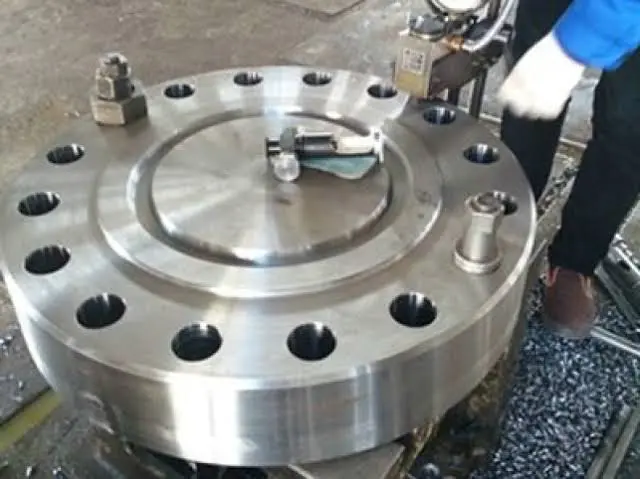
Understanding RTJ Blind Flange Dimensions
You have to be very careful with the measurements. If the groove depth or the pitch diameter is a little off, the ring gasket will not seat properly, and the seal will fail immediately. In the U.S. market, there are two basic regulations that govern the geometry of RTJ blind flanges:
ASME B16.5 Dimensional Coverage
From NPS 1/2 to NPS 24, ASME B16.5 covers RTJ blind flanges across applicable pressure classes, including Class 150 through Class 2500, with Class 2500 limited to the sizes specified by the standard. It specifies the outside diameter, the diameter of the bolt circle, the number and size of bolt holes, the width of the flange, and the groove's ring number, with the standard specifying the corresponding pitch diameter, groove depth, groove width, and 23° sidewall angle. This standard lists a minimum tolerance for each dimension. This isn’t a suggestion.
ASME B16.47 and API 6A for Larger Sizes
For NPS 26 through NPS 60, ASME B16.47 uses Series A and Series B flange dimensions, with Series A based on MSS SP-44 and Series B based on API 605. API Specification 6A covers wellhead and Christmas tree equipment with specified working-pressure ratings, including 10,000 psi and 15,000 psi classes. Because only mechanical contact exists in this area, the standards require stricter groove surface finish requirements, with a typical Ra of 0.8 to 1.6 μm.
Critical Groove Dimensions and Tolerances
The pitch diameter, groove width, groove depth, and 23° sidewall angle of the RTJ groove must be verified using a CMM or precision functional ring gages.Grooves with a flat bottom can hold both octagonal and oval rings, but grooves with a round bottom can only hold oval rings. When high pressures are present, octagonal rings provide surface contact along the groove sides, while oval rings provide line contact. Any scratch or chatter mark on the sidewall of the groove is a reason to reject the part.
RTJ Blind Flange Pressure Ratings and Design Standards
The selected pressure class must be appropriate for the system's design pressure and temperature, as each class has defined pressure-temperature limitations.
Pressure Class Overview
Class 150 and 300 flanges are used for chemical lines with low pressure and general-use lines. RTJ facing is available across multiple ASME pressure classes, including Class 150 through Class 2500 within the applicable size ranges. Class 900 and 1500 flanges are used for high-pressure steam, gas transmission, and refinery work. Offshore and wellhead equipment may use high-pressure ASME flanges or API 6A equipment with 10,000 psi and 15,000 psi working-pressure ratings, depending on the applicable design standard. ASME/ANSI Class 150, 300, 600, 900, 1500, and 2500 are standard pressure classes manufactured by JS Fittings. We also have European PN ratings from PN6 to PN100.
Governing International Standards
These standards—ASME B16.5, ASME B16.47, API 6A, ISO 7005-1, and EN 1092-1—set out the rules for design, the materials that can be used, and the testing procedures for products such as an RTJ blind flange. To stop sulfide stress cracking, NACE MR0175 / ISO 15156 specifies material-specific hardness and environmental requirements for sour service conditions. Following these standards is required for EPC projects and government bids; it's not just a marketing box to be checked.
Gasket Compatibility and Torque Requirements
The ring gasket hardness should meet the applicable requirements of the governing flange and gasket standard, with sufficient hardness difference from the flange material to promote proper sealing and avoid damaging the groove. When matched to the grade of the flange, typical sealing materials are soft iron, low-carbon steel, 304/316 stainless steel, and Inconel 625. To keep the gap between the flanges uniform, torque is applied in a star pattern over several passes. When you torque something unevenly, you crush one side of the seal but leave the other side unseated. This is one of the main reasons why field joints leak.
Materials Used for RTJ Blind Flanges: Selection Guide
Material selection directly dictates component longevity and sealing reliability under operational stress. Flange metallurgy must be precisely matched to the process fluid chemistry, design temperature range, and localized corrosion mechanisms.
The main types of materials used to produce RTJ blind flanges are:
- Carbon Steel ASTM A105: The workhorse for non-corrosive pipe applications from ambient to moderate temperatures. This is highly machinable and weldable, may be specified across a range of ASME pressure classes, subject to the applicable material, temperature, size, and design requirements, and is still the most inexpensive alternative for general oil and gas infrastructure. JS Fittings produces A105 flanges with a full PMI inspection to verify the proper material is utilised and no mix-up.
- ASTM A182 F316/F304 Stainless Steel: Suitable for many corrosive services, including selected chloride-bearing media and food-processing applications, with the specific grade selected according to the chemical composition and service conditions. F316 offers molybdenum for increased resistance to pitting in chloride environments. RTJ groove surface finish should meet the applicable standard and gasket manufacturer's requirements; a typical specified finish may be around Ra 0.8 μm.
- ASTM A182 F51 Duplex Stainless Steel: Duplex grades such as F51 generally offer substantially higher yield strength than conventional austenitic stainless steels and may be utilised with a smaller wall thickness to reduce weight in offshore constructions. They are resistant to chloride stress corrosion cracking and are widely used in subsea and coastal infrastructure.
- ASTM A182 F22 Alloy Steel: Used for refinery operation at elevated temperatures — hydrocracker units, reformers, and high-pressure steam lines operating above 400°F. The chromium-molybdenum composition preserves mechanical properties at extreme temperatures when carbon steel loses strength.
- Nickel Alloys: Only for highly corrosive or cryogenic service. Inconel 625 may be selected for demanding corrosion, sour-service, or high-temperature applications when its specific corrosion and mechanical properties are required. These materials need specific machining to maintain tolerances in the groove.
These material choices affect the overall cost of ownership, not just the initial purchase price. Choose the incorrect grade, and you’ll spend much more than the price difference at purchase time for premature repair and unscheduled downtime.
RTJ Blind Flange vs. Other Blind Flange Types
An RTJ design is not required for every blind-flange application. Understanding the differences between flange facing types helps engineers avoid over- or under-specification.
When RTJ Outperforms Raised Face Designs?
A raised face blind flange uses a gasket between the mating flange faces and is available across a wide range of pressure classes. The choice of gasket and flange facing must therefore be matched to the pressure, temperature, and service conditions. The RTJ system uses a metallic ring gasket rather than a conventional soft gasket, with the ring gasket deforming against the machined grooves to create the seal. RTJ flanges are commonly selected for high-pressure applications, particularly where metal ring gaskets and the associated sealing characteristics are specified.
Flat Face and Specialty Blind Flange Comparisons
Flat face blind flanges and full-face gaskets are designed to prevent the face of the flange from cracking if you operate cast iron equipment at low pressure. Blind flanges can be tapped or threaded with NPT or BSP center threads. These threaded configurations can accommodate pressure gauges or drains where specified by the design. In the NPS 1/2 to NPS 60 size range, JS Fittings has all three facing options: RF, FF, and RTJ.
Selection Decision Framework
First, match the type of flange to the pressure class. Then match it to the temperature. Finally, match it to the fluid chemistry. For oil and gas work at higher pressure classes, an RTJ blind flange may be selected when the project specification, service conditions, and applicable design standard call for a metal ring-joint seal. For high-pressure applications, selecting a raised-face design solely to reduce initial cost may increase sealing, maintenance, and operational risks if the project specification requires an RTJ configuration.
Inspection, Installation, and Maintenance of RTJ Blind Flanges
Pre-Installation Surface and Groove Inspection
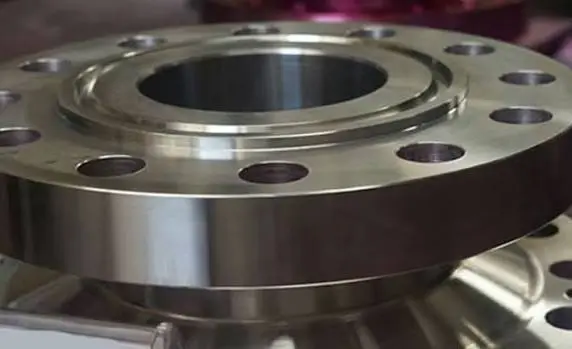
Before assembly, check the sides and bottom of the groove for machining lines, rust pits, or damage from shipping. The groove is the sealing surface, so any flaws there need to be fixed before the part can be installed. During shipping and storage, use bolted plywood covers or heavy-duty plastic protectors to keep the groove faces safe.
Bolting Procedure and Gap Control
Place the ring gasket into the groove by hand, making sure it sits in the middle, and then connect the two flanges. To torque the bolts, start with 30% of the final torque, then 70%, and finally 100%. Do this in a cross pattern. Use feeler gauges to measure the gap between the flanges at four different points. The flange gap should be checked at multiple points and should be sufficiently uniform to confirm proper alignment and bolt loading according to the applicable installation procedure. Any gaps that aren't even are a sign of imbalance or bad torque sequence.
Routine Maintenance and Inspection Schedule
In important service, the flange face should be visually inspected at intervals established by the applicable inspection and maintenance program for corrosion and the soundness of the bolts. Ultrasonic or thermal imaging equipment may be used during leak-detection studies to identify potential leakage at joints before a failure occurs. It is not possible to use a ring gasket more than once because the damage from coining is permanent and the gasket will not fit properly again.
Where and How to Procure Quality RTJ Blind Flanges?
When buying flanges, there are two types of procurement risk: not meeting the required dimensions and using the wrong material. Both can't be seen until a system breaks down under stress.
Supplier Qualification Criteria
Check sources against ISO 9001, CE, GOST-R certifications, third-party material test reports, and written NDT processes. It is important to find out if the hole sizes are checked with a CMM or appropriate gauges, not just calipers. Suppliers approved by major international energy corporations like ADNOC and Petrobras have already demonstrated rigorous compliance with high-tier quality audits.
JS Fittings Production Capability
JS Fittings has been making industrial flanges since 1983; that's more than 40 years of experience. Over 700 tons of flanges are made every month, and more than 90 containers are shipped every month. More than 95% of the time, the containers arrive on time. Our certifications include ISO, CE, and GOST-R. We are also approved suppliers for major global energy operators including ADNOC and Petrobras.Our size range goes from NPS 1/2 to NPS 60, with applicable pressure classes and facing options available according to the required specification. OEM and custom tapped configurations are also available upon request.
Ordering Process and Lead Times
Stocked items usually ship within two to three weeks. Non-standard ring grooves, specialty alloy flanges, and large-diameter blind flanges typically require 4–6 weeks for production. Before committing to a bulk buy, you can place a sample order to see how well the product works for your project. Our foreign trade team responds to inquiries within one hour.
Conclusion
To choose the right RTJ blind flange, you need to make sure that three things are in sync: the dimensions must be accurate according to the standard, the pressure class must match the design of the system, and the material grade must be suitable for the working environment. Each factor has an impact on the others. For example, to get a Class 2500 grade for sour gas service, the groove shape must be exact, and the hardness must meet NACE standards. Cutting corners on any of these things puts the whole piping system at a higher risk than it needs to be. JS Fittings has more than 40 years of flange manufacturing experience and offers certified products across a wide range of specifications. The company also provides documented quality-control records and post-shipment support.
FAQ
1. Can I reuse the ring gasket on an RTJ blind flange?
No. The sealing mechanism depends on permanent plastic deformation of the metal ring. Once a ring gasket has been compressed and work-hardened, it cannot re-seat correctly in a new assembly. Reusing a spent gasket on any RTJ flange substantially increases leakage risk.
2. What is the difference between oval and octagonal RTJ grooves?
Most modern flat-bottom grooves accept both oval and octagonal rings. Octagonal rings create surface contact along the groove sidewall, producing a tighter seal at elevated pressures. Oval rings make line contact and are the only option for older round-bottom grooves.
3. What hardness limit applies in sour service?
NACE MR0175 / ISO 15156 specifies hardness limits according to the material and service conditions for H₂S-containing environments. The applicable limit should be confirmed for the selected flange material and condition to prevent sulfide stress cracking in H₂S-containing environments. Hardness testing with Brinell or Vickers methods is a mandatory inspection step for sour service procurement.
4. How do I protect the groove during shipping?
Apply heavy-duty plastic face protectors or bolted plywood covers before shipment. A single scratch on the groove sidewall can require full re-machining, which costs more than the protective packaging.
Request a Quote from JS Fittings — RTJ Blind Flange Manufacturer
JS Fittings sells approved RTJ blind flanges in all ASME pressure classes, ranging from NPS 1/2 to NPS 60. The ISO, CE, and GOST-R paperwork is also included. For more than 40 years, our production team has manufactured precision-machined flanges that meet the exacting specifications of leading energy operators like ADNOC and Petrobras. Send your size, pressure class, material grade, and quantity details to admin@jsfittings.com, and you'll get a full price within one business day. Samples are available for project approval.
References
1. ASME B16.5 — Pipe Flanges and Flanged Fittings: NPS 1/2 Through NPS 24, American Society of Mechanical Engineers, 2017.
2. ASME B16.47 — Large Diameter Steel Flanges: NPS 26 Through NPS 60, American Society of Mechanical Engineers, 2017.
3. API Standard 6A — Specification for Wellhead and Tree Equipment, American Petroleum Institute, 21st Edition, 2018.
4. NACE MR0175 / ISO 15156 — Petroleum and Natural Gas Industries: Materials for Use in H₂S-Containing Environments in Oil and Gas Production, NACE International / ISO, 2015.
5. MSS SP-44 — Steel Pipeline Flanges, Manufacturers Standardization Society, 2019.
6. EN 1092-1 — Flanges and Their Joints: Circular Flanges for Pipes, Valves, Fittings and Accessories, PN-Designated, European Committee for Standardization (CEN), 2018.
Send Inquiry
You may like