
RTJ Blind Flange Pressure Ratings and Standards Explained






2026-11-04 13:22:48
An RTJ blind flange pressure rating depends on three things: the ASME pressure class, the material group, and the operating temperature. Class 150 through Class 2500 gives you the starting point, but the pressure-temperature table for your material sets the real allowable pressure. The governing standard matters just as much. ASME B16.5 covers NPS 1/2 through 24, ASME B16.47 covers NPS 26 and larger, and API 6A follows its own rules for wellhead equipment. In this guide, we explain how ratings, standards, dimensions, materials, and installation fit together, so you can specify the right ring type joint blind flange the first time.
What Is an RTJ Blind Flange and How Does It Work?
A Solid Disc That Closes the Line
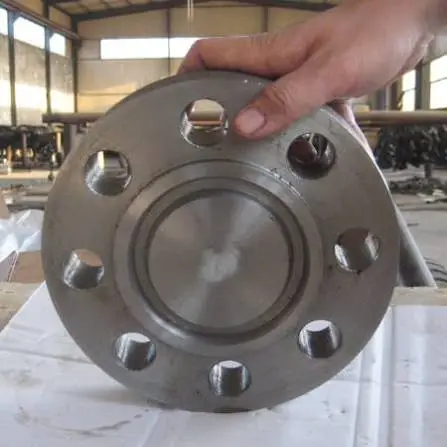
An RTJ blind flange is a solid forged steel disc without a center bore, engineered to seal pressure vessel nozzles, isolate piping sections during hydrostatic testing, or terminate line ends for future system expansion.Since there are no holes in the disk, it can hold the full end-cap force of the line pressure. The force bends the disk and stresses the nuts. Our forging process helps refine the internal grain structure, improving the flange's mechanical properties and resistance to cracking under pressure fluctuations. Unlike a welded pipe cap, an RTJ blind flange can be removed for inspection, cleaning, or maintenance by loosening the connecting bolts. A welded pipe cap generally requires cutting and re-welding for removal.
How the Ring Joint Creates the Seal
The letters RTJ stand for "Ring Type Joint."A precision-machined annular ring groove with a 23° sidewall angle is machined into the sealing face to receive the metallic ring gasket. Tightening the bolts compresses the metal ring against the groove surfaces, causing controlled plastic deformation and creating a high-contact-stress metal-to-metal seal. For the ring to bend instead of the groove, the flange needs to be stiffer than the ring. ASME B16.20 talks about these metal gaskets. Metallic ring gaskets come in two standardized profiles: oval and octagonal per ASME B16.20. Modern flat-bottom ring grooves accommodate both octagonal and oval rings, while legacy round-bottom grooves can only seat oval rings. It depends on the type of ring used, the condition of the surface, how well it is aligned, and how tight the bolts are that the joint stays together.
Where Buyers Use It
The ring-type joint face is usually used for high-pressure oil and gas work. An RTJ blind flange can be found on work platforms at sea, in petrochemical plants, on test pipes, at valve ports, and on the bottom of pressure vessels. It's what EPC workers ask for at the end of tests and at points where they separate. People who work in the area can quickly fill orders because distributors keep common sizes in stock. Purchasers for the government use it to meet the needs of bids, and maintenance teams at plants use it to cover extra nozzles. We have blind flanges for NPS 1/2 to NPS 60. We also have tapped RTJ blind flanges with NPT or BSP threaded cores that can be used for drains or level gauges.
RTJ Blind Flange Pressure Ratings: Class, Temperature, and Standards
Pressure Class Is Only the Starting Point
ASME B16.5 establishes six primary pressure rating classes: Class 150, 300, 600, 900, 1500, and 2500. We have all six. Based on EN 1092-1, our European range goes from PN6 to PN100. The psi figure and the class number are different. If the temperature goes up, the pressure that can be used drops. For each type of material, this is different, so you need to look at the table of pressure and temperature for that material. According to ASME B16.5, Class 2500 ends at NPS 12. Engineers need to look into bigger high-pressure sizes. The design pressure, test pressure, corrosion conditions, bolting materials, gasket selection, and external piping loads can also affect joint integrity. Since the lowest-rated component limits the pressure capacity of the system, the pipe, fittings, valves, and flanged connections must all be suitable for the specified operating conditions.
ASME B16.5 and ASME B16.47
The standard tells you about the tests, markings, sizes, and materials. ASME B16.5 talks about NPS 1/2 through 24. For NPS 26 through 60, ASME B16.47 has two sets of rules. Series A is generally larger and heavier than Series B and is based on the former MSS SP-44 standard. Series B is historically associated with API 605. The two series have different dimensions and bolt patterns and are not interchangeable. Always specify the required series when placing an order. A Series A flange and a Series B flange can't be joined together because they are made with different sizes and bolt patterns. Write down the series on every order. When we make our goods, we stick to ASME B16.5, ASME B16.47 Series A and B, MSS SP-44, DIN, and EN 1092-1.
API 6A and Sour Service
API 6A does cover the wellhead and Christmas tree gear. Along with the 6B and 6BX types, its flanges have their own ring seals, and psi ranges from 2,000 to 20,000 psi. On a 6BX flange, the BX ring fits in a different gap than the R and RX rings do on an ASME flange. You can't switch out parts made by API 6A and ASME. If your project needs API 6A specs, please send them to us so we can look them over before we give you a price.
Sour service environments present severe operational risks. Under NACE MR0175/ISO 15156, strict metallurgical constraints govern material selection for H2S-containing production fluids. Most of the time, carbon steel can't be harder than 22 HRC, which is about 237 HBW. Add "sour service" to the order form.
RTJ Blind Flange Dimensions, Materials, and Compatibility
Dimensions and Mating Flange Fit
Check the ring number (R-number), bolt circle diameter, bolt hole count and diameter, groove diameter, groove width, groove depth, and groove profile. For the lip to fit, the RTJ gap must match, and rings of the same size can be from different classes. According to ASME B16.5, the groove can't be rougher than 63 microinches Ra, which is about 1.6 µm. The angle of the groove wall is 23°. We use CNC machines to make things, and we pay close attention to how big the bolt holes are and how far apart they are. Our blind flanges fit with weld neck or slip-on flanges, which means that less work needs to be done in the field. All at once, check the bolt's length, the nut's size, and how it fits together.
Material and Coating Selection
Picking the right material depends on several factors, including the process medium, corrosion exposure, operating pressure, temperature, and required mechanical strength. Carbon steel is often used for general process work and work in oil and gas. ASTM A105 is a common grade of forged carbon steel, and ASTM A350 LF2 is good for work that needs to be done at low temperatures. When it comes to places that are acidic or hot, stainless steel or alloy steel works well. Something being "forged" doesn't mean it meets a standard or rate. Check the license and ask what the grade and standard are. Is the ring material compatible with the process medium, operating temperature, and mating flange material? Every blind flange can be protected with hot-dip galvanizing, black lacquer, or yellow anti-rust oil to protect it during shipping and storage, including sea transportation.
RTJ Compared with Raised Face, Flat Face, and Spectacle Blinds
RTJ, RF, and FF blind flanges all seal in different ways. Raised face (RF) flanges are widely used in industrial piping systems, while flat face (FF) flanges are commonly used with cast iron flanges and other applications where a flat mating surface is required. Because the gaskets are set up differently, they can't be used instead of RTJ unless the rings that fit together are the same. A spectacle blind offers positive separation when it is open or closed, which is helpful when repair needs to be done on the same line more than once. A blind flange closes the line, and a weld neck flange connects the pipe to a part with a flange. Use the same words on models, quotes, and purchase orders so you don't mess up when you place an order.
Installing and Selecting an RTJ Blind Flange
Installation Steps
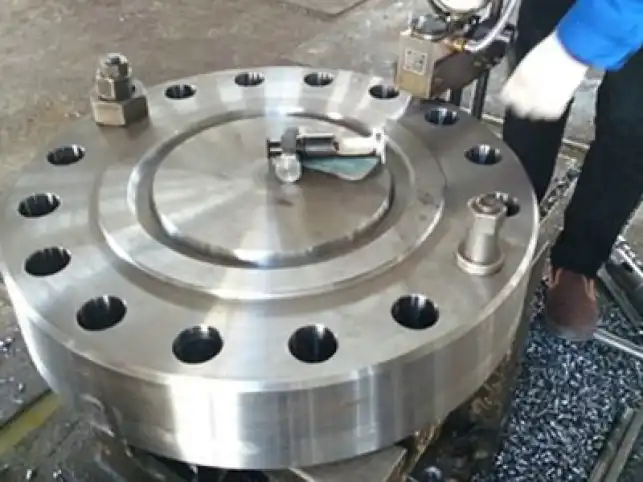
Before putting the parts together, make sure you check the standard, class, gap, material, ring name, and parts that fit together. Do not scratch the groove when you clean it. Then, put on a new ring that is not broken. Line up the edges so that the ring fits perfectly against them. Follow a known method, such as ASME PCC-1, and measure the force or use tensioning tools to tighten the bolts in a stepped star pattern. As you tighten, make sure the gap between the RTJ joints stays the same on the outside. This will keep the gap from getting too big. Apply an approved anti-seize thread lubricant uniformly to bolt threads and nut-bearing faces in accordance with ASME PCC-1. Remember to do the pressure test and the final check.
Common Failure Risks
Choose the wrong ring, use the wrong or too much oil, misalign the RTJ blind flange, tighten it unevenly, and use the same gasket more than once. These are the main reasons why things leak. Reusing is very important. A used ring gasket should not be reused because plastic deformation and work hardening during the initial installation can prevent it from forming a reliable seal during subsequent use. If the pressure isn't spread out evenly, it can damage the groove and break one side of the ring. Repairing a scratched groove wall through additional machining can be costly and may affect dimensional compliance. Use plastic or plywood protective covers to protect the flange face during shipping and storage.
How to Choose the Right Flange
First, evaluate the complete service conditions. These include the process medium, design and operating pressures, design and operating temperatures, test pressure, corrosion conditions, sour service requirements, external loads, and pressure cycles. Next, write down the rules that need to be followed, such as ASME B16.5, ASME B16.47, API 6A, ASTM, NACE, or a project plan. For the whole thing, check the class, material, groove, ring, bolt pattern, and flange that fits on top. Then, find out how much experience the seller has with shipping, forging, machining, inspecting, tracking, licenses, wait time, and getting help from experts. Writing these things down will help you save time and work when the parts come in.
Purchasing, Supplier Evaluation, and Quality Verification
What Drives Price and Quotation Accuracy
The price changes based on the forging's type, size, class, material, weight, how hard it is to work on, how many grooves it needs, certification, inspection, packing, shipping location, and groove type. On a full request, there is a standard, nominal size, class, material grade, ring name, service conditions, number, papers, and target date. Things that have a big diameter, a special material, or a design that isn't found anywhere else usually have to be made. Smaller sizes may be in stock. We can take one-of-a-kind orders, make samples, and sell small amounts to test the market. So contractors and wholesalers in the area can see how good it is before they order more.
Evaluating a Supplier
Discover how much experience they have, what quality systems they use, how they can track and inspect, how they handle exports, and if they offer technical support. A seller needs to show you models, proof of materials, inspection records, how to mark things, and papers that show they follow the rules. JS FITTINGS has been making and sending goods abroad since 1983. For quality control, we use ISO 9001 as a guide, and we test with spectral analyzers and other tools that look for flaws. We also have ISO, CE, and GOST-R certifications.We are also approved to supply high-pressure piping components for projects involving major energy operators such as ADNOC and Petrobras. They buy from us again over 98% of the time, and only 0.5% of the time do they complain. We deliver on time over 95% of the time.
Quality and Compliance Checklist
To begin, you need to get the buy order, the accepted drawing, the grade, class, and standard of the material, the inspection plan, and the certificate requirements. After that, inspect the outside diameter, thickness, bolt hole dimensions, groove profile, face condition, markings, and overall dimensions. Make sure that the material certificates match the correct heat number and that the PMI, hardness testing, heat treatment records, NDE, or mechanical tests were carried out according to the plan. You should look for tool marks, chatter, and scratches in the groove. If you find any flaws on the sidewall, you should throw them away. Keep the groove safe from damage like bumps, water, and dirt while it's being stored or shipped. Engineers should look at connections that are standard, underwater, sour-service, cycle, or a mix of the above.
Conclusion
You need to know the ASME class, material group, and temperature in order to get an RTJ blind flange pressure value. You can read the right pressure-temperature table along with the class number to find these. The rules say what sizes and tests must be done. The rules are ASME B16.5 for NPS 1/2 to 24, ASME B16.47 Series A or B for bigger sizes, and API 6A for wellhead equipment that doesn't work with ASME parts. Whether the joint seals or not depends on the material grade, the rings used, the shape of the grooves, and the range of sour service. That seal is safe as long as it is installed correctly with a new ring and tightened in stages. When there are clear specs, a written review, and a supplier with records that can be tracked, leaks, delays, and extra work on a project are less likely to happen.
FAQ
1. How is the pressure rating of an RTJ blind flange determined?
The temperature, the ASME class, and the type of material set it. Check out the table in ASME B16.5 or B16.47 that tells you how much pressure you can have based on the temperature. It's not just the class number.
2. Can I swap API 6A and ASME B16.5 flanges?
No. They differ in pressure designations, dimensions, and ring gaskets. Check the project specification before ordering.
3. How do I choose the ring gasket?
The gap size and class of the flange should match the R number. Pick a ring material that is neither too hard nor too soft. It should work with the medium. Use a new ring every time.
4. What information do you need for a quotation?
Send the size, class, standard, material grade, ring or groove designation, pressure and temperature, medium, quantity, certificates, destination, and schedule.
Request Your RTJ Blind Flange Quote from JS FITTINGS
If you email admin@jsfittings.com with your size, class, standard, material, and plan, we'll get back to you in an hour. We have been making RTJ blind flanges since 1983, and more than 95% of the time, we get them to our customers on time or early. We can take care of trial orders for samples and small amounts.
References
1. ASME B16.5 Pipe Flanges and Flanged Fittings, 2020
2. ASME B16.47 Large Diameter Steel Flanges, 2020
3. ASME B16.20 Metallic Gaskets for Pipe Flanges, 2017
4. API Specification 6A Specification for Wellhead and Tree Equipment, 2018
5. ASME PCC-1 Pressure Boundary Bolted Flange Joint Assembly, 2019
6. NACE MR0175/ISO 15156 Materials for Use in H2S-Containing Environments in Oil and Gas Production, 2015
Send Inquiry
You may like