
RTJ Blind Flange vs RF Blind Flange: Key Differences






2026-10-26 09:31:54
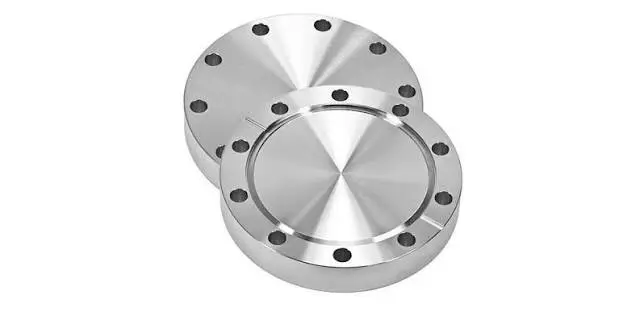
Choosing an RTJ blind flange instead of an RF (Raised Face) blind flange may endanger system integrity, delay project schedules, and increase expenses throughout the life of the project. An RTJ blind flange employs a precision-machined annular groove to accommodate a metal ring gasket, generating a metal-to-metal seal that is meant for high-pressure, high-temperature service—usually Class 600 and higher. An RF blind flange uses a raised face with a soft gasket material. It is the usual option for general industrial applications at lower pressure ratings.
Understanding RTJ and RF Blind Flanges: Definitions and Core Functions
What Is a Blind Flange?
A blind flange is a solid steel disk with no hole in the center. It is mainly used to control flow in a piping system or block an aperture in a pressure vessel for hydrostatic testing, maintenance, or future expansion. The quality of the casting and the kind of face are critical to its performance under pressure since it carries the whole end-cap force of the pipeline.
How Does an RTJ Blind Flange Work?
The RTJ type features a groove in the front that may accommodate an oval or octagonal metal ring gasket. The softer ring gasket is deformed into the tougher gap walls when the bolts are torqued. This is called "coining". This metal-to-metal contact forms a self-energizing seal that can handle pressures up to Class 2500 and API 10,000–15,000 psi. This sets the norm for high-pressure gas pipelines and offshore platforms.
How Does an RF Blind Flange Work?
An RF blind flange has a raised circular region on the face, slightly, around 1/16" for Class 150-300 and 1/4" for Class 400 and above. This results in the bolt stress being focused on soft gasket material such as a non-metallic sheet or spiral-wrapped material. This is the most frequent form of face for ordinary refinery and chemical plant piping with pressure ratings Class 150 to 600 since it is simpler to put together and more forgiving when installing.
Key Design and Performance Differences Between RTJ and RF Blind Flanges
Sealing Mechanism and Pressure Threshold
The main difference between the two is the way each face forms and maintains a sealing closure. RTJ metal-to-metal sealing does not blow out with rapid temperature changes and much vibration. This is where soft gaskets don’t work. RF flanges need gasket compression and hence are suitable for moderate duty but not for poor gas or high-pressure hydrocarbon streams.
Governing Standards and Dimensional Requirements
Both variants are manufactured to ASME B16.5 (up to NPS 24") and ASME B16.47 Series A & B (NPS 26" and above). CMM tools keep the RTJ groove shape exceedingly precise. This includes the pitch width, depth, and 23° side wall angle. Any variation can prevent the rings from seating correctly and may be grounds for rejecting the item during quality control.
Material Selection and Corrosion Resistance
RTJ blind flanges are often manufactured of ASTM A105 carbon steel for routine usage. They are ASTM A182 F316/F316L stainless steel for severe service. In sour service, hardness should not exceed 237 HBW to prevent sulfide stress cracking, as per NACE MR0175. The same base material options are available for RF blind flanges, but there are additional gasket material alternatives. This provides engineers with additional alternatives for moderate-pressure corrosive service.
Comparison and Decision-Making Guide: RTJ vs RF Blind Flanges for Procurement
Application Suitability
Choosing the right type depends directly on your operating conditions. Here is a concise comparison to guide procurement decisions:
- RTJ Blind Flange: Pressure Class 600–2500; temperatures above 750°F; offshore, subsea, wellhead, and high-pressure gas pipeline applications where leakage carries safety and environmental consequences.
- RF Blind Flange: Pressure Class 150–600; ambient to moderate temperature service; general refinery, chemical processing, water treatment, and utility piping where ease of assembly and cost matter.
- Cost Consideration: RTJ machining and groove inspection add 20–40% to unit cost versus an equivalent RF flange. However, avoided leakage incidents and reduced downtime typically offset this premium within the first service cycle.
These differences directly influence total cost of ownership. For EPC contractors specifying flanges across hundreds of tie-in points, applying RTJ only where the process genuinely demands it — and RF elsewhere — is a proven budget discipline.
Real-World Industry Application
In the Gulf of Mexico deepwater sector, Rtj blind flanges are mandatory on wellhead and Christmas tree connections because regulatory compliance under API 6A requires metal-ring sealing. Conversely, a refinery utility system operating at 150 psi and ambient temperature would unnecessarily inflate its bill of materials by specifying RTJ throughout. Matching face type to actual service conditions is the single most effective procurement decision a project engineer can make.
How to Choose the Right Blind Flange: A Procurement Manager's Checklist
Match Operating Parameters to Face Type
Three things to look for when placing an order for a purchase are the design pressure, the design temperature, and the kind of fluid service (sour, acidic, or clean). RTJ should be specified for pressures above Class 600 or when the fluid is a toxic hydrocarbon. RF is the most cost-efficient alternative when using standard process fluids and for systems below Class 600.
Verify Standards and Certification Requirements
Sometimes ASME B16.5, API 6A, or ISO 15590-3 are used in bid documents for government infrastructure or energy company projects. Procurement teams said each shipment should be accompanied by positive material identification (PMI) reports and supplier mill test certificates (MTCs). NACE MR0175 compliance documentation is mandatory and cannot be skipped.
Evaluate Supplier Capability and Lead Time
A constant supply is as crucial as perfect specs. Consider suppliers with verified ISO 9001 certification, CE or GOST-R certifications, and complete traceability from heat number to final product, and give them the greatest weight. Bulk order capacity, on-time delivery rates, and the amount of products in stock directly affect project timetables.
Installation and Maintenance Tips for RTJ and RF Blind Flanges
RTJ Installation: Gasket Handling and Torque Sequence
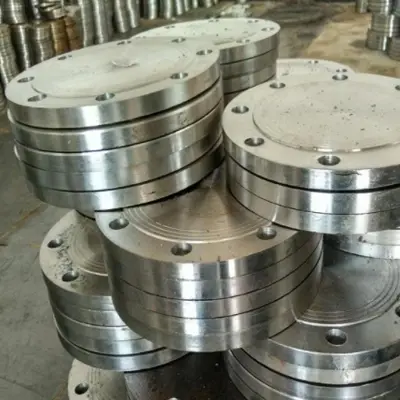
The ring seal must be at least 30 Brinell tougher than the gap in the flange. If you reuse an RTJ ring gasket, it will work-harden after being compressed and won’t seat well when you put it back together, creating a direct route for leaks. Use a star-pattern torque sequence and do at least three passes of bolt-up to maintain the flange gap evenly all the way around. Uneven closing of the gap splits the gasket unevenly and damages the groove, which should be re-machined at a considerable expense.
RF Installation: Gasket Centering and Surface Condition
You must check the finish on the raised face of an RF assembly before installing the seal to ensure it matches the desired AARH (Arithmetic Average Roughness Height). A standard finish for spiral-wound gaskets with serrations is 125–250 AARH. Before you start to tighten any nuts or bolts, center the gasket in the bolt circle. If the first contact is uneven, the seal will be squeezed out beneath the bolt force. It reduces the stress build-up and increases the probability of a leak.
Ongoing Maintenance and Inspection Intervals
Plan to inspect the groove wall and ring surface after every process change, high-cycle pressure event, or scheduled shutdown. For RTJ flanges, utilize a surface comparator to check for scratches or tool marks on the groove sidewalls. It is significantly more economical to repair a groove flaw discovered during an inspection than it is to have a machine unexpectedly shut down because a seal has failed.
Conclusion
Choosing between an RTJ and an RF blind flange is not a question of personal preference; it is contingent upon the pressure class, temperature, fluid service, and compliance requirements. You receive a metal-to-metal seal that’s built to survive in the hardest situations, including oil and gas, offshore, and high-pressure chemical service, with Rtj blind flanges. For most common industrial applications, RF blind flanges provide a cost-effective and dependable means of sealing. If you get the specs correct from the outset, you can maintain your project on budget, on schedule, and safe. No engineer wants a safety event to appear on their resume.
FAQ
1. Can I reuse an RTJ ring gasket?
No. The sealing action depends on the plastic deformation of the metal ring. Once compressed, the gasket work-hardens permanently. Reinstalling a used ring gasket significantly increases the probability of leakage.
2. What is the difference between oval and octagonal ring grooves?
Most modern RTJ flanges have a flat-bottom groove that accepts both oval and octagonal rings. Octagonal rings create surface contact rather than point contact, producing a better seal at higher pressures. Older flanges with round-bottom grooves accept only oval rings.
3. Why must the ring gasket be softer than the flange?
If the gasket is harder than the flange material, bolt load deforms the groove rather than the gasket, destroying the flange face. Industry practice requires the gasket to be at least 30 HB softer than the mating flange material.
4. How do I protect an RTJ groove during transport?
The machined groove is vulnerable to scratching. Ship RTJ flanges with heavy-duty plastic face protectors or bolted plywood covers. A single scratch on the groove sidewall can require full re-machining before the flange is serviceable.
5. Are RF blind flanges compliant with ASME B16.5?
Yes. Both RF and RTJ facing types are covered under ASME B16.5 for sizes up to NPS 24" and under ASME B16.47 Series A & B for larger diameters.
Request a Quote from JS FITTINGS — Your Trusted RTJ Blind Flange Supplier
Since 1972, JS FITTINGS has been supplying certified blind flanges to energy projects in more than 30 countries. They have a repurchase rate of over 98% and an on-time delivery rate of over 95%. Our blind flanges come in both RTJ and RF configurations and range in size from NPS 1/2" to NPS 60". They are suitable for Class 150 to Class 2500. If you need an RTJ blind flange manufacturer for offshore work or RF flanges for plant piping, please email us at admin@jsfittings.com to get a quote within one hour.
References
1. ASME International. ASME B16.5: Pipe Flanges and Flanged Fittings. 2017.
2. American Petroleum Institute. API 6A: Specification for Wellhead and Tree Equipment. 2018.
3. NACE International. MR0175/ISO 15156: Petroleum and Natural Gas Industries — Materials for Use in H₂S-Containing Environments. 2015.
4. ASME International. ASME B16.47: Large Diameter Steel Flanges NPS 26 Through NPS 60. 2017.
5. Bickford, John H. An Introduction to the Design and Behavior of Bolted Joints. CRC Press, 2007.
6. Nayyar, Mohinder L. Piping Handbook. McGraw-Hill, 2000.
Send Inquiry
You may like