
Stainless Steel 316L Buttweld Tee for Offshore Pipelines






2026-07-13 10:32:46
When offshore pipelines face the relentless assault of saltwater, corrosive gases, and extreme pressures, the choice of piping components becomes a matter of operational survival. The stainless steel 316L buttweld tee stands as a proven junction solution in these demanding marine environments. This fitting redirects flow at precise 90-degree angles while maintaining structural integrity under conditions that would degrade lesser materials. The 316L grade—distinguished by its ultra-low carbon content and molybdenum addition—resists pitting corrosion and chloride stress corrosion cracking, two failure modes that plague offshore installations. Engineered for full-penetration circumferential welds, this fitting eliminates the leak paths and fatigue vulnerabilities inherent in threaded or socket-weld alternatives.
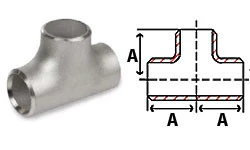
Understanding Stainless Steel 316L Buttweld Tee in Offshore Applications
When a part fails in an offshore pipeline network, serious consequences can occur, as output stops, damage to the environment, and safety events that make project costs increase significantly. In this case, the buttweld tee is the critical connection point where two or more flow lines meet or split. The buttweld configuration makes a metal bond that is as strong as the parent pipe, unlike threaded tees that rely on mechanical engagement or socket-weld variants that can only fit smaller diameters.
Why Does 316L Stainless Steel Dominate Offshore Specifications?
Corrosion resistance measures have a direct effect on lifetime costs and are used to choose materials for both subsea and topside uses. The number "316L" refers to an austenitic stainless steel that has between 16 and 18% chromium, 10 to 15% nickel, and 2 to 3% molybdenum, with a maximum carbon content of 0.03%. There are real benefits to this chemistry over carbon steel and even standard 304 stainless steel. The addition of molybdenum especially makes it more resistant to pitting caused by chloride, a failure process that is sped up by exposure to seawater. Getting carbon levels below 0.03% stops chromium carbide from forming during welding. This stops the intergranular rust that damages joint heat-affected zones. Maintenance work on platforms or subsea manifolds is significantly more expensive than similar work performed on land, so offshore operators choose 316L.
Types and Dimensional Standards for Offshore Piping
Buttweld tees that are made to ASME B16.9 standards come in different shapes and sizes to meet different hydraulic needs. Equal tees make sure that all three ports have the same diameter, which keeps the flow speed and pressure distribution the same. When connecting to instrumentation lines or smaller process equipment, reducing tees have a smaller branch outlet that can be used instead of separate reducer fittings. Even though they are not very common, lateral tees can redirect flow at 45-degree angles when specified for special piping arrangements, when standard 90-degree geometry can't be used because of space issues.
Wall thickness classification follows the schedule system. For offshore uses, Schedule 40, 80, or heavier XXS wall thicknesses are usually required, based on the design pressure. With a wall thickness of 0.337 inches, a 4-inch Schedule 80 tee is suitable for many high-pressure applications, depending on material, temperature, and design conditions, which is enough for most industrial manifolds. There are sizes available ranging from half-inch instrumentation lines to 72-inch manifold headers. Seamless production is common for smaller sizes, while welded fabrication is often used for larger diameters.
Installation and Welding Process of Stainless Steel 316L Buttweld Tee
If you put a buttweld fitting correctly, it will last as long as it's supposed to or break early because of a problem with the weld or contamination. Offshore settings make these problems worse by having salty air, changing temperatures, and transportation issues that make it hard to do more work.
Pre-Installation Handling and Surface Preparation
The consistency of the buttweld tee material starts as soon as the parts leave the factory. To keep the surface from oxidising, storage guidelines call for secure end caps, coatings that stop corrosion, and climate-controlled spaces. Before welding, surfaces are cleaned with a solvent and then brushed with a stainless steel wire brush. Carbon steel bristles, on the other hand, contain ferrous particles that start to corrode. Machined bevel angles of 37.5 degrees, as required by ASME B16.25, make sure that root gaps and penetration depth are always the same. Our very accurate CNC beveling machines can make tolerances of just ±0.5 degrees, which lets automatic welding systems get first-pass quality without having to make any adjustments by hand.
Welding Techniques and Quality Assurance Protocols
TIG (tungsten inert gas) welding is most common in root pass situations where penetration control keeps acidic media from getting stuck in cracks inside the material. Gas Metal Arc Welding (GMAW) is often used in later fill and cap passes to balance efficiency with mechanical qualities. Shielded Metal Arc Welding (SMAW) can still be used for fixes in the field when portability is more important than automation. Inter-pass temperature control, which keeps surfaces within the specified inter-pass temperature limits, stops too much grain growth, which weakens the material. Purge gas methods fill the inside of the pipe with argon, which pushes oxygen out of the way to stop sugaring, which is the formation of oxide scale that weakens corrosion resistance.
Quality control follows applicable welding standards such as ASME Section IX and project-specific requirements. It includes visual checking, tests for surface cracks with a liquid penetrant, and radiographic testing (RT) of critical welds. Before fittings are sent to installation sites, our 100% X-ray inspection protocol for large-diameter welded tees finds internal porosity, slag inclusions, and lack-of-fusion defects. Traceability of mill test reports is made possible by heat numbers stamped directly onto parts. This is needed for projects that are going to be inspected by regulators or certified by a third party.
Comparing Buttweld Tee Options for Offshore Procurement
When making a procurement choice, you have to weigh the upfront cost, the long-term dependability, and the time limits. Knowing how things are made and how different materials behave helps buyers choose parts that fit the risk profiles of their projects.
Seamless Versus Welded Construction
Tees that don't have lengthwise weld lines are made from billets that have been extruded or pierced. This gives them a regular grain structure. This design gets rid of a possible failure area and makes it easier to do non-destructive tests. In the same schedules, seamless fittings may offer advantages in certain critical applications, depending on design requirements and manufacturing specifications. But the largest diameters that can be made without any seams are 24 inches, and costs go up sharply above 12 inches because of the need for special tools.
Welded tees made from plate stock are used for bigger diameter uses where seamless ways are too expensive. Modern submerged arc welding makes parts that are close to the strength of the parent metal, as long as the right post-weld heat treatment gets rid of any remaining stresses. A full radiographic inspection confirms the integrity of the weld, but the costs of the inspection add 8–12% to the price of the part. Offshore projects that need to balance cost with dependability usually choose seamless fittings for important high-pressure services below 12 inches, saving welded construction for lower-risk tasks or pipes that are too big.
Material Grade Selection and Supplier Certification
While 316L is the most common grade for overseas applications, other grades are available to meet special needs. Duplex stainless steels, such as UNS S31803, have better strength-to-weight ratios and are less likely to suffer chloride stress corrosion cracking, but they need more careful control of the heat input during welding. Extreme corrosive environments with high chloride levels may require super austenitic grades such as 6% molybdenum alloys. For non-critical services, corrosion-resistant alloy (CRA) cladding on carbon steel fittings is a cost-effective option, but careful insulation is needed because of galvanic corrosion risks.
In addition to price quotes, other things that are used to judge suppliers are quality system standards (ISO 9001, API Q1) and project-specific approvals from companies such as ADNOC, Petrobras, or NIOC. Our factory is an approved supplier for these companies because we meet strict standards for dimensional limits, mechanical property requirements, and paperwork that go above and beyond what is expected in the commodity market. Material test reports that list the chemical make-up, tensile strength, and impact toughness of a material are objective proof that it is fit for service.
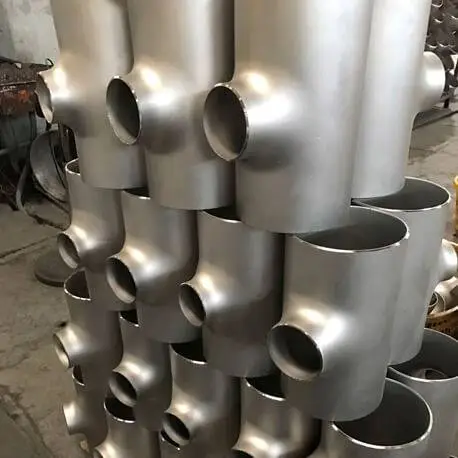
Procurement Insights: Buying Stainless Steel 316L Buttweld Tee for Offshore Pipelines
To make buying plans that balance cost, quality, and delivery times, you need to know how the supply chain works and what your vendors can do. Offshore project deadlines are very strict, and delays are punished harshly. For example, platform installation windows set strict material delivery schedules, and when materials arrive late, they cause expensive demobilisations.
Sourcing Considerations and Lead Time Planning
Minimum order quantities (MOQs) show how much each batch of production costs the company. Standard forms, such as standard 2-inch Schedule 40 equal tees, can be shipped right away, but non-standard shapes need to be made in large enough quantities that 50 to 100 pieces are needed. Lead times are between 6 and 8 weeks for items that are in stock and 12 to 16 weeks for custom orders that need to get raw materials and go through heat treatment cycles. Long-lead equipment projects should start fitting procurement 20 to 24 weeks before installation to allow for delays that are out of their control without putting critical path activities at risk.
For offshore applications involving sour service, suppliers must provide NACE MR0175/ISO 15156 conformance statements and third-party verification reports. If a vendor doesn't have established quality systems, it can be hard for them to make believable paperwork, which can lead to rejected orders and schedule changes for buyers. We've been supplying big energy projects for decades because we have quality standards that are built into every step of the production process.
Evaluating Supplier Reliability and Service Capability
Suppliers with a good reputation show that they can do more than just make things. They can also offer professional help, flexible inventory, and quick responses after the sale. If a buyer is confused about a specification, engineering help can clear things up. For example, engineering help can explain when reducing tees gets rid of extra fittings or confirm schedule compatibility across mixed-manufacturer piping systems. Warranty terms that show confidence in the product's durability—usually 18 to 24 months from shipment—set quality-focused vendors apart from commodity brokers who don't take responsibility after delivery.
Metrics for measuring delivery performance give suppliers objective ways to be judged. Our over 95% on-time delivery rate shows that our production capacity is in line with our commitment volumes. This way, we don't have to over-promise as our competitors do, who are only interested in making money. When the customer complaint rate is less than 0.5%, it means that quality systems are finding problems internally instead of sending them to customers. These success measures, which can be checked with customer examples, are a better way to lower procurement risk than price cuts.
Future Trends and Performance Optimisation in Buttweld Tee Solutions for Offshore Pipelines
Offshore pipeline technology changes because of harsher working conditions, stricter safety rules, and the need to invest in sustainable energy infrastructure.
Advanced Materials and Protective Coatings
Metallurgical study looks into nitrogen-enhanced austenitic types that offer higher strength without lowering resistance to corrosion. These metals allow for shorter schedules, which lowers the cost of materials and the weight of installation. These are important factors for offshore projects where the size of components is determined by the platform's payload capacity. Diffusion-bonded coatings that use nickel-chromium alloy layers on carbon steel substrates protect against corrosion and save money on structural costs. However, more research needs to be done on how well they stick over time in environments with repeated loading.
Internal coating technologies, like fluoropolymer linings and ceramic composites, lower flow friction and protect against erosion and corrosion in high-speed services. These treatments include reducing tees that have branch outlets that get squished by flow streams that have been diverted. Methods for applying the covering that keep it intact through the stress concentration zone at the crotch radius are still being worked on.
Inspection Technology and Supply Chain Digitalisation
Compared to regular radiography, phased-array ultrasonic testing provides a more detailed picture of defects while getting rid of the need for complicated radiation safety rules that make offshore fieldwork harder. Using digital twin platforms and automated scanning systems together lets you check the quality in real time and keep lasting records of inspections that help asset integrity management programmes.
Material traceability platforms that use blockchain reduce the risk of fake parts by creating permanent links between finished stainless steel 316L butt weld tee for offshore oil and gas and mill certifications, heat treatment logs, and inspection reports. These systems fight the growth of the grey market, which brings in cheap materials that aren't up to par. This is especially important for projects that get their materials through multi-tier distributor networks. When procurement teams use these tools, they lower the costs of qualifying vendors and make it easier to defend against audits.
Conclusion
When choosing stainless steel 316L buttweld tees for offshore pipeline projects, you have to find a balance between the metal's performance, the quality of the making, and the dependability of the provider. When you combine the 316L alloy's proven ability to fight corrosion in marine settings with the structural integrity of buttweld construction, you get the best solution for safety-critical uses. To be successful in procurement, you need to check that measurements are met, materials are certified, and vendors can do more than just give goods. They also need to be able to work with you on technical issues. As offshore developments move into deeper waters and rougher conditions, the fittings that hold these systems in place must reflect the high standards of quality manufacturing and engineering that JS FITTINGS has provided for 40 years to the world's energy infrastructure.
FAQ
1. What advantages does 316L stainless steel provide over the 304 grade in offshore environments?
The molybdenum content in 316L is 2-3%, compared to trace amounts in 304. This makes it much more resistant to pitting in chloride-rich seawater. The ultra-low carbon standard stops sensitisation during welding, which gets rid of the risk of intergranular corrosion in heat-affected areas. This is a type of failure that can happen with 304-grade setups that don't have a post-weld heat treatment.
2. How do I verify supplier quality certifications for critical offshore projects?
Ask for EN 10204 Type 3.1 material certificates that have been checked by independent, licensed testing organisations. Compare the heat numbers stamped on fittings with mill test reports that list the chemicals used and the fittings' mechanical properties. Make sure the supplier has ISO 9001 certification and project-specific approvals from well-known operators that show their quality systems have been audited.
3. Can buttweld tees be customised for non-standard specifications?
For jobs that don't follow ASME B16.9 standards, manufacturers can work with custom sizes, plans, and material grades. Customisation is possible as long as the minimum order quantity is high enough to justify buying tools and raw materials. Because of engineering reviews and setting up production, lead times are 4 to 6 weeks longer than for normal goods.
Partner with JS FITTINGS for Proven Offshore Pipeline Solutions
Since 1983, JS FITTINGS has been sending stainless steel 316L buttweld tees to offshore sites all over the world. They have learned a lot about subsea manifolds, platform pipes, and FPSO systems during that time. We can make seamless fittings with diameters from half an inch to 24 inches and welded constructions up to 72 inches long. All of these are made using quality systems that are ISO 9001 certified. Every fitting goes through full heat treatment, precision beveling, and optimised crotch reinforcement to make installation faster in the field and meet ASME B16.9 dimensional requirements. As an authorised provider of buttweld tees for ADNOC, Petrobras, and NIOC, we keep a large inventory to support quick deployment schedules and expert resources to help with developing specifications. Email our team at admin@jsfittings.com to talk about the needs of your offshore project and get competitive quotations backed by full material certifications.
References
1. American Society of Mechanical Engineers. (2018). ASME B16.9: Factory-Made Wrought Buttwelding Fittings. New York: ASME Press.
2. Davis, J.R. (Ed.). (2006). Corrosion of Weldments. Materials Park, OH: ASM International.
3. European Committee for Standardization. (2017). EN 10253-2: Butt-welding Pipe Fittings - Part 2: Non-alloy and Ferritic Alloy Steels with Specific Inspection Requirements. Brussels: CEN.
4. Mohitpour, M., Golshan, H., & Murray, A. (2007). Pipeline Design & Construction: A Practical Approach (3rd ed.). New York: American Society of Mechanical Engineers.
5. National Association of Corrosion Engineers. (2015). NACE MR0175/ISO 15156: Petroleum and Natural Gas Industries - Materials for Use in H2S-Containing Environments in Oil and Gas Production. Houston: NACE International.
6. Bai, Y., & Bai, Q. (2014). Subsea Pipeline Design, Analysis, and Installation. Oxford: Gulf Professional Publishing.
Send Inquiry
Related Industry Knowledge
- ASTM A105 Weld Neck Flange: Complete Guide
- Buttweld Bend Dimensions: LR, SR & Custom Radius Guide
- Cold Drawn vs Hot Rolled ASTM A312 Seamless Pipe: Key Differences
- ASTM A312 vs ASTM A213 Steel Pipe: What Are the Key Differences?
- Long Radius Buttweld Elbow: Ultimate Guide 2026
- What are ANSI Pipe Flanges, And How Does it work?
- What is carbon steel pipe made of?
- What are Lap Joint Pipe Flanges & how do they work?
- How to bolt to flanges with threaded holes?
- What is the temperature to weld carbon steel pipe?