
What Are the Main Types of Plate Flanges?






2026-09-23 09:45:53
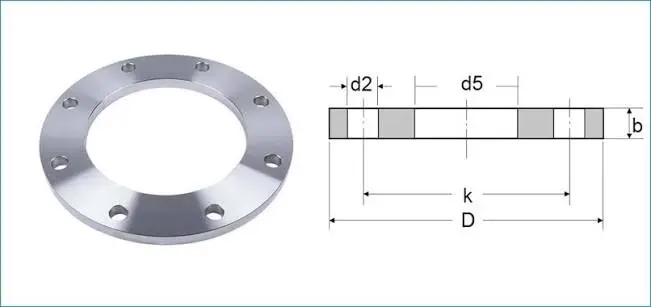
If you work in industrial piping, procurement, or project engineering, you have likely asked this question at some point. A plate flange—also called a flat flange or slip-on plate flange—is a flat, circular disk with a central bore that slips over the end of a pipe and gets welded in place. With no tapered hub, it sits low-profile against the pipe, making it a cost-efficient option for low-pressure systems. This article breaks down the main types, compares them with other flange styles, and helps you choose the right one for your project.
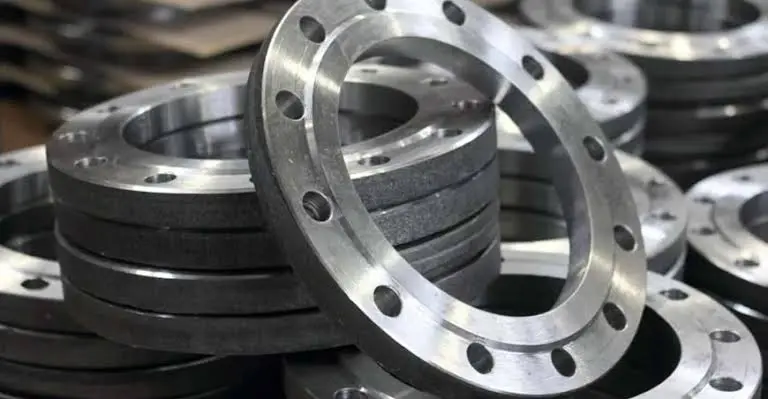
Overview of Plate Flanges and Their Applications
What Makes a Plate Flange Different?
A plate flange is not die-forged like a weld neck or hubbed slip-on flange; it is cut straight from rolled steel plate stock. This gets rid of the need for hub support and can reduce material and manufacturing costs compared with more complex flange designs. As a result, the part performs reliably in non-critical systems where working pressures and external mechanical loads remain moderate.
Industries That Rely on Plate Flanges
Plate flanges are used in a lot of different fields. Large diameter versions are used by municipal waterworks for sewage and potable water pipes. Slip-on plate flanges made to JIS B2220 are used in cooling water and ballast systems because they keep the ship's weight down. Low-pressure chemical transfer lines and agricultural irrigation networks also use these flanges to make connections that are easy on the wallet and the field.
Standards and Pressure Ratings
We make plate flanges that meet EN 1092-1 Type 01, DIN 2573/2576/2501/2502, BS 4504, and AS 2129 standards here at JS FITTINGS, with ASME B16.5 flanges available in applicable sizes. Pressure ratings in metric units range from PN6 to PN40, while U.S. customary pressure classes include Class 150. The sizes range from DN15 to DN2000, which is approximately ½" to 80", depending on the applicable standard. You can choose between a Flat Face and a Raised Face, depending on the applicable piping standard, gasket arrangement, and service requirements. Surface treatments like hot-dip galvanizing, yellow anti-rust paint, or black lacquer protect against corrosion in wet or dry places.
The Main Types of Plate Flanges Explained
There are different types of plate flanges, and each one is made for a certain set of working settings and installation situations. If you know which type fits your pipeline, you can avoid over-engineering and spending money you don't need to.
Flat Plate Flange
The flat plate welded flange is the standard item in this group. One fillet weld is made on the inside hole and the other is made on the outside. It fits over the end of the pipe.This dual-fillet weld configuration seals the joint completely, preventing fluids from penetrating the annular crevice between the pipe OD and the flange bore. It works well in places like water treatment plants, irrigation pipes, and low-pressure industrial cooling lines where connections need to be made permanently but on a budget. Most of the time, carbon steel grades A36 or S235JR are used. For corrosive service, stainless steel 304/316 is available.
Blind Plate Flange
A blind plate flange completely seals off the end of a pipeline. You can use it for pressure tests, maintenance isolation, and future tie-in locations because it doesn't have a bore.Engineers specify blind plate flanges with plate thicknesses engineered to withstand the full internal system pressure acting against the blank end. A lot of chemical plants and water treatment plants use it to block branch connections that aren't being used without making permanent changes.
Threaded Plate Flange
The threaded plate flange doesn't bond to a pipe; instead, it uses internal threads to join to it. This method works for short-term installations, systems that can't handle the heat from welding, or fixes that need to be done in the field without access to welding equipment. Engineers usually use threaded plate flanges in utility air lines, instrument connections, and low-pressure gas distribution headers at PN10 or less because they can handle less pressure than welded types.
Custom-Bore Plate Flange
Pipes with non-standard outer sizes are often used for repairs, building tanks, and upgrading old systems. JS FITTINGS can make custom bore diameters to match any pipe OD. This capability helps resolve fit-up issues that standard off-the-shelf flanges cannot accommodate. It also makes field modifications easier, reducing the time and cost associated with non-standard installations.
Comparison: Plate Flange Types Versus Other Popular Flanges
To choose the right flange, you need to know more than just the different types. You also need to know how each choice compares to popular alternatives in terms of pressure capacity, cost, and how easy it is to install.
Here is a direct look at four types of common flanges:
- Plate Flange vs. Weld Neck Flange: Weld neck flanges are good for ASME Class 300+ uses with a lot of thermal cycles because their tapered hubs distribute stress better. Plate flanges, on the other hand, are much cheaper, ship faster, and work well for PN6–PN40 service. Plate flanges may be suitable for large-diameter water or air lines when the applicable pressure, temperature, and design requirements permit their use.
- Plate Flange vs. Socket Weld Flange: Socket weld flanges keep fluid in a crack between the pipe and the socket, which can make rusting more likely in some media. This crevice can increase the potential for localized corrosion in some services, whereas a properly welded plate flange connection can provide a different joint configuration.
- Plate Flange vs. Lap Joint Flange: Lap joint flanges need a stub end and allow the bolt holes to be lined up in any direction. Plate flanges naturally align the bolt holes because the flange slides over the pipe before welding. This eliminates the need for an additional, costly stub end component.
- Carbon Steel vs. Stainless Steel Plate Flanges: Carbon steel, such as A36, Q235, and SS400, is cheaper and can be used for most water and air service uses. When chlorides, acids, or elevated temperatures are present in the medium being moved, stainless steel 304L or 316L may be considered, depending on the specific service conditions and material requirements. When used in chemical service, lifecycle cost analysis often makes the extra money paid up front worth it.
These comparisons help procurement teams establish accurate cost-benefit models for plate flanges and avoid both under-specification and costly over-engineering.
How to Choose the Right Plate Flange for Your Project?
Match Pressure Rating to System Requirements
Begin by determining the pipeline's operating pressure and temperature. Plate flanges are commonly used in lower-pressure utility applications such as PN6–PN16 service, where permitted by the applicable standard and design requirements. Make sure that the number you choose meets the published standard and that the material of the gasket fits the face type.
Verify Dimensional Standards and Certifications
When bolt circle diameters don't match, costly field delays happen. Before you place an order, you should always check the governing standard. Suppliers with ISO 9001 certification and EN 10204 3.1 inspection certificates can provide traceable quality documentation, which may be required for EPC and government projects. Ultrasonic testing of the source plate material looks for internal laminations that could break the weld while it's in use.
Evaluate Lead Times and Bulk Purchasing Options
For big infrastructure projects, it's common to need flanges in more than one size during the same shipping time. Scheduling risk is lower when the provider makes more than 700 tons of flanges every month and delivers them on time more than 95% of the time. When you buy in bulk, you can usually get better unit prices, which is important for distributors that need to maintain local inventory and procurement teams working with tight project budgets.
Maintenance Tips and Longevity of Plate Flanges
Routine Inspection Practices
Check the torque values and gasket contact areas at regular intervals, especially after temperature cycling or water hammer events. The sealing face's surface roughness should remain within the range specified by the applicable flange and gasket requirements. Any radial scratches can create a potential leak path and should be repaired or the flange replaced.
Corrosion Management
When installed underground or outside, hot-dip galvanized plate flanges effectively protect against corrosion from the air and soil. For underwater waterworks, checking and touching up the coating on a regular basis keeps the base metal from getting wet. Stainless steel versions don't need this kind of upkeep, but they cost more at first.
Knowing When to Replace
A plate flange should be replaced when the bolt-hole dimensions or condition exceed acceptable limits, when the face warping can't be fixed by re-machining, or when corrosion reduces the flange below the minimum allowable thickness specified by the applicable design and inspection requirements. Unplanned downtime can be avoided by keeping replacement parts on hand for important lines.
Conclusion
Plate flanges are a useful and inexpensive way to connect low- to medium-pressure pipe systems used in chemical service, shipbuilding, water treatment, and industrial cooling. Which type to use—flat welded, blind, threaded, or custom-bore—depends on the pressure being used, how it will be installed, and how it will be maintained over time. Choosing the correct material and governing standard is important for maintaining system integrity, meeting service requirements, and controlling project costs. When procurement teams work with a verified manufacturer whose certifications can be tracked and whose production capacity stays the same, they greatly lower the risk of the project.
FAQ
1. What materials are plate flanges available in?
Plate flanges are available in carbon steel and stainless steel. The appropriate material depends on the fluid type, temperature range, corrosion conditions, and pipeline requirements.
2. What pressure ratings do plate flanges support?
The following PN numbers are standard: PN6, PN10, PN16, PN25, and PN40. Imperial ratings include Class 150 for versions that aren't very heavy. Plate flanges should only be used at ASME pressure classes and service conditions permitted by the applicable flange standard and design requirements.
3. Can plate flanges be customized for non-standard pipe sizes?
Yes, JS FITTINGS can make special bore sizes to fit non-standard pipe ODs. This is useful for building tanks, fixing old pipes, and upgrading them.
4. What is the typical lead time for a bulk order?
Standard sizes from DN15 to DN2000 in common grades are usually shipped according to the delivery schedule agreed upon for the project. JS FITTINGS maintains a monthly flange production capacity of 700 tons and ships more than 90 containers each month to meet the needs of fast-turnaround buying.
Get a Quote from JS FITTINGS — Your Trusted Plate Flange Supplier
Over the past 40 years, JS FITTINGS has been making approved plate flanges for projects in over 30 countries. These flanges have ISO, CE, and GOST-R qualifications. We have sizes from DN15 to DN2000 that meet ASME, DIN, and EN standards. If you buy in bulk, you can save money, and we deliver on time more than 95% of the time. Please email our purchasing team at admin@jsfittings.com to get a price that fits the needs of your project.
References
1. ASME B16.5 – Pipe Flanges and Flanged Fittings, American Society of Mechanical Engineers, 2017.
2. EN 1092-1 – Flanges and Their Joints: Circular Flanges for Pipes, European Committee for Standardization, 2018.
3. DIN 2573/2576 – Steel Flanges: Plate Flanges, Deutsches Institut für Normung, 2016.
4. Piping Handbook, 7th Edition, Nayyar, M.L., McGraw-Hill, 2000.
5. Process Piping: The Complete Guide to ASME B31.3, Becht, C., ASME Press, 2009.
6. Industrial Piping and Equipment Estimating Manual, Page, J.S., Gulf Professional Publishing, 1999.
Send Inquiry
You may like