
What Is a 45 degree buttweld elbow?






2026-10-08 10:21:31
A 45 degree buttweld elbow is a factory-made wrought pipe fitting manufactured to ASME B16.9 standards that redirects fluid flow by 45 degrees within a piping system. Formed through hot pressing or forging, it joins to adjacent pipe via a full-penetration circumferential weld at precision-machined 37.5° beveled ends per ASME B16.25. This permanent welded connection withstands high pressure and elevated temperature far better than threaded or socket weld alternatives. For EPC contractors, industrial plants, and procurement teams who need long-term integrity with minimal maintenance risk, this fitting is a dependable choice.
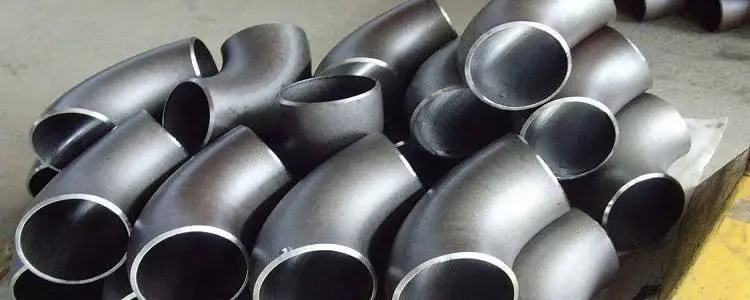
Introduction to the 45 Degree Buttweld Elbow
What Makes the 45-Degree Angle Significant?
Among commonly used elbow angles, the 45-degree angle provides a useful balance between directional change and flow resistance. This form of elbow is commonly used as the second-most-common elbow angle after the 90-degree type. A 90-degree elbow produces a sharper change in direction, which can increase turbulence and pressure loss compared with a more gradual bend. Conversely, a 45-degree geometry flows fluid in a gentle arc. This gradual transition is particularly beneficial in high-velocity or high-viscosity service, where each point of pressure loss impacts the pump’s energy consumption and operating expenses.
How Buttwelding Differs from Other Connection Methods?
The word buttweld informs you precisely how the fitting is assembled. The pipe end and elbow bevel are aligned and joined by a butt weld, which can be designed as a full-penetration weld when required by the applicable welding procedure and piping specification. With socket weld or threaded fittings, the pipe is connected through a socketed or mechanically threaded joint rather than a butt-welded joint. A properly qualified buttwelded junction can provide strength comparable to the parent material when the applicable welding procedure and acceptance requirements are met. This is a huge bonus for high-pressure steam lines, offshore risers, and refinery process pipes since it doesn’t produce stress concentration areas like threaded joints do.
Core Benefits at a Glance
This fitting offers three key performance benefits:
- Lower pressure drop: The 45-degree arc can reduce local pressure loss compared with sharper directional changes, depending on the piping geometry and flow conditions, helping maintain pump efficiency and reduce energy consumption during the system's service life.
- Improved structural integrity: The welded junction may provide load-carrying capability comparable to the connected piping, which cannot be achieved with threaded or socket weld connections for piping classes.
- Erosion Resistance – The gradual angle can help reduce local particle impact compared with sharper directional changes, depending on flow velocity, particle loading, and elbow geometry, to provide longer service life in offshore and refinery locations where flow-induced corrosion is a recognised problem.
These three qualities are precisely aligned with what procurement executives value most: reducing the total cost of ownership and reducing downtime caused by maintenance.
Dimensions, Standards, and Material Specifications
Governing Standards and Dimensional Parameters
ASME B16.9 is the primary dimensional standard for factory-made wrought buttwelding fittings. DIN 2605 (EN 10253-2) and JIS B2312 are also widely referenced for international projects. The typical 45 degree buttweld elbow is manufactured in most cases as a Long Radius, with its center-to-end dimension determined by the applicable ASME B16.9 dimensional requirements. Short radius shapes provide a tighter routing configuration but may result in higher pressure loss and are typically specified when space constraints justify their use. ASME B16.9 covers factory-made wrought buttwelding fittings in sizes from NPS ½ to NPS 48, while the actual availability of 45-degree elbows depends on the manufacturer and material specification.
Material Grades and ASTM Specifications
The material selection has a direct effect on the pressure rating, corrosion resistance, and service temperature. The three most prevalent kinds of material are:
- Carbon Steel – ASTM A234 WPB: The workhorse standard for general industrial service, oil & gas pipelines, and steam systems at moderate temperatures. Available in a range of wall thicknesses to match applicable pipe schedules and ASME B16.9 dimensional requirements.
- Stainless Steel — ASTM A403 WP304/316: Preferable for corrosive media, high purity requirements, or cryogenic temperatures, especially when a butt welded 45 pipe elbow is required. The WP316 has molybdenum for improved resistance in chloride conditions.
- Alloy Steel — ASTM A234 WP11/WP22: For high-temperature and high-pressure applications such as high-temperature piping in power plants and hydrotreater feed lines in refineries.
Pressure Ratings and Surface Coatings
Under ASME B16.9, buttweld elbows match the full pressure-temperature rating of straight seamless pipe when specified with the equivalent wall thickness schedule (e.g., SCH 40, SCH 80, SCH 160). For atmospheric and transit protection, carbon steel elbows are routinely finished with rust-preventive black lacquer, transparent anti-rust oil (varnish), epoxy lining, or hot-dip galvanizing.
Comparison of 45 Degree Buttweld Elbow with Other Elbow Types
45° vs. 90° Buttweld Elbow
The 90-degree elbow provides an abrupt shift in flow and is the ideal solution when there is not enough area for a change in direction where a sharper turn is required. The 45-degree fitting provides a reduced pressure drop and may reduce erosion at the bend, while the 90-degree fitting can provide a shorter routing path where a direct turn is required, which may affect long-term operating efficiency and maintenance requirements. In some long-distance process lines, pairs of 45-degree fittings may be used instead of a single 90-degree elbow when the resulting routing and pressure-loss characteristics are more suitable for the system.
45° Buttweld vs. Threaded and Socket Weld Elbows
Threaded and socket weld elbows are utilised in low-pressure systems and small diameters, generally less than 2” NPS. They are easy to install but leave crevices for corrosive elements to get lodged in, particularly around socket weld fittings. The geometry of socket weld connections can also make certain radiographic examinations more difficult. Buttweld construction can minimize crevice-related corrosion risks and offers a junction that can generally be inspected more readily using radiographic or other applicable NDE methods. In ASME B31.3 process piping, the appropriate connection type should be selected according to the design pressure, temperature, pipe size, material, piping class, and applicable project requirements.
Where the 45-Degree Buttweld Fitting Performs Best?
This type of fitting is commonly used in offshore platform riser systems, where weight and space are limited; petrochemical reactor feed and heat exchanger interconnects, where corrosive media and thermal cycling are important considerations; and high-pressure steam lines in power plants. In these applications, the gradual change in direction and welded construction can support both flow management and structural requirements. In all cases, the progressive slope and full penetration weld work together to satisfy both flow and structural requirements at the same time.
Installation Guide and Best Practices
Welding Procedure and Fit-Up Requirements
Before welding, make sure that the elbow schedule matches the schedule of the connecting pipe. Differences in wall thickness or internal diameter can create an internal bore step, potentially increasing turbulence and complicating weld-root alignment. A butt welded 45 pipe elbow with a 37.5° factory bevel, when combined with the pipe bevel, creates the required groove geometry for the specified weld penetration. In accordance with ASME Section IX and the applicable project requirements, qualified welders should follow a written Welding Procedure Specification (WPS). The fitting should be properly tacked before the root pass.
Avoiding Common Installation Errors
Forced alignment is a common installation mistake in which clamps or other tools are used to close gaps between misaligned components. This practice can introduce additional stress into the weld and increase the risk of cracking during thermal cycling. Center-to-end dimensions should be verified for accuracy before fit-up in a pre-fabrication shop.For P91 and certain chrome-moly alloy materials, post-weld heat treatment is required or specified by the applicable construction code and welding procedure to control the properties and residual stresses of the welded joint.
Post-Weld Inspection Protocols
When joints are in critical service after welding, they need to be checked without damaging them. In high-pressure service, elbows may be subject to radiographic testing or other nondestructive examination methods according to the applicable construction code and project specification. Ultrasonic testing finds flaws and laminations in wall thickness. Magnetic Particle Inspection can find surface cracks in carbon steel fittings. X-ray fluorescence or optical emission spectroscopy can be used for Positive Material Identification to verify the applicable alloying elements against the MTR, with the appropriate method selected when carbon measurement is required before the system is turned on.
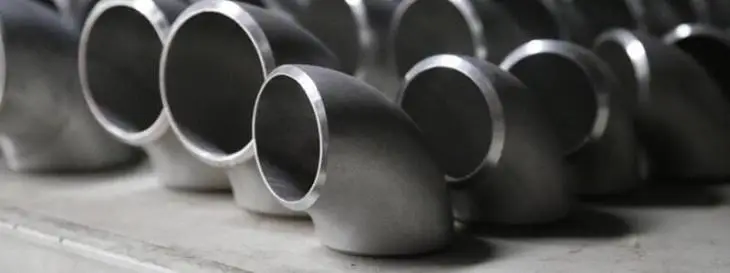
Procurement Insights and Supplier Selection
Key Supplier Qualification Criteria
Three supplier qualifications are particularly important when sourcing 45-degree pipe elbows for large projects. First, current certifications: ISO 9001 quality management and product certifications like CE and GOST-R show that process control is documented. Second, production capacity: a provider that can make more than 800 tons of fittings every month and deliver them on time more than 95% of the time can meet both urgent project plans and planned replenishment rounds. Third, look at the supplier's client list. If big energy companies like ADNOC, PETROBRAS, or NIOC approve them, it means they passed high-level third-party checks.
Pricing Trends and Bulk Order Advantages
For general industrial use, the most cost-effective choice is carbon steel elbows in standard rates. Because the costs of the raw materials affect the prices of stainless and alloy grades more than other grades, locking in prices through blanket purchase orders or OEM agreements protects project budgets from changes in the market. When suppliers allow small-batch trial orders, procurement teams can verify dimensional accuracy and surface quality before placing the full project order.
Documentation and Traceability Requirements
Every shipment needs to have a heat number, an MTR according to EN 10204 3.1, a dimensional inspection report, and, if needed, NDE certificates. Government building projects and EPC contractors working under ASME or PED standards should make sure that these papers are produced automatically by the supplier's quality management system and not just when asked for.
Conclusion
A 45-degree buttweld elbow is not merely a commodity piping component. It is a precisely designed part that has a direct effect on the safety, economy, and long-term cost of running the system. When you buy the right material grade, schedule, and radius type, a 45 degree buttweld elbow from a source with recorded quality control can help ensure that your piping system works as planned for decades rather than requiring expensive repairs early on. Getting along with the right seller is just as important for buying teams in EPC contracting, distribution, government infrastructure, and industrial plant operations as the product design itself.
FAQ
1. What is the difference between Long Radius and Short Radius in a 45-degree elbow?
The industry standard for 45-degree buttweld elbows is Long Radius, where the bend radius equals 1.5 times the pipe diameter. Short Radius versions are not manufactured as standard stock and require custom fabrication. LR elbows produce significantly lower pressure drop and are the default specification in ASME B16.9-governed piping systems.
2. How do I match the elbow to my existing pipe?
Match the elbow to both the Nominal Pipe Size and the pipe Schedule. If the schedules differ, the internal bores may not align, potentially creating turbulence and a difficult weld-root condition that can increase the risk of rejection during RT inspection.
3. Can a 90-degree elbow be cut to produce a 45-degree fitting on site?
This practice is not acceptable for certified pressure piping. Cutting a 90-degree elbow alters the center-to-face dimension, removes the factory bevel, and requires field re-machining. It voids the manufacturer's material certification and pressure rating.
4. What surface treatment is standard for carbon steel elbows?
Carbon steel buttweld elbows are typically supplied with black lacquer, anti-rust oil, or varnish for transit protection. Epoxy coating and hot-dip galvanizing are available for extended outdoor storage or corrosive service environments.
Source Your 45 Degree Buttweld Elbow from JS FITTINGS
Since 1983, JS FITTINGS has made and shipped pipe fittings, which is more than 40 years of recorded production experience. We are a qualified 45 degree buttweld elbow manufacturer approved by leading energy corporations like ADNOC and Petrobras. We have ISO, CE, and GOST-R certifications, and we ship more than 90 containers every month with an on-time delivery rate of over 95%. We have sizes from ½" to 48" in ASTM A234, A403, and MSS SP-75 grades. If you'd like a quote or technical advice, please email us at admin@jsfittings.com.
References
1. ASME B16.9, Factory-Made Wrought Buttwelding Fittings, American Society of Mechanical Engineers, 2018.
2. ASME B16.25, Buttwelding Ends, American Society of Mechanical Engineers, 2017.
3. ASTM A234/A234M, Standard Specification for Piping Fittings of Wrought Carbon Steel and Alloy Steel for Moderate and High Temperature Service, ASTM International, 2022.
4. ASME B31.3, Process Piping, American Society of Mechanical Engineers, 2022.
5. ASTM A403/A403M, Standard Specification for Wrought Austenitic Stainless Steel Piping Fittings, ASTM International, 2021.
6. MSS SP-75, Specification for High-Test Wrought Butt-Welding Fittings, Manufacturers Standardization Society, 2019.
Send Inquiry
You may like