
What Is a Buttweld Bend? Types, Radius & Standards






2026-07-02 10:57:32
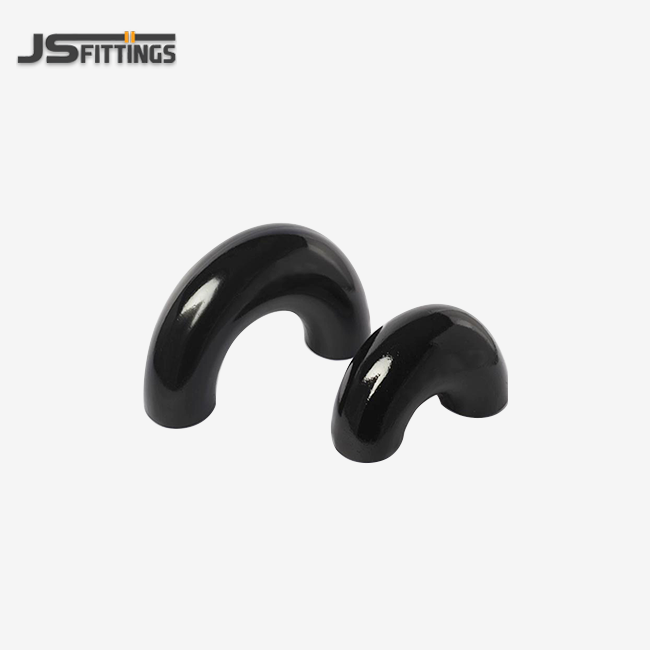
A buttweld bend is a special kind of pipe part that is made by using precise forming methods, like induction bending or cold bending, to change the flow direction in a pipe system. These parts make it easier for pipes to change directions while keeping the structure strong and reducing flow resistance. Standard elbows are commonly supplied in 1D (short radius) and 1.5D (long radius) configurations, but buttweld bends can be made with radii ranging from 2D to 20D. This makes them better for hydraulic applications that need to work reliably for a long time, like in power plants, oil and gas pipelines, and petrochemical processing plants.
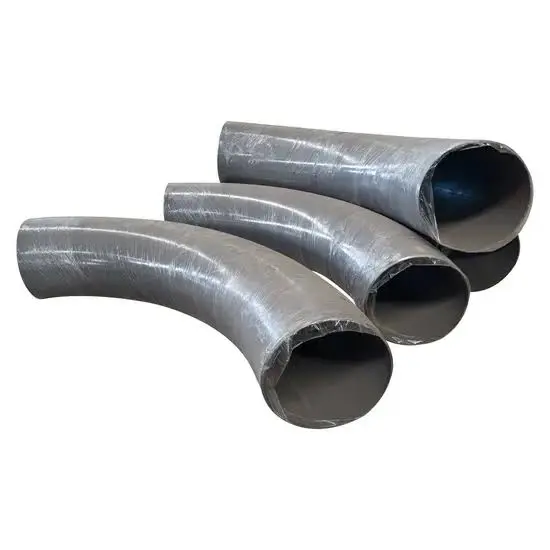
What Are Buttweld Bends? Overview and Applications
When building industrial pipe systems, picking the right directional fitting can have a huge effect on how well they work and how safe they are. Buttweld bends are an important part of the infrastructure for moving fluids, especially when project requirements call for less pressure drop, better piggability, or strict compliance with regulatory standards.
These fittings work great in places where regular parts don't work well. In hundreds of kilometers-long crude oil pipelines, smooth changes in direction keep the flow from becoming turbulent, which could damage the pipe walls or catch inspection tools. These fittings are used in thermal power plants to handle superheated situations above 600°C without affecting the structural safety of high-pressure steam lines. In the same way, subsea systems on offshore platforms use custom-angle butt-weld bends to get through tight areas while reducing the number of weld joints that could become leaky when the pressure from the outside is very high.
The choice of material has a big impact on how long something works. For moderate service conditions, carbon steel grades such as ASTM A234 WPB for fittings and API 5L X65 for line pipe applications are cost-effective options. For high-temperature uses, alloy steel grades like WP11 or WP22 avoid creep deformation. Corrosion-resistant metals, such as ASTM A403 WP316L or Duplex 2205, keep chemical processes or seawater injection systems safe from harsh media. Total cost of ownership, repair intervals, and system uptime are all directly affected by the choice. These are all important factors that EPC companies handling multimillion-dollar infrastructure projects use to make buying decisions.
Why Industries Prefer Pipe Bends Over Standard Elbows?
There is more than just a difference in radius measures between these two types of fittings. Standard elbows made with a 1D or 1.5D curve make sharper flow transitions that increase turbulence, speed up erosion, and make it harder for pipeline inspection gauges, also known as 'pigs,' to pass. These maintenance tools are needed to clean and check for corrosion in pipeline systems, but they can't make tight turns without getting stuck.
Buttweld bends with angles of 3D or more make it easy for pipeline inspection gauges to move through, which cuts down on downtime and inspection costs. The softer curve can significantly reduce pressure drop compared to short-radius options. This means that pumping systems use less energy, and gravity-fed applications get more done. When there is enough room, selecting long-radius buttweld bends is a smart way to improve the reliability of the system and its operating efficiency.
Types of Buttweld Bends and Their Radius Variants
By understanding the taxonomy of these parts, procurement workers can accurately match product characteristics with project needs. The main things that determine the classification are the bent radius and the way the product is made. Each design has its own performance and cost effects.
Radius Classifications and Performance Trade-offs
A simple rule is used in the industry to tell the difference between elbows and buttweld bends: fittings with bending radii of 1D or 1.5D are called elbows, while those with bending radii greater than 2D are called buttweld bends. People usually use 3D, 5D, 6D, and 8D to describe radii, but in some cases, up to 20D is needed for specific purposes.
A 3D buttweld bend has the smallest radius needed for most pigging jobs, making the best use of the room while still providing good hydraulic performance. This setup works well for midstream oil and gas plants that have limited space but still need to optimize flow. Moving to 5D or 6D radii further lowers pressure loss and flow disturbance. This makes these versions perfect for moving slurry or high-speed gases where the extra material investment is worth it to avoid erosion.
For tasks that need the most efficient flow or that involve very thick fluids, 8D and bigger radii provide flow properties that are similar to those of a straight pipe. As a result, more materials and installation space are needed, so a careful cost-benefit study must be done during the design process. When procurement teams are working with limited funds or space, they have to weigh these factors against the long-term savings from reduced energy consumption and not having to do as much upkeep.
Manufacturing Methods: Seamless vs. Welded Construction
How the part is made has a big effect on its mechanical qualities and pressure number when it's finished. When seamless buttweld bends are made from extruded seamless pipe stock, the wall thickness has a consistent grain structure. This makes the bends stronger and more reliable for high-pressure service up to ANSI Class 2500. When wall stability can't be compromised, these fittings are the best choice for fuel processing, high-pressure steam, or corrosive media.
Because manufacturing large-diameter seamless pipe involves significant technological limitations, the size range for seamless building is usually limited to 1/2" to 24" nominal diameter. Wall thickness choices range from SCH 10S to SCH 160 and XXS, and pressure classes range from 150# to 2500#, based on the type of material and the temperature where it will be used.
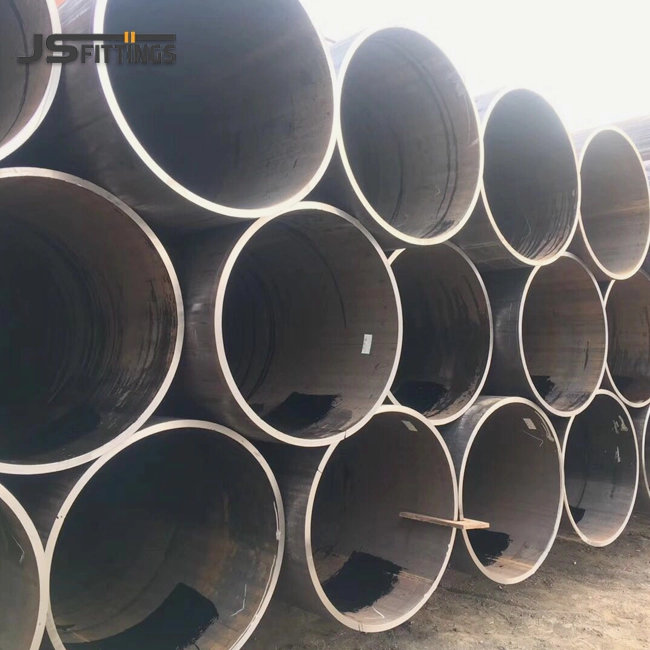
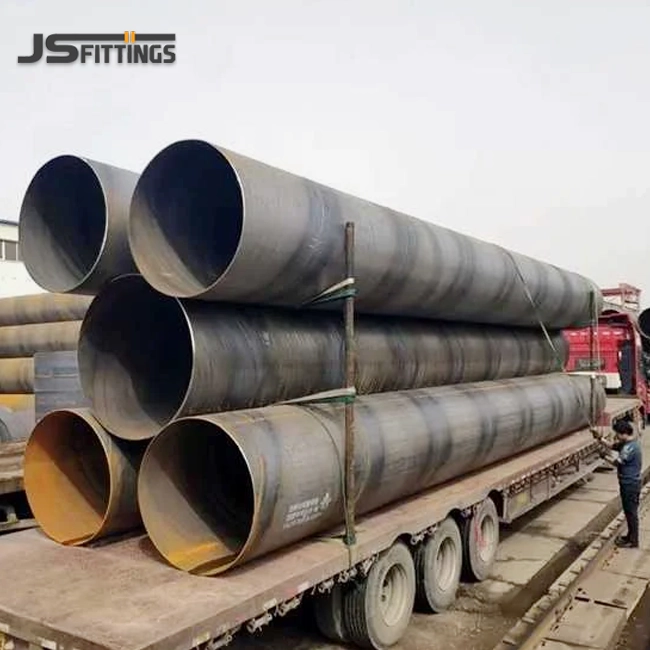
Welded buttweld bends use longitudinally welded pipe as the base material, which saves money for uses with bigger diameters and low pressure. As required by manufacturing standards, the longitudinal seam is typically positioned near the neutral axis to minimize stress during the bending process. This keeps the weld seam from being under too much stress. This method lets you use either LSAW or HSAW to make fittings with a diameter of up to 60 inches. It's useful for big infrastructure projects like city water systems or power plant cooling loops, where pressure values below ANSI Class 600 are enough.
When procurement teams are trying to optimize costs on projects with moderate service conditions, choosing welded construction (CS ASME Buttweld Pipe Bend) can save them 15 to 25 percent without affecting the functionality requirements. When making their choice, they should think about more than just the initial purchase price. They should also think about the costs of installation labor, inspections, and insurance premiums, which can change depending on the fitting's history.
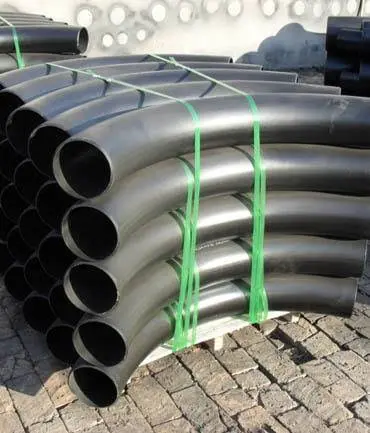
Dimensions and Industry Standards Governing Pipe Bends
Following well-known engineering standards makes sure that industrial installations are safe, interoperable, and defensible in contractual and regulatory contexts. Procurement specifications must include the right codes to make sure that the goods supplied meet the requirements of the project plan and government rules.
Critical Dimensional Parameters
The nominal diameter, wall thickness, and bending radius are the three main measures that describe the shape of a buttweld bend. The nominal diameter usually falls between DN15 (1/2") and DN1500 (approximately 60"), which are the diameters of the straight pipe sections that are joined. The choice of wall thickness is based on pressure design estimates according to ASME B31.3 for process pipe or B31.8 for gas transmission. There are schedules ranging from SCH 10 to XXS to handle design pressures from vacuum service to high-pressure applications, depending on design conditions.
The centerline radius of the curve is shown by the bending radius, which is given as a multiple of the standard diameter (e.g., 3D, 5D). This parameter directly affects flow behavior and piggability. Angle standards usually include 45°, 60°, and 90° shapes, but custom angles that match isometric models can be made to avoid fabrication in the field and cut down on weld joints. Tangent lengths, which are the straight sections at each end, give you enough surface area for butt-welding while keeping the heat-affected area separate from the complex grain structure inside the curved section.
Governing Standards and Material Specifications
ASME B16.49 sets standards for measurements, tolerances, marking, and material qualities for wrought steel induction buttweld bends that are made in a plant. The bends made from pipes that meet different ASTM standards must follow this standard. The ASME B16.9 standard describes the sizes of wrought steel butt-welding fittings, such as bends, elbows, and tees, up to NPS 48. For fittings made of high-strength, low-alloy steel in pipeline building, MSS-SP-75 adds to these rules.
Material standards, like API 5L, spell out the chemical makeup, mechanical qualities, and testing procedures for line pipe steel in grades B through X80. Fittings made of wrought carbon and alloy steel that can handle mild to high temperatures are covered by ASTM A234. The most common types are WPB (carbon steel), WP11 (chromium-molybdenum alloy), and WP22 (chromium-molybdenum alloy). Fittings made of stainless steel meet ASTM A403, which lists austenitic types like WP304/304L and WP316/316L as being resistant to rust.
When procurement workers understand these standards, they can write clear specs that remove confusion during the quotation process and lower the risk of rejection during the incoming inspection. By requiring mill test certificates, material traceability, and third-party proof, everyone in the supply chain is held accountable. This keeps project plans from getting pushed back because of materials that don't meet standards.
Standard Angles and Custom Configurations
For quick shipping and inventory management, 45° and 90° buttweld bends are the most common angle requirements.However, custom angles can be very helpful in complicated pipe plans. When you order a 22.5° or 67° bend that is made to exact isometric requirements, you don't have to weld together multiple standard fittings in the field. This cuts down on labor costs, inspection points, and possible leak tracks.
This ability to be customized is especially useful for repair projects where existing structures limit the ways that pipes can be routed or for modular buildings where pre-made spools have to fit perfectly within very tight size limits. Leading makers keep their production plans open to meet these needs, but procurement teams should expect longer lead times of 6–10 weeks instead of 2–4 weeks for normal configurations.
Conclusion
Understanding the differences between radius classifications, manufacturing methods, and governing standards helps procurement professionals make decisions that balance initial cost against long-term value. Choosing the right materials, dimensions, and quality verification procedures lowers project risk and makes sure delivered buttweld bends meet technical requirements and regulatory obligations. Working with well-known manufacturers who offer a wide range of services, reliable quality systems, and quick technical support sets the stage for a successful project execution and ongoing operational reliability throughout the asset lifecycle.
FAQ
1. What differentiates a pipe bend from an elbow in practical terms?
The main difference is the bending radius and the way they are made. Elbows have radii of 1D or 1.5D and are made as standard catalog items through casting, forging, or forming processes. They are available for immediate delivery in common sizes and angles. Buttweld bends have radii that are greater than 2D and are usually made through induction bending or cold forming to custom specifications. This larger radius reduces flow turbulence and pressure drop while letting pipeline inspection gauges pass.
2. How does wall thinning during bending affect pressure rating?
The bending process stretches the material on the outer curve (extrados), which makes the wall thinner through plastic deformation. To make up for this, manufacturers choose pipes with greater wall thickness as the starting materialso that the post-bending thickness at the extrados still meets the minimum requirements calculated according to ASME B31.3 or B31.8. Dimensional inspection makes sure that compliance is met before shipment. Correctly manufactured buttweld bends keep the full pressure rating of the connected pipe system without needing thickness allowances at joints. Knowing this compensatory approach helps procurement professionals evaluate quotes where the initial pipe schedule seems heavier than the connected straight pipe.
3. Why is it important to do post-bend heat treatment?
Induction bending changes the microstructure of the steel, which can cause residual stresses and differences in hardness. Post-bend heat treatment (normalizing or tempering) evens out the mechanical properties, relieves residual stress, and ensures that the toughness is the same throughout the fitting. Pipeline codes often require PBHT for high-yield grades or low-temperature service where brittle fracture is a risk. Skipping this step to save money creates reliability risks that could lead to field failures, particularly under cycle loads or impact conditions. Quality-conscious buyers should verify that specifications include appropriate heat treatment with documented furnace charts and hardness testing results.
Partner with a Trusted Pipe Bend Manufacturer
JS FITTINGS delivers precision-engineered buttweld bends backed by 43 years of manufacturing expertise serving EPC contractors, distributors, and industrial end users across 30+ countries. Our comprehensive product range—from DN15 to DN1500 in carbon, alloy, and stainless steel—meets ASME B16.49, API 5L, and ASTM specifications with certifications from NIOC, ADNOC, and Petrobras validating quality and reliability. We control every production stage from material verification through final inspection, maintaining on-time delivery above 95% while keeping customer complaints below 0.5%. Whether you need standard configurations for immediate shipment or custom-radius bends engineered to complex isometric requirements, our technical team provides consultation to optimize specifications for performance and cost. Contact our specialists at admin@jsfittings.com to discuss your project requirements and receive a detailed quotation from a proven buttweld bend supplier committed to supporting your operational success.
References
1. American Society of Mechanical Engineers. ASME B16.49: Factory-Made Wrought Steel Buttwelding Induction Bends for Transportation and Distribution Systems. New York: ASME Press.
2. American Society of Mechanical Engineers. ASME B31.3: Process Piping—Design, Materials, Fabrication, Examination, and Testing. New York: ASME Press.
3. American Petroleum Institute. API Specification 5L: Specification for Line Pipe, 46th Edition. Washington: API Publishing Services.
4. ASTM International. ASTM A234/A234M: Standard Specification for Piping Fittings of Wrought Carbon Steel and Alloy Steel for Moderate and High Temperature Service. West Conshohocken: ASTM International.
5. Manufacturers Standardization Society. MSS SP-75: Specification for High Test, Wrought, Butt Welding Fittings. Vienna: MSS Standards.
6. Nayyar, Mohinder L. Piping Handbook, 8th Edition. New York: McGraw-Hill Professional.
Send Inquiry
_1775029549981.webp "Buttweld Tee")
Related Industry Knowledge
- ASTM A234 WPB Buttweld Tee Material Properties Overview
- Benefits of Using A312 stainless steel pipe In Various Industries
- Buttweld Tee vs Socket Weld Tee for High-Pressure Piping
- ASTM A312 vs ASTM A213 Steel Pipe: What Are the Key Differences?
- How thick is the FBE Coated Steel Pipe?
- Key Considerations With ANSI Pipe Flanges
- How long does A53 ERW Pipe last?
- Buttweld Tee Pressure Ratings Explained for Industrial Piping
- How thick is standard wall pipe on carbon steel?
- What causes porosity in carbon steel pipe welding?