
What is carbon steel pipe used for?






2026-05-19 10:57:42
When engineers and project managers ask, "What is carbon steel pipe used for?" the answer covers almost all of the world's most important industries. Water, oil, natural gas, chemicals, and steam are moved through refineries, power plants, city infrastructure and factories by these strong pipes. Their power comes from having an unbeatable mix of high tensile strength, low cost, and the ability to be used in a wide range of high-pressure and structural situations. Modern industry runs on carbon steel pipes, which are used for everything from building skyscrapers to laying transcontinental pipelines.
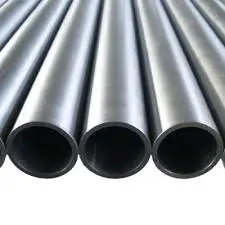
What is Carbon Steel Pipe?
These pipes are called carbon steel pipes. They are made of an iron-carbon combination that has up to 2.1% carbon by weight and not a lot of chromium, nickel, or molybdenum. This material is very strong and durable, and it doesn't cost a lot of money either. The material solves a problem that has been around for a long time in the industry: how to keep buildings safe without spending too much money.
Carbon steel pipes are a good way to move large amounts of fluid and build structures without having to spend extra money on alloying. Stainless steel pipes are a lot more expensive. They can hold up big loads from the outside in building projects and can handle huge pressures inside of more than 3,000 psi. It is simple to cut, thread, and join the material because it is so easy to work with. This cuts down on the time and money needed for installation.
There are two major ways to make pipes: seamless pipes are made by poking holes in solid billets, and welded pipes are made by rolling flat steel into cylinder shapes and then joining the edges with ERW, SAW, or some other method. Most of the time, seamless versions work best in places with a lot of pressure. For bigger width needs, welded versions are cheaper. Carbon steel pipes are versatile and simple to make, so they can be used for many things, from small tracing lines to 60-inch transmission mains.
Core Industrial Applications and Use Cases
Carbon steel pipes dominate six major industrial sectors, each leveraging specific material properties to solve operational challenges. Infrastructure for oil and gas: Pipes from API 5L Grade B to X80 are used by petroleum companies to move crude oil, natural gas, and finished goods. In pipeline systems, these pipes often extend for hundreds of miles and operate under pressures of up to 1,440 psi. ASTM A333 grades are suitable for low-temperature service in Arctic and offshore environments due to their impact toughness, while sour gas service requires materials compliant with NACE standards. Longitudinal Submerged Arc Welded (LSAW) pipes are designed to achieve weld strength comparable to that of the base metal when properly manufactured and inspected. This is very important because a single leak could cause environmental disasters or production shutdowns that cost millions of dollars every day.
Power Plants: In thermal power plants, ASTM A106 Grade B seamless pipes are used in boiler systems where steam is heated to 600°C and pressed at 250 bar. This is a very rough environment, so you need a material that won't break down over time. The walls of a seamless structure are all the same width, so there are no places of high stress that could break the structure in a very bad way. Cooling water systems in nuclear power plants typically use carbon steel or stainless steel materials selected for corrosion resistance and structural integrity, depending on service conditions. In case of an emergency, this makes sure that the safety devices work properly.
Public Water Systems: ASTM A53 lines are used by cities all over the world to move potable water and collect wastewater. When buried, zinc-coated hot-dipped galvanised versions don't rust for decades, which saves money over their lifetime compared to other choices that need to be replaced more often. Water gets to homes through big SSAW (Spiral Submerged Arc Welded) lines that are brought from treatment plants. To handle big amounts, they can be up to 60 inches across. The supply stays steady because the material is flexible and doesn't break when the ground moves due to earthquakes or settlement.
In commercial buildings, heating, ventilation, and air conditioning systems move cold water, hot water, and condensate through Schedule 40 welded pipes. These pipes are also used for fire protection. Fire sprinkler networks use ASTM A53 Grade A because it works reliably in situations, and the threading makes it easy to make changes to the field quickly. The fact that the material works with standard fittings makes it easier for repair teams to keep track of thousands of feet of installed pipe.
Material Standards and Technical Specifications
Knowing the specs for pipes is important for choosing the right materials for tough jobs. ASTM A106 Grade B seamless pipes have a minimum tensile strength of 60,000 psi and are widely used in elevated-temperature service, with allowable limits defined by ASME B31.3. To make it easier to weld and less likely to break, the chemical makeup limits the amount of sulphur and phosphorus to below 0.035%. Before leaving the factory, these pipes are hydrostatically tested in accordance with ASTM requirements to ensure pressure integrity.
You can get Grade A (48,000 psi tensile) and Grade B (60,000 psi tensile) in ASTM A53 in both seamless and welded forms. Because the standard can be used for many things, it is usually the best choice for general-purpose pipes in moderate-pressure situations. Hot-dipped galvanised forms have a zinc coating that weighs at least 1.8 oz/ft². This makes them last 50 years or more in corrosive environments.
The API 5L standards set the rules for oil and gas pipes. The grades are based on the minimum yield strength. X52 shows a yield of 52,000 psi, and X70 shows a yield of 70,000 psi. This means that thinner walls can be used at the same pressure levels. This increase in strength reduces material usage and welding work in long-distance pipeline projects.For international projects requiring high-quality carbon steel pipes, standards such as CSA Z245 (Canada) and ISO 3183 are broadly equivalent to API 5L.
DIN 2440 medium-weight tubes feature metric dimensions common in European and Asian markets. Wall thicknesses enable threading for mechanical joints without compromising pressure capacity. DIN 2444 galvanised variants protect industrial gas distribution networks and compressed air systems from internal oxidation.
Available outside diameters range from 1/2 inch to 60 inches, while schedule designations (such as SCH 10 to SCH 160) represent standardized wall thickness ranges that vary depending on pipe diameter. By working together, engineering teams and manufacturing facilities can come up with custom specifications that meet the special needs of each project.
Manufacturing Quality and Performance Advantages
Modern production techniques ensure carbon steel pipes meet stringent reliability standards. Cold expansion processes applied to LSAW pipes guarantee precise roundness within 1% tolerance, critical when aligning 48-inch diameter sections during field installation. Misalignment creates stress concentrations and gasket leakage, delaying project completion and increasing rework costs.
Automated submerged arc welding (SAW) deposits filler metal under a protective layer of granular flux, effectively shielding the molten weld pool from atmospheric contamination. This advanced process achieves full weld penetration, creating a robust joint with mechanical properties that match the base metal and eliminating the weak, heat-affected zones that are susceptible to failure. Radiographic inspection of 100% of weld length detects internal porosity, slag inclusions, or lack-of-fusion defects invisible to surface examination. Reject rates below 0.5% demonstrate manufacturing consistency essential for safety-critical applications.
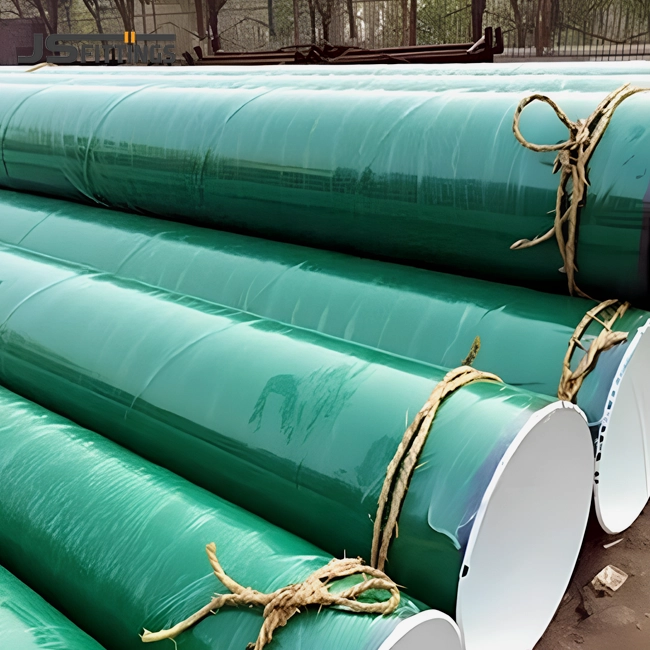
Surface treatments extend service life in harsh environments. Three-layer polyethylene (3PE) coatings protect buried pipelines from soil corrosion and cathodic disbondment. Fusion-bonded epoxy (FBE) provides thin-film protection for underwater installations and chemical exposure. Clad and lined options bond corrosion-resistant alloys to carbon steel substrates, combining exotic material performance with carbon steel economics.
Material traceability systems track each pipe from raw billet through final inspection. Heat numbers stamped on finished products link back to mill certificates documenting chemical composition and mechanical properties. This documentation proves compliance during regulatory inspections and liability investigations, protecting project owners from non-conforming material risks.
Comparative Analysis: Seamless vs. Welded Pipes
Seamless pipes eliminate the longitudinal weld seam, distributing stress uniformly around the circumference. This construction handles pressure spikes and cyclic loading without fatigue crack initiation at weld zones. Ultra-high-pressure hydraulic systems, critical steam lines, and downhole oil well tubing specify seamless variants where failure consequences are catastrophic.
Welded pipes offer economic advantages for large diameters and lower-pressure services. ERW pipes up to 24 inches cost 20-30% less than seamless equivalents, making them preferred for municipal water distribution and HVAC systems. LSAW pipes from 20 to 60 inches provide the only practical manufacturing method for transmission mains, as seamless production equipment cannot accommodate such sizes.
Spiral-welded (SSAW) pipes maximize material utilization by forming helical seams from coiled strip. This technique produces large diameters with minimal waste, ideal for water transmission projects where budget constraints limit infrastructure investment. The continuous weld path undergoes ultrasonic testing to detect defects, achieving reliability comparable to straight-seam alternatives.
Addressing Limitations and Practical Considerations
Because carbon steel is easily oxidised, it needs to be protected in places where corrosion is common. Galvanising, painting, or cathodic protection systems all cost more at first, but they are necessary for long-term use. Maintenance teams need to keep an eye on the quality of the coating and fix any damage right away to stop it from breaking down faster.
At elevated temperatures, creep may become a concern for carbon steel during long-term service, and allowable limits are defined by design codes such as ASME B31.3. Alloy steel alternatives with molybdenum and chromium raise this temperature limit to 1,100°F, but they cost more in materials. The working conditions must be taken into account in the project specifications for the whole design life of the equipment.
Logistics for moving and transporting things are affected by weight. A 40-foot piece of 24-inch Schedule 40 pipe weighs about 2,400 pounds, so it needs to be moved with heavy-duty tools and trucks. Using modular building methods and field welding makes it easier to move things around on busy job sites.
To make joints that meet building codes, welding processes need qualified workers and the right way to do them. In thick-wall applications, preheat and post-weld heat treatment stop hydrogen cracking and ease residual stresses.Before system pressurization, robust quality control systems—utilizing advanced non-destructive testing (NDT) methods like X-ray (RT) or ultrasonic (UT) inspection—are mandatory to verify the integrity of every weld.
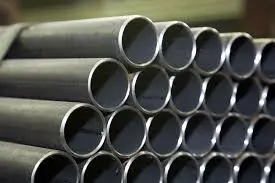
Target Decision-Makers and Procurement Insights
EPC contractors who are in charge of multimillion-dollar projects give more weight to suppliers who have regular quality certifications and a history of on-time delivery. You can be sure that the supply chain is stable because of ISO 9001 quality management systems, API certifications, and pre-qualification by national oil companies. Help with value engineering and technical help while putting together bid sets, setting different suppliers apart in competitive tenders.
Distributors and stockists need a wide range of popular sizes and schedules of inventory to choose from. More than 50 containers are shipped every month, which shows that the factory can keep up with just-in-time supply schedules. Mills that offer cut-to-length services and beveled ends reduce the time and money that distributors have to spend on processing.
Small and medium-sized engineering firms gain when suppliers are willing to take small orders and test samples. Flexible minimum order amounts let you make prototypes and run pilot projects without having to buy too much inventory. Quick turnaround on quotes (within an hour) lets bids be sent on time for fast-tracked jobs.
Government building projects have strict rules about how to buy things and what percentage of local content must be used. Suppliers who are certified by more than one foreign standards body (ASME, GOST, JIS, DIN) make it easier to follow specifications in a lot of different places. Audit requirements are met by clear documentation and access for third parties to examine.
Lifecycle cost optimisation through stable long-term performance is what industrial end users are looking for. Delivery rates of more than 95% on time keep production from having to stop for long periods of time while new parts are sourced. A client dissatisfaction rate of less than 0.5% means that the quality is consistent, which cuts down on maintenance downtime and emergency repair costs.
Conclusion
Carbon steel pipes are still the most important part of the world's industrial infrastructure. They offer unbeatable value by being strong, flexible, and cost-effective. They are used to move oil and gas, make electricity, run municipal water systems, handle chemicals, do structural engineering, and provide building services. Understanding material standards, manufacturing quality markers, and the right way to choose an application is important for making sure a project succeeds and keeping costs low over its lifetime. As the world's infrastructure grows faster, carbon steel pipes will continue to make it possible for everyone to get clean water, energy security, and high industry productivity.
FAQ
Q1: How do I select between seamless and welded carbon steel pipe?
A: Choose seamless pipes when maximum pressure rating, zero weld-zone risk, or cyclic loading conditions exist. Applications include high-pressure steam, hydraulic systems above 3,000 psi, and sour gas service. Specify welded pipes for diameters above 24 inches, lower-pressure distribution systems, and projects where budget constraints prioritise initial cost savings. Welded options meeting ASTM A53 or API 5L standards provide reliable performance in 80% of industrial applications at 20-30% cost reduction compared to seamless alternatives.
Q2: What coating should I specify for buried pipeline applications?
A: Three-layer polyethene (3PE) coatings deliver superior protection for buried pipelines in soil environments, offering mechanical damage resistance during installation and decades of corrosion prevention. Fusion-bonded epoxy (FBE) provides thinner protection suitable for moderate corrosion conditions at a lower cost. Combine coatings with cathodic protection systems in aggressive soil conditions or where pipeline longevity must exceed 50 years. Zinc-coated galvanised pipes suit residential water services and small-diameter applications where coating cost-effectiveness matters most.
Q3: How can I verify pipe quality before project installation?
A: Request mill test certificates (MTCs) documenting chemical composition, mechanical properties, and hydrostatic test results for each heat number. Engage third-party inspection agencies to witness production and perform dimensional verification, hardness testing, and non-destructive examination. Require material traceability through heat number stamping on each pipe length. Suppliers holding ISO 9001, API, and national oil company approvals demonstrate established quality management systems. Pre-qualification audits of manufacturing facilities reveal production capabilities and quality control infrastructure.
Q4: What minimum order quantities should I expect from manufacturers?
A: Large-scale projects typically require container-load quantities (20-25 tons) to justify international shipping costs and achieve optimal pricing. Many suppliers accommodate smaller orders for stock replenishment or prototype development, though per-unit costs increase for quantities below 5 tons. Distributors and stockists maintain an inventory of common sizes for immediate small-quantity fulfilment. Custom specifications and exotic grades generally require higher minimums (50+ tons) to justify production setup and material sourcing.
Partner with JS FITTINGS: Your Trusted Carbon Steel Pipe Supplier
Sourcing reliable carbon steel pipe requires partnering with a premier manufacturer that combines proven quality systems with highly responsive customer service.JS FITTINGS brings over four decades of manufacturing expertise, producing pipes to ASTM, API, DIN, and international standards for clients in 30+ countries. Our 7,000-square-meter facility ships 90+ containers monthly with on-time delivery exceeding 95% and customer satisfaction reflected in a 98% repurchase rate. Whether you need ASTM A106 seamless pipes for high-pressure service or large-diameter LSAW pipes with full radiographic testing, our experienced team provides technical guidance and competitive quotations within one hour. Contact admin@jsfittings.com to discuss your project specifications and receive a detailed proposal backed by ISO, CE, and GOST-R certifications trusted by NIOC, ADNOC, and Petrobras.
References
1. American Society of Mechanical Engineers. ASME B31.3 Process Piping: Materials and Specifications for Carbon Steel Pipe Systems. ASME International, 2022.
2. American Petroleum Institute. API Specification 5L: Specification for Line Pipe - Carbon Steel Grades and Applications. 46th Edition, API Publishing Services, 2021.
3. ASTM International. ASTM A106/A106M Standard Specification for Seamless Carbon Steel Pipe for High-Temperature Service. Annual Book of ASTM Standards, Volume 01.01, 2023.
4. Bai, Yong and Qiang Bai. Subsea Pipeline Design, Analysis, and Installation: Carbon Steel Material Selection and Corrosion Management. Gulf Professional Publishing, 2022.
5. Mohitpour, Moness, H. Golshan, and A. Murray. Pipeline Design and Construction: A Practical Approach to Carbon Steel Welded and Seamless Pipe Systems. 3rd Edition, ASME Press, 2021.
6. Revie, R. Winston and Herbert H. Uhlig. Corrosion and Corrosion Control: An Introduction to Corrosion Science and Engineering for Carbon Steel Pipelines. 4th Edition, Wiley-Interscience, 2020.
Send Inquiry
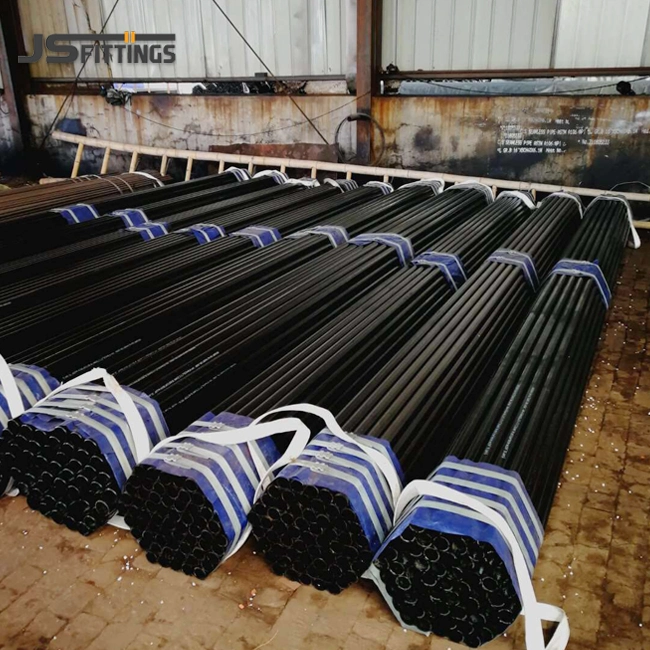
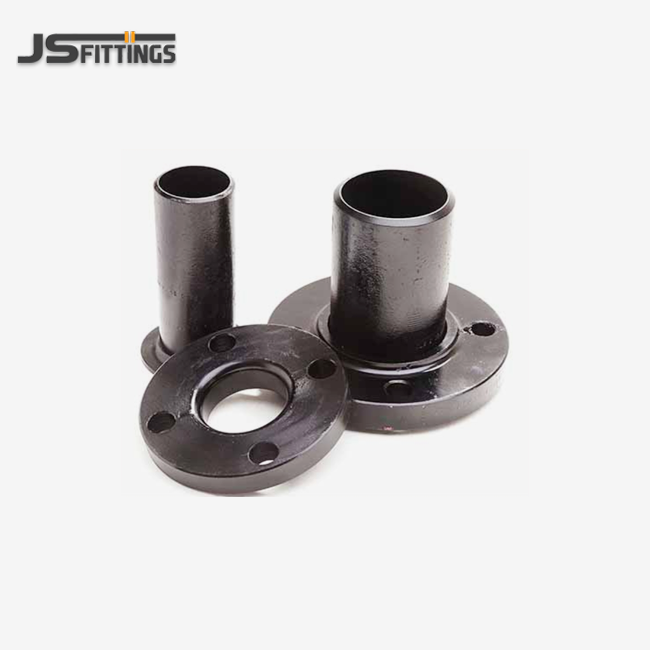
_1775030068227.webp "ASTM A105 Weld Neck Flange")
Related Industry Knowledge
- Carbon Steel Buttweld Reducer Material Standards Explained
- A53 ERW Pipe – Type, Grade, Performance, Tolerance, Application Full Analysis
- Slip-On Flanges: Types, Uses, and Installation Guide
- How to Select a Buttweld Reducer for Process Piping?
- ASTM A105 Carbon Steel Forged Steel Flange Specifications
- Carbon Steel Buttweld Reducer for High-Pressure Pipelines
- Carbon Steel vs Stainless Steel Buttweld Bend: Which to Use?
- How to Choose a Buttweld Tee for High-Pressure Pipelines
- What is a threaded flange?
- Do blind flanges require hydrotesting?