
What Is Carbon Steel Welded Pipe and How Is It Made?






2026-10-10 09:36:19
Carbon steel welded pipe is a tubular product formed by rolling flat carbon steel — such as coil, skelp, or plate — into a cylindrical shape and bonding the seam through high-energy welding. Three primary manufacturing methods exist: Electric Resistance Welding, Longitudinal Submerged Arc Welding, and Spiral Submerged Arc Welding. These pipes comply with standards including ASTM A53, API 5L, and EN 10217, and they serve industries ranging from oil and gas transmission to municipal infrastructure. Their consistent wall thickness, faster production cycle, and cost advantage over seamless pipe make them a practical choice for most industrial piping projects.
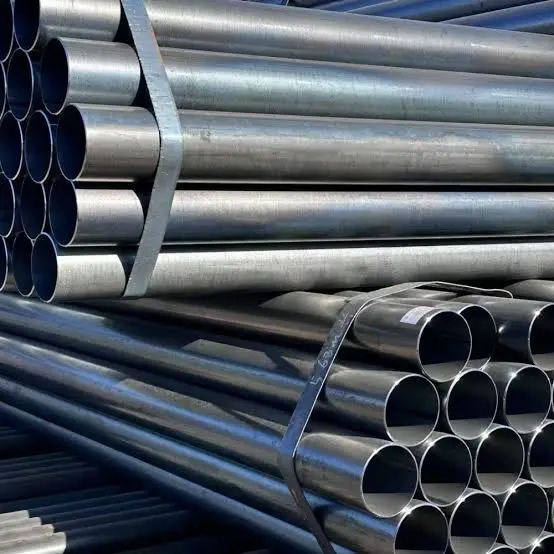
Understanding Carbon Steel Welded Pipe
What Defines This Product?
Carbon steel welded pipe is manufactured from flat-rolled steel coils, skelp, or heavy plate formed into cylindrical shells and joined along a longitudinal or helical seam. The chemical composition varies by grade and applicable standard, with carbon and manganese limits specified for each grade. In the Heat Affected Zone, a low carbon content improves weldability and reduces the risk of cracking during welding. Tensile strength is often between 330 and 520 MPa, depending on the grade, such as ASTM A53 Grade B or API 5L X52.
How Does It Differ from Stainless or Galvanized Pipe?
Carbon steel pipe will rust if not coated for protection. Stainless steel generally offers much greater corrosion resistance than carbon steel because its chromium content promotes the formation of a passive oxide layer. Galvanised pipe is coated with zinc, which gives it modest protection against corrosion. For harsh underground environments or high-pressure oil and gas lines, carbon steel pipe coated with 3LPE or FBE can provide effective corrosion protection at a competitive cost when the coating system is properly selected for the service conditions. That is why it is the go-to solution for large infrastructure and industrial projects.
Key Compliance Standards
Before making an order, procurement teams should confirm that the item satisfies the criteria. The standards for oil and gas transmission pipes are specified by API 5L. ASTM A53 covers welded and seamless steel pipe for mechanical and pressure applications, as well as ordinary uses in steam, water, gas, and air lines. ASTM A252 is for structural piling. EN 10217 is for pressure applications in Europe. Each standard establishes specific requirements for chemical composition, mechanical test criteria, and methods for weld inspection. This allows buyers to simply determine whether a provider is a good fit for their requirements.
The Manufacturing Process of Carbon Steel Welded Pipe
Raw Material Selection and Forming
The manufacturing process begins with selecting certified hot-rolled steel coils or heavy plates that conform to governing grade chemistry and mechanical properties. The strip moves through forming rollers that gradually bend it into a circular shape. Up to this stage, the dimensions have a direct effect on the uniformity of the wall thickness. This can provide good dimensional consistency, while the permitted wall-thickness tolerances depend on the applicable ASTM or API product specification.
ERW, LSAW, and SSAW Welding Techniques
ERW pipe is manufactured by fusing the strip edges using high-frequency electrical current (contact or induction welding) without filler metal. ERW pipe is available in a wide range of sizes, with the practical size range depending on the manufacturing line and applicable specification. It is widely used in water, structural, and oil and gas piping applications where its manufacturing efficiency and dimensional consistency are suitable for the service requirements. LSAW welds are produced using the submerged arc welding process with filler wire and flux. This method is well suited to thick-wall, big-diameter pipe up to 60" and more. SSAW pipe is the most economical big-diameter water transmission pipe. Steel strip is spirally wound and welded along the helical seam.
Heat Treatment and Surface Finishing
ERW pipes after welding are subjected to online normalising to enhance the grain structure of the HAZ and to equalise the hardness of the weld and base metal. Cold expansion is used to improve the roundness of the LSAW pipe, especially for large-diameter pipe intended for field installation. Bare, varnished, painted, 3PE, or FBE coatings may be selected as surface finishes. Mild steel welded pipe may be supplied with plain, beveled, or otherwise prepared ends according to the applicable specification and project requirements, and can be delivered in standard 20-foot/40-foot lengths or custom-cut to specific project dimensions.
Inspection and Quality Control
Each pipe length is hydrostatically tested in accordance with the pressure requirements of the applicable product specification. Ultrasonic testing (UT) scans the full length of the weld seam for internal discontinuities, such as slag inclusions or lack of fusion. Radiographic Testing may be required for specific applications or project specifications to detect volumetric weld flaws. Flattening tests evaluate weld ductility and resistance to cracking, while laser dimensional inspection verifies that the pipe conforms to specified ovality and straightness tolerances and that the wall thickness meets the applicable API or ASTM requirements.
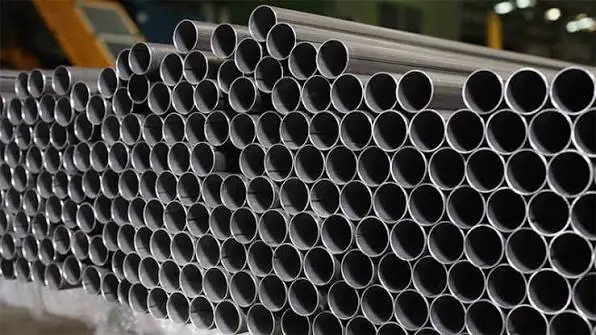
Comparing Carbon Steel Welded Pipe with Other Pipe Types
Welded vs. Seamless Pipe
Seamless pipe may be selected for certain high-temperature or high-pressure services where its manufacturing characteristics are advantageous. However, seamless pipe manufacturing becomes technically constrained and cost-prohibitive for diameters exceeding 24 inches. Under governing piping design codes (such as ASME B31.3 or B31.4), fully inspected welded pipes achieve a joint efficiency factor (E) of 1.0, matching the pressure rating of seamless pipe. Both varieties perform reliably across standard operational pressures, but welded pipe generally offers shorter lead times, lower material costs, and superior dimensional consistency.
Welded Carbon Steel vs. Stainless Steel Pipe
Stainless steel pipe generally costs more than carbon steel pipe of the same size, with the price difference depending on grade, dimensions, market conditions, and quantity. This higher cost is partly related to its alloying elements, particularly chromium and, in many grades, nickel. If the fluid is not corrosive, or if the exterior coatings are good enough to preserve the pipe, carbon steel welded pipe will accomplish the same function for a lot less money. It is commonly selected by EPC contractors and project developers for HVAC distribution systems, structural piling, and hydrocarbon transfer.
Galvanized vs. Black Steel Welded Pipe
Galvanised pipe can be used in above-ground fire protection and certain water applications when the applicable standards, water chemistry, and project requirements permit its use. Black steel welded pipe with FBE or 3LPE coating is suitable for greater pressure ratings in subterranean service and simpler field welding. The proper finish for black carbon steel pipe is the ideal option for oil and gas applications that need API 5L and applicable sour-service requirements.
Applications and Advantages of Carbon Steel Welded Pipe in Industry
Oil and Gas Transmission
API 5L covers seamless and welded steel line pipe used in pipeline transportation systems for oil, gas, and other energy products. The standard covers line pipe used under demanding pressure, temperature, and corrosive service conditions such as sour service with exposure to H2S. For sour-service applications, materials and welds must meet the applicable requirements of NACE MR0175/ISO 15156. Chemical composition, hardness, heat treatment, and environmental conditions should be controlled according to the applicable sour-service requirements to reduce the risk of Sulfide Stress Cracking.
Structural Piling and Infrastructure
Large diameter SSAW pipe may be utilised as support piling in bridges, port facilities, and tall structures when it meets the applicable requirements of ASTM A252. Its suitability depends on the pipe dimensions, grade, weld quality, loading conditions, and foundation design. For municipal utilities, ERW pipes engineered with internal cement mortar lining or external 3LPE coating are widely used to transport potable water and district heating media.
Surface Treatment and Life-Cycle Planning
Selecting the correct coating during procurement can reduce long-term maintenance costs. Pipelines installed in aggressive soils need 3LPE or FBE. Cement mortar lining can be specified for potable water service when the lining system and materials have the required potable-water approvals. Hot-dip galvanizing can be used for suitable above-ground carbon steel applications when specified by the applicable coating standard and project requirements. The ability to choose the treatment in the bidding process, rather than having to modify it later, provides purchasing teams genuine control over the overall cost of ownership.
Procurement Insights: How to Choose and Buy Carbon Steel Welded Pipes?
Looking for carbon steel welded pipe for a large industrial project is not as simple as checking pricing lists. Buyers should verify that a supplier has the proper mill documentation and certifications for the applicable standards, is capable of producing the required wall thickness and schedule, and has sufficient production volume to satisfy delivery windows.
The following are the primary parameters that procurement teams should utilise while evaluating bids:
- Certification Verification: Verify mill test results are traceable to the heat and lot number of your order.
- NDT capability: Each pipe should be tested by suppliers with full-length UT and hydrostatic testing. RT inspection should be available for critical applications when required by the applicable code or project specification.
- Dimensional range: Check that the supplier can provide the whole project size range, from small-bore ERW to large-diameter LSAW or SSAW, under one contract for easier logistics.
- Coating and finishing options: Confirm 3LPE, FBE, and varnish are available in-house or via a competent subcontractor with documentation.
- Delivery & lead time: A supplier with a history of more than 95% on-time delivery and 90+ containers of monthly shipping capacity lowers schedule risk for time-sensitive EPC projects.
Conclusion
Welded pipe made of carbon steel remains the most often used tubular product for infrastructure, oil and gas, and industrial development. There are 3 forms of welding: ERW, LSAW, and SSAW. Each method is engineered to meet specific design pressure, pipe diameter, and project budget requirements. As procurement teams are aware of the production process, the standards, and the many surface treatment alternatives, they can make low-risk, cost-effective selections. When evaluating suppliers, they may consider carbon steel welded pipe options alongside proven certifications, broad dimensions, and a reputation for delivering on schedule, which can help mitigate project risk.
FAQ
1. What is the difference between ERW and LSAW pipe?
ERW uses high-frequency current to fuse strip edges without filler metal and suits diameters up to approximately 24 inches. LSAW uses submerged arc welding with filler wire and flux, making it appropriate for thick-wall, large-diameter pipe in high-pressure oil and gas applications.
2. Is welded pipe weaker than seamless pipe?
Appropriate heat treatment and welding controls can improve weld performance and may allow a weld joint efficiency factor specified by the applicable code. For standard operating pressures, the two types perform equivalently. Seamless pipe is specified for extreme temperature or pressure conditions where no weld variation is acceptable.
3. Can carbon steel pipe be used in H2S environments?
Yes, with specific controls. Pipe and weld materials for sour-service applications must meet the applicable requirements of NACE MR0175/ISO 15156, including material, hardness, and environmental requirements, to reduce the risk of Sulfide Stress Cracking in sour-service conditions.
4. What certifications should I require from a supplier?
At minimum, request API 5L or ASTM A53 mill test reports traceable to your order, ISO 9001 quality management certification, and third-party hydrostatic and UT test records. For European projects, EN 10217 documentation is required.
Partner with JS FITTINGS for Your Next Carbon Steel Welded Pipe Order
Welded carbon steel pipe and pipe fittings from JS FITTINGS have been used in industry projects in over 30 countries since 1983. We are a trusted supplier of carbon steel welded pipes for EPC contractors, distributors, and government infrastructure projects. We ship more than 90 containers every month, and our deliveries are on time over 95% of the time. We maintain certified quality systems including ISO 9001, CE, and GOST-R, with approved vendor status for leading global energy corporations like PETROBRAS and ADNOC. You can get ½" to 60" ERW, LSAW, and SSAW steel with wall thicknesses from SCH 10 to SCH 160 from us. For a quote that is tailored to your project, email our team at admin@jsfittings.com.
References
1. American Petroleum Institute. API Specification 5L: Specification for Line Pipe. 46th ed. API Publishing Services, 2018.
2. ASTM International. ASTM A53/A53M: Standard Specification for Pipe, Steel, Black and Hot-Dipped, Zinc-Coated, Welded and Seamless. ASTM International, 2022.
3. NACE International. NACE MR0175/ISO 15156: Petroleum and Natural Gas Industries — Materials for Use in H2S-Containing Environments in Oil and Gas Production. NACE International, 2015.
4. European Committee for Standardization. EN 10217-1: Welded Steel Tubes for Pressure Purposes — Technical Delivery Conditions. CEN, 2019.
5. ASTM International. ASTM A252: Standard Specification for Welded and Seamless Steel Pipe Piles. ASTM International, 2021.
6. Nayyar, Mohinder L. Piping Handbook. 7th ed. McGraw-Hill, 2000.
Send Inquiry
You may like