
What is the material of A53 ERW Pipe?






2026-07-01 15:31:54
When looking for piping options for important industrial jobs, it's important to know exactly what the materials are made of. A53 ERW pipe is made from carbon steel that meets the requirements of ASTM A53, especially Type E (Electric Resistance Welded). Cold-forming flat steel strips into a cylindrical shape and joining the long seam together with high-frequency electric resistance heating are the steps used to make this pipe. The base material is mostly low-carbon steel with small amounts of manganese, phosphorus, and sulfur. It has a good mix of being easy to weld, strong, and inexpensive for use in structural and fluid transportation uses.
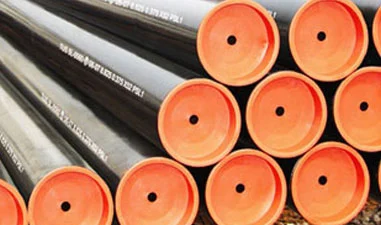
Understanding the Material Composition of A53 ERW Pipe
Defining ASTM A53 and the ERW Manufacturing Method
The ASTM A53 standard tells manufacturers how to make black and hot-dipped zinc-coated welded and seamless steel pipes that are used in mechanical and pressure situations. Type E pipes in this standard are made using electric resistance welding, a method in which a steel strip is continuously shaped and the longitudinal sides are heated with high-frequency electrical current before being forge-welded together under pressure.
We use modern high-frequency induction welding at JS Fittings, and then we heat treat the weld seam right away online. This important step evens out the grain structure in the heat-affected area. This makes sure that the mechanical properties of the weld seam match those of the parent metal. Unlike past methods of welding, this new method gets rid of weak spots along the seam, answering worries about the integrity of the weld in pressure service.
The ERW method has clear benefits for industry buyers who are in charge of big building projects. When compared to seamless options, production lead times are much shorter and the controlled forming process makes the dimensions more consistent. This level of accuracy in production means that lines can be connected to flanges, valves, and other fittings more quickly and with fewer problems in the field.
Chemical Composition Breakdown
The chemical makeup of carbon steel pipe has a direct effect on how well it works in service. The most popular type in the business, ASTM A53 Grade B, has strict limits on chemical elements to make sure that it will behave consistently during production and use.
The carbon percentage is limited to a maximum of 0.30%, which gives the metal enough strength while still letting it be welded. Too much carbon would make the metal harder, but it would also make it less flexible and increase the risk of cold cracking during welding. Manganese, which is present at a level of about 0.95% to 1.20%, makes the steel stronger and helps the fine grain structure during hot rolling. This element also removes oxygen, which makes steel cleaner.
Phosphorus and sulfur are controlled elements that cannot be more than 0.05% and 0.045% of the total. These elements must stay low because at lower temperatures, they can increase brittleness and reduce impact resistance.
Keeping the silicon level between 0.10% and 0.35% helps remove oxygen and improves strength without having a big effect on flexibility. At JS Fittings, our quality control lab checks the chemical makeup of every production heat using laser emission spectrometry to make sure it meets all the requirements before the pipes are put into service.
Grade A versus Grade B Material Differences
ASTM A53 has two grades, each with its own set of mechanical traits. Grade A has a minimum yield strength of 30,000 psi and a minimum tensile strength of 48,000 psi. It can be used in non-critical situations where the structure loads are low. These standards are raised to 35,000 psi yield and 60,000 psi tensile strength for Grade B. This makes it suitable for pressure tanks, boiler tubes, and structural parts.
There are changes in the chemical makeup of the grades, with Grade B material having better control over carbon and manganese. This improved chemistry gives better mechanical qualities without making it harder to work with. When purchasing materials for utility infrastructure projects like water distribution networks, HVAC systems, and fire protection installations, procurement teams always choose Grade B materials to keep costs low and safety high.
Our factory keeps both classes in stock, but Grade B is what most customers ask for because it can be used in so many situations. The small price increase over Grade A—usually between 5 and 8 percent—is good insurance against loss in service before it's supposed to.
Physical and Mechanical Properties
Besides chemical makeup, pipe function is also affected by a number of physical factors. The modulus of elasticity for carbon steel stays the same at about 29 million psi, which controls how it bends when it is loaded. When planning pipe systems that will be exposed to changes in temperature, it's important to keep in mind that thermal expansion happens at a rate of about 6.5 microinches per inch per degree Fahrenheit.
Tensile strength is the maximum force that a material can withstand before it breaks, and yield strength is the point at which it starts to change shape permanently. The ratio between these numbers—usually 0.58 for Grade B material—shows how flexible the material is and how well it can handle impact loads without experiencing brittle fracture.
Heat treatment is an important part of getting certain qualities. At JS Fittings, the process of normalizing a weld seam includes heating the fusion zone to about 1650°F right after welding and then slowly cooling it down. This heating cycle smooths out the structure of the grains, lowers changes in hardness, and releases leftover stresses that could cause cracks to form later.
Impact resistance is important for installs in cold regions, even though it's not specifically mentioned in ASTM A53 ERW pipe. At moderately low temperatures, Grade B material generally maintains adequate toughness, but specific applications may require Charpy V-notch testing, and for important uses, Charpy V-notch testing may be needed after that.
Dimensions and Specifications of A53 ERW Pipe
Standard Size Range and Wall Thickness Options
To design for different flow rates and pressure ratings, engineers may cut carbon steel pipe to various diameters. JS Fittings produces pipes from ½ inch to 24 inches (DN15 to DN600 in metric). This wide range of sizes fits most industrial pipes without tools.
ASME B36.10M schedules wall thickness. Balanced pressure and material economy make Schedule 40 the most common design. Schedule 80's 50% thicker walls increase pressure and corrosion space. Along with STD and XS grades, we make Schedule 10 and Schedule 20 for low-pressure systems that require weight reduction.
Dimensions, schedule, and theoretical internal diameter are related. Due to its 6.625-inch outside diameter and 0.280-inch wall thickness, a 6-inch Schedule 40 pipe has a 6.065-inch internal diameter. Standardization enables worldwide component interchangeability, essential for major projects with several vendors.
Manufacturing Tolerances and Quality Standards
Measurement accuracy impacts installation and longevity. ASTM A53 is popular because it has fewer limitations than other standards. The size of the pipe influences the outer diameter difference. For widths up to 1.900 inches, it's ±0.031 inches. Larger sizes have ±1% of nominal diameter.
Wall thickness tolerances. Pipes must meet minimum pressure requirements and generally have a ±12.5% tolerance. JS Fittings tightens tolerances by repeatedly measuring the ultrasonic wall along each pipe. Field welding flanges or fitting pipe ends is easier with attention to detail.
Container shipping is simplified and cheaper due to random length constraints between 16 and 22 feet. We provide random double lengths (38–40 feet) and exact cut lengths for special-sized applications.
Comparing A53 ERW with API 5L and Other Specifications
When choosing a material, consider how standards apply to similar uses. Some API 5L and ASTM A53 grades have similar strength levels. Most oil and gas pipelines use API 5L. API 5L Grade B pipe has the same minimum yield strength (35,000 psi) as A53 Grade B pipe but more chemical composition restrictions and testing.
Main difference: application focus. Water utilities, building services, and industrial facilities use ASTM A53 for mechanical and pressure purposes. API 5L facilitates hydrocarbon transfer by improving tracking and testing. Pipeline safety projects need API 5L, but building codes require ASTM A53.
Another misconstrued standard is ASTM A106. This standard covers seamless high-temperature carbon steel pipe. The material chemistry was chosen for high-temperature strength. A106 pipe is generally more expensive than A53 ERW due to its seamless manufacturing process and higher temperature service requirements.
Variations help procurement teams (ASTM A53 ERW Pipe Specifications). An A53 ERW pipe saves money without sacrificing safety or compliance when utilized within its design range. At JS Fittings, our professionals help customers tailor specifications to their needs. They avoid over-specification and material mismatch.
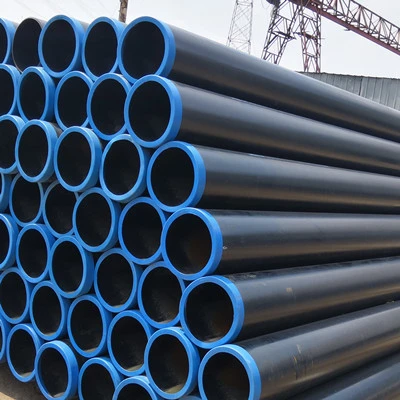
Manufacturing Process and Quality Control of A53 ERW Pipes
Step-by-Step ERW Production Methodology
Multiple controlled steps turn a raw steel tube into a polished pipe. Manufacturing starts with a chemically correct hot-rolled steel strip. We check and store 20–25-tonne coils in a climate-controlled facility to avoid corrosion.
First, set and uncoil. Rollers level the coil set and flatten the steel strip. Next, trim straight edges for welding seam formation. Rolls are used to bend flat steel into a cylindrical shape after trimming.
At the welding station, ERW occurs. Strip border connections carry 400 kHz electricity. The material warms to approximately 1300–2000°F in the V-shaped gap where the sides meet due to electrical resistance. Under controlled pressure, squeeze rollers behind the welding site forge hot sides without filler.
Comprehensive Quality Assurance Protocols
Weld quality is improved by our internal heat treatment device warming the fusion zone immediately after welding. Heat to 1650°F and cool gently to balance out grain structure and remove hardness differences. Its mechanical qualities meet or surpass basic materials.
Later, dimensional accuracy is strictly controlled, and automated saws cut lengths. Finished pipes are supplied with simple square-cut ends, ASME B16.25 buttweldable beveled ends and threaded and linked mechanical connecting ends are available.
Quality control at JS Fittings includes raw material inspection, production monitoring, and product testing. Our ISO 9001-certified quality management system records every checkpoint, tracking mill test results through to shipment.
Pressure is hydrostatically monitored on all pipelines. The average test pressure is 1.5 times the grade and intended maximum operating pressure. Pressure is maintained while automated test equipment detects leaks and size changes. Destructive testing verifies material, weld, and wall thickness meet criteria.
Besides hydraulic testing, non-destructive analysis is used. Weld seam eddy current testing finds hidden surface and near-surface faults. Electromagnetic detection identifies fractures, partial fusion, and performance-reducing modifications.
ERW Advantages Compared to Seamless and Other Welded Variants
Manufacturing usually involves measurements. Laser micrometers measure the circle's outside circumference, and ultrasonic gauges measure wall thickness at several locations throughout the creation. Real-time data tightens limitations by enabling process modifications instantaneously.
Each batch is mechanically tested for tensile, yield, and stretch. Our in-house lab conducts ASTM A370 testing, and mill test records are included with each item. We have NIOC, ADNOC, and Petrobras credentials. These certifications required rigorous construction and product testing.
Seamless, SAW, and spiral-welded pipes compete. Each industrial process involves trade-offs that affect purchasing.
Solid steel billets perforated into seamless pipe contain no weld seams. This structure is well-suited for high-pressure, high-temperature service. Seamless production takes longer and consumes more resources, increasing expenses. Seamless pipe may require 8–12 weeks, whereas A53 ERW pipe takes 3–4 weeks.
Submerged arc welding utilizes granular flux to shield the linear or spiral weld seams. SAW pipe can handle 24" or more heavy-wall, large-diameter work that ERW machines can't. ERW creates a small fusion line; however, the SAW process has a larger heat-affected zone.
Spiral-welded pipe has a helical seam by repeatedly twisting and fusing steel strips. This method quickly creates enormous sizes from thin coils but adds geometric complexity. Spiral pipes are generally less preferred for critical pressure applications compared to seamless or longitudinal welded pipes because the sloping seam path causes stress clusters.
ERW pipe is economical and efficient for most commercial uses. Modern high-frequency welding generates small, fully penetrated gaps with less heat. Three to five times faster production than seamless pipe cuts costs and wait times. These benefits make the ERW technique used for 60% of carbon steel pipes under 16 inches.
Quality data backs ERW ASTM A53 Grade B ERW Steel Pipe Schedule 40. After three years of producing over 30,000 tonnes of pipe, customer complaints have stayed below 0.5%. Process control and careful review are evident in the performance record.
Conclusion
Knowing what materials are used to make carbon steel pipe and how it is made helps you make smart purchasing choices that balance cost, performance, and safety. A53 ERW pipe is effective in a wide range of situations because it has controlled chemistry, exact size requirements, and strict quality control. The material has a good track record in water systems, structural parts, and industrial pipes. This is due to decades of improving specifications and manufacturing techniques. So that the project is as cost-effective as possible, buying teams make sure that the grade choice, wall thickness, and surface finish are all based on how the structure will be used. By focusing on certifications, output ability, and quality systems when evaluating suppliers, you can be sure that the materials you get will always meet your needs and arrive on time.
FAQ
1. What temperature range can A53 ERW pipe withstand?
The structure of Grade B material stays strong from about 20°F to 750°F. Impact testing may be needed at lower temperatures to make sure the toughness is good, especially for outdoor installations in cold places. For uses above 750°F, ASTM A106 seamless pipe is recommended because it has better high-temperature strength thanks to changes in the chemicals used and the way it is made.
2. How strong is the seam that was welded compared to the base material?
With modern A53 ERW pipe production and post-weld heat treatment, seams have characteristics that are the same as or better than the base metal. Our straight normalization process improves the structure of the grains, getting rid of the heat-affected zone's weakness. Tensile testing always shows that the seam's strength is the same as the parent material. This is proven by damaging testing done on sample pipes from every production run.
3. Can A53 pipe be bent for fabrication?
Standard cold-bending tools can be used on Grade B pipe, but the weld seam position relative to the bend line needs to be taken into account. To keep the seam from breaking, put it on the neutral line (the side of the bend) instead of in a tension or compression zone. When you direct the heating and cooling of the material, hot bending makes it easier to make tight radius bends while keeping the material's qualities.
4. What galvanizing thickness protects against corrosion?
Hot-dip galvanizing according to ASTM A123 puts on a zinc layer that is about 3.0 to 4.0 mils thick and protects for 50 to 80 years in normal weather conditions. Coating weight changes based on pipe width. Because they are immersed for longer, thinner coats stick to smaller pipes. During regular inspections, the focus is on how well the coating sticks and covers, not on getting exact thickness readings.
Partner with JS Fittings for Reliable A53 ERW Pipe Supply
JS Fittings sells high-quality carbon steel pipe and has been in business for more than 40 years. Our advanced high-frequency induction welding method makes pipes with better weld quality and tighter limits on size than what ASTM requires. Every pipe is tested for 100% hydraulic pressure and eddy current to make sure it will work in serious situations. We can consistently serve projects of any size because we ship more than 90 containers every month and can produce more than 800 tonnes of goods every month.
Our ISO 9001-certified center offers quick expert help and low prices to EPC contractors, distributors, and end users all over North America. As a qualified maker of A53 ERW pipes for big energy companies, we know the quality and paperwork rules that apply to infrastructure projects. Our expert export team plans processes to make sure deliveries happen on time, which helps you meet the deadlines for your project.
To talk about your pipe needs, email our sales team at admin@jsfittings.com. We give you full technical specs, competitive quotes, and samples that you can look over. JS Fittings has the quality and service your project needs, whether you need standard Schedule 40 pipe for a city water job or custom measurements for a unique use.
References
1. American Society for Testing and Materials. "ASTM A53/A53M Standard Specification for Pipe, Steel, Black and Hot-Dipped, Zinc-Coated, Welded and Seamless." Annual Book of ASTM Standards, Vol. 01.01, 2023.
2. American Society of Mechanical Engineers. "ASME B36.10M: Welded and Seamless Wrought Steel Pipe." ASME Standards Collection, 2022 Edition.
3. Davis, Joseph R. "Carbon and Alloy Steels." ASM Specialty Handbook, ASM International, Materials Park, Ohio, 2021, pp. 342-367.
4. National Association of Pipe Fabricators. "Technical Guide to Electric Resistance Welded Steel Pipe Manufacturing." NAPF Technical Publication Series, Houston, Texas, 2022.
5. Metals Handbook Desk Edition. "Properties and Selection of Carbon and Low-Alloy Steels." ASM International, Second Edition, 2023, pp. 193-228.
6. American Water Works Association. "Steel Pipe Design and Installation Manual M11." AWWA Standards, Seventh Edition, Denver, Colorado, 2022.
Send Inquiry
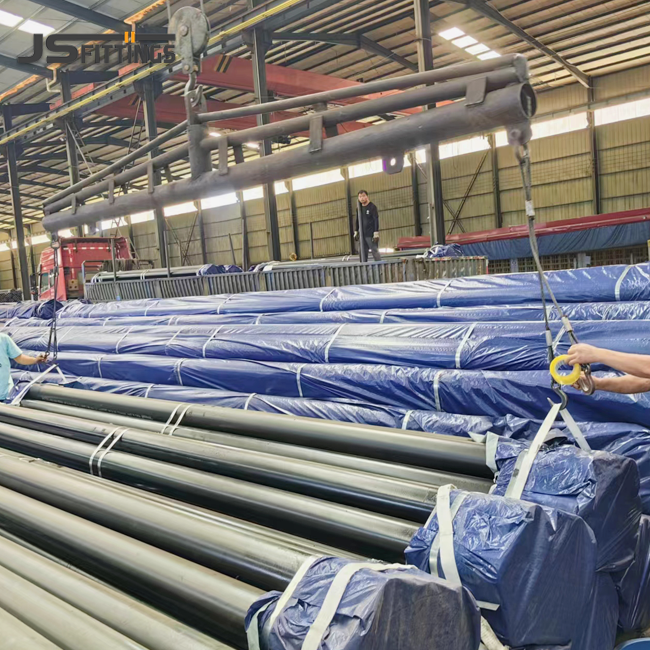
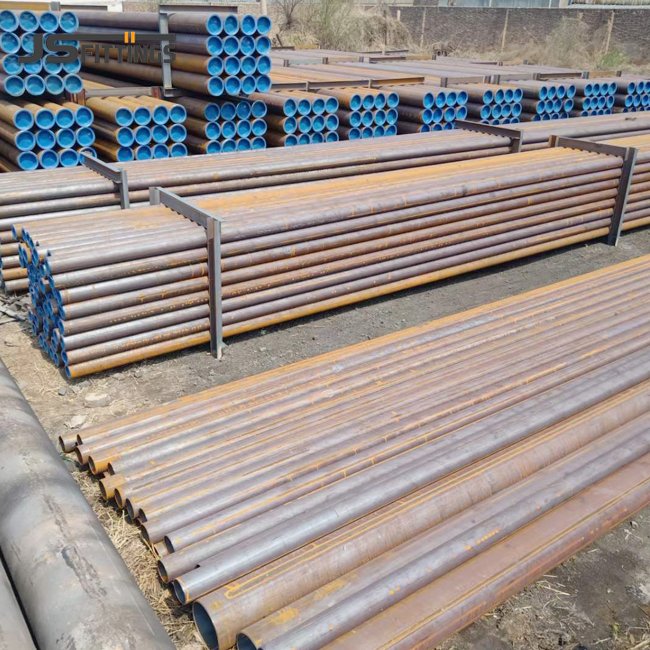

Related Industry Knowledge
- What is ASME B16.5: A Guide to ASME B16.5 carbon steel flange
- How to Order Custom Steel Flange
- All About ASTM A105 weld neck flange
- FBE vs 3LPE vs CWC for Underground and Subsea Applications
- Lap Joint Pipe Flanges: How and When to Use Them
- Why Is Long Radius Buttweld Elbow Preferred in Oil & Gas?
- What is carbon steel pipe used for?
- What are butt weld fittings?
- How to bolt to flanges with threaded holes?
- How to weld carbon steel pipe?