
What is the service life of an ASME B16.5 carbon steel flange?






2026-07-09 14:30:27
When buying piping components for important industrial projects, it's important to know how long an ASME B16.5 carbon steel flange is supposed to last so that you can keep costs down and make sure the project runs smoothly. As long as normal operating conditions are followed, these forged flanges can often provide 20 to 30 years of reliable service under suitable operating conditions. However, the actual lifespan depends a lot on the type of material used, the operating environment, how well it was installed, and how often it is maintained. In high-temperature or corrosive environments, service life may be cut to 10–15 years if proper precautions are not taken. However, if conditions are just right, performance can last longer than 30 years.
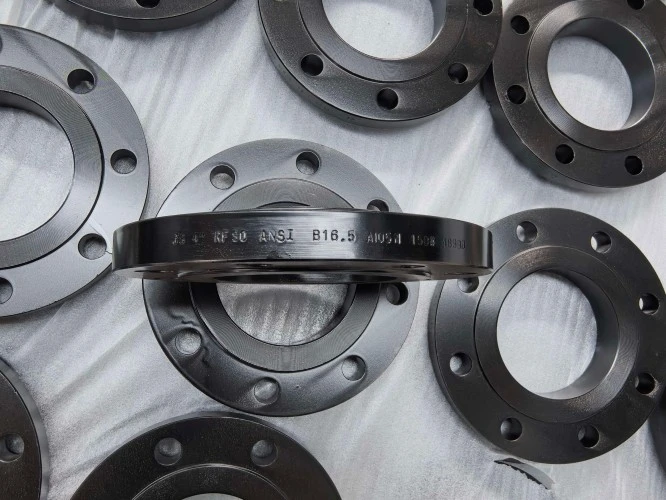
Understanding ASME B16.5 Carbon Steel Flanges
The backbone of process piping in refineries, chemical plants, and power plants is ASME B16.5 carbon steel flanges, which are forged connections intended to connect sections of pipe or equipment. In pressurized systems where safety and dependability can't be compromised, these parts make solid seals that prevent leakage.
Material Grades and Standards
ASTM A105 is the most common material specification for carbon steel flanges. It has strict chemical composition limits, with a maximum carbon content of 0.35% and manganese levels up to 1.05%, with the required range depending on the carbon content and specification requirements. This mix makes it easier to weld while keeping the minimum tensile strength at 70,000 psi. When used in low-temperature situations, ASTM A350 LF2 grade material provides improved impact toughness for low-temperature applications, with requirements depending on the specified class and test temperature. These materials are very flexible, able to achieve elongation values of at least 22%, and they have a controlled hardness within the applicable limits specified for the material grade and service environment ensuring excellent resistance to brittle fracture and thermal shock during rapid thermal cycling.
Flange Types and Pressure Classes
ASME B16.5 includes a number of different flange styles that can be used for different types of installations. For high-pressure systems, weld neck flanges provide better structural integrity, while slip-on types allow for more installation options for lower-pressure systems. Blind flanges protect the ends of pipelines, socket weld designs allow for smaller pipe sizes, and lap joint flanges make it easy to take things apart and put them back together again. The pressure classes include 150, 300, 400, 600, 900, 1500, and 2500, and each number represents the highest pressure that can be used at a certain temperature. Standard industry pressures can be handled by Class 150 flanges. On the other hand, Class 600 and 900 versions are commonly selected for higher-pressure services, including some steam applications in power plants, depending on temperature and material ratings.
Surface Finish and Facing Types
The usual toothed finish (AARH values such as 125–250 microinches are commonly specified for many raised face applications) makes it easier for gaskets to grip and seal. Most industrial applications utilize Raised Face (RF) designs, which feature higher sealing surfaces that focus bolt loads. Flat Face (FF) forms work well in low-pressure situations, while Ring Type Joint (RTJ) facings are better for high-pressure situations in upstream oil and gas activities. These precisely machined surfaces, which were made by CNC drilling and facing, allow for quick assembly on-site and perfect alignment with matching tools.
Factors Influencing the Service Life of ASME B16.5 Carbon Steel Flanges
How long these important parts of industrial piping systems work effectively is based on a number of linked factors.
Material Properties and Manufacturing Quality
Forged construction reduces the risk of internal defects that may occur in cast products, making them stronger and more resistant to wear. The process of forging smooths out the grain structure, which increases the yield strength and impact hardness. Material integrity is confirmed by manufacturing certifications like mill test reports, positive material identification, and non-destructive testing. Before JS FITTINGS ships an order, our spectral analyzers and ultrasonic testing equipment check the chemical makeup and structural soundness to make sure that each ASME B16.5 carbon steel flange meets the required mechanical properties.
Operating Conditions and Environmental Exposure
Pressure levels that stay the same, changes in temperature, and the properties of the fluid all have a big effect on how long a flange lasts. High-temperature steam service at elevated temperatures can accelerate creep deformation, especially in long-term high-temperature applications, where bolts are used to connect parts. Acidic condensates, chloride-containing fluids, and sour gas environments are some of the corrosive media that attack base metal surfaces and cause pitting and stress corrosion cracking. Over time, the vibrations from reciprocating equipment (such as compressors or pumps) can make bolted joints less secure, which affects the stability of the seal. Sprays of saltwater and chlorine in the air make offshore projects even more difficult.
Installation Precision and Maintenance Regimes
When you use the right amount of torque on the bolts, the gasket will be compressed evenly across the sealing surface. Leaks happen when the torque is too low, and damage to the gasket material and extra stress in the flange bodies happen when the torque is too high. Gasket compatibility is important; choosing the wrong materials can cause seals to fail early. Surface corrosion, bolt elongation, gasket degradation, and alignment shifts are all early warning signs that can be found through regular inspection protocols. Performing regular maintenance, such as re-torquing bolted connections after the first startup and temperature cycling, greatly increases the service life.
Application-Specific Environmental Factors
When flanges are in petrochemical plants, they have to deal with cyclical temperature changes, toxic process streams, and mechanical vibrations. Power plants put parts through long periods of high temperatures and changes in pressure when the load changes. Offshore platforms are in saltwater, which is corrosive, and the structure moves because of the waves. Engineers can choose the right pressure classes, material changes, and safety steps by understanding these application-specific stressors.
Comparing ASME B16.5 Carbon Steel Flanges with Alternatives: Service Life and Performance Insights
Comparing ASME B16.5 carbon steel flanges to other options helps procurement workers make smart choices that balance cost, performance, and durability.
Carbon Steel versus Stainless Steel Flanges
Stainless steel flanges are better at resisting corrosion, especially in places where chloride is present, but carbon steel versions are more cost-effective for uses that don't involve corrosion. A carbon steel flange is 40–60% less expensive than similar stainless steel parts. This makes it a good choice for water service, petroleum lines, and chemical streams that are not aggressive. But stainless grades last longer (30–50 years) in acidic environments, where carbon steel would need to be replaced more often.
ASME B16.5 and ASTM A105 Relationship
For carbon steel forgings, ASME B16.5 lists the sizes, tolerances, and pressure-temperature ratings, and ASTM A105 lists the material properties. These standards work together to make things better. ASME B16.5 makes sure that shapes from different makers are compatible, and A105 makes sure that things work mechanically. Both standards should be included in the procurement specifications so that materials aren't substituted in a way that hurts reliability. If a flange is marked "ASME B16.5" but doesn't have the matching ASTM material certification, it might not meet the strength standards.
Forged versus Fabricated Flange Types
When it comes to structural integrity, forged flanges generally provide more advantages than fabricated (welded plate) alternatives. When you forge something, the grain flow lines up with the stress patterns. This makes it more resistant to fatigue under cyclic loading. Even though fabricated flanges are cheaper, they have areas where the weld heat has made them less tough. For important service uses like high-pressure systems, settings that change temperature often, and setups that are prone to vibration, the extra cost of forged construction is worth it because it lasts longer and has a lower failure rate.
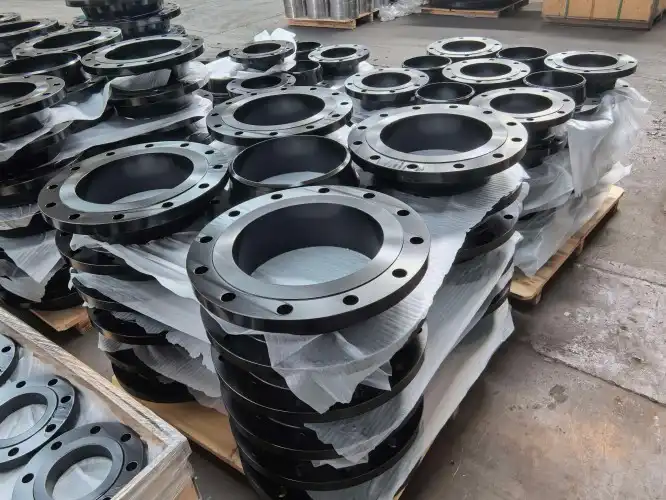
Procurement Considerations Impacting the Service Life of ASME B16.5 Carbon Steel Flanges
The operational lifespan and total cost of ownership of piping system parts are directly affected by the strategic decisions made during the procurement of ASME B16.5 carbon steel flanges.
Selecting Qualified Suppliers and Certifications
Partnering with manufacturers who have ISO 9001 certification, an ASME stamp of approval, and third-party quality audits makes sure that the quality of the products is always the same. JS FITTINGS has been making things for 43 years and has certifications from NIOC, ADNOC, and Petrobras, which show that we can meet the strict needs of the industry. Our plant has high-tech testing tools, like spectrum analyzers and phased array ultrasonic systems, that make sure the material's chemistry and structure are correct. These tools get rid of any defective parts before they are shipped.
Lead Times and Customization Capabilities
Standard pressure class flanges usually ship between 2 and 4 weeks, but custom requirements need 6 to 8 weeks for planning, making tools, and production. Every month, our factory makes 800 tonnes of pipe fittings and 700 tonnes of flanges to meet the needs of both large-scale projects and one-of-a-kind orders. With this much production capacity, we can quickly meet pressing needs—we answer customer questions within an hour—while still keeping high-quality standards. Customization options include sizes that aren't standard (DN15 to DN2000), special materials, and facing configurations that are made to fit the needs of a specific application.
Cost-Quality Balance and Long-Term Value
The initial price differences between premium and economy-grade flanges are not very important when you consider the costs of unplanned shutdowns, safety incidents, and replacement labor. A qualified manufacturer's Class 600 RF weld neck flange costs 15–20% more than options that aren't certified, but it performs reliably for the entire length of its design life. Our customer retention rate of over 98% shows that customers see this long-term value offer. Total lifecycle costs include the initial purchase price, installation labor, maintenance needs, expected service life, and how often the product needs to be replaced.
After-Sales Support and Warranty Coverage
Full help after the sale is what sets trustworthy sellers apart from transactional ones. Our service system includes technical advice on choosing materials, help with installation, help with fixing problems, and warranty coverage for problems caused by manufacturing. With a customer complaint rate of less than 0.5 percent and more than 95% of deliveries happening on time, we keep up the supply chain reliability that is needed to stick to the project schedule. Our foreign trade team handles complicated processes, paperwork, and legal requirements, making it easier for global projects to get what they need.
Best Practices to Maximize the Service Life of ASME B16.5 Carbon Steel Flanges
Using tried-and-true installation and maintenance procedures greatly increases the life of ASME B16.5 carbon steel flanges while lowering operational risk.
Proper Installation and Handling Protocols
Preparing the surface has a direct effect on how well the seal works. Cleaning the flange faces to get rid of mill scale, rust, and other contaminants ensures that the gasket contacts the surface properly. Using measured tools to apply controlled bolt torque stops uneven loads that can cause gaskets to crack and seals to fail in certain places. To get even tension, the torque is gradually increased over several passes as the bolt is tightened in a star pattern. The right gasket must be chosen for the job. For example, spiral-wound gaskets work well with hot steam, and full-face gaskets spread the load on flat-face flanges.
Inspection Frequencies and Diagnostic Techniques
Visual checks that are done on a regular basis find surface rust, loosening bolts, and gasket expansion before they cause leaks. Ultrasonic thickness measurements can find wall loss caused by internal corrosion, which allows replacement to happen before the structure's strength decreases. Infrared thermography shows hot spots that mean the seal is breaking down and there is internal leakage. Set inspection times for critical service applications based on a risk assessment: every three months for corrosive environments, and once a year for standard service conditions to ensure reliable flange performance.
Material Upgrades and Protective Coatings
When working conditions are too tough for base carbon steel, you might want to think about upgrading the material or covering the surface. Hot-dip galvanizing can provide long-term atmospheric corrosion protection, with service life depending strongly on the marine exposure conditions. Acidic condensates can't damage epoxy coatings chemically. If you're worried about corrosion, switching to grades of ASTM A182 F11 chrome-moly alloy or stainless steel stops base metal attack. Critical hydrogen service applications may use Cr-Mo alloy materials such as F22 when required by the applicable design standards and service conditions, which increases the flange's service life from 12 to 28 years.
Conclusion
An ASME B16.5 carbon steel flange's service life relies on the quality of the material, the setting in which it is used, how well it was installed, and how well it is maintained. Most uses can depend on them for 20 to 30 years, but harsh conditions can shorten that time if the right materials aren't used and safety steps aren't taken. Procurement professionals keep lifecycle costs as low as possible by working with certified manufacturers that have clear quality systems, do thorough testing, and offer quick support. Making smart choices about the specifications, the supplier, and the installation process sets the stage for decades of leak-free operation, which protects both the capital investment and the safety of operations.
FAQ
1. What is the typical service life of carbon steel flanges in standard industrial conditions?
Forged carbon steel flanges will last 20 to 30 years with normal temperatures (below 500°F), fluids that don't corrode them, and regular upkeep. Controlled installation, regular inspection, and choosing the right gasket are all things that can make this last longer.
2. Which certifications validate flange quality and reliability?
ASME B16.5 dimensional compliance, ASTM A105 material specification, ISO 9001 quality management, and third-party approvals from companies like Lloyd's Register or Bureau Veritas are some of the most important certifications. Manufacturers approved by big oil companies like NIOC, ADNOC, and Petrobras have shown they can do what they say they can do.
3. How do sour and highly corrosive environments affect the service life of carbon steel flanges?
Acidic fluids, fluids containing salt, and sour gas can speed up the loss of metal through pitting and stress corrosion cracks, which could shorten the service life to 10 to 15 years. Some ways to reduce the risk are to use better materials, protective coats, or more frequent inspections.
Partner with JS FITTINGS for Reliable ASME B16.5 Carbon Steel Flange Supply
You can trust JS FITTINGS to make high-quality ASME B16.5 carbon steel flanges. For 43 years, they have been doing great work on industrial projects around the world. Our ISO, CE, and GOST-R certifications, along with our NIOC, ADNOC, and Petrobras qualifications, show that we are dedicated to quality and dependability. We ship more than 90 containers every month, and we deliver on time more than 95% of the time, so your project schedules will stay on track. Our expert team offers complete piping solutions, from choosing the right materials to helping with construction. They do this while strictly controlling quality with optical emission spectrometers and ultrasonic testing tools. Get in touch with admin@jsfittings.com right away to talk about your flange needs and see for yourself why our 98% repurchase rate is so high.
References
1. American Society of Mechanical Engineers. (2021). ASME B16.5: Pipe Flanges and Flanged Fittings NPS 1/2 through NPS 24 Metric/Inch Standard. New York: ASME Press.
2. ASTM International. (2020). ASTM A105/A105M: Standard Specification for Carbon Steel Forgings for Piping Applications. West Conshohocken: ASTM International.
3. Becht Engineering. (2019). Flange Joint Assembly and Service Life Considerations in Process Industries. Houston: Becht Technical Publications.
4. Nalco Water. (2018). Corrosion Control in Industrial Piping Systems: Material Selection and Service Life Optimization. Naperville: Ecolab Inc.
5. Singh, R. (2017). Applied Welding Engineering: Processes, Codes, and Standards (2nd Edition). Oxford: Butterworth-Heinemann.
6. 压力管道技术. (2022). Industrial Flange Performance and Longevity: Case Studies from Petrochemical Applications. Beijing: China Petrochemical Press.
Send Inquiry
_1775030564781.webp "Blind Flange")
Related Industry Knowledge
- All About ASTM A105 weld neck flange
- ASTM A312 vs ASTM A213 Steel Pipe: What Are the Key Differences?
- ASTM A53 ERW vs Seamless Pipe: Strength and Usage Comparison
- CRA Clad Line Pipe for Subsea and Offshore Pipelines
- Carbon Steel Forged Steel Flange in Oil, Gas & Power Plants
- What are Lap Joint Pipe Flanges & how do they work?
- How to Select the Right Buttweld Bend Radius (3D–20D)
- How Does a Buttweld Elbow Reduce Pressure Loss in Pipelines?
- What is the difference between a 45 degree and 90 degree elbow?
- What is a plate flange?