
What Materials Are Used for Butt Weld Fittings?






2026-10-13 10:25:15
Butt weld fittings are a kind of permanent pipe connection component. They feature a bevelled edge that is welded circumferentially to the corresponding pipe ends to form a continuous, leakproof metal construction. The choice of acceptable materials is mainly governed by the fittings, such as elbows, tees, reducers, and caps, for safe and long-term performance. They are found in oil and gas, chemical processing, power generation, and water treatment applications. The pressure tolerance, corrosion resistance, temperature capability, and total service life will be determined by the choice of material. We accept carbon steel and stainless steel, alloys, and exotic alloys. Each of these materials is appropriate for a certain operating condition and fluid service.
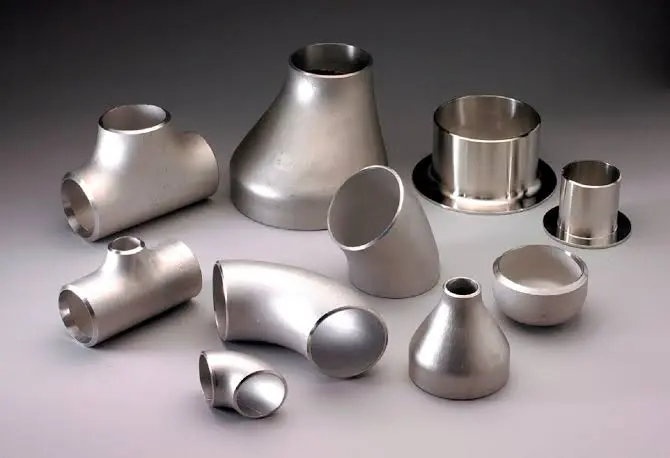
Understanding Butt Weld Fittings and Their Material Requirements
What Makes Material Selection So Critical?
The material selection of a pipe fitting will directly affect the life of your system without failure. The last thing you want on an industrial project is to choose the incorrect material for a high-pressure or acid service and have it fracture, leak, or altogether fail. Material selection is not only a technical choice; it is a decision regarding risk management.
Governing Standards That Define Material Requirements
ASME B16.9 covers factory-made wrought buttwelding fittings, including applicable dimensions, tolerances, and material requirements. These standards specify chemical composition, mechanical properties, and tests to be performed. This is to ensure the safe use of industrial pipe systems and the interchangeability of such systems with each other.
How Do Standards Protect Your Project?
ASME B36.10M covers pipe dimensions, while ASME B31.3 covers process piping requirements. Following ASME B16.9 provides a strong basis for procurement engineers. This is particularly essential for EPC contractors, government construction bids, and facilities under stringent regulatory supervision.
Common Materials Used for Butt Weld Fittings
Carbon Steel: The Workhorse Material
For standard industrial uses, butt-welded pipe fittings are most often made from carbon steel, generally ASTM A234 WPB. Carbon steel fittings are suitable for different low- to medium-pressure applications and offer a good strength-to-cost ratio. They are a common choice where the process fluid presents limited corrosion risk, such as in refineries, steam generation lines, and industrial utility piping.
Stainless Steel: Corrosion Resistance for Demanding Environments
However, carbon steel butt weld pipe fittings are often used for less corrosive service circumstances, while stainless steel grades of ASTM A403 WP304/WP304L and WP316/WP316L are needed for corrosive fluids, sanitary requirements, or high temperatures in service situations. GRADE 316L is molybdenum-bearing; it is far more resistant to chloride pitting and is suitable for marine, chemical, and food-grade applications. These stainless steel fittings are more expensive than carbon steel but last significantly longer in harsh circumstances.
Alloy Steel and Specialty Materials
Chrome-moly alloy steels such as ASTM A234 WP11 and WP22 are used in power plants and industries where creep resistance is needed above 850°F. Corrosion problems in extreme settings may not be securely handled by carbon steel and normal stainless steels, and specialty metals such as nickel-based Inconel, Monel, or copper-nickel may be appropriate. These materials are covered by distinct ASTM standards and have higher lead times and cost.
Manufacturing and Heat Treatment Processes Influencing Material Performance
Seamless vs. Welded Construction
Seamless butt weld fittings are preferred for high-pressure and safety-critical applications because they are formed from high-grade seamless steel pipe stock and contain no longitudinal weld seams. For certain lower-pressure and larger-diameter applications, welded fittings from plate or strip material may be a cost-effective alternative. Thickness uniformity, pressure rating, and NDT requirements depend on the applicable manufacturing and material standards. In applications where service is crucial, seamless construction may typically be specified, with the necessary pipe dimensions linked to ASME B36.10M or B36.19M.
Heat Treatment Processes That Affect Mechanical Properties
In quality manufacturing, the post-forming heat treatment required by the material standard cannot be overlooked. Hot forming alters the grain structure, while normalisation can help restore the required mechanical properties. Stress relieving is used to reduce residual stresses induced during cutting and forming. This is especially important for items to be welded into high-cycle or variable pressure systems. ASTM A403 fittings need heat treatment; ASTM A234 provides heat-treatment standards according to suitable material grade. The specifics of the appropriate heat treatment should be recorded in the MTC.
Why Traceability and NDT Matter?
All JS FITTINGS fittings are supplied with a 3.1 Mill Test Certificate giving full chemical and mechanical traceability and are from a Tier-1 mill. We conduct visual inspections, ultrasonic testing, and magnetic particle inspection to identify internal discontinuities and surface cracks. We can produce consistent bevel ends to ASME B16.25 specifications using our CNC machining. This saves the time and danger of rework your contractors have to conduct on site.
How to Choose the Right Material for Your Butt Weld Fittings?
Assess Your Operating Conditions First
Before specifying the material grade for your butt weld pipe fittings, evaluate the design temperature, operating pressure, fluid corrosivity, ambient environment, and required wall thickness schedule (such as SCH 10, SCH 40, or SCH 80). These answers narrow the material selection and help avoid choices that are either unsuitable or unnecessarily restrictive.
There are different kinds of materials, and picking the right one at the beginning can save you a lot of money and trouble over the course of the whole project.
- Carbon steel: Best for general-purpose, non-corrosive service in budget-sensitive projects. Widely stocked in sizes from ½" to 48", with surface coatings such as black paint, epoxy, or galvanizing available to extend service life.
- Stainless steel 316L: Best for corrosive or hygienic service where long-term reliability outweighs initial cost. Specified in chemical plants, offshore platforms, and pharmaceutical piping.
- Chrome-moly alloy steel: Best for high-temperature power and refinery service where creep and oxidation resistance are design requirements.
Early engagement with suppliers is important for non-standard specifications like unusual alloys, oversized dimensions, or tight delivery schedules. JS FITTINGS can handle sizes from DN15 to DN2000 and takes OEM and custom orders. We support both large EPC procurement schedules and urgent spot orders for wholesalers handling local inventory. Each month, we produce more than 800 tons of pipe fittings and deliver them on time more than 95% of the time.
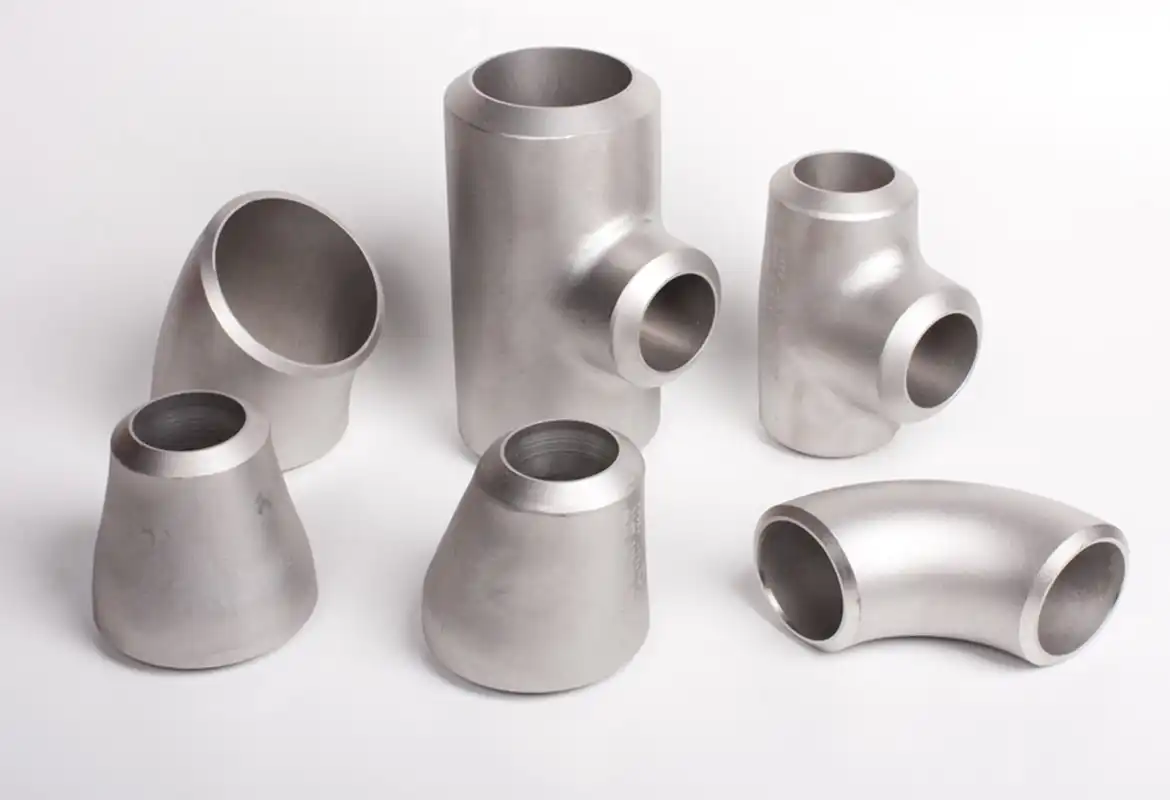
Advantages of Selecting Quality Materials and Trusted Suppliers
Lifecycle Cost vs. Initial Purchase Price
The cheapest fitting you buy may not be the cheapest fitting you have in 10 or 20 years. A carbon steel fitting in a chloride-rich atmosphere may corrode and snap, perhaps causing unplanned shutdowns, emergency buys, and safety issues. If you choose the correct material from the start, even if it costs more, the total cost of ownership will be cheaper since you’ll have less maintenance and fewer early failures.
Certifications That Protect Your Supply Chain
Collaborating with an accredited source ensures your legal documentation is transparent. JS FITTINGS has been approved as a supplier by the National Iranian Oil Company, Abu Dhabi National Oil Company, and Petrobras. The company is also certified with ISO 9001, CE, and GOST-R. These certifications and approvals provide documented evidence of quality-system compliance and project-specific qualification, not a business claim. This documentation supports government and infrastructure projects that must comply with applicable tender requirements.
Packaging and Logistics Designed for Stockists
We understand that trading and distribution companies require more than a good product. They also need reliable inventory tracking. Our seaworthy plywood cases and palletized packages are clearly marked with heat numbers, making it easier to receive goods into storage and manage stock. We are a partner in the supply chain, not just a seller, with more than 90 containers shipped per month and a customer complaint rate of less than 0.5%.
Conclusion
The selection of the right material for butt weld fittings is a technical and business decision that affects the safety of the project, its compliance, and its long-term running costs. Carbon steel can perform well in many general-purpose applications. Stainless steel can perform well in corrosive environments. Alloy steel can provide improved performance in high-temperature and high-pressure applications when properly specified. The appropriate material depends on the service conditions and project requirements, while the right supplier should provide traceable products backed by documented quality control. Getting both right from the outset will keep your project safe from hazards that can be avoided.
FAQ
1. What material is best for high-pressure pipeline fittings?
For high-pressure service, material selection should be based on the required pressure, temperature, and service conditions. Seamless carbon steel grades such as ASTM A234 WPB or chrome-moly alloy steels such as WP11/WP22 may be considered when they meet the applicable design and material requirements.
2. Can carbon steel fittings be used in corrosive environments?
Plain carbon steel cannot be utilised in extremely corrosive situations without coating. Where exposure to severe chemicals or seawater is anticipated, the specification may include fittings of stainless steel or nickel alloy.
3. Does heat treatment improve fitting performance?
Yes. Proper heat treatment after forming may improve mechanical properties, eliminate residual stresses, and increase toughness. The required heat treatment depends on material grade and specification and should be noted on the MTC.
4. What schedule thicknesses does JS FITTINGS supply?
JS FITTINGS manufactures butt weld fittings in SCH 10, SCH 40, and SCH 80 from ½” – 48” as per ASME B16.9 and related pipe schedules in ASME B36.10M and B36.19M.
Get Certified Butt Weld Fittings from JS FITTINGS
It's been over 40 years since JS FITTINGS sent approved pipe fittings to projects in more than 30 countries. We are a reliable company that makes butt weld fittings. Our products are manufactured from carbon steel, stainless steel, and other specified materials, with sizes ranging from ½" to 48" in SCH 10, SCH 40, and SCH 80. Relevant certifications and approvals include ISO, CE, GOST-R, and approved vendor qualifications for leading operators such as ADNOC and Petrobras.To get a quote or a product specification sheet, email our team at admin@jsfittings.com.
References
1. ASME International. ASME B16.9: Factory-Made Wrought Buttwelding Fittings. American Society of Mechanical Engineers, 2018.
2. ASTM International. ASTM A234/A234M: Standard Specification for Piping Fittings of Wrought Carbon Steel and Alloy Steel for Moderate and High Temperature Service. ASTM International, 2022.
3. ASTM International. ASTM A403/A403M: Standard Specification for Wrought Austenitic Stainless Steel Piping Fittings. ASTM International, 2021.
4. ASME International. ASME B31.3: Process Piping. American Society of Mechanical Engineers, 2020.
5. ASME International. ASME B16.25: Buttwelding Ends. American Society of Mechanical Engineers, 2017.
6. Nayyar, M. L. Piping Handbook, 7th Edition. McGraw-Hill, 2000.
Send Inquiry
You may like