
What Pressure Ratings Suit Plate Flanges?






2026-10-20 10:54:36
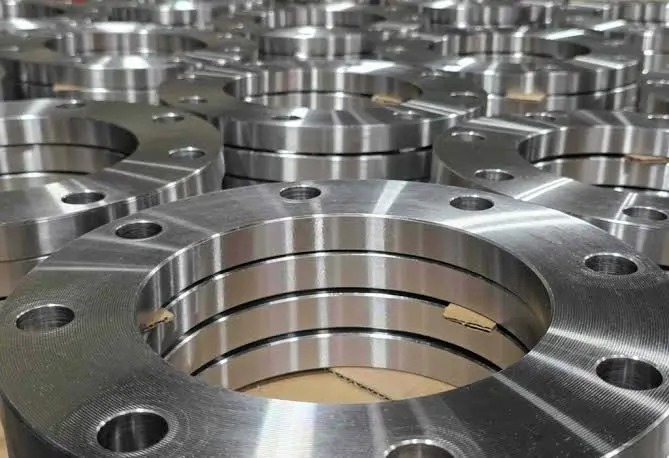
Flat flanges, also known as plate flanges or slip-on plate flanges, are flat circular disks that are placed over the end of a pipe and fillet welded in place. Due to their low-profile shape, they are the most inexpensive connection solution for low- to medium-pressure systems. Metric versions are rated to PN6 to PN40 standard pressure ratings, while imperial versions are covered by ASME B16.5 Class 150 lightweight variants. What rating applies to your system is critical for safety compliance, cost management, and long-term dependability, three concerns that drive every significant purchase choice.
Understanding Plate Flange Pressure Ratings
What a Pressure Rating Actually Means
The flange has a pressure figure that informs you of the maximum pressure a flange can take at a certain temperature. EN 1092-1 Type 01, DIN 2573/2576/2501/2502, BS 4504/AS 2129 and ASME B16.5 all provide the numbers to be used for Plate flanges. The pressure class of each standard is determined by the material type, wall thickness, and the form of the closure face rather than by a general pressure estimate.
How Material Properties Set the Limit
Carbon steels (e.g. A36, Q235, S235JR) are suitable for the service of PN6-PN16. Stainless steel grades like SS304L and SS316L can bear similar pressures. However, they are less susceptible to corrosion and have a longer life span in chemical or marine environments. Plate flanges are restricted to ASME Class 300 as they lack hub support; they are fabricated from rolled plate, not die-forged steel.
Testing and Compliance Protocols
A reputable facility will make sure that every Plate flange that leaves it has gone through a number of tests. These include ultrasonic testing of the source plate to search for laminations, confirmation of the bolt-circle diameter tolerances, and measurement of the surface roughness (Ra 3.2–6.3 μm) on the gasket face. If you choose EN 10204 3.1, you may acquire a mill test certificate showing the carbon equivalent figures for welding. Completing these verification steps is essential to ensure full regulatory compliance and audit readiness.
Types of Plate Flanges and Their Pressure Ratings
Flat Plate and Slip-On Variants
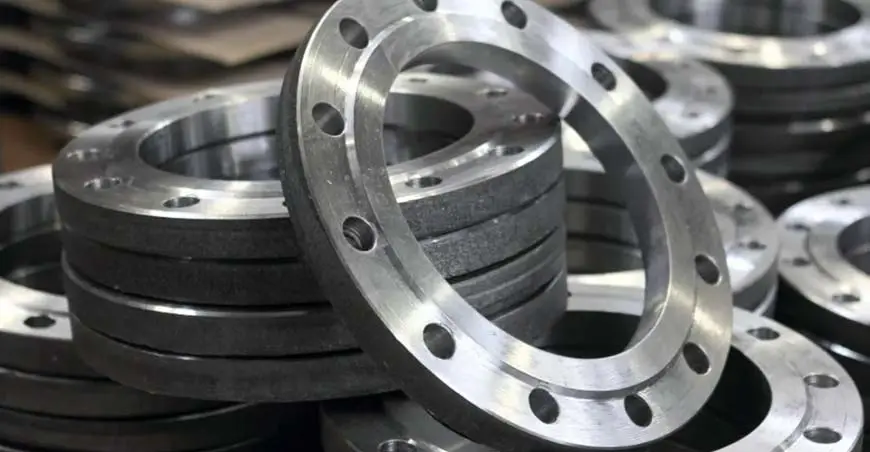
The Flat Plate flange body and slip-on construction are exceedingly thin. They are effective in water treatment facilities, irrigation systems, and manufacturing cooling lines, typically covering PN6 to PN16. Their flat face (FF) seating distributes the load on the flange face evenly when used with full-face gaskets in cast iron or plastic pipe systems.
Blind and Lap Joint Plate Flanges
Blind plate flanges conforming to PN10 or PN16 ratings are installed to isolate piping sections or provide positive line termination. If they are formed of the same plate material all have the same grade range, PN6 to PN40. Stub ends are typically used with lap joint flanges when frequent disassembly is required. But for plate cut variants, their pressure limit is within PN16.
Plate Flange vs. Weld Neck: A Direct Comparison
A weld neck flange places the stresses on the pipe wall directly with a tapered hub. This allows it to attain Class 600 or above. Without a reinforcing hub, plate flanges are generally limited to Class 150 in imperial specifications (or up to PN16/PN25 under EN 1092-1). For utility-class systems, plate flanges can be a cost-effective alternative to forged hub flanges when their pressure and service limits are appropriate.
How to Select Plate Flanges Based on Pressure Rating Requirements
It’s not simply about hitting a number to receive the correct grade. Temperature, fluid type, gasket compatibility, and pipe schedule all influence each other in different ways. This is a draft plan that may be used by those buying projects and tech teams.
- Step 1 — Establish operating pressure and temperature: Check the maximum working pressure in bar or psi and the design temperature. Note that pressure ratings decline with temperature; a PN16 carbon steel plate flange rated for 16 bar at 20 °C is typically derated to approximately 13 bar at 200 °C.
- Step 2 — Identify the standard relevant to your pipeline system: Projects that are EN/DIN-based use PN ratings, whereas those that are ASME-based use Class designations. Do not combine standards without engineering evaluation because of different bolt patterns and face measurements.
- Step 3 — Material grade selection: Carbon steel is suitable for neutral fluids and dry gas lines. Stainless steel (SS316L) is ideal for chloride-containing water, brine, or dilute chemical service.
- Step 4 - Select facing type: Flat face (FF) is the norm for most PN10 and PN16 forged plate flange applications and mates with full-face gaskets. Raised Face (RF) is offered for applications that need a higher gasket seating stress.
Procurement Considerations for Plate Flanges by Pressure Rating
Certification and Supplier Qualification
Plate flanges for high-pressure applications should be sourced from suppliers that can verify the accuracy and traceability of the supplied information. Providers should be ISO 9001 certified and provide EN 10204 3.1 material traceability. Sourcing from a vendor holding approved supplier qualifications from major energy operators such as ADNOC and PETROBRAS provides an additional layer of verified reliability. It accelerates the approval procedure for bids for government or energy projects.
Customization and Size Range
Normal Plate flanges are from DN15 to DN2000, ½" to 80". But in the case of building or fixing tanks, various size holes are needed regularly. If you have a supplier with CNC boring equipment on site, they can produce interior holes to accommodate pipe OD's that are not typical. This reduces the expense of changing the field and makes it less likely that the plan for huge projects would slide.
Bulk Orders, Lead Times, and Packaging
Dealing and distribution organizations that handle regional goods might generate more money if they can rely on consistent wait times and significant order prices. International shipping of plate flanges requires individual wrapping in VCI anti-corrosion film and placement in wooden containers or pallets. In addition, each part should be covered with hot-dip galvanizing, yellow anti-rust paint, or black lacquer. You may save yourself the hassle of damage claims and shipping delays by confirming this logistical information in advance.
Conclusion
Plate flanges are available for metric PN6 through PN40 and English ASME Class 150 service. They perform reliably in low-pressure, large-diameter transmission mains, municipal water treatment facilities, and industrial cooling systems where budget, space, and installation time are critical. A suitable plate flange should be sourced from a qualified supplier that provides clear specifications, traceability documents, and guidance for the intended service conditions.
FAQ
1. What pressure classes are most common for plate flanges in industrial use?
PN10 and PN16 are the most widely specified ratings for plate flanges in water treatment, HVAC, and general utility piping across the US and international markets. Class 150 covers comparable imperial applications. PN6 suits low-pressure irrigation or gravity-fed water lines.
2. Does temperature affect a plate flange's pressure rating?
Yes. Pressure ratings published in standards apply at a baseline temperature, typically 20 °C (68 °F). As operating temperature rises, the allowable working pressure drops. Always check the pressure-temperature table in the relevant standard — EN 1092-1 or ASME B16.5 — before finalizing specifications.
3. How does the welding method affect pressure performance?
Double fillet welding — both inside and outside the bore — is required for plate flanges in pressure service. This technique prevents crevice corrosion between the pipe and flange body and provides sufficient joint strength for PN6 to PN40 service. Single-weld installation is not recommended for any pressurized system.
4. Can stainless steel plate flanges carry higher pressure than carbon steel versions?
Not necessarily at room temperature, as both grades share similar PN ratings within the plate flange category. However, SS316L retains its mechanical properties better at elevated temperatures and in corrosive media, making it the preferred choice where longevity under aggressive conditions is the priority.
Request a Quote from JS FITTINGS — Plate Flange Supplier
Since 1983, JS FITTINGS has supplied plate flanges to projects in more than 30 countries. Plate flanges come in DN15 to DN2000, PN6 to PN40, and ASME Class 150 sizes. They have ISO, CE, and GOST-R certifications. We work with EPC contractors, distributors, and government projects of all kinds. We deliver on time more than 95% of the time and make more than 700 tons of flanges every month. Email our team at admin@jsfittings.com right away to get a unique price.
References
1. American Society of Mechanical Engineers. ASME B16.5: Pipe Flanges and Flanged Fittings. ASME, 2017.
2. European Committee for Standardization. EN 1092-1: Flanges and Their Joints — Circular Flanges for Pipes. CEN, 2018.
3. Deutsches Institut für Normung. DIN 2576: Plate Flanges for Welding — PN 10 and PN 16. DIN, 2002.
4. Nayyar, Mohinder L. Piping Handbook, 7th ed. McGraw-Hill, 2000.
5. Becht, Charles. Process Piping: The Complete Guide to ASME B31.3, 4th ed. ASME Press, 2014.
6. British Standards Institution. BS 4504-3.1: Circular Flanges for Pipes, Valves and Fittings — Steel Flanges. BSI, 1989.
Send Inquiry
You may like