
When Is a Plate Flange the Best Choice?






2026-09-20 16:02:40
A Plate flange becomes the best choice when cost optimization and installation flexibility outweigh the need for high-pressure handling or intensive cyclic loading. Manufactured from flat steel plate stock using machining or thermal cutting, a plate flange delivers an economical, lightweight solution for low-to-medium pressure piping systems—commonly used in PN6 to PN16 service, depending on design requirements and applicable standards—for municipal water distribution, shipbuilding cooling systems, and industrial utility lines. Its compact geometry suits confined spaces where traditional hubbed flanges create clearance problems, while its straightforward slip-on and fillet-weld design accelerates onsite assembly.
What Is a Plate Flange and Its Key Specifications?
Definition and Design Features
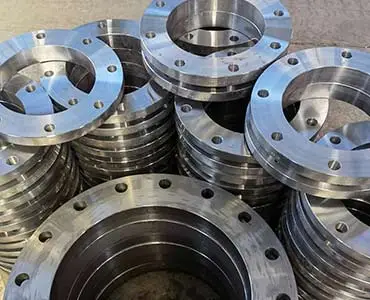
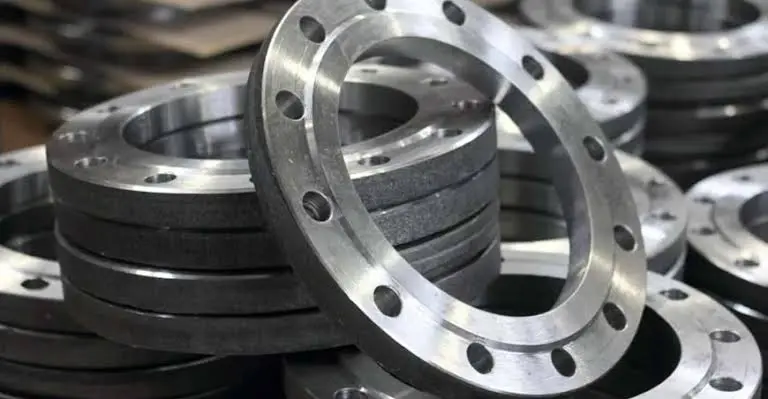
Plate flanges are flat, circular hubless flanges featuring a central bore and concentric bolt holes, precision-machined directly from hot-rolled steel plates rather than forged blanks.The plate flange has a flat shape, so it doesn't have an extended neck like weld neck or slip-on flanges with tapered tips. By eliminating the extended forged neck, this streamlined geometry reduces raw material consumption by 30% to 50% compared to hubbed weld neck flanges. The lack of a hub also lowers the overall weight, which makes pipe hangers and support structures less stressed in large networks of pipes where weight savings add up.
International Standards and Material Grades
Plate flanges are compatible with many international standards, which gives purchasing teams a range of design choices. In European, Asian, and Australian markets, EN 1092-1 Type 01, JIS B2220 SOP, and AS 2129 are the most popular names used. Material grades include carbon steels such as A36, Q235, SS400, and S235JR for plate fabrication, while forged flange designs may use materials such as ASTM A105. Stainless steel grades include SS304/L and SS316/L. The grades are chosen based on how corrosive the medium being carried is and the surroundings. Hot-rolled plate material has a consistent thickness and grain structure, so it doesn't have the porosity problems that come with cast options. However, it doesn't have the directional flow-line strength that comes with forged goods.
Pressure Ratings and Dimensional Specifications
Plate flanges are designed for low- to medium-pressure service and are typically rated at PN6, PN10, and PN16 (up to 16 bar) or JIS 5K and 10K. They are generally not preferred for ASME Class 300 or higher critical services because higher pressure, cyclic loading, and thermal expansion conditions often require the additional reinforcement provided by hubbed flange designs. Flat Face (FF) and Raised Face (RF) are two common flange-facing types. Their sealing surfaces are typically machined to a specified surface roughness to support proper gasket seating and sealing integrity. To keep the unit from being out of line and the gasket from failing, tight tolerances must be met for bolt circle diameter (BCD) and center-to-center hole setting.
Comparing Plate Flanges with Other Flange Types
Plate Flange vs. Weld Neck Flange
Weld neck flanges have a long, curved hub that distributes stress better in high-temperature and high-pressure situations. This makes them the best choice for ASME Class 600 and higher uses. Plate flanges aren't as good at handling cycle loads and thermal expansion as these structural reinforcements. But this costs an extra 40% to 60% and needs accurate bevel preparation and full-penetration butt welding, which adds to the time and money needed to make the product. Plate flanges provide acceptable performance at a fraction of the cost for projects where pressure ratings stay below PN16 and thermal cycling is minor, like cooling water lines or low-pressure chemical transport.
Plate Flange vs. Slip-On Flange
Like plate flanges, slip-on flanges need to be fillet welded to the outside of the pipe. The main difference is that slip-on flanges have a short hub that adds some strength and makes them slightly more resistant to fatigue. When choosing between these two choices, procurement managers should look at the levels of shaking and pressure. Slip-on flanges can be used in some Class 300 applications where pressure, temperature, and cyclic loading conditions are acceptable. Plate flanges supplied by experienced manufacturers can be a cost-effective solution for installations that do not experience significant movement or pressure surges, such as water treatment plants, irrigation systems, and city infrastructure.
Plate Flange vs. Threaded Flange
Threaded flanges, which are also called screwed flanges, have tapered threads on the inside that let them be screwed onto pipes with matching threads on the outside without having to weld them together. We make threaded flanges that meet ASME/ANSI B16.5 and DIN/EN 1092-1 standards at JS Fittings. We use NPT (National Pipe Thread) and BSPT (British Standard Pipe Taper) thread types. The pressure classes range from Class 150 to 2500, and sizes are commonly available from NPS 1/2 to NPS 24 depending on the applicable standard. Threaded flanges can be useful in applications where field welding is restricted, especially for small-diameter piping systems where avoiding hot work is beneficial. They make it easier to put things together on-site, don't require certified welders, and don't need any heat treatment after the welding process. Their ability to be unscrewed easily also makes upkeep and system changes go more quickly. Threaded flanges, on the other hand, are better for small-diameter pipes, while plate flanges are better for large-diameter lines (DN600 and above) in water and wastewater systems where welding is safe.
Plate Flange vs. Blind Flange and Lap Joint Flange
Blind flanges secure the end of a pipe system and don't have a hole in them, so they are not the same as plate flanges. Lap joint flanges, which can spin easily behind a stub end, work well in systems that need to be taken apart often or where expensive alloy pipe needs to be kept to a minimum to save money. Plate flanges are still the most common way to connect pipes in naval and utility uses. These specialized flanges are used in specific situations.
When Is a Plate Flange the Best Choice?
Pressure and Temperature Considerations
The main technical factor for choosing a flange is the pressure and temperature profile of the pipe system. Plate flanges are commonly used in the PN6 to PN16 range, although the allowable pressure depends on the applicable standard, material grade, temperature, and design conditions. When it comes to engineering properties, plate flanges work perfectly with municipal water delivery networks that usually run at 100 to 150 psi. Where pressures rarely go above 10 bar and temperatures stay below 80°C, plate flanges are also helpful for cooling water systems in power plants and factories. They save money and make installation faster.
Corrosion Resistance and Material Selection
Corrosive conditions affect both the choice of material and the flange type. Plate flanges made of SS316L stainless steel are very good at resisting pitting and crevice corrosion caused by chloride, which can happen in seawater cooling systems on ships and offshore platforms. A lot of shipbuilders use the JIS B2220 SOP standard, which lists plate flange sizes and material types that work well in marine settings. Stainless steel plate flanges can perform reliably in continuous water immersion applications and the vibrational stresses of marine propulsion systems as long as working conditions remain within rated JIS 5K or 10K pressure limits.
Installation Space Constraints
Low-profile parts are needed in tight installation areas like pipe racks under processing platforms, utility tunnels in basements, and chemical plants with a lot of pipes stacked close together. Plate flanges don't have a hub, so they need less axial length to be installed. This is helpful when weld-neck flanges would interact with nearby lines, structural supports, or equipment housings. This small shape speeds up the fit-up process during building, especially in retrofit projects where room is limited by existing infrastructure.
Cost Sensitivity and Budget Constraints
When working on big projects with hundreds or thousands of flanges, budget constraints directly affect the choice of materials. Field data from municipal water infrastructure projects demonstrates that specifying plate flanges in non-critical lines can reduce procurement costs by 30% to 50% compared to forged weld neck flanges. For irrigation networks and utility lines with strict capital budgets, these savings make high-quality plate flanges the ideal engineering choice. These cost savings can help engineering companies and local installers control project costs while maintaining required safety and compliance.
Ease of Maintenance and Field Modifications
Plate flange connections are easy to use and work well for systems that need to be inspected, cleaned, or reconfigured often. It is easier to cut and remove a simple fillet-welded joint than a full-penetration weld on a weld neck flange, which cuts down on downtime during maintenance breaks. Plate flanges help industrial end users who are in charge of process lines that need to be upgraded or expanded on a regular basis turn things around faster, which means less downtime and lost revenue.
Customization and Non-Standard Sizes
Plate flanges from JS Fittings come in sizes from DN15 to DN2000, so they can be used for both normal and non-standard tasks. Custom production lets you meet the specific needs of a project, such as non-standard bolt patterns, special facing shapes, and material grades that aren't available in a list. Distributors and stockists who serve a variety of regional markets can meet local needs with the help of flexible customization options, which keep them from keeping too much product on hand.
How to Source and Procure Plate Flanges Efficiently?
Identifying Certified Suppliers
Qualifying suppliers is the first step in effective buying. Check to see if the makers have the right certifications, such as ISO 9001 for quality management systems, CE marking for European markets, and GOST-R for compliance in the Russian Federation. JS Fittings is an approved supplier for major international energy and infrastructure operators, including Abu Dhabi National Oil Company (ADNOC) and Petrobras. This demonstrates our ability to meet international project requirements. Ask for Mill Test Certificates (EN 10204 3.1) that verify chemical composition and mechanical properties. Carbon equivalent values should be reviewed separately when assessing weldability and preheating requirements.
Understanding Pricing Structures
Plate flanges are priced based on material grade, nominal size, order volume, and any secondary processing requirements, such as anti-corrosion coating or custom beveling. Plate flanges made of carbon steel usually cost between $5 and $50 per piece for sizes DN50 to DN300. Stainless steel versions, on the other hand, cost 40% to 100% more because of the higher cost of the raw materials. Through economies of scale, buying in bulk lowers the cost per unit. Setting up long-term supply agreements with manufacturers can help stabilize pricing and reduce the impact of fluctuations in raw material costs.
Evaluating Delivery Lead Times
Standard plate flanges in standard sizes (DN50 to DN300, PN10 to PN16, carbon steel) can be shipped two to four weeks after they are stocked. Depending on the supply of raw materials and manufacturing complexity, it may take six to eight weeks to make something in a custom size or grade of stainless steel. JS Fittings reports monthly shipments of more than 90 containers, supporting predictable delivery planning for distributors and EPC contractors. Over 95% of deliveries happen on time or early, which keeps projects on schedule and helps distributors and EPC contractors use just-in-time inventory strategies.
Requesting Samples and Trial Orders
Before making a big purchase, you should ask for samples or small-batch trial orders to make sure the measurements are correct, the surface finish is good, and the material is certified. During physical inspection, quality assurance teams can use precise measuring tools to check for flatness tolerances, the placement of bolt holes, and the roughness of the gasket seating surface. When trial orders go well, they give buyers trust in the supplier's skills and set quality standards for future production runs.
Conclusion
When choosing the right flange type, you have to think about technical needs, spending limits, and business goals. When cost effectiveness, compact geometry, and ease of installation outweigh the need for high-pressure structural reinforcement, plate flanges provide an affordable, reliable solution for applications where cost efficiency and installation simplicity are priorities. Because they have been used successfully in ships, local water infrastructure, and industrial utility lines, and because they can be customized easily and meet global standards, they are the practical choice for projects that want to save money without sacrificing safety or durability. When procurement teams work with certified manufacturers, they get uniform quality, on-time delivery, and full expert help throughout the lifespan of a project.
FAQ
1. What pressure ratings are suitable for plate flanges?
Plate flanges are good for low- to medium-pressure uses. They are usually rated PN6, PN10, and PN16 (up to 16 Bar or 232 psi), or JIS 5K and 10K. They shouldn't be used in ASME Class 300 or higher service, where hubbed flanges are needed to support the structure against temperature stress and cyclic loads.
2. How does material selection affect corrosion resistance?
Plate flanges made of carbon steel (grades Q235, A36, and SS400) work well in freshwater and non-corrosive settings. They are often made stronger with protective coats. Stainless steel grades (SS304/L and SS316/L) provide improved corrosion resistance compared with carbon steel, while SS316/L offers better resistance in chloride-containing environments. This means they last longer in harsh environments without needing to be coated often.
3. Can plate flanges be customized for non-standard applications?
Custom production can meet specific size needs, such as non-standard bolt patterns, unique facing shapes, and material grades that aren't available in a list. Suppliers that can do their own machining and have flexible production schedules can provide custom solutions with reasonable lead times.
Partner with JS Fittings for Reliable Plate Flange Solutions
JS Fittings has been making high-quality plate flanges that meet ASME, DIN, JIS, and EN standards for over 40 years. They bring that experience to every project. Our certified manufacturing facilities and experience serving international projects support consistent quality and reliable delivery, making sure that the quality is always the same and that we meet all world standards. Plate flanges made of carbon steel and stainless steel are available in sizes DN15 to DN2000. We can meet both regular inventory needs and special engineering needs.
Our experienced international trade team responds to inquiries within an hour and provides technical guidance, material recommendations, and project-based quotations. Just-in-time purchasing strategies and tight project plans are supported by monthly shipments of more than 90 containers and arrival rates of more than 95% on time. JS Fittings offers reliable plate flange solutions and full after-sales support, whether you need a small batch for a test run or a large-scale supply agreement.
Contact our team to discuss your project requirements and specific application needs. You can email us at admin@jsfittings.com to see all of our products and get a price from a reliable plate flange provider.
References
1. American Society of Mechanical Engineers (2020). ASME B16.5: Pipe Flanges and Flanged Fittings.
2. European Committee for Standardization (2018). EN 1092-1: Flanges and their joints—Circular flanges for pipes, valves, fittings, and accessories.
3. Water World (2019). Cost Optimization Strategies in Municipal Water Infrastructure Projects.
4. American Petroleum Institute (2021). API 6A: Wellhead and Christmas Tree Equipment.
5. ASTM International (2022). ASTM A105/A105M: Standard Specification for Carbon Steel Forgings for Piping Applications.
Send Inquiry
You may like