
When Should You Use Butt Weld Fittings?






2026-09-29 15:55:39
If you deal with industrial piping—whether you’re in charge of EPC projects, own a distribution firm, or supervise a processing plant—you’ve undoubtedly been asked which kind of fitting is appropriate for your system. When you require a permanent, high-integrity pipe junction that can stand up to pressure, heat, and corrosive media, butt weld fittings are the solution. These fittings are covered by ASME B16.9 and are available in diameters from ½” to 48”. The fittings include elbows, tees, reducers, caps, and crosses. They outperform threaded or socket weld options in difficult conditions every time.
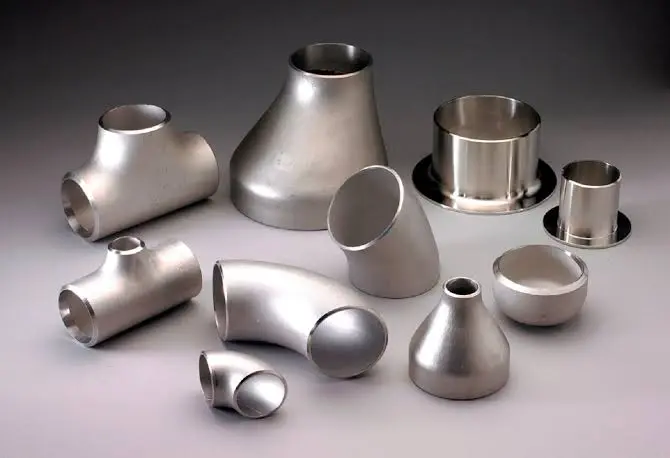
Understanding Butt Weld Fittings and Their Applications
What Defines a Butt Weld Fitting?
A butt weld fitting features precision-machined beveled ends that are aligned edge-to-edge with matching pipe ends and joined via a circumferential full-penetration butt weld. This creates a continuous, high-integrity metal joint with no internal gaps or pockets. The bore of the fitting fits right into the bore of the pipe. This provides a steady flow of fluid, reducing pressure drop and slowing wear over time. The design eliminates the internal crevice associated with socket weld fittings, reducing one potential source of corrosion-related failure and unplanned shutdowns.
Common Types and Materials
The ASME B16.9 product line consists of long radius elbows, equal and reducing tees, concentric and eccentric reducers, and end caps. ASTM A234 WPB is a carbon steel fitting grade, ASTM A403 WP316L is an austenitic stainless steel fitting grade, and ASTM A420 WPL6 is an alloy steel fitting grade for low-temperature service. The wall thickness schedule is selected to match the adjoining pipe. Thus, the stress distribution along the joint and the wall transition is preserved.
Industries That Rely on These Fittings
In oil and gas transportation, petrochemical processing, electricity generation, pharmaceutical production, and municipal water infrastructure, the standard method of connecting critical lines is using butt-welded pipe fittings. The permanent weld connection is in compliance with the pressure integrity criteria of ASME B31.3 Process Piping and ASME B31 Code for Pressure Piping. This makes these fittings the ideal solution when a joint failure might be hazardous or detrimental to the environment.
When to Choose Butt Weld Fittings Over Other Types?
High-Pressure and High-Temperature Service
Full-penetration butt welds are commonly preferred for high-pressure service where threaded joints are unsuitable, as well as for systems subject to significant temperature variations. For example, a 90° long-radius elbow made of SCH 80 carbon steel must be evaluated according to the applicable piping design code, material specification, wall thickness, and operating conditions. A threaded fitting of the same nominal size may be less suitable for certain cyclic or high-temperature applications because repeated stresses can increase the risk of fatigue-related failure.
Large-Diameter Pipe Systems
Socket weld joints are commonly used for smaller pipe sizes, while butt weld fittings become increasingly practical as pipe diameter increases. For NPS 3, 6, 12 or larger, such as in refinery headers, power plant steam lines, or offshore installations, butt weld fittings are the only practical means of connection. JS FITTINGS manufactures fittings in sizes from ½ inch to 48 inches to accommodate all industrial pipe dimensions mentioned in ASME B36.10M and ASME B36.19M.
Seamless vs. Welded Construction
Seamless or welded fittings are selected based on the service environment. Seamless elbows and reducers without a longitudinal weld seam may be selected for applications involving cyclic stress or demanding service conditions, while welded fittings can be a cost-effective solution when their manufacturing method, inspection requirements, and service conditions are acceptable. For lower-risk, larger-diameter purposes, welded fittings are a cost-effective solution. Procurement teams can also evaluate a butt weld fitting factory in China when sourcing welded fittings, particularly when price, production capacity, and delivery timing are important considerations. Seamless construction should be specified for sour service and high-fatigue lines, while welded construction can be employed when its manufacturing characteristics and inspection results meet the project requirements.
Technical and Quality Considerations for Butt Weld Fittings
Governing Standards and Specifications
ASME B16.9 specifies dimensions, dimensional tolerances, testing, and marking requirements for factory-made wrought butt-welding fittings. ASME B16.25 includes bevel-end geometry, ASME B31.3 is process pipe design, and ASTM material specifications are all helpful when combined. When a seller routinely references all of these standards in their documentation, procurement teams may validate compliance and interchangeability without having to undertake their own re-engineering.
Quality Assurance Methods That Matter
You cannot tell by looking at a weld whether it is stable or not. Good manufacturers utilise Non-Destructive Testing (NDT) techniques. Ultrasonic Testing is used to detect internal discontinuities, and Magnetic Particle Inspection is used to detect surface and near-surface discontinuities in ferromagnetic materials. At JS FITTINGS, UT and MPI are performed on each batch of output. Each fitting also has a 3.1 Mill Test Certificate showing the applicable chemical composition, mechanical properties, and heat identification information.
The major quality criteria that distinguish a fitting that works in the field from one that doesn’t are:
- Raw material traceability: Steel only from Tier-1 mills with complete 3.1 MTC documentation including chemical and mechanical test reports for each heat number.
- Precision CNC Beveling: Bevel ends are machined according to the applicable ASME B16.25 requirements so on-site welders can achieve consistent fit-up and proper penetration.
- Uniform wall thickness: Hot-mandrel and cold-forming techniques provide wall thickness uniformity at the extrados (outer radius) of elbows, where stress concentration is greatest in high-pressure service.
These measures reduce the risk of purchasing fittings that appear satisfactory on receipt but later fail hydrostatic testing or crack after repeated heating and cooling cycles. If one fitting goes in a power plant or refinery, the impact is significantly greater than any price savings from a non-qualified vendor.
Surface Coating Options
Depending on storage and operating conditions, JS FITTINGS provides protective coatings including black rust-preventive paint, transparent anti-rust oil (varnish), epoxy lining, and hot-dip galvanizing. Epoxy coating is suitable for underground or submerged applications, while galvanising gives further corrosion protection for outdoor stockyards and short-term installations.
Procurement Guide: How to Source the Right Butt Weld Fittings?
Evaluating Supplier Credibility
A reliable butt weld fitting factory in China is ISO 9001 certified and can provide project-specific certification on request, such as CE marking for projects destined for Europe, GOST-R for projects destined for Russia and the CIS, and authorised vendor status with major energy corporations. Leading international energy corporations, including ADNOC and Petrobras, are referenced in our approved supplier credentials, supported by ISO, CE, and GOST-R quality certifications.
Balancing Lead Time, Price, and Specification
Accurate dimensional conformity and consistent lead times are critical for distributors and trade businesses dealing with stocked items so that end users may acquire drop-in replacements. JS FITTINGS transports approximately 90 containers each month and has an on-time delivery percentage of >95%. This delivery performance is supported by a dedicated inventory system and a pre-shipment inspection process. Sample orders and small-batch trial orders are also encouraged, so prospective clients may try the quality before committing to a larger purchase.
Customization and Special Orders
Most projects just need conventional ASME B16.9 fittings. Sometimes wall thicknesses are not standard, metals are not prevalent, or sizes are not in the specified range for pipeline projects. JS FITTINGS produces fittings from DN15 to DN2000 and accepts OEM and ODM orders. The corporate engineering staff examines designs and recommends materials within 24 hours after receiving a question.
Best Practices for Installation and Maintenance
Proper Weld Preparation and Procedure Qualification
Before you weld, the joint area of the pipe and fitting must be clean, dry, and free of mill scale. Welders must have current qualifications, and the welding procedure specification must be qualified in accordance with the applicable code, which may include ASME Section IX. Fit-up and weld-end dimensions must comply with the applicable ASME B16.25 requirements, while the root gap and welding parameters should follow the qualified WPS.
Post-Installation Inspection
Before the system is pressurized, radiographic testing or phased-array UT should be performed on critical lines after welding to verify joint quality. Visual inspection alone can miss internal porosity and incomplete fusion, which can both lead to problems months after the system has been put into service. Project owners can avoid expensive rework by scheduling NDT as a contractual hold point, not as an afterthought.
Routine Maintenance to Extend Service Life
UT thickness-gauge inspections performed at intervals established by the facility's inspection program keep track of wall loss due to erosion or internal corrosion. This lets maintenance teams plan replacements before a fitting reaches the minimum wall thickness. By comparing heat numbers to inspection records, facilities can build a reliable history of replacements and make accurate budget predictions for consumables.
Conclusion
Butt weld fittings are the best choice for large-diameter, high-pressure, high-temperature, and corrosion-sensitive pipe systems where the integrity of the joint cannot be compromised. ASME B16.9 sets requirements for dimensions, tolerances, testing, and marking. Rigid NDT and full material tracking turn those standards into real-world safety. The best way to lower project risk and total cost of ownership is to choose a qualified, experienced maker. This is true whether you are looking for fittings for a government infrastructure tender, restocking your distribution stock, or putting together an EPC bid package.
FAQ
1. What size range do ASME B16.9 butt weld fittings cover?
According to ASME B16.9, metal fittings from NPS ½" to NPS 48 can be made in a plant. JS FITTINGS has sizes from DN15 to DN2000, including sizes that are less commonly specified for standard applications.
2. Are butt weld fittings suitable for food-grade or pharmaceutical service?
Yes, 304L and 316L stainless steel fittings manufactured to ASTM A403 can be used in food-grade or pharmaceutical applications when the applicable sanitary, surface-finish, cleaning, and welding requirements are also met. In your inquiry, please say whether the product is seamless and what the internal surface finish is.
3. How do butt weld fittings compare in cost to socket weld fittings?
The cost of each fitting unit is about the same, but the cost of installing butt welds is a little higher because full-penetration welding needs more weld passes. But over the life of the asset, the absence of a socket crevice and the reduced number of potential leakage paths can help lower maintenance and replacement costs when the system is properly designed and maintained.
4. What certifications should I request from a supplier?
Ask for ISO 9001, material MTC, dimensional inspection records, and any approvals that are special to the project. For projects that use the ASME code, make sure the supplier can provide documentation packages that meet the ASME standards.
Partner with JS FITTINGS for Your Next Project
For more than 40 years, JS FITTINGS has been making certified butt weld fittings for EPC contractors, distributors, and industrial end users in more than 30 countries. We are a butt weld fittings seller that you can build long-term supply deals around. Each month, we make more than 800 tons, and the number of complaints from customers is less than 0.5 percent. To get a price right away, email your specs or RFQ to admin@jsfittings.com.
References
1. ASME B16.9, Factory-Made Wrought Buttwelding Fittings, American Society of Mechanical Engineers, 2018.
2. ASME B31.3, Process Piping, American Society of Mechanical Engineers, 2022.
3. ASTM A234/A234M, Standard Specification for Piping Fittings of Wrought Carbon Steel and Alloy Steel for Moderate and High Temperature Service, ASTM International, 2022.
4. ASME B16.25, Buttwelding Ends, American Society of Mechanical Engineers, 2017.
5. Nayyar, M. L., Piping Handbook, McGraw-Hill, 2000.
6. ASTM A403/A403M, Standard Specification for Wrought Austenitic Stainless Steel Piping Fittings, ASTM International, 2021.
Send Inquiry
You may like