
Which Standards Apply to Butt Weld Fittings?






2026-09-22 10:50:39
Butt weld fittings are governed by multiple international and regional standards that define their dimensions, materials, testing, and marking requirements. The primary standards include ASME B16.9 for factory-made wrought fittings, ASTM A234 for carbon and alloy steel materials, ASTM A403 for stainless steel specifications, ISO 5251 for stainless steel butt-welding fitting dimensions and quality requirements, and EN 10253 for European applications. These standards ensure that pipe fittings used in high-pressure and high-temperature industrial systems meet strict safety, performance, and interchangeability criteria across global markets.
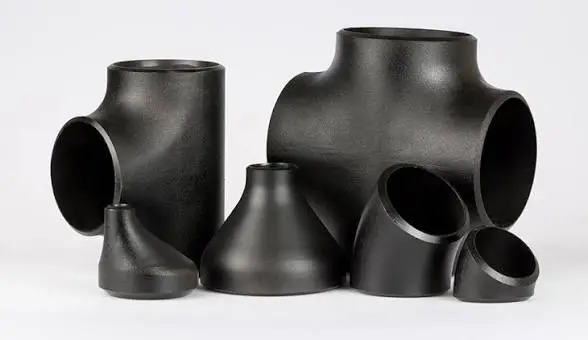
Understanding Butt Weld Fittings and Their Role in Industrial Applications
Butt weld fittings are essential components in modern industrial process piping systems. They connect pipes through circumferential butt welds that can provide full-penetration joints when properly designed and welded. Instead of threaded or socket-welded connections, these fittings feature precision-machined beveled ends that align seamlessly with matching pipe sections.This provides a smooth internal flow path and, when properly welded and inspected, helps maintain joint integrity in factories, chemical plants, power plants, and offshore platforms.
Why Do Butt-Weld Fittings Matter in Critical Systems?
The structural stability of butt weld joints has a direct effect on how safe operations are and how long the system lasts. If pipes change directions at elbows, branch off at tees, or go from one diameter to another at reducers, the quality of these connection points determines whether the system can withstand pressure surges, temperature changes, and corrosive environments without breaking. EPC companies who are in charge of multimillion-dollar projects can't have joints that aren't strong enough, which could cause unexpected shutdowns or safety issues.
Since 1983, we've been supplying fittings to major energy companies. This experience has shown us that procurement professionals must balance cost control with stringent quality requirements. One broken fitting during a hydrostatic test can cause the project to be late by weeks, which cuts into profits and hurts relationships with suppliers. Because of this, knowing the relevant standards is not only a technical need but also a business necessity.
Common Types and Their Industrial Applications
In pipe networks, different fitting shapes are used for different tasks. Long radius elbows let you change directions slowly, which keeps pressure drop and erosion to a minimum in high-speed situations. In complex process systems, reducing tees are very important because they let branch connections work with pipes of different sizes. Concentric and eccentric reducers accommodate transitions between different pipe diameters while maintaining proper drainage or preventing vapor pocketing.
Carbon steel fittings are commonly used in applications with moderate temperatures and non-corrosive fluids. They offer a cost-effective solution for many industrial piping systems. Stainless steel types offer good corrosion resistance, which is important for chemical processing and food-grade systems. Alloy steel can handle the high temperatures and high pressures that are common in power plants and petrochemical crackers. To make sure long-term dependability, the choice of material must match both the service conditions and the material standards that apply.
Overview of International and Regional Butt Weld Fitting Standards
The world's pipe standards are a reflection of how industries grow and how people think about safety. These standards all have similar goals, like making sure that measurements are consistent, materials are good, and performance is reliable. But their specific requirements are different in ways that affect buying choices and project compliance.
Major Standards Organizations and Their Jurisdictions
Standards set by the American Society of Mechanical Engineers (ASME) are used by most multinational companies and have a big impact on international projects. With its clear pressure class system and detailed measurement tables, ASME B16.9 has become the globally recognized benchmark for factory-made wrought buttwelding fitting dimensions.
ASTM International publishes material standards that spell out a material's chemical composition, mechanical properties, and testing needs. ASTM A234 covers carbon and alloy steel fittings for moderate- and high-temperature service, while ASTM A403 covers wrought austenitic stainless steel fittings. Together with measurement standards, these material standards make sure that the full final specification is met.
European standards, especially EN 10253, guide the fittings that are used in all EU member states and countries that use European technical models. The PN (Pressure Nominal) rating method is used instead of the ASME pressure classes in these standards, which could be confusing for projects that need to meet more than one standard. ISO 5251 tries to make international practices more consistent, but it doesn't replace regional standards; it works with them.
Understanding Pressure Rating Systems
It can be hard for procurement teams to convert between ASME Class ratings and European PN designations when selecting an ASTM A234 WPB buttweld fitting. Even though they are both used in pressure ranges that are similar, ASME Class 150 and PN 16 are not the same. This is because the rating systems use different ways to calculate and different safety factors. Our technical team often helps buyers choose fittings that meet both the required standard and the actual service conditions. This way, buyers don't have to choose between fittings that are too specific, which raises costs, or too generic, which lowers safety.
Russian GOST standards are still needed for projects in Russia and a few other former Soviet states. Because we are certified by GOST-R, we can provide fittings that are legal for pipeline projects in these areas, where other standards might not meet legal requirements even if they are technically the same.
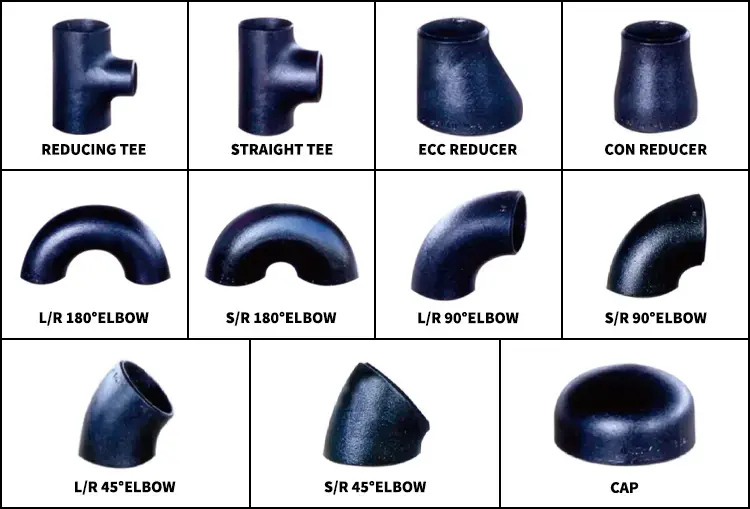
Key Standards Governing Butt Weld Fittings
When procurement professionals know the exact requirements of each standard, they can make sure that the products being quoted will work as expected and pass inspection by a third party. Dimensional and material guidelines work together to make a full specification system.
ASME B16.9: The Dimensional Foundation
ASME B16.9 sets the requirements for factory-made wrought steel buttwelding fittings in terms of sizes, tolerances, ratings, testing, and marking. In this standard, sizes range from NPS 1/2 to NPS 48, and fittings can be made by forming, forging, or machining. The standard lists the center-to-face measurements for elbows, tees, and crosses. This makes sure that fittings from different manufacturers can be used interchangeably as long as they meet the same standard.
ASME B16.9's tolerance standards strike a balance between the practicality of production and functional requirements. To account for manufacturing variation while maintaining the required pressure capacity, the specified minimum wall thickness may be subject to a negative tolerance of 12.5%. Outside diameter standards make sure that pipes fit together properly, which lowers the cost of field fitting and weld quality problems.
According to ASME B16.9, buttweld fittings do not have independent pressure-temperature rating tables; instead, their pressure ratings are engineered to match straight seamless pipe of equivalent wall thickness (schedule) and material grade. For instance, a Schedule 80 fitting made to ASME B16.9 dimensions provides the exact pressure capacity calculated for seamless pipe under the applicable ASME B31 piping design code.
ASTM Material Specifications: Ensuring Chemical and Mechanical Properties
ASTM A234 covers wrought carbon steel and alloy steel piping fittings for moderate- and high-temperature service. The specification lists several grades, but for most industrial uses, WPB is one of the most commonly used grades for carbon steel fittings and may be supplied in seamless or welded construction, depending on the applicable requirements. The grade is widely used in moderate- and high-temperature process piping, with allowable temperature and pressure determined by the applicable piping design code and service conditions.
Weldability and mechanical properties are protected by chemical composition limits in ASTM A234. Limits on phosphorus and sulfur, carbon content, and manganese amounts keep the joint from breaking easily and keep its flexibility over its service temperature range. Our spectral analyzer checks the chemistry of every production lot, which gives us documented traceability that meets the needs of third-party inspectors.
ASTM A403 covers wrought austenitic stainless steel piping fittings in grades such as 304/304L and 316/316L, which offer corrosion resistance for chemical processing applications. The "L" ending means that the metal has a low carbon content, which reduces the risk of sensitization during welding and keeps the corrosion resistance in the heat-affected zone. This is very important for parts that will be exposed to acidic media.
ISO and EN Standards for International Projects
ISO 5251 is an international standard covering the dimensions and requirements for butt-welding pipe fittings. It provides an alternative dimensional framework to ASME B16.9. Although many dimensions are similar, an ASTM A234 WPB buttweld fitting may still need to meet additional material and manufacturing requirements, and there are small changes in the range bands and the ways that pressure is calculated. When projects call for ISO standards, fittings must be made and inspected according to those standards, not just assuming that they are the same as ASME standards.
Butt-welding pipe fittings used in European pressure equipment may need to comply with the applicable requirements of EN 10253. This standard divides fittings into several parts that cover a range of materials and ways of making them. The European standard EN 10253-2 covers butt-welding fittings made of non-alloy and ferritic alloy steels, while EN 10253-4 covers fittings made of austenitic and austenitic-ferritic (duplex) stainless steels. Both standards cover seamless and welded fittings. This is because Europe puts a lot of importance on being able to track the production method.
MSS SP-43: Solutions for Special Requirements
MSS SP-43 covers wrought and fabricated butt-welding fittings for low-pressure, corrosion-resistant applications, primarily for use with Schedule 5S and 10S pipe, with short-pattern stub ends also shown for Schedule 40S applications. This standard is for uses where ASME B16.9 measurements would be too big for lower-pressure service and corrosion-resistant fittings are needed. Pharmaceutical and food processing systems may use MSS SP-43 fittings where low-pressure, corrosion-resistant service and the applicable dimensional requirements are appropriate.
How to Inspect and Verify Butt Weld Fittings to Meet Standards?
Quality verification tells the difference between products that are compliant and fakes that could fail horribly in service. Comprehensive inspection protocols look at things like dimensional accuracy, material properties, surface finish, and the integrity of the welds at many checkpoints, from receiving the raw materials to packaging them up at the end.
Visual and Dimensional Verification
The first visual check finds clear flaws like surface cracks, laminations, or mechanical damage that could weaken the fitting's integrity. Trained inspectors examine both the outside and inside surfaces under suitable lighting and record any indications that require further investigation.
Dimensional measurements ensure that the fittings are within the specified tolerances. The center-to-face measurements of elbows and tees affect how well pipes are laid out and how well they fit together. Measuring the outside diameter of the fittings and mating pipes makes sure that they fit together correctly. Checking the wall thickness at several points around the fitting's edge finds differences in the way it was made that could lead to weak spots when it's put under pressure.
When we use CNC to make things, we make sure that the fitting dimensions and end preparations are very accurate. This is especially important for butt-welding ends that need to align correctly with the mating pipe. Dimensional requirements for outside diameter, wall thickness, center-to-face dimensions, and end alignment are carefully measured to make sure that the fittings meet the applicable standard and can be installed correctly. This helps prevent field installation delays caused by dimensional mismatches or improperly aligned pipe ends.
Material Testing and Certification
Mill test reports show how the chemical and mechanical properties of a material can be linked to specific heat numbers. These reports show that the raw materials met the relevant ASTM standards before they were shaped into finished parts. Positive material identification (PMI) testing with portable XRF analyzers makes sure that the grades of marked materials match their real chemistry. This stops dangerous material substitutions from happening.
Tensile strength, yield strength, elongation, and hardness values are checked mechanically on fitting samples from each production lot. These properties help verify that fittings can meet the applicable mechanical requirements for the piping service without unacceptable deformation or failure. Impact testing at certain temperatures shows that the material is flexible at low temperatures that are common in project service settings.
Non-Destructive Testing Techniques
Radiographic testing shows internal breaks that can't be seen by looking at the surface. Radiographic testing can detect internal discontinuities such as porosity, inclusions, and incomplete weld penetration in applicable welded fittings. This makes sure that the products are internally sound before they are put into service. Ultrasonic testing is an alternative NDT method that works especially well for fittings with thick walls, where x-rays are less sensitive.
Magnetic particle screening finds cracks on the surface and close to the surface of ferromagnetic materials like carbon and low-alloy steels. Liquid penetrant testing is also useful for checking nickel alloys and nonmagnetic stainless steels. These methods can identify manufacturing defects or handling damage that could propagate when pressure is repeatedly applied and released.
These inspection methods are incorporated into our quality control system at set times based on the type of product, customer requirements, and past performance data. Statistical process control plans keep an eye on changes in dimensions and the number of defects, so changes can be made before they become problems. Our client complaint rate has remained below 0.5% over decades of international supply thanks to this methodical approach.
Conclusion
To find your way around the rules for butt weld fittings, you need to know how the measurements, materials, and testing procedures all work together to make sure that the pipe systems are safe and effective. When buying parts for foreign projects, procurement professionals have to make sure that the requirements of ASME, ASTM, ISO, and EN standards are all met. Choosing the right material from carbon steel, stainless steel, and alloys affects both meeting standards and performing well over time in specific service conditions. Thorough inspection, documented certifications, and supplier capability assessments help procurement teams distinguish compliant products from non-compliant alternatives and reduce the risk of service failure. Strategic partnerships with manufacturers that show consistent quality, broad standard coverage, and quick technical support help procurement teams keep costs low, meet tight deadlines, and minimize project risk.
FAQ
1. What is the difference between ASME B16.9 and EN 10253 standards?
In terms of dimensional and pressure-rating conventions, ASME B16.9 and EN 10253 follow different standard systems. Their dimensional ranges, tolerances, testing requirements, and pressure-rating approaches are not identical. Many measurements work the same way, but the tolerance bands and testing standards are not the same. Instead of thinking that parts will work with other systems, projects should choose one standard system and make sure that the fittings they purchase meet all of its requirements.
2. How do I verify that a supplier's fittings truly meet specified standards?
Ask for copies of the manufacturer's certifications, such as relevant ISO certifications or applicable ASME certifications and markings. Check the mill test results to make sure they have all the test data and the right heat number tracking. Third-party agencies should look over your items before they are shipped. During site checks, look over the quality documentation systems of suppliers. Qualified suppliers are happy to be inspected and keep clear quality records that show they always follow the rules.
3. Can carbon steel and stainless steel fittings be used interchangeably?
To replace a material, engineers have to look at the service conditions, such as temperature ranges, corrosive contact, and electrical compatibility with nearby parts. Both materials may meet the standards for size, but their resistance to corrosion and mechanical properties are very different. Stainless steel is better at resisting rust, but it costs more. When rust is not a problem, carbon steel is a good choice because it is strong and cheap.
Partner with JS FITTINGS for Standards-Compliant Butt Weld Fittings
When selecting a butt weld fittings supplier, you need to consider more than just price. You also need to be sure that the supplier will meet your standards, deliver on time, and provide technical support throughout the lifecycle of your project. Since 1983, we've been manufacturing pipe fittings and have built long-term relationships with energy companies around the world that count on our dedication to quality and safety. We hold applicable certifications and approvals, including ISO, CE, GOST-R, PETROBRAS, and ADNOC qualifications, demonstrating our ability to meet demanding project requirements.
Our production capacity supports more than 90 container exports per month, while our on-time delivery rate exceeds 95%, helping customers maintain reliable project schedules. Our professional team is here to help you find the right fittings for your needs, whether you need ASME B16.9 carbon steel elbows for a project at a Gulf Coast refinery or EN 10253 stainless steel reducers for a pharmaceutical facility in Europe. We have sizes ranging from DN15 to DN2000, and we can also make sizes to fit specific project needs that standard catalog items can't meet.
Email our international trade team at admin@jsfittings.com to talk about the needs of your upcoming project. We want to become your trusted long-term butt weld fittings manufacturer, so we give you detailed technical specifications, samples of mill test reports, and quick quotes.
References
1. ASME. (2018). ASME B16.9: Factory-Made Wrought Buttwelding Fittings. American Society of Mechanical Engineers.
2. ASTM International. (2021). ASTM A234/A234M: Standard Specification for Piping Fittings of Wrought Carbon Steel and Alloy Steel for Moderate and High Temperature Service.
3. ASTM International. (2020). ASTM A403/A403M: Standard Specification for Wrought Austenitic Stainless Steel Piping Fittings.
4. European Committee for Standardization. (2019). EN 10253: Butt-welding pipe fittings. CEN.
5. International Organization for Standardization. (2017). ISO 5251: Butt-welding pipe fittings for pressure purposes. ISO.
6. Manufacturers Standardization Society. (2016). MSS SP-43: Wrought Stainless Steel Butt-Welding Fittings. MSS.
Send Inquiry
You may like