
90 degree buttweld elbow vs. Threaded Elbow: Which Is Better?






2026-10-11 14:10:21
When the engineers and procurement managers pose this question, the answer depends on the operating conditions. The 90 degree buttweld elbow is welded to the pipe using a full-penetration circumferential weld directly to make a joint as robust as the base pipe. Hence, it is a common choice for high-pressure, high-temperature, and large-diameter piping systems. Threaded elbows screw into the ends of the pipes. They are commonly used for utility lines that have low pressure or temporary systems. The welded elbow is the safer, longer-lasting answer for oil, gas, steam, or any kind of essential process fluid.
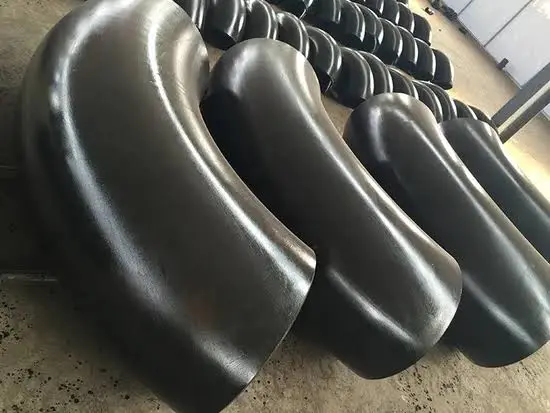
Understanding 90 Degree Buttweld Elbows and Threaded Elbows
What Is a Buttweld Elbow?
Buttweld elbows are steel pipe fittings, hot-pressed or forged. Their bevelled ends are welded directly to the connecting pipe, making a joint that will not come apart. These fittings conform to ASME B16.9, ASTM A234, and ASTM A403. Carbon steel, stainless steel, and alloy steel are available. Sizes range from 1/2" to 48", with wall schedules from SCH 10 to SCH XXS for a wide range of industrial piping applications.
What Is a Threaded Elbow?
A threaded elbow is a way to join two pipes together by screwing them together using NPT or BSP threads. No welding is required, which can significantly speed up installation. But threads can eventually develop clusters of stress and paths of leakage, particularly when subjected to vibration, temperature changes, or pressures in excess of 2,000 psi. Most process piping codes, such as ASME B31.3, place restrictions on threaded joints that are specific to the fluid service, material, size, and design conditions.
Key Structural Differences at a Glance
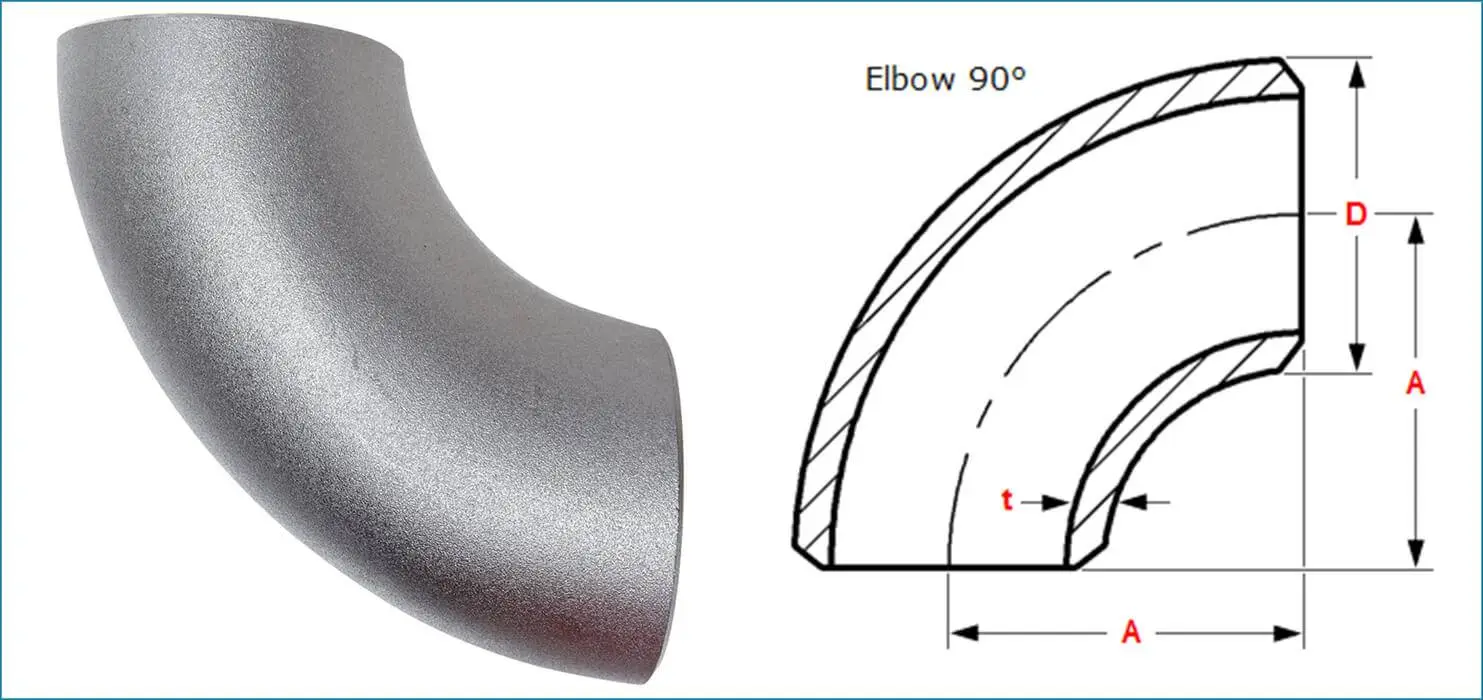
The primary structural difference lies in the type of joint. A threaded joint has a stress concentration at the thread root, while a butt-welded joint provides a more continuous load path through the pipe wall. The difference in structure immediately tells you which fitting goes with which system. Butt-weld elbows come in two different styles: Long Radius and Short Radius. This allows engineers more route options without sacrificing pressure integrity.
Performance and Application Comparison
Pressure and Temperature Ratings
You can use buttweld elbows within the applicable design pressure and temperature limits of the piping system. In places like petrochemical refineries, superheated steam lines, and high-pressure oil transmission, the welded joint can accommodate thermal cycling when it is properly designed, fabricated, and inspected for the applicable service conditions. Threaded elbows are available in pressure classes such as Class 2000, Class 3000, and Class 6000, depending on the applicable standard and material, and their performance gets worse faster when they are heated and cooled over and over again.
Corrosion Resistance and Material Options
The choice of material affects how well it resists corrosion over time. Butt-weld elbows made of stainless steel in ASTM A403 WP304 or WP316 can provide good corrosion resistance in many chloride-containing and mildly acidic environments. For general use, carbon steel ASTM A234 WPB works well, while chrome-moly alloy grades like ASTM A234 WP11 and WP22 are standard for elevated-temperature service in refineries and power-generation applications. Similar materials are used to make threaded elbows, but the thread gap can trap water and speed up pitting and rusting in damp places.
Installation and Maintenance
Threaded elbows allow for rapid mechanical assembly without hot-work permits or welding equipment, which is highly advantageous for small-bore utility lines, instrument piping, and temporary field tie-ins. Conversely, installing a 90-degree buttweld elbow demands qualified welders, precise fit-up alignment, and post-weld NDT for critical service, but the resulting joint requires virtually zero long-term maintenance. The welded connection is usually the more cost-effective choice over a 20-year working life because it doesn't need much upkeep.
Cost, Procurement, and Supplier Considerations
Purchase Price vs. Total Cost of Ownership
Threaded elbows generally cost less per piece and do not require welding supplies, but the total cost of ownership can tell a different story. A leak from a threaded joint in a hydrocarbon line can cause an unexpected shutdown, environmental damage, and regulatory penalties that far exceed the initial cost of the fitting. Threaded joints can introduce additional leakage considerations in process piping, particularly where vibration, thermal cycling, severe erosion, or crevice corrosion may occur in process plants. Investing in welded connections up front can pay off because they lower the risk of accidents.
Bulk Procurement and Volume Considerations
Buttweld elbows give EPC contractors and distributors who handle large orders more power over prices. Manufacturers who follow ASTM A234 and are certified by ISO 9001 can give mill test reports, heat numbers, and measurement certifications according to ASME B16.9. These are often required for government bids and energy-company-approved seller lists. Minimum order quantities and delivery lead times depend on the size and schedule of the project, so it's important to work with a manufacturer whose inventory is deep enough to meet the schedule.
Choosing a Qualified Supplier
A trustworthy provider should have ISO 9001 certification, offer traceable MTRs for each heat, and show that they have worked with well-known energy companies in the past. Check to see if the company uses spectral analysis and ultrasonic flaw detection as regular quality control steps and not just as extras. Certifications like CE and GOST-R show that the quality system meets the standards set by an independent third party. Before you place a big order, ask for samples of the paperwork and make sure that the monthly output capacity fits with your project plan.
When to Choose 90 Degree Buttweld Elbows vs. Threaded Elbows?
Choose Buttweld Elbows When
Buttweld elbows are generally appropriate when the following conditions apply:
- Operating pressure exceeds 2,000 psi or severe thermal cycling is present in process lines.
- The pipe size, pressure, temperature, and service conditions mandate a welded connection under applicable design codes (such as ASME B31.3).
- The fluid is flammable, toxic, or highly erosive.
- The system must comply with ASME B31.1, B31.3, or a comparable piping code.
- Long service life and low maintenance requirements are important.
In the US, welded connections, including a butt weld 90 degree elbow, are used in many oil and gas, power-generation, and chemical-process pipe systems when permitted by the appropriate design code and service requirements.
Choose Threaded Elbows When
In certain low-risk scenarios, threaded connections may still be utilised. They may be utilised for instrument air lines, small-bore potable water systems, fire sprinkler branch lines, and temporary process connections. Threaded fittings are relatively straightforward to install and do not require welding equipment for smaller pipe sizes, such as NPS 1.5 and below, where permitted by the applicable code and pressure limitations.
Decision Framework Summary
To make an informed selection, engineers must evaluate four decisive criteria: operational severity, nominal pipe diameter, available project budget, and governing piping codes. The 90-degree steel elbow with butt-weld ends is the ideal option for anything that fits ASME B31.3's criteria of "critical service." Threaded elbows are useful for a variety of repair and service jobs. If you are unsure of the correct type of connection, you should first consult your pipe expert and the appropriate design code.
Installation Best Practices and Measurement Guide for 90 Degree Buttweld Elbows
Pre-Installation Checks
Before welding, compare the center-to-end dimension (Dimension A) of the elbow with the ASME B16.9 tables for the NPS and schedule. The bevel geometry shall comply with ASME B16.25 and the approved welding procedure. The face shall be smooth and free of burrs. Ensure the inside diameter of the elbow is suitable for the bore of the connecting pipe. If not, you will have “high-low” mismatches that cause turbulence and stress risers that accelerate erosion failure at the weld root.
Welding and Alignment Procedure
Tack weld the elbow in at least 4 locations evenly spaced prior to the root pass. Ensure the root gap and land match the welding procedure standard for the base material. Preheat carbon steel ASTM A234 WPB as per the applicable piping code, material requirements, and qualified welding procedure when required by wall thickness and service conditions. After welding, perform a visual inspection and, where required by the applicable code, conduct radiographic testing or ultrasonic testing before hydrostatic testing.
Routine Inspection and Troubleshooting
Ultrasonic thickness gauging should be used to inspect the extrados of 90-degree elbows at intervals established by the applicable inspection program. This area has the fastest rate of deterioration in fluid services that carry particles or move quickly. If the measured thickness falls below the minimum required wall thickness specified by the applicable piping code or project standard, the condition should be promptly evaluated by a qualified engineer. Record all values to create a baseline trend and estimate the remaining service life.
Conclusion
The decision to use a threaded elbow or a 90 degree buttweld elbow is dictated by engineering standards, not personal taste. Welded elbows are code-compliant joints that don't leak and can handle the high temperatures, pressures, and long service lives that industrial pipes need. When used in low-pressure, small-bore, and non-critical situations, threaded elbows do their job. Make sure the connection type fits the working conditions, that it meets the relevant ASME or ASTM standard, and that you buy from a company whose quality documentation can stand up to project audits.
FAQ
1. Can threaded elbows be used in high-pressure pipelines?
Most of the time, no. ASME B31.3 places stringent limitations on threaded joints in Category M fluid service and in normal process service above certain pressure and temperature limits. For pipes moving hydrocarbons or steam under high pressure, a butt weld elbow is the right choice.
2. What material is best for corrosion resistance in butt-weld elbows?
ASTM A403 WP316/316L stainless steel grades offer superior corrosion resistance in aggressive environments, particularly where wet chlorides or mild acids are present. The addition of molybdenum gives 316L significantly better resistance to pitting and crevice corrosion compared to standard 304 grades. Carbon steel with an epoxy coating on the inside works well with less aggressive media and costs less.
3. How do I verify a buttweld elbow supplier is qualified?
Ask for the ISO 9001 certificate, the most recent mill test reports with heat and lot numbers, measurement inspection reports according to ASME B16.9, and a list of recent energy company projects that can be used as references. A reliable manufacturer will gladly give these to you and will allow a third party to inspect the factory if your project needs it.
4. What is the difference between LR and SR elbows?
If you use a Long Radius elbow, the central radius is 1.5 times the standard pipe size. This lowers pressure drop and erosion in service that moves fluids. A Short Radius elbow has a radius of 1.0 times the nominal pipe size, which saves space in tight pipe racks but makes the pressure drop and turbulence worse. Most designs for process pipes use LR joints as the standard.
Request a Quote from JS FITTINGS — Your Trusted 90 Degree Buttweld Elbow Supplier
Since 1983, JS FITTINGS has been manufacturing pipe fittings and supplying customers in more than 30 countries. Our quality management system is based on ISO 9001, with CE and GOST-R certifications available for applicable products. We handle both standard and special orders, including the 90 degree buttweld elbow, and our monthly output is more than 800 tons. We also have a 95%+ on-time delivery record, and our sizes range from DN15 to DN2000. To get a competitive price for your next job, email our team at admin@jsfittings.com.
References
1. ASME B16.9 — Factory-Made Wrought Buttwelding Fittings, American Society of Mechanical Engineers, 2018.
2. ASME B31.3 — Process Piping, American Society of Mechanical Engineers, 2022.
3. ASTM A234 / A234M — Standard Specification for Piping Fittings of Wrought Carbon Steel and Alloy Steel for Moderate and High Temperature Service, ASTM International, 2023.
4. ASTM A403 / A403M — Standard Specification for Wrought Austenitic Stainless Steel Piping Fittings, ASTM International, 2022.
5. Nayyar, M. L. — Piping Handbook, 7th Edition, McGraw-Hill, 2000.
6. Becht, C. — Process Piping: The Complete Guide to ASME B31.3, 4th Edition, ASME Press, 2020.
Send Inquiry
You may like