
ASTM A105 Weld Neck Flange: Complete Guide






2026-07-09 14:30:36
The ASTM A105 weld neck flange is a standard piping component that engineers and procurement professionals all over the world use to find piping parts for high-pressure applications. This forged carbon steel flange has a unique long tapered hub design that butt-welds directly to the pipe. This makes it possible for the flange body to transfer mechanical stress to the pipe wall without any problems. This design of flange reduces stress concentration points compared with other types. This makes it the best choice for harsh environments where safety, durability, and leak-proof integrity can't be compromised.
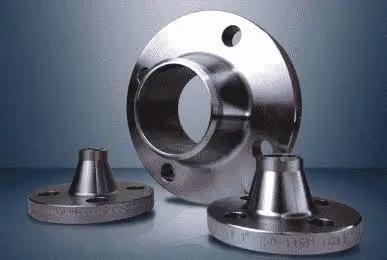
Understanding ASTM A105 Weld Neck Flange – Specifications and Material Properties
This type of flange is based on strict industry norms, which give it its technical basis. ASME B16.5 sets the rules for dimensional requirements and pressure-temperature ratings, while ASTM A105 specifies the material requirements for forged carbon steel components. Knowing these standards helps procurement teams make sure they are followed and avoid costly delays in projects.
What Defines an ASTM A105 Weld Neck Flange?
This part sets the highest bar for carbon steel pipe systems. Controlled forging processes are used to align the steel grain flow with the shape of the flange. This gives the material better resistance to impact and structural density. The long, curved hub slowly changes from the flange ring to the pipe wall thickness. This keeps the hub from having any sharp edges that could break when the load is applied and removed over and over again. This shape solves some of the most important problems in high-pressure systems: it lowers line turbulence, stops metal from experiencing excessive wear, and lowers the risk of leaks during thermal cycles.
Material Composition and Mechanical Strength
Manganese content is typically specified within the ASTM A105 limits, which vary depending on forging thickness, while phosphorus content must stay at 0.035% and sulfur content must stay at 0.040%. These requirements guarantee great machinability and weldability. The minimum tensile strength is 70,000 psi (485 MPa), and the minimum yield strength is 36,000 psi (250 MPa). The maximum hardness is 187 HBW. The normalized heat treatment condition commonly referred to as A105N smooths out the grain structure, making the material tougher and more resistant to impact at lower temperatures. This is something that many end users require to make sure that all projects are the same.
Pressure Ratings and Temperature Limitations
Standard pressure classes go from 150# to 2500#, which can meet a wide range of operational needs. The service temperature window generally covers low to moderate temperature applications, depending on pressure ratings and design codes. For temperatures approaching 800°F (427°C), allowable stresses must be checked according to the applicable design standards, which cover most applications at room temperature and higher. But for low-temperature services below the applicable limits of ASTM A105, materials such as ASTM A350 LF2 may be selected based on impact testing requirements and design conditions to prevent catastrophic brittle fracture. Knowing these limits keeps you from making mistakes when choosing materials that could put system safety at risk.
Detailed Dimensions and Manufacturing Process of ASTM A105 Weld Neck Flanges
Accurate measurements have a direct effect on how quickly and reliably joints are put together and for a long time afterward. Every important measurement is specified in the ASME B16.5 standard, from bolt hole patterns to hub taper angles. This makes sure that the ASTM A105 weld neck flanges can be used anywhere in the world.
Critical Dimensional Specifications
There are standard sizes ranging from 1/2" to 24" under ASME B16.5, while larger sizes are generally covered by ASME B16.47, but custom sizes can be made for specific projects. The ASTM A105 weld neck flange bore is carefully machined to match the corresponding pipe outside diameter and wall thickness requirements, like Schedule 40, 80, 160, or XXS. This gets rid of internal diameter mismatches that cause flow turbulence and corrosion. There are different types of faces, such as raised face (RF) with serrated ends for soft gaskets and ring type joint (RTJ) configurations for high-pressure areas that need metal seals. Pattern standards are used to place the bolt holes in a way that keeps them concentrically within very small ranges. This makes sure that the gasket is compressed evenly during assembly.
Manufacturing Workflow and Quality Assurance
The first step in the production process is controlled forging of raw carbon steel billets at high temperatures. This shapes the material while keeping its good grain structure. After that, either normalizing or stress-relieving heat treatment is used to improve the mechanical qualities and get rid of any internal pressures. Then, each flange is precisely machined to the right size, and CNC equipment makes sure that this happens every time a batch is made. The preparation for the bevelled weld gets extra care; it is machined to a bevel angle of approximately 37.5° according to ASME B16.25 requirements that make full penetration butt welds easier to do during installation.
During production, there are quality checks. Spectral analyzers check the chemical composition against the standards set by ASTM A105. Ultrasonic testing finds internal defects or discontinuities inside the forged body. Magnetic particle inspection checks surfaces that have been machined for cracks or laps that could get worse in use. Dimensional verification makes sure that the parts meet the tolerances set by ASME B16.5. It checks the uniformity of the hub taper, the accuracy of the bolt holes, and the finish on the gasket sealing face, which is usually specified according to ASME B16.5 surface finish requirements for the best gasket engagement.
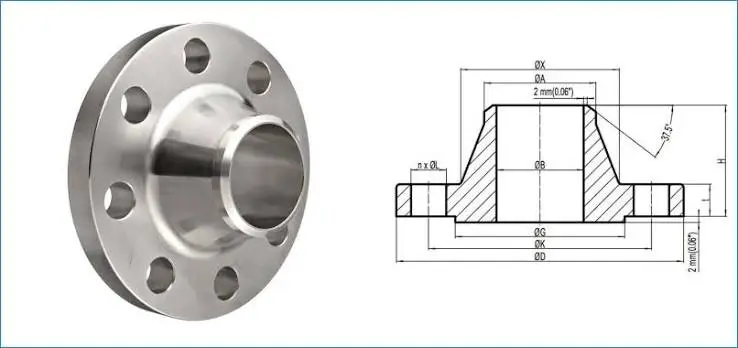
Comparing ASTM A105 Weld Neck Flange with Other Flange Types
To make smart purchasing choices, you need to know how different fitting options work with different types of materials. The project's suitability is affected by the types of materials used, the design of the structure, and how much it costs.
ASTM A105 versus ASTM A182 Flanges
A182 covers forgings made of stainless steel and alloy steel, while A105 focuses on carbon steel. Both standards can be used for piping. Carbon steel flanges are highly cost-effective and provide sufficient corrosion resistance when exposed to non-aggressive media.This makes them a good choice for water, steam, and hydrocarbon service within their temperature range. When working with acidic fluids, you need to use stainless steel options (A182 F304/F316), which cost a lot more.
Weld Neck versus Slip-On Flanges
When the structure is put under pressure, the difference becomes important. Slip-on flanges fit over the end of the pipe and have fillet welds put in on both the inside and the outside. This makes the two-weld design less good for X-ray checking. Full penetration butt welds used with weld-neck designs are more suitable for radiographic examination than fillet weld configurations. This provides recorded weld stability that is necessary for important services. The tapered hub in weld-neck flanges better spreads stress, providing better fatigue protection under cyclic loads and thermal expansion. These benefits explain the higher starting cost for high-pressure uses.
Market Availability and Lead Times
Carbon steel ASTM A105 weld neck flanges are easy to find thanks to global supply networks. Most major distributors keep standard sizes in stock. Depending on the supplier's capacity, manufacturing lead times for custom specifications or large-diameter flanges could be anywhere from four to eight weeks. Planning for purchases should include inspections, paperwork, and international shipping when getting things from other countries, especially when projects need certified materials to be able to be tracked.
Procurement Considerations for ASTM A105 Weld Neck Flanges
Strategic buying guards against quality risks and makes the most of project funds at the same time. When looking at possible suppliers and making purchase orders for ASTM A105 weld neck flanges, there are a few important things that need to be taken into account.
Supplier Selection Criteria
Verified manufacturing capabilities tell you the difference between vendors you can trust and those you should avoid. Look for suppliers that have quality management systems that are in line with ISO 9001. This shows that they have structured process control. ASME-related certifications or code compliance qualifications add another layer of trust by proving that the supplier knows how to make pressure parts that meet code requirements. Independent confirmation of quality methods and compliance with manufacturing standards comes from checks by reputable third parties.
References from clients can tell you a lot about how well a company does its job. Ask for case studies from industries like oil and gas, petrochemicals, and power production to see if the knowledge is useful. Low complaint rates (less than 0.5%) and high customer retention rates (more than 98%) show that the service is consistently good. If more than 50 containers are shipped every month, it means that production is stable and there is enough capacity.
Essential Documentation and Certifications
Material Test Reports (MTR) are the most important part of quality control for ANSI B16.5 weld neck flanges because they show that ASTM A105 requirements were met through heat analysis and mechanical testing. EN 10204 3.1 certificates provide documented manufacturer inspection results and material traceability, which are often needed for government contracts and international projects. Mill test reports must link each flange to its original heat number. This ensures if quality problems show up after delivery, the flanges can be sent back.
Pricing Dynamics and Order Quantities
Dimensional reports show that all important values are in line with ASME B16.5 standards. Non-destructive testing certificates show the results of any ultrasonic tests, magnetic particle tests, or radiographic tests that were done on the forging. The right paperwork makes it easier to get goods through customs, meets the quality standards of the project, and protects you legally if there are problems with performance during the service life.
The price of carbon steel flanges changes based on the cost of the raw materials. Usually, the prices range from modest levels for normal pressure classes to high prices for Class 1500 and 2500 configurations. When you buy a lot of something, the unit price goes down, and suppliers often offer discounts after 100, 500, or 1000 pieces. Setting up framework agreements that lock in prices for long periods of time protects distributors against changes in the market.
Each seller has different minimum order amounts. Some makers can work with small amounts for testing or maintenance, but others need at least a container load to ship internationally. By making MOQ requirements clear early on, you can avoid order rejection and project delays.
Trusted Suppliers and Brands of ASTM A105 Weld Neck Flanges
Choosing production partners with a history of success lowers the risk of buying things and ensures that the quality of ASTM A105 weld neck flanges remains consistent across multiple orders.
Evaluating Manufacturer Credentials
Since 1983, JS FITTINGS has had over 40 years of specialized knowledge and has run state-of-the-art production sites that are 7,000 square meters in size. Our monthly production capacity is up to 700 tonnes of flanges, which helps keep supply lines running smoothly even when demand goes up. We keep our ISO and GOST-R certifications up to date and are a qualified supplier to major energy companies like Petrobras, the National Iranian Oil Company, and the Abu Dhabi National Oil Company. These partnerships show that we can consistently meet strict international standards.
Our quality control method uses seven-stage quality control framework covering everything from getting materials to providing service after the sale. For every production heat, spectral analyzers verify the chemical composition. Before flanges are put into stock, ultrasonic and magnetic particle inspection equipment find flaws on the surface and below the surface. Dimensional verification follows the rules in ASME B16.5 to make sure that the bolt holes are accurate within the allowed ranges. With this multi-stage method, we keep our client complaint rate below 0.5% and our on-time delivery rate above 95%.
Accessing Technical Support and Custom Solutions
For complicated jobs, professional help is often needed in addition to what is normally available in a catalog. Reputable makers have expert teams that can look over the pipe specs, suggest the best flange setups, and give advice on how to install the products. Custom boring services perfectly match flange IDs to non-standard pipe schedules, so there are no worries about flow restrictions or pressure drops. When you work with experienced makers who can make changes to your specifications, you can get special certifications for materials, more tests, or changes to the size of your orders.
Complete specs for ASME B16.5 Weld Neck Flanges should be included when asking for thorough quotes, such as the size, pressure class, schedule, facing type, number, transport location, and any other needs. Clear communication during the inquiry stage avoids confusion and guarantees correct pricing. Sample evaluations let you check the quality before committing to full production volumes, which is especially helpful when you're getting to know a new supplier.
Conclusion
With its forged construction and stress-optimized design, the ASTM A105 weld neck flange is the most reliable part of high-pressure pipe systems. It meets important safety and performance standards in the oil and gas, petrochemical, and power generation industries thanks to its tapered hub, precise bore matching, and radiographic weldability. Procurement pros can find parts that meet budget and reduce project risk by understanding material specs, measurement standards, and quality verification processes. Working with certified makers makes sure that you can get goods that are compliant and come with full paperwork and expert support.
FAQ
1. What distinguishes ASTM A105 from ASTM A105N flanges?
The "N" at the end of the name means "normalized heat treatment," which is a controlled cooling process that improves low-temperature toughness and smooths out the grain structure. ASTM A105 weld neck flanges with the "N" suffix are required by many specifications as standard to make sure that the mechanical qualities are the same from one batch of production to the next. This is especially important for uses that will be exposed to changes in temperature or mechanical shock.
2. Can these flanges serve cryogenic applications?
Not at all. Below -29°C, ASTM A105 carbon steel experiences a sharp drop in impact toughness and becomes brittle, increasing the risk of catastrophic brittle fracture through rapid crack propagation. For cryogenic services, you need materials that have been tested for impact, like ASTM A350 LF2, which is made to stay flexible at temperatures as low as -46°C.
3. Why does schedule specification matter when ordering?
The hole in the flange has to line up perfectly with the inside diameter (ID) of the pipe. Schedules that don't match up make steps at the weld joint, which causes turbulence that speeds up erosion and creates stress concentrations. Making the right plan guarantees smooth internal flow routes and even stress distribution.
Partner with JS FITTINGS for Premium Weld Neck Flange Solutions
For over 40 years, JS FITTINGS has been making high-quality ASTM A105 weld neck flanges that are certified by ASTM A105. As a qualified supplier with ISO, GOST-R, and major energy company approvals, we can guarantee that all of our materials can be tracked back to their source with full MTRs and 3.1 certificates. Our 700-ton-per-month flange production ability can handle jobs of any size, from small prototypes to full container loads. Get in touch with our expert team at admin@jsfittings.com to talk about your needs, get detailed quotes, and find out how our all-in-one piping solutions can help you save time and money while still meeting all foreign standards.
References
1. American Society of Mechanical Engineers (2020). ASME B16.5: Pipe Flanges and Flanged Fittings NPS 1/2 Through NPS 24 Metric/Inch Standard. New York: ASME Press.
2. ASTM International (2019). ASTM A105/A105M: Standard Specification for Carbon Steel Forgings for Piping Applications. West Conshohocken: ASTM International Standards.
3. Becht, C. (2017). Process Piping: The Complete Guide to ASME B31.3. New York: ASME Press.
4. Nayyar, M. (2019). Piping Handbook, Eighth Edition. New York: McGraw-Hill Education.
5. Singh, A. and Kumar, R. (2018). Material Selection and Flange Design for High-Pressure Piping Systems. Journal of Pressure Vessel Technology, 140(3), pp. 031202-1–031202-9.
6. Smith, P. and Zappe, R. (2016). Valve Selection Handbook: Engineering Fundamentals for Selecting the Right Valve Design for Every Industrial Flow Application, Sixth Edition. Oxford: Gulf Professional Publishing.
Send Inquiry

_1775030564781.webp "Blind Flange")
Related Industry Knowledge
- ASTM A234 WPB Buttweld Tee Material Properties Overview
- What Are Slip-On Flanges?
- How to Select the Right Buttweld Bend Radius (3D–20D)
- Buttweld Tee Manufacturing Guide: Seamless or Welded?
- How to Choose a Buttweld Tee for High-Pressure Pipelines
- Seamless vs Welded Buttweld Tee: Which Performs Better?
- How thick is standard wall pipe on carbon steel?
- Do blind flanges require hydrotesting?
- What is a plate flange?
- What causes porosity in carbon steel pipe welding?