
Blind Flange vs Weld Neck Flange: Which Is Better?






2026-10-16 10:29:36
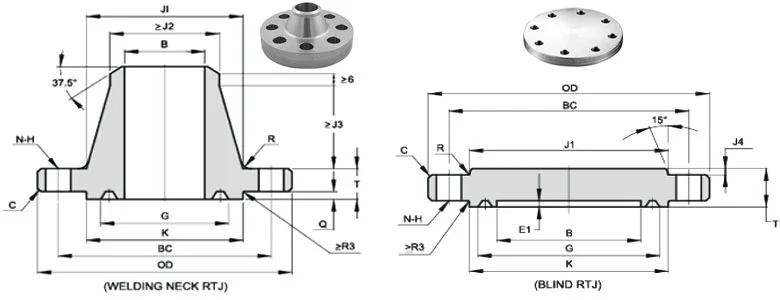
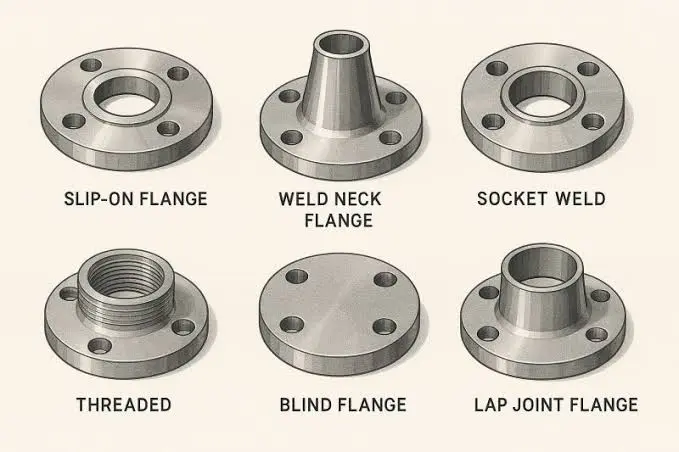
When engineers and procurement teams ask this question, there is rarely a single correct answer — but there is always a right answer for your specific application. A blind flange is a solid forged steel disc with no center bore, designed to seal a pipe end, isolate a system section, or support hydrostatic pressure testing. A weld neck flange, by contrast, features a long tapered hub that is butt-welded directly to the pipe, distributing stress across the joint. Choosing between the two depends on your pressure class, maintenance requirements, and long-term project economics.
Understanding Blind Flanges and Weld Neck Flanges
What Is a Blind Flange?
A blind flange, which is also known as a blanking flange or BL flange, is a solid disk that is bolted across the end of an open pipe to stop flow or separate a section for inspection. The full end-cap load of the pipeline puts the most stress on this type of flange, especially in the middle, where bending is greatest. Therefore, forging accuracy and material quality are critical for these applications. Under ASME B16.5 and B16.47, blind flanges are rated from Class 150 to Class 2500. In Europe, they are available in a range of PN pressure designations specified by the applicable standard and flange type.
What Is a Weld Neck Flange?
A weld neck flange, or WN flange, has a long hub that tapers down to the thickness of the pipe wall. Because of this shape, the mechanical and heat stress is spread out evenly along the pipe-to-flange joint, rather than being concentrated at the flange connection. Weld neck flanges are the standard for systems that have to deal with high pressure, high temperatures, and cyclic service, all of which are common in oil refining, power generation, and offshore platforms.
Shared Standards and Materials
Both types of flanges are manufactured according to applicable standards such as ASME B16.5, ASME B16.47 Series A & B, DIN, and EN 1092-1. Materials that are often used are carbon steel ASTM A105, stainless steel A182 F316, and alloy steel grades such as F11 and F22. Raised Face, Flat Face, and Ring Type Joint are the facing options for both types. In oil and gas service, RTJ facing is often specified for high-pressure applications where the project requirements call for a metal ring gasket.
Blind Flange vs Weld Neck Flange – Technical and Functional Comparison
Design and Stress Behavior
This stress distribution can make the weld neck flange more suitable for high-cycle or high-vibration service. Acting as a flat circular plate under internal hydrostatic pressure, a blind flange experiences maximum bending stress at the center of the disk. Since this is the case, blind flanges for higher pressure classes are much thicker and heavier than weld necks. When designing a blind flange, the required thickness depends on factors such as diameter, pressure, material strength, and design conditions.
Pressure and Temperature Performance
Weld neck flanges excel in severe high-temperature and high-pressure service because their tapered hub provides a gradual, smooth stress transition at the butt weld. Blind flanges can handle the pressure rating of the applicable standard, but their design must also account for pressure, bolting loads, thermal effects, and applicable external loads. In RTJ-faced configurations, both types can provide reliable sealing in high-pressure applications when the flange rating, gasket, materials, and design conditions are properly matched, which is needed in subsea injection manifolds and high-pressure hydrocarbon service.
Installation, Maintenance, and Cost
Weld neck flanges require a full-penetration butt weld and post-weld heat treatment for some alloy grades, which raises the cost of labor and inspection. Blind flanges do not require welding to the mating flange; they are simply bolted in place. This makes them easier to remove and reinstall when a section of the pipeline needs to be inspected, cleaned, or expanded. This adaptability really cuts down on costs over the course of a project, mainly during planned shutdowns in petrochemical plants.
Procurement Considerations for Blind and Weld Neck Flanges
Matching Flange Type to System Specifications
Before placing an order, make sure you confirm three things: the pipe schedule, the pressure-temperature rating, and the type of face your gasket needs. If the flange bore and pipe dimensions don't match the piping design, it can cause a flow restriction, an abrupt geometry change, or a local stress concentration. For blind flanges that are used for testing or isolating, make sure you know if you need a tapped blind for connecting a pressure gauge or thermowell.
Evaluating Supplier Certifications and Quality Systems
When buying from a business-to-business supplier, the quality paperwork from the seller is just as important as the product itself. Check that the company has ISO 9001 certification, material test reports that follow EN 10204 3.1 or 3.2, and third-party inspection acceptance. Suppliers holding CE marking, applicable GOST certification, and approved vendor status from major energy operators such as ADNOC and Petrobras demonstrate verified compliance with rigorous international standards. This is especially important for EPC companies whose subcontracts need certified products to be able to be tracked.
Lead Times, Stock Availability, and Total Cost
Major distributors usually keep carbon steel blind flanges in sizes up to NPS 24" in stock. These come in Class 150 and 300. Large-diameter blind flanges and rare alloy grades are generally made to order. Lead times vary from four to twelve weeks, based on the supplier's production capacity. Think about how much it will cost to consider corrosion protection during shipping, such as hot-dip galvanizing or an appropriate temporary rust-preventive coating, so that the field doesn't reject it when it gets there.
Case Studies and Practical Applications
Petrochemical Refinery Turnarounds
During scheduled plant turnarounds (maintenance shutdowns), blind flanges are installed on manifold terminations to positively isolate hydrocracker units from upstream process equipment. In order to handle cyclic thermal loading and protect against hydrogen sulfide attack, refiners often ask for RTJ-faced blind flanges made of Alloy Steel F11 or F22. In one Gulf Coast refinery, switching to forged blind flanges with CNC-machined gasket surfaces stopped bypass leaks that needed unplanned shutdowns to be fixed.
Municipal Water Infrastructure
On water supply headers, large-diameter blind flanges are used as termination points for future expansion. A municipality can terminate a water main with a Class 150 carbon steel blind flange today, and later extend the line to new developments by simply unbolting the blind flange and tying in the new piping spool. This can be done without cutting the concrete-lined pipe. For raw water service, galvanized or epoxy-coated finishes are standard to protect the internal surface from corrosion between installation and removal.
Offshore and Power Generation Applications
Heavy-wall RTJ components are widely deployed in subsea wellhead and Christmas tree equipment engineered in accordance with API 6A requirements, accommodating severe pressure and environmental conditions. In power plants, weld neck flanges are used for most high-pressure steam lines because their tapered hubs provide favorable stress distribution under repeated thermal cycling. If the right type of joint is used, it lowers the chance of major leaks that cause downtime, damage to the environment, and safety issues.
Conclusion
There is no one type of flange that is better than the other; each type solves a different engineering problem. If you need a leak-proof seal that can be taken off, like for line termination, system separation, or pressure testing, a blind flange is the way to go. If you need a permanent connection designed for high-pressure or high-temperature service, a weld neck flange may be specified. Both can work at modest pressures. At these pressure levels, blind flanges are often preferred for terminal locations because they are easier to remove and maintain, while weld neck flanges are more suitable for active pipe joints where welded connections and stress distribution are priorities.
FAQ
1. Why does a blind flange experience more bending stress than other flange types?
A blind flange works like a flat plate to stop full pipeline pressure. In contrast to a weld neck flange, which passes force through the pipe wall, that pressure makes the disk center bend the most. This is why higher-pressure blind flanges are generally much thicker and heavier.
2. Can a blind flange be modified for instrument connections?
Yes. As a general rule, pressure gauges and thermowells may be connected through tapped blind flanges with threaded NPT or other specified connections in the middle or off-center. As a result, any drilling or tapping can reduce the flange's strength and should be evaluated against the applicable design requirements, including ASME B31.3.
3. When is RTJ facing required on a blind flange?
RTJ facing is typically specified when the applicable project, pressure, temperature, leakage-control, or service requirements call for a metal ring gasket. The metal ring gasket can handle small changes in the shape of the plate better than soft gaskets do when pressure is applied. This makes it the best choice for high-pressure oil and gas uses.
4. What causes a blind flange to fail receiving inspection?
Most of the time, rejection is caused by damage to the gasket seating surface. Even small scratches on the serrated gasket seating surface can lead to leaks and cause the product to be rejected according to MSS SP-6 surface finish standards.
Partner with JS FITTINGS for Your Next Flange Order
Since 1983, JS FITTINGS has been making and exporting precision pipe fittings and flanges. Every month, over 90 containers are sent out, and the company has a delivery rate of over 95% on time. We make approved blind flanges with ISO, CE, GOST-R, and approvals from ADNOC and Petrobras. Our blind flanges range from NPS 1/2" to NPS 60" and are available in all ASME/ANSI pressure classes and European PN ratings. Our team gets back to you within an hour, whether you need normal carbon steel or special alloy grades. To get a price right away, email us at admin@jsfittings.com.
References
1. ASME International. ASME B16.5: Pipe Flanges and Flanged Fittings. American Society of Mechanical Engineers, 2017.
2. ASME International. ASME B16.47: Large Diameter Steel Flanges. American Society of Mechanical Engineers, 2017.
3. ASME International. ASME B31.3: Process Piping. American Society of Mechanical Engineers, 2022.
4. Nayyar, Mohinder L. Piping Handbook. 7th ed. McGraw-Hill, 2000.
5. Bickford, John H. Gaskets and Gasketed Joints. Marcel Dekker, 1997.
6. Manufacturers Standardization Society. MSS SP-6: Standard Finishes for Contact Faces of Pipe Flanges and Connecting-End Flanges of Valves and Fittings. MSS, 2012.
Send Inquiry
You may like