
Differences Between AWWA Flanges and ANSI Pipe Flanges






2026-07-03 11:05:22
If you want to successfully buy flanges for industrial building projects, you need to know the difference between ANSI pipe flanges and AWWA flanges. The American Water Works Association created AWWA flanges, which are used in local water lines and treatment plants. They have specific dimensions and lower pressure ratings. ANSI Pipe Flanges, which are controlled by ASME B16.5 and B16.47 standards, are used in most of the world's energy infrastructure, from offshore platforms to petrochemical plants. They provide standard links for pressure classes 150 to 2500, with allowable pressures varying depending on material grade and temperature. This comparison helps procurement teams make decisions about which type of flange to use based on operating needs. helping ensure projects remain safe, compliant, and within budget throughout their lifecycle.
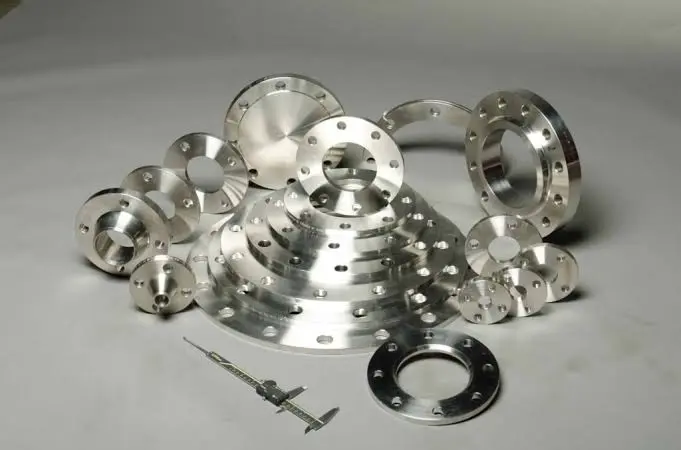
Understanding the Basics of AWWA and ANSI Pipe Flanges
Before you can choose between AWWA and ANSI standards, you need to know what their basic design principles are and where they are meant to be used. Each standard was created because of a different industry's needs, which shaped its details.
What Are AWWA Flanges?
The American Water Works Association puts out standards that AWWA flanges must follow. For example, AWWA C207 for steel pipe flanges is one of those standards. These parts are designed to work with water distribution systems, wastewater treatment plants, and public pumping stations where pressures are typically in low to moderate ranges, generally up to about 250 psi, depending on system design. When compared to industrial flanges, AWWA flanges usually have thinner wall sections because they are designed for water distribution service rather than high-pressure hydrocarbon or process applications. Specifications for materials are typically based on carbon steel, with defined strength and corrosion allowances suitable for water service that perform effectively in standard, non-corrosive water environments.The bolt hole patterns and facing measurements are very different from ANSI designs. This keeps water infrastructure and industrial systems from accidentally being connected.
What Are ANSI Pipe Flanges?
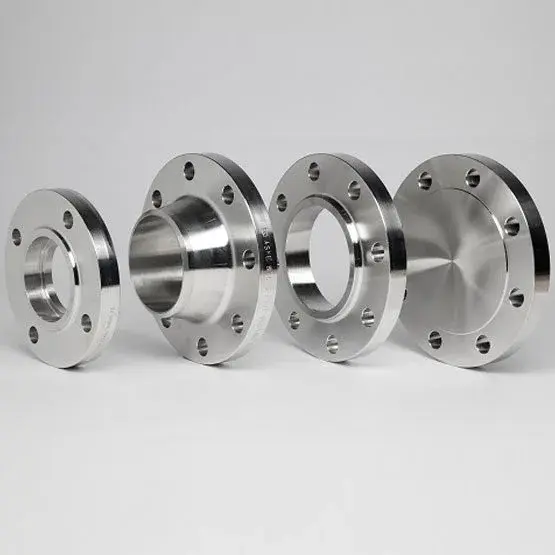
ANSI pipe flanges are forged steel connections manufactured to meet ASME B16.5 for sizes up to 24 inches, and ASME B16.47 for larger sizes (26 to 60 inches). These flanges make openings in pipe systems that deal with high temperatures, pressures, and hazardous or toxic fluids without leakage. Hot forging is utilized to manufacture these components from materials like ASTM A105 carbon steel or ASTM A182 stainless steel. This is followed by precise CNC cutting to get errors of just a few thousandths of an inch. Different pressure classes have different closing needs, which are met by the different face types (raised face, flat face, and ring-type joint). Decades of field performance data show that they work reliably in serious situations where failure could lead to anything from lost production time to major safety issues.
The main difference is in how they were made: ANSI pipe flanges are made to last in harsh working conditions across many industry sectors, while AWWA flanges are made to move water efficiently and cheaply.
Technical and Dimensional Differences Between AWWA and ANSI Pipe Flanges
Dimensional requirements have a direct effect on how well systems work and how easily parts can be swapped out. This means that technical comparison is a must for accurate buying.
Pressure Ratings and Class Designations
AWWA flanges can handle pressures between 86 and 275 psi, which is what their Class D, E, and F names mean. These rates are good enough for water mains that are fed by gravity and low-pressure distribution networks, but they are not good enough for industrial process needs. ANSI Pipe Flanges, on the other hand, can handle pressures ranging from 150 (285 psi at room temperature) to 2500 (6,170 psi), so they can be used for high-pressure steam lines, hydraulic fracturing tools, and underwater production systems. The link between pressure and temperature depends on the type of material. For example, carbon steel flanges deform a lot above 700°F, while alloy steel grades stay strong up to 1,000°F. Because they are so flexible, ANSI standards are used for most foreign project requirements.
Dimensional Standards and Bolt Patterns
Interestingly, AWWA C207 Class D flanges actually share the same bolt circle and number of holes as ANSI B16.5 Class 150 flanges for most sizes. However, they are generally not interchangeable because AWWA flanges have significantly thinner walls and are typically flat-faced, whereas ANSI flanges are thicker and often raised-face. Bolting them together can cause severe bending stress and gasket failure.so all systems must be aligned with a single standard. As a result of ASME B16.5 standardized bolt patterns around the world, any manufacturer's 6-inch Class 300 flange will fit with another manufacturer's similarly rated part. This makes the supply chain more flexible. This interchangeability is very helpful for emergency repairs or buying from more than one seller, which makes inventory simpler for wholesalers and stockists.
Material Composition and Corrosion Resistance
AWWA standards allow both cast and forged materials,with lower yield strengths that are suitable for standard water service. ANSI pipe flanges require that they be made from controlled material types that have been tested for their impact toughness and tensile strength. In sour gas settings, stainless steels like 304 and 316 offer improved resistance to general corrosion but may still be susceptible to chloride-induced stress corrosion cracking under severe conditions, and F11 and F22 alloy steels don't weaken when exposed to hydrogen in refinery hydroprocessing units. Material traceability through heat numbers and mill test records makes sure that third-party standards are met, like NACE MR0175 for sulfide stress cracking resistance. This is a requirement that isn't present in public water use for purchasing.
Application and Industry Suitability: When to Choose AWWA vs. ANSI Flanges
Matching flange standards to practical situations stops mistakes that cost a lot of money and ensures that facilities stay in line with regulations throughout their entire lives.
AWWA Flanges in Water Infrastructure
AWWA flanges are used by municipal water companies for transmission mains that transport treated water from treatment facilities to distribution networks.Extreme pressure containment is not a priority for these systems. Instead, they focus on preventing leaks and making upkeep easy. AWWA-rated flanges are used in clarifier pipes, sludge handling systems, and chemical feed lines in wastewater treatment plants where process pressures stay below 150 psi. When used in large diameters, the cost savings become clear: an ANSI pipe flange component is much more expensive than an AWWA flange that is 48 inches in diameter because it requires more material and is harder to machine. But this cost savings only works in the service areas that the standard is meant to cover.
ANSI Pipe Flanges Across Industrial Sectors
Offshore production platforms need ANSI pipe flanges with ring-type joint facings that are rated Class 900 or higher to maintain seal integrity under high mechanical stress and variable temperature conditions in offshore environments. These links have to be able to handle sour service conditions with high levels of hydrogen sulfide, which would quickly corrode materials that aren't properly defined. In catalytic cracking units where temperatures go over 900°F and pressures hit 800 psi, petrochemical companies use Class 600 stainless steel flanges. ANSI pipe flanges are used in boiler feed systems, high-pressure steam heads, and wastewater return lines in power plants. In nitric acid service, chemical processing plants need metals that don't rust. The choice of material is based on process engineering studies rather than general requirements.
JS FITTINGS has provided Class 1500 forged flanges for use at the wellhead in the Middle East energy sector, where operating pressures are close to 3,000 psi. Full material tracking, positive material identification tests, and supervised checks were needed for these projects. These requirements show the difference between standard water fittings and engineered industrial parts.
Procurement Considerations for AWWA vs. ANSI Pipe Flanges
Strategic sourcing choices weigh up-front costs against success over the lifetime and the dependability of the supply chain.
Quality Assurance and Supplier Qualifications
Suppliers with a good reputation use ISO 9001 quality management systems that include written processes for getting materials, checking production, and doing the final inspection. For important service, ANSI Pipe Flanges (B16.5 Forged Steel Flanges) need extra approvals like API 6A for wellhead and Christmas tree equipment in upstream applications. Third-party inspection agencies use precise measuring tools that can be traced back to national standards to make sure that the dimensions are correct. JS FITTINGS has approvals from PETROBRAS, NIOC, and ADNOC, as well as CE, GOST-R, and individual clients. This shows that they can work with a variety of regulatory systems. These requirements lower the risk of procurement by making sure that goods meet both written standards and project-specific extra requirements, which are often stricter than baseline requirements.
Pricing Structures and Lead Time Management
Because they are easier to make and use common materials, AWWA flanges usually have lower unit costs. However, ANSI pipe flanges are a better deal in situations where the extra cost is worth it for the added dependability. Lead times depend on the size, grade of the material, and difficulty of the production process. For example, normal Class 150 carbon steel flanges up to 24 inches in diameter usually ship within three weeks, while large-diameter or unusual alloy parts may need eight to twelve weeks. Project delays are kept to a minimum by keeping smart inventory levels of popular configurations. JS FITTINGS sends more than 90 crates every month and keeps delivery rates above 95% on time by using an optimized production schedule and buffers for raw materials. This responsiveness is very important when EPC contractors have to meet tight project deadlines and are punished for delays by liquidated damages agreements.
Customization and Technical Support
Standard catalogue items work for most uses, but for unique projects, they need to be resized or made of better materials. Customized hole sizes work with different pipe plans, and non-standard pressure ratings fill in the gaps between classes that are next to each other. JS FITTINGS makes flanges from DN15 to DN2000 and can help with engineering for special designs that need finite element analysis or pressure testing that goes above and beyond what is required by code. Within an hour of receiving an inquiry, our expert team replies with advice on material choice, torque specs, and gasket compatibility. This consultative approach helps procurement professionals navigate complicated specifications and avoid making mistakes that cost a lot of money and slow down the project.
Installation, Maintenance, and Technical Support Differences
How well flanges are installed and maintained over time determines whether they last as long as they're supposed to or break before their time.
Installation Procedures and Torque Requirements
AWWA flanges usually have full-face gaskets that go all the way to the outside of the bolt circle. To keep the gasket from escaping, the bolts must be tightened in a regular way. ANSI pipe flanges with raised face configurations use ring seals that are limited within the raised area. This concentrates the sealing pressure and lowers the bolt loads that are needed. Assembling things is done according to ASME PCC-1 rules, which give force values based on the size of the bolts, the type of grease used, and the class of the flanges. Ring-type joint flanges need special oval or octagonal ring gaskets that bend plastically during installation. This makes metal-to-metal seals that can handle changes in temperature and pressure. Most field leaks are caused by bad installation methods, like uneven bolt loading or broken sealing surfaces. This shows how important it is to have trained workers and torque wrenches that are accurate.
Maintenance Protocols and Inspection Intervals
During routine checks, the state of the flange is checked visually for signs of corrosion, bolt loosening, and gasket leaks. When ANSI pipe flanges are put through a lot of stress, they need to be tested without damaging them. Ultrasonic thickness readings or magnetic particle inspection can find fatigue cracks before they break. Over time, bolt stress relaxes, so they need to be retorqued every so often. This is especially important in high-temperature work, where thermal expansion causes cyclic loads. JS FITTINGS gives a lot of paperwork, like material certificates, measurement reports, and suggested maintenance plans that are based on the particular conditions of use.
Our after-sales support includes troubleshooting help when problems arise out of the blue. We use our 40 years of knowledge in making high-pressure ANSI flanges Class 600/900/1500 for oil and gas to find the root causes and take corrective actions. When procurement teams run into problems in the field that need to be fixed quickly, it's clear how valuable expert help is. Suppliers who offer technical help in addition to delivering goods help keep project plans and lower downtime costs.
Conclusion
Choosing between ANSI pipe flanges and AWWA flanges depends on the needs of the product, the working conditions, and the rules that must be followed. AWWA standards are used for city water systems with mild pressures and media that don't attack each other. This lets cost-effective designs work. ANSI pipe flanges have been shown to be reliable in harsh industrial settings, such as chemical factories and offshore platforms, where safety is very important and solutions designed with lots of performance data are needed. To get the best results from projects, procurement workers have to look at things like pressure levels, material specs, dimensional compatibility, and source qualifications. When you work with experienced makers, you get access to technical know-how, quality control systems, and a supply chain that is quick to respond. These things turn buying flanges from a transactional commodity into a smart way to create value.
FAQ
1. Can AWWA and ANSI flanges be used interchangeably in the same system?
Generally no. While AWWA Class D and ANSI Class 150 share identical bolt patterns in many sizes, they have significantly different flange thicknesses and facing types (Flat Face vs. Raised Face). When you try to mate these different flanges, the gasket won't contract properly, the bolts will be out of line, and the system could leak. To make sure that everything works together mechanically, projects must all define the same standard.
2. Which flange type offers better long-term value for industrial applications?
ANSI pipe flanges have a better lifetime value in industrial settings because they can handle higher pressures, have data on how well they work, and are available from suppliers around the world. The starting costs are higher than AWWA options, but the standardized measurements and wide range of pressure-temperature ratings lower the total cost of ownership over many years of service because they are more reliable and require less upkeep.
3. How do I verify supplier compliance with ANSI flange standards?
Ask for approved mill test records that show the chemical makeup and mechanical qualities of the material, as well as dimensional inspection reports that show the product meets ASME B16.5 or B16.47 standards. You should also ask for third-party certifications like ISO 9001 or approvals specific to the client. Reliable providers, like JS FITTINGS, keep full traceability by stamping heat numbers on each flange. This lets you check against the original factory records and ensures accountability across the supply chain.
Partner with JS FITTINGS for Your High-Pressure Flange Requirements
JS FITTINGS has been making high-quality products for over 40 years and is now working on energy and industry infrastructure projects around the world. We offer forged carbon steel and stainless steel flanges in pressure classes 150 to 2500. We are a qualified ANSI Pipe Flanges seller with ISO 9001, CE, and GOST-R certifications. Our monthly capacity is over 700 tonnes, and we deliver on time more than 95% of the time. We help EPC companies and wholesalers with inventory from DN15 to DN2000. We are approved by PETROBRAS, NIOC, and ADNOC, and we offer full material traceability, unique engineering support, and quick expert help. Send us an email at admin@jsfittings.com with your requirements, and our team will get back to you within an hour with solid solutions made for heavy use.
References
1. American Society of Mechanical Engineers, "ASME B16.5-2020: Pipe Flanges and Flanged Fittings NPS 1/2 Through NPS 24 Metric/Inch Standard," ASME International, New York, 2020.
2. American Water Works Association, "AWWA C207-18: Steel Pipe Flanges for Waterworks Service, Sizes 4 In. Through 144 In.," AWWA Standards, Denver, 2018.
3. Harvey, John F., "Theory and Design of Pressure Vessels," Van Nostrand Reinhold Company, Second Edition, Chapter 7: Flange Design, 1985.
4. Bickford, John H., "An Introduction to the Design and Behavior of Bolted Joints," Fourth Edition, CRC Press, Taylor & Francis Group, Sections on Flanged Connections, 2008.
5. Nayyar, Mohinder L., "Piping Handbook," Seventh Edition, McGraw-Hill, Chapter B7: Flanges and Flanged Fittings, 2000.
6. American Society of Mechanical Engineers, "ASME PCC-1-2019: Guidelines for Pressure Boundary Bolted Flange Joint Assembly," ASME Standards Technology, New York, 2019.
Send Inquiry
_1775029549981.webp "Buttweld Tee")
_1775030068227.webp "ASTM A105 Weld Neck Flange")
Related Industry Knowledge
- All About ASTM A105 weld neck flange
- What Facing Types Suit a Carbon Steel Forged Steel Flange?
- Understanding the API 5L Seamless Steel Line Pipe Specification
- FBE Coated Steel Pipe: The Ultimate Guide (Process & Specs)
- Understanding Long Radius Buttweld Elbow: Essential Components for Your Construction Projects
- Induction Buttweld Bend vs Cold Bend: Pros and Cons
- Why Engineers Choose Buttweld Bend Over Mitered Bends?
- ASME B16.9 Buttweld Tee Dimensions and Weight Guide
- Seamless vs Welded Buttweld Tee: Which Performs Better?
- Where can I buy carbon steel pipe?