
How to Choose a 45 degree buttweld elbow?






2026-10-26 09:31:55
To choose the correct 45 degree buttweld elbow, you need to match three things: the material grade, the nominal pipe size (NPS), and schedule (wall thickness) to the circumstances you’ll be working in. The elbow is butt-welded directly to the pipe with a full-penetration circumferential weld at a precision-machined 37.5° bevel to ASME B16.25. Getting the specification incorrect here may have major safety and financial implications, since this sort of connection can withstand greater pressures and temperatures than threaded or socket-weld options. From technical specifications to supplier certification, this book takes procurement managers, engineers, and distributors through each decision point so you can source with confidence.
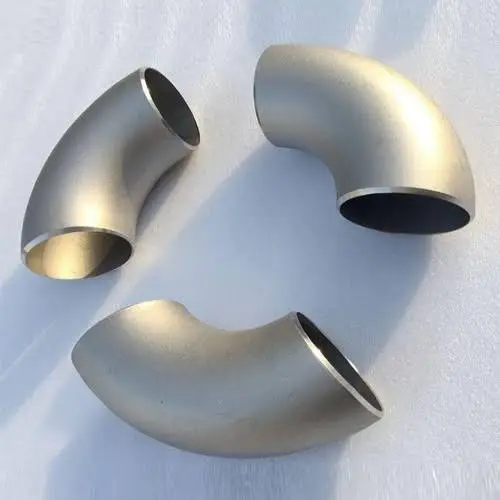
Understanding 45 Degree Buttweld Elbows — Basics and Specifications
It can help you make a decision if you know how this fitting is different from a normal 90-degree elbow and why those differences are important for your project.
What It Is and How It Works
A 45-degree steel pipe elbow redirects the flow in a softer bend. This results in a less turbulent flow and less pressure loss than a sharp 90-degree turn. The body may be hot-pressed or manufactured by another suitable forming process, depending on the material and production method. The beveled edges are carefully trimmed to provide a clean V-groove that can receive a full penetration weld. This is the ideal method for tying high-pressure & high-temperature lines in oil, gas & electricity production.
Key Dimensional Parameters
ASME B16.9 ( Factory-Made Wrought Butt-Welding Fittings) states that these fittings have to have the correct size for use in the US. Most of the 45-degree variations are constructed as Long Radius (LR), which is the face being 1.5 NPS from the center. The space between the walls is ample enough to accommodate the pipe that comes with it. Most individuals purchase stock sizes of SCH 10, SCH 40, and SCH 80, from ½" to 48". Before you submit your purchase, check that the outer width at the angle and the root face are the same (1.6 mm ± 0.8 mm per ASME B16.25).
Material Grades at a Glance
The three major types of steel are alloy steel (ASTM A234 WP11/WP22), carbon steel (ASTM A234 WPB), and stainless steel (ASTM A403 WP304/316). Carbon steel is the most used material for process lines at medium-range temperatures. Stainless steel types are employed when there are corrosive substances or cleanliness requirements. Alloy grades are used in power plants and manufacturing since they can withstand high temperatures. If you use the same material for the fitting as you do for the pipe, you will have no electrical difficulties, and the welding procedure will be done according to regulations.
How to Select the Right 45 Degree Buttweld Elbow for Your Application
Getting the specification right before issuing a purchase order saves rework costs and schedule delays downstream.
Assess Your Operating Conditions First
Begin with three data points: design pressure, design temperature, and fluid composition. Carbon steel A234 WPB fittings are generally rated for use to around 800°F. For low-temperature service below -20°F, impact-tested grades such as ASTM A420 WPL6 should be used. For sour gas or chloride-bearing fluids, stainless steel or duplex grades are resistant to stress corrosion cracking that would degrade carbon steel over time.
Long Radius vs. Short Radius
The usual industrial practice for butt welded 45 pipe elbows is the Long Radius type. Short Radius (SR) 45-degree elbows are not produced as stock items in accordance with ASME B16.9. SR variants are only offered in the 45° configuration as special fabrications and typically are not recommended owing to poor flow characteristics and limited code adoption. If your pipe isometric is tight enough to need an SR fitting, before buying a bespoke component, recheck the isometric layout—an LR elbow with altered routing will generally solve the dispute at less expense.
Buttweld vs. Threaded and Socket-Weld Alternatives
Threaded and socket-weld fittings are for smaller bore, lower-pressure applications (often under 2" NPS). The butt-weld joint does not have the crevice present with a socket-weld fitting, reducing the possibility of crevice corrosion, and may be inspected by radiography. A butt-weld fitting is the ideal solution for any line that will be hydrotested or X-rayed at pressures over ASME B31.3 Class 150 limitations. The weld joint strength is equal to or higher than the base metal, and the threaded joints are exposed to stress concentration areas during cyclic loading.
Procurement Considerations for 45 Degree Buttweld Elbows
Sound procurement practice protects both project budgets and long-term system integrity.
Quality Verification Checkpoints
Every shipment should arrive with a Mill Test Report (MTR) per EN 10204 3.1, certifying chemical composition, mechanical properties, and heat treatment. Beyond paperwork, these physical checks matter:
- Positive Material Identification (PMI): X-ray fluorescence confirms the alloy matches the MTR and ASTM grade on delivery.
- Dimensional metrology: Verify center-to-face, OD at bevel, and wall thickness against ASME B16.9 tolerances using calibrated instruments.
- Non-destructive testing (NDT): Ultrasonic testing (UT) checks for laminations; magnetic particle inspection (MPI) detects surface cracks in carbon steel; radiographic testing (RT) is mandatory for welded-seam (WP-W grade) fittings.
These checks collectively protect against counterfeit or substandard fittings entering a safety-critical line.
Evaluating Suppliers
A qualified supplier holds ISO 9001 certification and can provide third-party inspection reports. Evaluate lead time against your project schedule—standard carbon steel sizes in common schedules typically ship within two to four weeks, while stainless or alloy grades may need four to eight weeks. Confirm minimum order quantities against your actual needs; some manufacturers accept small-batch trial orders, which lets you verify dimensional quality before committing to a bulk purchase. A supplier with experience in recognized international standards (ASME, DIN, JIS, GOST) gives EPC contractors and government infrastructure buyers the document package they need for tender compliance.
Price Analysis and Ordering Logistics
Carbon steel elbows cost significantly less than stainless equivalents—typically three to five times lower on a per-piece basis for equivalent sizes and schedules. Custom sizes or non-standard schedules add tooling time and cost. Bulk purchasing for large-diameter or alloy fittings generally reduces the per-unit price and stabilizes supply. Build realistic delivery windows into your procurement schedule and confirm packaging specifications (bare metal, black lacquer, varnish, or epoxy coating) to prevent corrosion during ocean freight.
Installation and Maintenance Guidelines for Optimal Performance
If you put in a fitting the wrong way, it can fail even if it is described correctly.
Pre-Weld Preparation
Clean the pipe ends and cut the faces down to metal within 25 mm of the joint. This is to make sure that the pipe schedule and the fitting schedule are the same. If the adjoining wall thicknesses do not match, an internal bore step will form, creating turbulence and risking incomplete root penetration. Prior to fit-up and tack welding, verify the root face thickness (1.6 mm ± 0.8 mm) and the 37.5° bevel angle using a calibrated welding gauge.
Welding and Post-Weld Inspection
ASME Section IX mandates that welding be executed in accordance with a qualified Welding Procedure Specification (WPS). For carbon steel components with heavy wall thicknesses, proper preheating slows the cooling rate and diffuses hydrogen, mitigating the risk of hydrogen-induced cold cracking (HICC). Before you put the piece back together, make sure the center-to-face length is still within the accepted range. After that, the spool should move on to the next step. As per ASME B31.3, you should test the line with either hydraulic or air pressure before putting it to use to make sure the joints are solid.
Ongoing Maintenance Considerations
Regular UT checks should be done on butt welded 45 pipe elbows that are used in erosive environments, such as factories, offshore platforms, and slurry lines, to see how thick they are. The 45-degree shape is better at stopping erosion and corrosion than a 90-degree elbow. It is still most worn on the outside curve (extrados) of any bend, though. The service will last longer and won't shut down without warning if you do regular checks in these places.
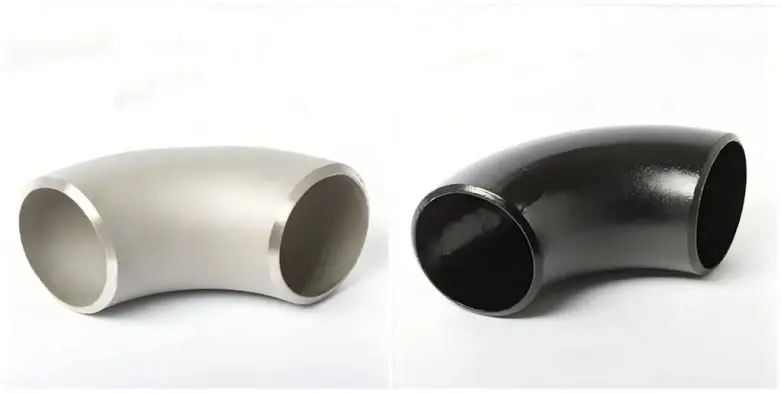
Brand and Product Recommendations for Reliable 45 Degree Buttweld Elbows
Since 1983, JS FITTINGS has been manufacturing stainless steel, alloy steel, and carbon steel butt welding fittings for projects in more than 30 countries. The company maintains ISO 9001, CE, and GOST-R certifications and holds approved vendor status for leading global energy corporations including ADNOC and Petrobras. Thus, it may provide evidence of compliance for EPC contractors and purchasers of government projects.
Our 45-degree elbows comply with ASME B16.9, DIN 2605 (EN 10253-2), and JIS B2312. These are available in SCH 10, SCH 40, and SCH 80 sizes ranging from ½" to 48". Surface treatments include black painting, varnishing, epoxy coating, and galvanizing. You may choose the kind of surface treatment depending on how the item will be transported and what it will be used for. Every month, about 90 containers are delivered, and 800 tons of pipe fittings are produced. Deliveries are on time more than 95% of the time.
The smooth inner surface and the gradual change of direction mean that abrasive particles can not reach the surface. This extends service life in refineries and maritime environments.
The great precision of center-to-face allows a seamless change of dimensions and the components to be aligned without being forced into fit in prefabrication situations.
- Precision Bevel Ends: Machined to 37.5 degrees per ASME B16.25 for full penetration welds that pass radiographic inspection regularly.
- Consistent wall thickness: Manufactured with optimum mandrel forming across the full bend, including the extrados, minimizing the weak places of lesser-quality fittings.
- Reduced erosion-corrosion: The smooth interior surface and gradual directional shift minimize the effect of abrasive particles and improve service life in offshore and refinery applications.
Smooth dimensional transitions: Part alignment without forced fit-up in prefabrication settings via high center-to-face precision.
These qualities respond to the key issues of industrial customers, i.e., system reliability, inspection requirements, and the overall cost of ownership of an asset throughout its full useful life.
Conclusion
When choosing a 45 degree buttweld elbow, there are three crucial things to remember: make sure the standard is suitable for the work, make sure the vendor is qualified before purchasing, and make sure the fitting method is certified. Missing any of these makes the task riskier and isn't worth the time or money. This fitting is the finest option for process pipes that are under heavy pressure and need to last a long time. It has a 45-degree form, a full penetration weld joint, and suitable dimensions as per ASME B16.9. Purchase from an ISO certified company that has well-defined quality control procedures. All packages should have an MTR, and NDT checkpoints should be in the regulations for accepting the items.
FAQ
1. What is the difference between a 45-degree buttweld elbow and a socket-weld elbow?
An all-through circle weld is used to join the pipe to a buttweld joint at one end that is beveled. This means that the joint can be fully X-rayed and can be used for work at high temperatures and pressures. A fillet weld is inside a hollow socket in a socket-weld elbow. It's not good for places with a lot of pressure or strong acid because it makes a crack that holds water. With an NPS of 2" or more and for services that require radiographic inspection, butt-weld fittings are generally preferred.
2. Which material should I choose for corrosive service?
More often than not, carbon steel (A234 WPB) with the right amount of corrosion allowance is enough to stop mild corrosion. Steel grades ASTM A403 WP304 or WP316 are often used for clean uses, fluids that contain salt, or weak acids. When molybdenum is added to WP316, it makes it less likely to pit in chloride environments. To deal with aggressive materials like sour gas (H₂S), you should talk to a rust expert and follow the guidelines for sour-service materials.
3. Can I order custom sizes not listed in standard catalogs?
Yes. Fittings from DN15 to DN2000 are made by companies like JS FITTINGS, and they can also make any size or wall thickness you need. It takes four to eight weeks longer to make custom pieces than stock items, so keep that in mind as you plan your project and write the purchase order.
4. What surface coating is standard for carbon steel elbows?
Most carbon steel buttweld elbows have a black lacquer or varnish finish on them to keep them from rusting while they're being stored or shipped. Epoxy sealing or hot-dip galvanizing can be used for things that need extra rust protection before or after installation.
Partner with JS FITTINGS for Your Next Project
JS FITTINGS is a dependable 45 degree buttweld elbow manufacturer with more than 40 years of production experience, ISO, CE, GOST-R, and approvals from ADNOC and Petrobras. Our sizes range from ½" to 48", and we offer a range of plans and surface treatments to make sure that your project needs are met perfectly. Almost all of our customers have been happy with our service—more than 98% have bought from us again. You can email us at admin@jsfittings.com to get a quote or look at our products.
References
1. ASME B16.9, Factory-Made Wrought Buttwelding Fittings, American Society of Mechanical Engineers, 2018.
2. ASME B16.25, Buttwelding Ends, American Society of Mechanical Engineers, 2017.
3. ASTM A234/A234M, Standard Specification for Piping Fittings of Wrought Carbon Steel and Alloy Steel for Moderate and High Temperature Service, ASTM International, 2022.
4. ASME B31.3, Process Piping, American Society of Mechanical Engineers, 2022.
5. ASTM A403/A403M, Standard Specification for Wrought Austenitic Stainless Steel Piping Fittings, ASTM International, 2021.
6. MSS SP-75, Specification for High-Test Wrought Buttwelding Fittings, Manufacturers Standardization Society of the Valve and Fittings Industry, 2019.
Send Inquiry
You may like