
How to Choose a 90 degree buttweld elbow?






2026-10-08 10:21:26
Choosing the right 90 degree buttweld elbow starts with matching the fitting to your system's pressure rating, temperature range, fluid type, and pipe schedule. Manufactured to ASME B16.9 and ASTM standards, these steel pipe fittings connect to adjacent pipe via full-penetration butt welds, producing joints that match the base pipe in structural strength. Whether you are sourcing for an oil and gas transmission line, a chemical processing plant, or a power generation facility, the correct elbow selection directly reduces leak risk, lowers maintenance frequency, and keeps your project on schedule.
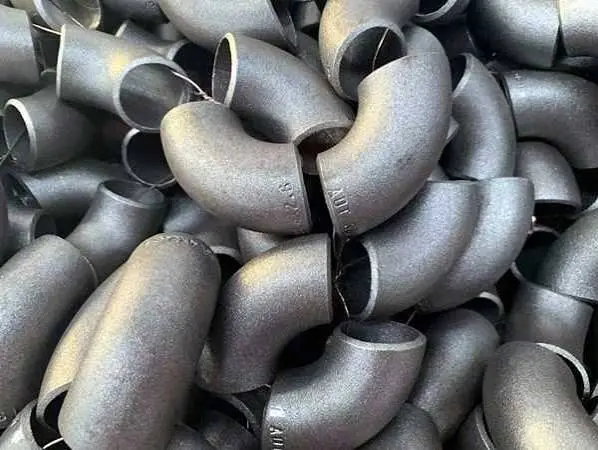
Understanding 90 Degree Buttweld Elbows: Key Fundamentals
It's helpful to know precisely what you're getting and why the design is important for your use before you place an order.
What Is a Buttweld Elbow?
A 90-degree buttweld elbow is a pipe fitting made of steel that changes the direction of flow in a system of pipes. It is formed by hot pressing or forging the steel.Its beveled ends are welded directly to the adjoining pipe, creating a full-penetration, leak-tight joint. This way of connecting can handle higher temperatures and pressures than socket weld or threaded options. It is the standard for important service lines in the chemical, power, water treatment, and oil and gas industries.
Material Options and Their Impact
Most industry needs can be met by three main products. For general service, carbon steel is a cost-effective choice. In chemical and food-grade settings, stainless steel offers good corrosion resistance. Chrome-moly alloy steel grades like ASTM A234 WP11 and WP22 maintain high-temperature creep strength in power plants and refinery cracking units. Choosing the wrong material can accelerate wall degradation, increase inspection requirements, and raise the cost of ownership over time.
Seamless vs. Welded Construction
Seamless elbows are made from a single piece of steel, which gives them a uniform grain structure that works well under high-pressure and thermal stress. Welded elbows are made from plates and have a longitudinal seam weld. They are good for utility lines with moderate pressure and cost less per unit. For important pipeline specifications, the procurement documents need to state which construction type is required, because the selection between seamless and welded fittings depends on the design requirements and project specifications.
Criteria for Choosing the Right 90 Degree Buttweld Elbow
People who work in procurement often look at price first. A more reliable method starts with the conditions of the operation and works its way out to the supplier's abilities.
Assess Operating Parameters First
The system's maximum allowable working pressure, design temperature, and fluid properties should be the first things you look at. Before any catalog search starts, these three numbers tell you the minimum schedule and material grade that you need. A steam line that works at 750°F needs alloy steel and a stronger wall schedule. On the other hand, a water treatment header that works at low pressure can use carbon steel in Schedule 40 without any problems.
Long Radius vs. Short Radius Selection
The centerline radius of a Long Radius elbow is 1.5 times the standard pipe size. A butt weld 90 degree elbow in this configuration has less friction loss and can be used in most flow-critical situations, like pump discharge lines and gas systems with high speeds. Short Radius elbows have a centerline radius equal to the nominal pipe size, making them suitable for installations with limited space where routing restrictions are more important than flow efficiency. However, SR elbows cause a greater pressure drop and may be less suitable for services with high flow velocities or erosion concerns.
Supplier Certifications and Standards Compliance
Make sure that the supplier's product meets the material standards set by ASTM A234, ASTM A403, or MSS SP-75, and that the size limits are in line with ASME B16.9. For full weld penetration, the bevel geometry should comply with the applicable requirements of ASME B16.25. Suppliers with ISO 9001, CE, and application-specific approvals such as PETROBRAS or ADNOC qualifications can demonstrate established quality-control practices. These controls can help reduce the risk of rejected fittings or failed weld inspections that may delay the project.
Installation and Measurement Best Practices
If measured or put in the wrong place, even a part that is exactly what it's supposed to do can cause problems. The following steps protect the quality of the weld and the life of the system.
Measuring Center-to-Face Dimensions
For prefabricating pipe spools, the center-to-end dimension (Dimension A in ASME B16.9) is critical for accurate spool fit-up. This standardized dimension establishes the exact distance from the center line of one end to the face of the beveled end. Verifying this dimension ensures seamless alignment during spool assembly and avoids residual stresses during fit-up.When dimensions are off by more than the allowed amount, field adjustments may be required, which puts stress on the joint and delays the hydraulic testing.
Pre-Weld Inspection and Surface Preparation
Check each elbow before putting it all together. Make sure the edge is smooth and free of burrs, the pipe end is round within ASME spec, and there are no cracks, pits, or scale on the inside or outside of the pipe. If the elbow and pipe bore are not lined up correctly, there is a high-low mismatch at the weld root. This causes stress to build up under working pressure. Before you tack weld, clean the bevel face and the area within an inch of the weld joint down to clean metal and remove oil, dirt, scale, and other contaminants.
Common Installation Errors to Avoid
There are three mistakes that cause many field failures. First, mismatched schedules between the elbow and pipe can create an internal step that accelerates erosion.
Second, pulling or jacking the pipe into position during tack welding is a form of forced fitting that can introduce residual stress and increase the risk of fatigue cracking during thermal cycling. Third, failing to perform post-weld heat treatment when required by ASME B31.3 and the applicable material, thickness, and service conditions may result in non-compliance with code and welding procedure requirements.
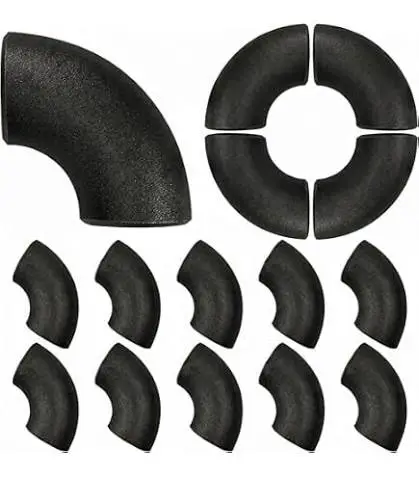
Procurement Insights: Buying and Ordering Your 90 Degree Buttweld Elbows
It takes more than picking out a catalog number to find pipe fittings for industrial projects. Fitting quality and supply chain reliability both have a direct effect on project timelines.
Evaluating Pricing and Lead Times
Pricing by the piece may seem simple, but discounts for large orders and combining freight have a big impact on the final cost of large projects. Ask your supplier for a tiered price plan that includes the amount of materials you think you will need for the job. Take lead time into account when planning your construction schedule. A butt weld 90 degree elbow that arrives two weeks late can leave welding crews waiting and delay scheduled hydrostatic testing. Please make sure that the seller keeps finished goods in stock for normal sizes and can confirm production slots for bigger diameters up to 48".
Specifying Custom Orders Accurately
The technical data sheet for custom orders needs to be clear and include the nominal pipe size, schedule, material grade, construction type, elbow radius, surface coating, and any standards that apply. Most of the time, wrong deliveries happen because the specs aren't complete. When working with international suppliers, make sure you get a material test report and a dimensional inspection report for each heat of steel before the shipment is released.
Verifying Quality Through Documentation
Mill test reports, heat numbers, and third-party inspection certificates make up the documentation required by project quality plans and client audits. Make sure that the supplier has an ISO 9001-certified quality management system and that their testing tools include spectral analyzers to check the material and ultrasonic flaw detectors to check for internal discontinuities and wall-thickness variations. These documents provide traceability from material receipt through final system commissioning.
Comparison Guide: 90 Degree Buttweld Elbow vs. Other Elbow Types
It's important to know where a 90 Degree Buttweld Elbow fits in relation to other types of connections so that you don't over- or under-specify.
Buttweld vs. Socket Weld and Threaded Elbows
When used in moderate-pressure, non-critical service, socket weld and threaded bends work well for small-bore lines. They are easier to put in, but there is a chance of corrosion in the cracks around the socket gap, and they can't handle high pressures for gas or steam. Butt-weld elbows use butt-welded joints that can provide a continuous connection and can be designed to meet the pressure requirements of the piping system.
Schedule 40 vs. Schedule 80 Wall Thickness
Pressure containment capacity is directly determined by the wall thickness schedule. Schedule 40 carbon steel can be used for a lot of different industrial tasks when the pressure is moderate. Schedule 80 has a thicker wall for systems that are used in high-pressure or high-temperature situations or that carry slurries that wear down the pipe wall over time. In a high-pressure system, choosing a lower schedule to save money on materials shortens the system's service life and makes inspections happen more often, which raises the total cost of ownership.
45 Degree vs. 90 Degree Elbows
A 45-degree elbow changes the direction of flow more slowly, lowers the pressure drop, and stops erosion at the bend. It works well for long, smooth changes in routing. When space or structure limitations mean a right-angle turn has to be made, the 90-degree fitting is usually the best choice. The 90-degree elbow is widely used in industrial piping because its right-angle configuration suits common steel-framed structures and equipment layouts.
Conclusion
To choose the right pipe elbow fitting, including a 90 degree buttweld elbow, you need to know the operating pressure, temperature, fluid type, radius requirement, wall schedule, and material grade. For high-integrity service, the fitting construction, material traceability, and dimensions should be selected according to the applicable design requirements and ASME B16.9. If you make these technical choices and then find a provider with clear quality control, quick response times, and helpful technical support, your piping system will work well for as long as it was meant to.
FAQ
1. What is the difference between LR and SR elbows?
Long Radius elbows have a central radius that is 1.5 times the standard pipe size. This means that there is less friction loss and the flow changes more smoothly. Short Radius elbows are only used when there isn't enough room for LR installation. Their centerline radius is the same as the nominal pipe size. SR elbows have a bigger pressure drop, so they shouldn't be used for services that need to handle high speeds or erosion.
2. Which certifications should I require from a supplier?
At the very least, you should make sure that the material meets ASTM standards, that the dimensions meet ASME B16.9, and that the welding ends meet ASME B16.25. ISO 9001 certification indicates that the supplier operates a documented quality management system. For major energy projects, vendor approvals from leading global operators like ADNOC and PETROBRAS provide proven verification of technical capability.
3. Can stainless steel elbows handle high temperatures?
Yes, ASTM A403 WP316 and WP316L can be used in certain elevated-temperature services, but their allowable stresses, mechanical properties, oxidation behavior, and corrosion resistance must be evaluated for the specific temperature and service environment. Before finalizing the material specification, consult your metallurgist to make sure it will work with high-temperature reducing atmospheres or certain process fluids.
4. Is heat treatment required after forming?
Carbon steel elbows made by hot forming may require normalizing or other specified heat treatment depending on the material grade, forming temperature, wall thickness, and applicable specification. When required by the applicable ASME rules, material grade, wall thickness, and service conditions, the specified heat treatment must be performed for ASTM A234 WPB material.
Request a Quote from JS FITTINGS — Your Trusted 90 Degree Buttweld Elbow Supplier
Since 1983, JS FITTINGS has manufactured steel pipe fittings for international markets. We supply ASTM-compliant elbows to more than 30 countries, with sizes ranging from DN15 to DN2000. We are a qualified 90 Degree Buttweld Elbow manufacturer approved by major energy corporations like ADNOC and PETROBRAS, supported by ISO 9001, CE, and GOST-R certified quality systems. Over 800 tons are made every month, with more than 95% of shipments delivered on time, and more than 98% of our customers place repeat orders. You can get a detailed quote within an hour by emailing our team at admin@jsfittings.com.
References
1. ASME International. ASME B16.9: Factory-Made Wrought Buttwelding Fittings. American Society of Mechanical Engineers, 2018.
2. ASTM International. ASTM A234/A234M: Standard Specification for Piping Fittings of Wrought Carbon Steel and Alloy Steel for Moderate and High Temperature Service. ASTM International, 2022.
3. ASTM International. ASTM A403/A403M: Standard Specification for Wrought Austenitic Stainless Steel Piping Fittings. ASTM International, 2021.
4. ASME International. ASME B31.3: Process Piping Code. American Society of Mechanical Engineers, 2022.
5. ASME International. ASME B16.25: Buttwelding Ends. American Society of Mechanical Engineers, 2017.
6. Nayyar, Mohinder L. Piping Handbook, 7th Edition. McGraw-Hill, 2000.
Send Inquiry
You may like